#inherited-belongings
#inherited-belongings
[ follow ]
#nostalgia #family #inheritance #family-history #grief #family-traditions #parenting #photography #travel
fromwww.npr.org
1 week agoHow a jeweler's quest to create the world's largest jeweled egg led to his downfall
Paul Kutchinsky's ambition to create the world's largest jeweled egg was driven by a desire to showcase British craftsmanship on a global stage, competing with the legendary Faberge eggs.
Berlin
Law
fromIndependent
1 week ago'Even the simple distribution of heirlooms can become contentious' - how to divide inheritance in blended families and avoid arguments
Estate planning in blended families requires careful consideration to avoid inheritance issues, especially regarding stepchildren and property ownership.
Mindfulness
fromSilicon Canals
2 weeks agoI asked my mother what she thinks about when she looks at old photographs of herself and she said "I think about how worried I was and how little of it mattered" - and the simplicity of that sentence from a woman who spent decades carrying everything has been sitting in my chest for three weeks because it contains a permission I'm not sure I'm brave enough to take yet - Silicon Canals
Worry often consumes energy without yielding significant outcomes, highlighting the importance of action over inaction.
History
fromianVisits
3 weeks agoLooted from a royal palace: The medieval jug now on display in London
A medieval English bronze jug looted from Ghana's Asante kingdom reveals how European luxury goods became valued ceremonial objects through trans-continental trade networks before colonial appropriation.
fromwww.cbc.ca
1 month agoToronto family stung by cemetery theft warns others to be careful with family heirlooms | CBC News
I was actually shocked. Mori said it felt like a total violation of my parents. The niche is sacred. On Nov. 17, 2025, the same day the Mori family reported the missing items from Highland Memory Gardens in North York, Halton police held a news conference detailing a string of thefts at eight cemeteries across the Toronto, Halton and Niagara region.
Canada news
History
fromSmithsonian Magazine
3 weeks agoTudor Courtiers Exchanged Portrait Miniatures as Love Tokens. Centuries Later, New Research Is Unlocking the Secrets of These Intimate Artworks
Nicholas Hilliard, England's first internationally famous native-born artist, created exquisitely detailed miniature watercolor portraits on vellum that served as portable intimate keepsakes and diplomatic gifts in Elizabethan England.
Parenting
fromBusiness Insider
4 weeks agoMy mom has been collecting miniatures for 50 years. They have taken over our 1000-square-foot basement.
Celina Myers' mother has collected miniatures since age 14, filling their entire basement with thousands of organized tiny treasures that continue to bring her joy despite physical disability.
SF parents
fromBusiness Insider
4 weeks agoI inherited a storage unit from a family friend. It was full of vintage clothes, which I now sell online.
Scottlynn Krause and her mother launched CS80 Vintage after inheriting thousands of pristine 1980s sportswear items from a family friend's defunct sporting goods store, converting a disposal problem into a successful online business.
Digital life
fromSilicon Canals
1 month agoPsychology says the reason boomers get emotional watching old home movies isn't the people in them - it's the background, the furniture nobody saved, the wallpaper nobody photographed, the ordinary details of a life that felt permanent until it wasn't - Silicon Canals
Everyday household spaces and objects hold profound emotional significance and preserve memories more powerfully than people realize, creating lasting impacts when they disappear.
Parenting
fromSilicon Canals
1 month ago9 quiet things the best grandparents do that have nothing to do with spoiling-and the one their grandchildren remember most vividly as adults is always the smallest - Silicon Canals
Grandparents create lasting impact through presence, patience, and consistent rituals rather than material gifts or solutions.
Parenting
fromSilicon Canals
1 month ago9 things a truly good father does without ever needing to be asked-and most people only recognize them after he's gone - Silicon Canals
Good fathers demonstrate love through consistent, quiet actions rather than words, fixing problems proactively and remembering what matters to each family member.
History
fromMedievalists.net
1 month agoDreaming of Owning a Medieval Artefact? Here's Your Chance - Medievalists.net
TimeLine Auctions' March 3 online sale features hundreds of medieval historical objects including a 13th-century Limoges cross, 1224 Chinese armor, Viking silver mount, and Anglo-Saxon brooch.
Arts
fromThe Art Newspaper - International art news and events
1 month agoUK exhibition celebrates the artisans throughout history who went to war
Frontline-made objects salvaged from battlefields reveal the skills, identities, and lived experiences of ordinary soldiers across conflicts from the World Wars to modern wars.
fromemptywheel
2 months agoHow Do You Want Your Family to Remember You? - emptywheel
The Stasi, the secret police, were legendary for their data files. Their work was based on instilling fear, and they induced stunningly amazing numbers of East Germans into informing on their neighbors. Something along the lines of 1 in 6 East Germans were informants, whether out of fear or out of approval of what the East German government was doing.
US politics
fromEmptywheel
2 months agoHow Do You Want Your Family to Remember You?
The Stasi, the secret police, were legendary for their data files. Their work was based on instilling fear, and they induced stunningly amazing numbers of East Germans into informing on their neighbors. Something along the lines of 1 in 6 East Germans were informants, whether out of fear or out of approval of what the East German government was doing.
E-Commerce
fromBuzzFeed
1 month ago12 Grandparent Memory Books And Journals To Chronicle Family Histories
BuzzFeed Shopping provides service-focused product recommendations prioritizing readers, vetting products, fact-checking claims, exposing fake deals, and offering authentic, inclusive choices across price points.
fromSlate Magazine
2 months agoHelp! I Thought I Knew an Important Part of My Family's History. Turns Out, I've Been Living a Lie.
When I was 4 years old, my parents divorced, and my father moved away. I grew up thinking that my biological father was "John," but recently discovered that my mother had an affair with another man, "Allen." Allen is my biological father. This was a surprise and filled with a lot of drama, but it's gotten weirder than you'd imagine.
Psychology
fromSilicon Canals
1 month agoThe downsizing regret most retirees share and the items they wish they'd never sold - Silicon Canals
Picture this: you're finally retiring, ready to embrace that simpler life you've been dreaming about. You sell the family home, donate half your belongings, and move into something smaller and more manageable. Freedom at last, right? Fast forward a few months, and suddenly you're missing that extra bedroom, kicking yourself for selling grandma's china cabinet, and wondering why you thought downsizing meant getting rid of everything that made your house feel like home.
Real estate
fromSilicon Canals
1 month agoTreasures worth thousands: homeowners discover vintage items hidden in walls during renovation - Silicon Canals
Picture this: you're knee-deep in renovation dust, crowbar in hand, when something unexpected tumbles from behind century-old plaster. A yellowed envelope? A strange metal box? That moment when your heart skips because you realize you might have just found something extraordinary. For some lucky homeowners, these discoveries turn out to be worth thousands of dollars, transforming a simple home improvement project into an unexpected treasure hunt.
Renovation
fromIndependent
2 months agoLiam Collins: My lifetime collection of 'stuff' might look like junk - but every piece has meaning
When you reach a certain age, one of the things you notice at the turn of the year is the "stuff" you have accumulated. Old newspapers, documents and books jostle with the detritus of life, from pieces of dead coral from Barbados to an old label that never made it onto a bottle of Guinness. I have spent the last decade preaching to my adult children, telling them to stop buying things.
Mindfulness


fromYanko Design - Modern Industrial Design News
2 months agoThe Case for Heirloom Furniture in an Era Obsessed With Biodegradable Everything - Yanko Design
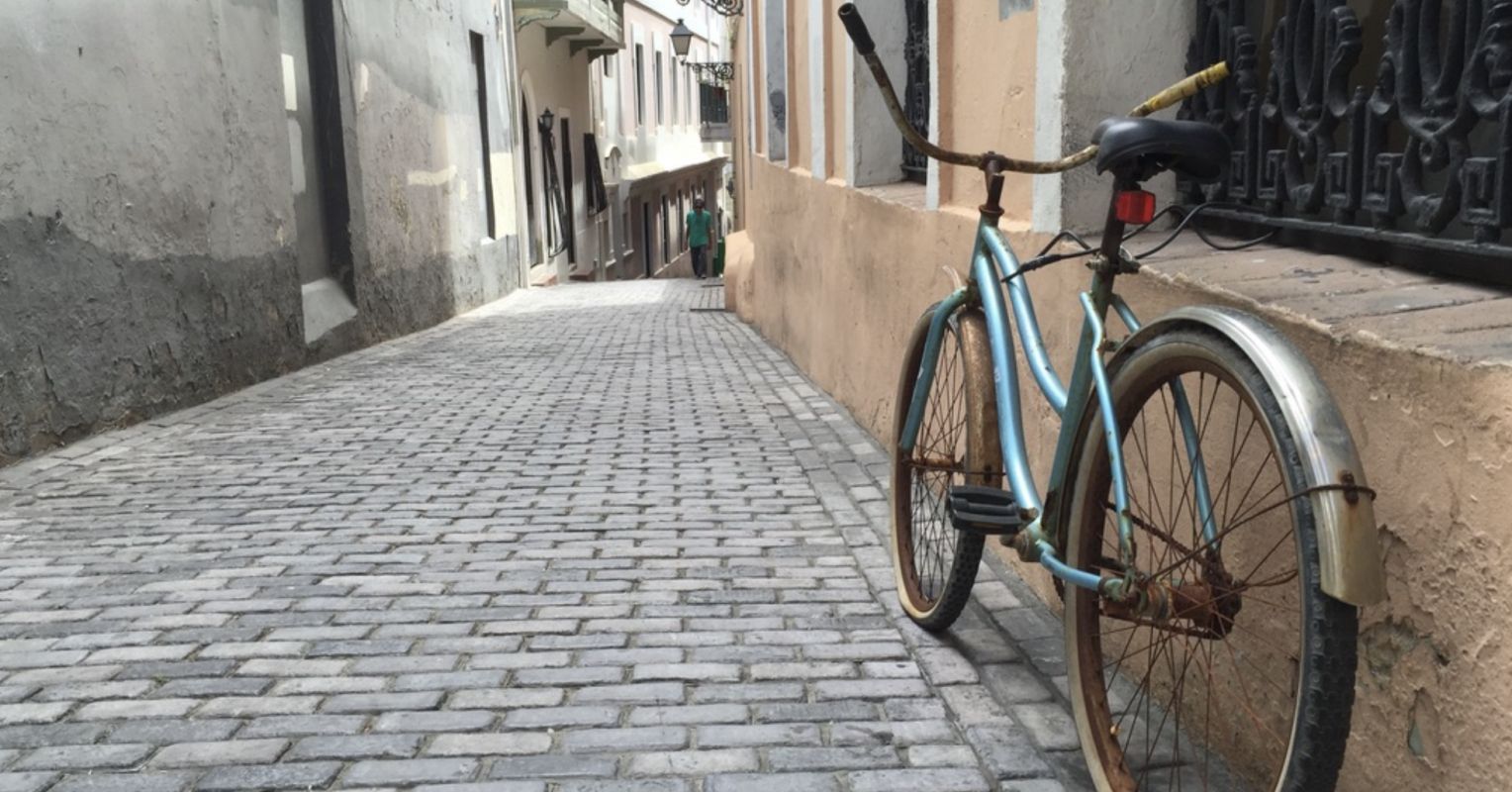
Furniture made from mycelium or algae can decompose in five years, sure, but a well-made antique armoire outlives empires because no one throws it away. Columns takes that logic seriously. Handcrafted in solid oak, natural leather, and horsehair, the pieces are built to last a thousand years, which sounds like marketing hyperbole until you look at the joinery, the hand stitching, and the material choices. This is furniture designed to be inherited, repaired, and remembered.
Design
Business
fromLondon Business News | Londonlovesbusiness.com
2 months agoThe rising appeal of traditional goods in modern investment portfolios - London Business News | Londonlovesbusiness.com
UK investors increasingly allocate to tangible alternative assets for stability, scarcity-driven appreciation, and clearer ownership, balancing portfolios against market volatility.
fromCurbed
2 months agoSentimental Value Is an Excellent Lamp Movie
Sentimental Value is very much a film about a house - a Victorian " dragestil," or "dragon style," home in Oslo where generations of the same family have lived for more than a 100 years. Director Joachim Trier, who found the house in Oslo's Frogner neighborhood, called its role in the film "a witness of the unspoken ... a witness of the 20th century."
fromwww.theguardian.com
2 months agoDoes my obsession with old trinkets make me a hoarder or a sentimental maximalist? | Eleanor Burnard
It's important to state that I am the most insufferably sentimental person I know. There are old birthday cards collecting dust in my jam-packed cupboards, stuffed toys their colours long-faded sitting in my bedroom despite their prime cuddling years over, while gifts handmade by friends I no longer talk to take up real estate on my cluttered shelves. You couldn't pay me to part with any of them.
Mental health
fromHuffPost
2 months ago'Inheritourism' Is Shaping Our Vacations. Here's What Experts Want You To Know.
A 2026 travel report from Hilton identified "inheritourism" as a notable trend for the new year ― with 66% of travelers surveyed by the hotel brand saying that their parents have influenced their choice of accommodations, 60% saying they guided their choice of loyalty programs and 73% saying they shaped their general travel style.
Travel
Law
fromSlate Magazine
1 month agoAfter My Mom's Death, I Went Inside My Parents' House for the First Time in Years. What I Saw Terrified Me.
Adult child with power of attorney discovers father depleted finances, hoarding home, excessive gambling and spending, declining health, and refusal of help risking homelessness.
fromwww.theguardian.com
2 months agoMy favourite family photo: It's a snapshot of our goofy bond'
It was his aside that spoiled the secret identity of Santa Claus; he who laughingly revealed the mechanics of sex; he who gave me my first sip of beer. Yet, when he found out I was sneaking cigarettes from my dad's stale dinner party supply, he chastised me before either of my parents could, and when my mum was diagnosed with cancer and I was just 15, he was already a 22-year-old medical student.
Relationships
Arts
fromdesignboom | architecture & design magazine
1 month agolight sculptures preserve ancestral designs through antique doilies and lace textile
Kinship transforms heirloom doilies and stockings into LED-lit stainless steel sculptures that preserve textiles and project lace-like shadows and layered histories.
fromSlate Magazine
2 months agoI Don't Expect Money When My Dad Dies. I'm Terrified of What He Might Leave Me With Instead.
I'm sorry you're dealing with this. Having a financially irresponsible parent creates real anxiety, and you deserve clarity so you can plan your own future. Here's the good news: You are not responsible for your father's debts when he dies. Period. Debts die with the debtor unless you've co-signed loans, have joint credit cards, or are a joint account holder. Don't do any of those things.
Law

fromSilicon Canals
2 months ago9 things Boomers refuse to throw away that their kids will put straight in the trash without opening - Silicon Canals
My father kept manuals for products we hadn't owned in years, filed alphabetically in a cabinet. When I asked why, he looked at me like I'd suggested burning money. "What if we need to look something up?" The concept of finding any manual online in seconds just doesn't compute for a generation that had to rely on these paper lifelines.
Relationships
Arts
fromBusiness Insider
2 months agoI became a tattoo artist with my dad's support. Tattooing my family was the most meaningful gift I've given.
A tattoo artist pursued an apprenticeship with strong family support and gifted personally meaningful tattoos to family members as expressions of her art and gratitude.
fromPsychology Today
2 months agoYour Life's Work Preserved: Why Collectors Are Going Virtual
The traditional museum experience, pausing in front of an object, and absorbing its history visually or by reading its description, has long shaped how collectors and others relate to cultural treasures. Yet, over the last few decades, digital technology has quietly rewritten many of those rules, changing not only how collections are exhibited but also how they are documented, preserved, and even inherited.
Arts
Relationships
fromwww.theguardian.com
2 months agoMy favourite family photo: I bucketed 30 years of tears that day then smiled my smiliest smile'
A long-term couple chose a civil partnership after 30 years together, valuing romance and legal protection, celebrated in a joyful ceremony just before COVID disrupted plans.
fromBusiness Insider
2 months agoBoth of my parents died before my son was born. My grandmother ended up being my son's grandma too.
My mom died when I was young, so I grew up spending summers with her mom in South Dakota. I loved that time with her, but I often only saw her that one time of year. I lived back in Florida with my dad for the rest of the year. When my grandma was older, she embraced the snowbird lifestyle and spent half the year in Florida to escape the Midwest winters.
Parenting
fromwww.theguardian.com
2 months agoMy rookie era: scrapbooking is like creating my own sentimental time capsule
I had always associated scrapbooking with grandmas and bored children, so, imagine my surprise when as a twentysomething with a Big Girl Job I found myself enamoured of printing, cutting, and sticking random bits and bobs into a book. If, like me, you've racked up a disconcerting amount of screen time, you may have stumbled across a multitude of craft-inspired social media posts made primarily by young women. Described as junk journalling, the hobby is distinguishable by an affinity with collecting and storing physical mementoes, such as tickets, receipts, packaging and Polaroids.
Arts
fromSilicon Canals
1 month agoIf you remember these 8 weekend rituals from childhood, you grew up with stronger family bonds than most people have today - Silicon Canals
I was thinking about this the other day while scrolling through my phone on a Saturday morning, realizing I'd been working for two hours without even noticing. Growing up, my weekends looked nothing like this. There were unspoken rules, traditions that just happened without anyone scheduling them into a calendar app. These weren't grand gestures or expensive activities. They were simple rituals that, looking back now, built something most of us are desperately trying to recreate through therapy apps and self-help books: genuine connection.
Relationships
fromThe Art Newspaper - International art news and events
1 month agoWhen it comes to restitution, how can museums solve a problem like inalienability?
When Thomas Jefferson wrote about the "inalienable" rights of man in the US Declaration of Independence 250 years ago, it's possible he lifted the term from the French. And long before it was ever used as an adjective to describe human rights, it defined royal property. To this day, "inalienability" remains a cornerstone of public collections in France-and many other countries-impacting museums and their ability to deaccession, including for purposes of restitution.
Arts
fromwww.thehistoryblog.com
2 months agoPreviously unknown Hans Baldung Grien portrait emerges after 500 years in the sitter's family
A previously unknown drawing by the German Renaissance artist Hans Baldung Grien has been rediscovered in a wooden box belonging to the family of the woman who sat for the portrait 500 years ago. Drawings by Baldung are extremely rare, with only a handful known in private collections. One with a direct-line provenance by descent from the original sitter is an unprecedented find.
History
fromMedievalists.net
2 months agoMedieval gold ring discovered in Norway - Medievalists.net
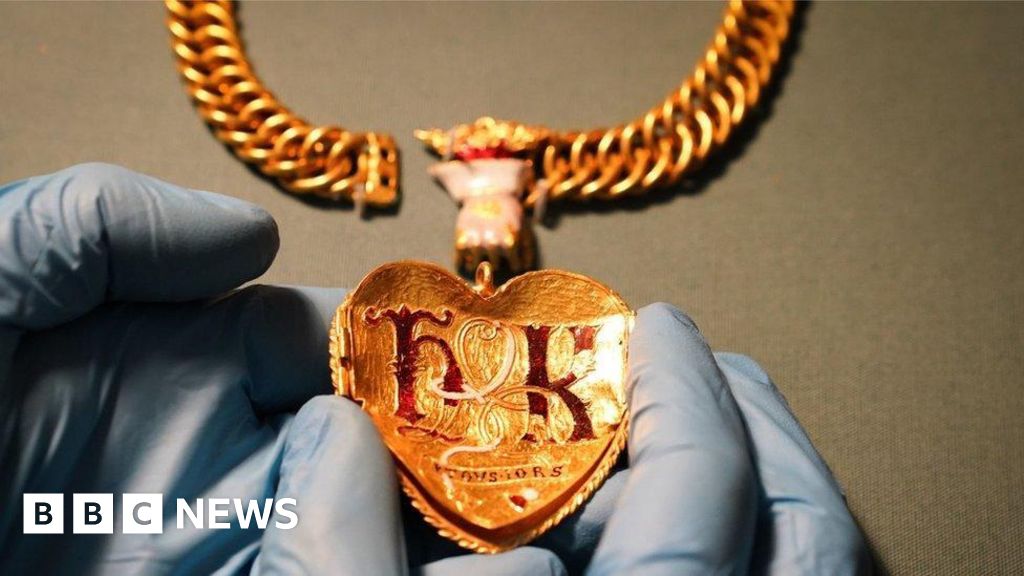
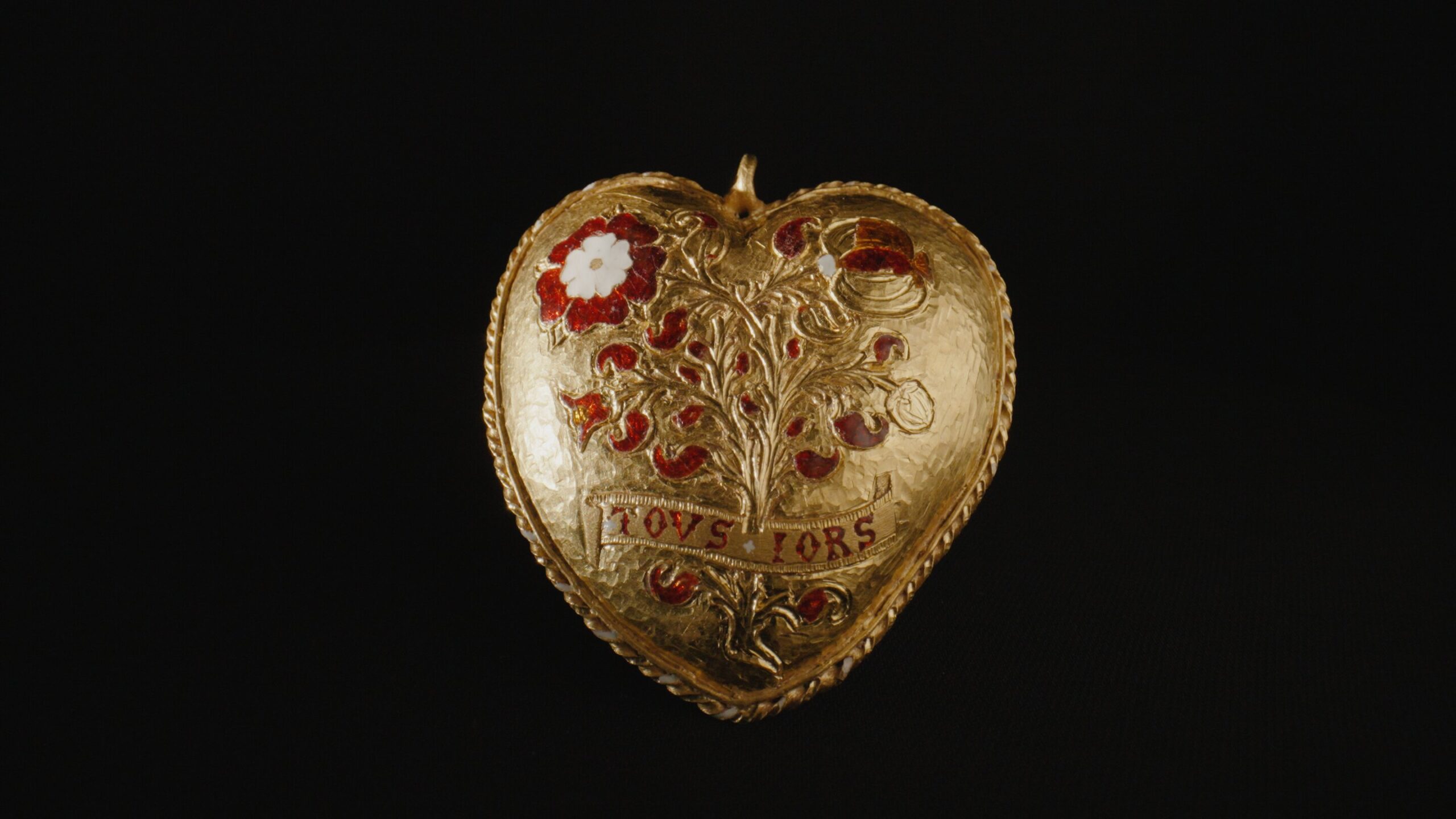
A gold ring with a deep-blue, oval setting - decorated with fine spirals of filigree and tiny granulated beads - has been recovered from medieval deposits in Tønsberg, a historic town in southeastern Norway. The ring was found during an excavation in the modern town centre, where archaeologists have been investigating layers of urban life preserved beneath today's streets. The discovery was made within the protected archaeological area known as Tønsberg Medieval Town.
History
[ Load more ]