#james-deeley
#james-deeley
[ follow ]
Independent films
fromThe Independent
1 day agoChristopher Nolan called this his 'most underrated' film - it's now on BBC iPlayer
Christopher Nolan's film Insomnia is considered his most underrated work, featuring a psychological thriller plot with strong performances from Al Pacino and Robin Williams.
London music
fromwww.theguardian.com
2 days agoCurated chaos': Danny Boyle on the pop culture spectacular' he's bringing to London's Southbank Centre
Danny Boyle's 'You Are Here' celebrates 75 years of youth culture with a one-day immersive event featuring 1,000 performers at London's Southbank Centre.
fromThe Independent
4 days agoJames McAvoy says he's faced 'bias' in industry over Scottish accent
"[Bias] is that thing that stops you being regarded as a person and makes you something smaller. With my accent, I've had that experience where I'm suddenly no longer a person with infinite possibilities and potential - I am 'that Scottish person'. I'm reduced to a noise that comes out of my mouth."
Film
Arts
fromwww.npr.org
1 month agoFor filmmaker Chloe Zhao, creative life was never linear
Director Chloe Zhao brings a sensitive, ritualistic approach to filmmaking, using meditation, breathing exercises, and dance to create intentional moods during production and premieres of her Oscar-nominated film Hamnet.
Film
fromFast Company
2 weeks agoAre you in a competitive creative career? Oscar-winning director Barry Jenkins has advice on what it takes to find success
Even Academy Award-winning filmmakers like Barry Jenkins worked survival jobs while building their careers, emphasizing that persistence and flexibility are essential for sustaining a creative career in film.
Independent films
fromIndieWire
2 weeks agoIndie Film Has an Architecture Problem
The indie film model is structurally designed to fail, with misaligned incentives between investors, filmmakers, distributors, and audiences, resulting in only 0.025% of screenplays achieving profitable theatrical outcomes.
fromApaonline
1 month agoRecently Published Book Spotlight: Anticolonialism, Ontology, and Semiotics: A Cinematic Exploration
Anticolonialism, Ontology, and Semiotics draws upon Africana anticolonial philosophy-especially the work of Frantz Fanon and two of his most influential interpreters, Eldridge Cleaver and Sylvia Wynter-to develop a basic analytical model for doing anticolonial political theory. I wanted to show that there is something distinctive, something special, to be found in this tradition of thought that has not been fully appreciated by philosophers and theorists in other fields.
Philosophy
Independent films
fromArchitectural Digest
10 months agoSinners' Production Designer Takes AD Inside the Making of Ryan Coogler's Vampire Thriller
Sinners, a vampire thriller set in 1930s Mississippi, became a record-breaking awards phenomenon with 16 Oscar nominations and four wins, grossing over $369 million globally.

fromThe New Yorker
3 weeks agoPaul Mescal's Starter Pack of Cultural Essentials
I remember seeing it in drama school. I remember being so profoundly moved by it. I remember being so frightened by the performances in terms of seeing both sides to the thing that I think for most of us is, the most alive thing in our life, which is these, like, romantic relationships and the kind of inception of those things and the death of those things.
Film
fromConsequence
1 month agoStream On This Week: A New Michelle Yeoh Short and a Ciaran Hinds Recommendation!
Welcome to the latest issue of Stream On, the weekly newsletter from Consequence that answers the eternally confounding question: What films and TV shows should you be watching? (Subscribe here!) We're looking at all the new and recent releases from Netflix, Hulu, Disney+, Prime Video, Paramount+, Peacock, HBO Max, and more for ideas - not to mention a Blast From the Past and streaming suggestions from this week's special guest: Midwinter Break star Ciarán Hinds!
Television
US politics
fromConsequence
2 months agoJames Cameron on Leaving America for New Zealand: "I'm Not There for Scenery, I'm There for the Sanity"
James Cameron became a New Zealand citizen because he values New Zealand's science-based pandemic response, high vaccination rate, and societal sanity over U.S. polarization.
fromBusiness Matters
2 months agoFrom roundtable to the camera: The Traitors' Brian Davidson celebrates record-breaking year for Studio Snap
Davidson, a professional photographer and owner of Glasgow-based Studio Snap, is celebrating his strongest trading year to date, with revenues up more than 70 per cent in 2025. The surge follows his memorable appearance on series two of The Traitors, which turned him into a familiar face for millions of viewers, and, unexpectedly, a powerful brand amplifier for his business.
Photography
Television
fromThe Independent
1 month agoDownton Abbey star opens up on working with 'proper multi-tasker' Guy Ritchie
Hugh Bonneville praises Guy Ritchie's multitasking directing, hints at an unconfirmable Gentlemen role, reflects on Downton Abbey's unexpected longevity, and doubts further Paddington appearances.
Television
fromwww.theguardian.com
1 month agoA modern masterpiece': writer Jack Thorne's best TV shows from This Is England to Adolescence
Jack Thorne is a prolific British playwright and screenwriter responsible for many acclaimed TV dramas, stage plays, and films, with several major projects forthcoming.
fromwww.theguardian.com
1 month agoThe Martini Shot review Matthew Modine and a cast to die for can't save this unholy mess
Facing the end of his life thanks to an unspecified terminal illness that should have shuffled him off his mortal coil 18 months ago, this Steve bobs around the coast meeting up with crew members (always complaining they need more kit) and actors who are officially dead (Jacobi and Townsend's characters) – not that this means they still can't be cast.
Film
fromThe Independent
1 month ago17 great movies ruined by terrible endings
10 Cloverfield Lane Mary Elizabeth Winstead, John Goodman and John Gallagher Jr are locked in an underground bunker for the majority of this left-field sequel to Cloverfield, with thrilling results. In the film's final throes, Winstead's character exits the bunker, and finds that her captor was telling the truth about an alien invasion above - a twist that completely and ruinously dissipates the hard-earned tension that came before.
Film
fromCN Traveller
1 month agoHow the British countryside became 2026's breakout onscreen star
"On that bleak hill-top the earth was hard with a black frost, and the air made me shiver through every limb," so wrote Emily Brontë. In a story studded with untameable lust, unbreakable love, fierce tempers and shocking acts of revenge, perhaps the most faithful aspect of Emerald Fennell's latest film, "Wuthering Heights", to its 1847 novel is the tempestuous depiction of the remote English countryside. The Yorkshire moors, to be exact.
Film
fromColossal
2 months agoWade into Slow-Motion Suspension and Anticipation in the Radiant Film 'Divers'
Through the atmospheric lens of New York-based photographer Geordie Wood, a short film called " Divers " glimpses a day in the life of an elite high-diving camp. A moody yet bright setting evokes the way sun still glares when tucked behind clouds or glints off the surface water, and individuals are alternately silhouetted and spotlit by its glow. With cinematography by Adam Golfer and editing by Luke Lorentzen,
Film
fromFilmmaker Magazine
2 months agoCue the Sun: DP Steve Yedlin on "Wake Up Dead Man"
After spending the last Knives Out entry on a billionaire's private Greek island, master sleuth Benoit Blanc's latest mystery Wake Up Dead Man takes him to a remote parish in upstate New York to solve the murder of a priest (Josh Brolin). It's a classic locked door mystery, with Brolin's monsignor stabbed mid-mass in a closet a few feet from his pulpit.
Film
fromOpen Culture
2 months agoHow the "Netflix Movie" Turns Cinema into "Visual Muzak"
A quarter-century later, it's safe to say that those days have come to an end. Not only does the streaming-only Netflix of the twenty-twenties no longer transmit movies on DVD through the mail (a service its younger users have trouble even imagining), it ranks approximately nowhere as a preferred cinephile destination. That has to do with a selection much diminished since the DVD days
Film
fromAnOther
1 month agoMy Father's Shadow: A Mesmeric Ode to Lost Childhood
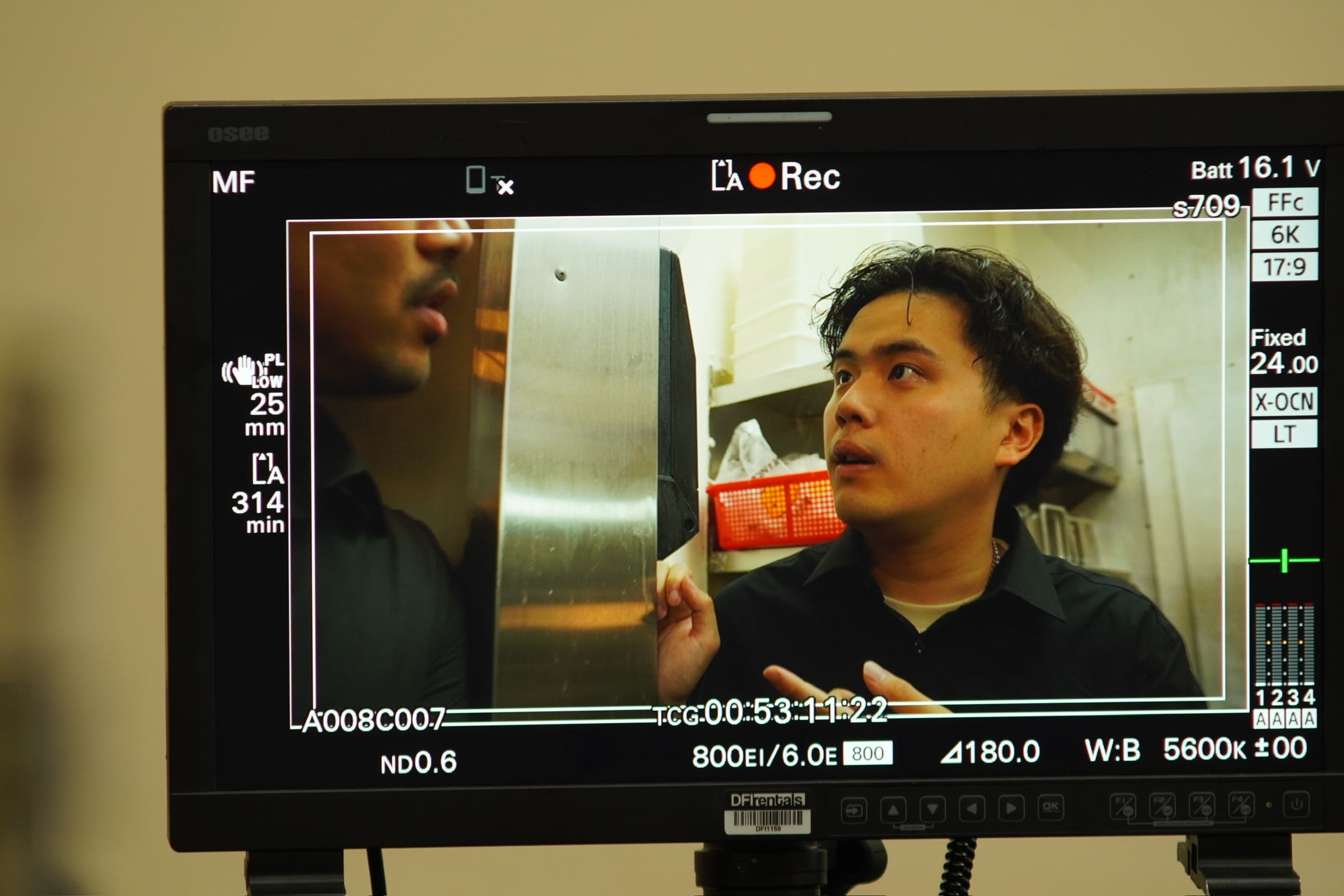
Some years ago, Akinola Davies Jr received a short story written by his brother Wale, who was then living in Nigeria and working as a screenwriter for TV. The result of a writing exercise, Wale Davies's story was titled My Father's Shadow. "He sent it to me, really unprompted," Davies Jr remembers. "I cried, as you can imagine, because our father passed when we were really young. I would have been 20 months and I think he would have been about three years old." That story would become Davies Jr's Bafta-nominated debut feature My Father's Shadow, a magical portrait of two young brothers enjoying a rare day out in Lagos with their beloved, enigmatic father, told from the boys' perspective.
Film
fromFilmmaker Magazine
2 months ago"It's Like Funny Ordinary People": Jay Duplass on See You When I See You
I was a struggling filmmaker. I was trying to find myself and it wasn't happening. I was ready to give up on filmmaking as I was about to turn 30. I didn't feel like I could do this to myself, my family and friends any longer. I was living in South Austin making the minimum amount of money, eating peanut butter and jelly sandwiches, and making bad art. But then Sundance gave me my career with this $3 short film that we submitted to the festival on a lark.
Film
Film
fromIndieWire
2 months agoBob Berney on Five Wild Decades at Sundance, and Chasing Movies No One Else Wanted Like 'Memento' and 'Donnie Darko'
Bob Berney identifies promising films at Sundance, secures financing and distribution, and mounts release and awards campaigns that bring them to wide audiences.
Film
fromwww.theguardian.com
2 months agoWatching James Bond play my great uncle Brendan in Giant was surreal and spooky | Sean Ingle
Prince Naseem Hamed rose from a prodigious, unconventional boxer trained by Brendan Ingle to world-class success; their strained relationship is dramatized in the film Giant.
fromVulture
1 month agoCallum Turner and George MacKay Board a Bad Boat in Rose of Nevada Trailer
It's supposed to be a good thing, isn't it: finding something that got lost? But what if that lost thing isn't just a pair of sunglasses but a whole entire boat, the likes of which hasn't been seen for 30 years? In Mark Jenkin's forthcoming Rose of Nevada, out June 19, the title refers to said missing ship, once lost only to now drift back into the harbor of the remote fishing village whence it disappeared.
Film
fromIndieWire
2 months agoGuillermo del Toro and Martin Scorsese Celebrate the 'Extraordinary Artistry' of 'The Greatest Story Ever Told'
"The film was shot in Ultra Panavision 70 with lenses that yielded an aspect ratio of 2.76 to 1, and it was breathtaking," Scorsese said. "But it wasn't just the size of the image, it was the imprint of the man behind the camera who knew how to fill that frame, how to compose it. And composer seems like the right word to describe George Stevens and the extraordinary level of artistry he reached at that point in his life and career."
Film
[ Load more ]