Node JS
fromFrontendmasters
2 days agoWhat To Know in JavaScript (2026 Edition)
JavaScript's ECMAScript 2025 introduces new iterator methods and improved set functionalities, enhancing performance and usability for developers.
The dynamic type hints feature in Module Federation 2.0 dramatically streamlines the development process by automatically generating and loading types from remote modules, eliminating the need for shared type packages.
Events are essential inputs to modern front-end systems. But when we mistake reactions for architecture, complexity quietly multiplies. Over time, many front-end architectures have come to resemble chains of reactions rather than models of structure. The result is systems that are expressive, but increasingly difficult to reason about.
Modern web applications are no longer just "sites." They are long-lived, highly interactive systems that span multiple runtimes, global content delivery networks, edge caches, background workers, and increasingly complex data pipelines. They are expected to load instantly, remain responsive under poor network conditions, and degrade gracefully when something goes wrong.
We've identified, responsibly disclosed, and confirmed 2 critical, 2 high, 2 medium, 1 low security vulnerabilities. Vibe-Hacking Cloudflare's Vibe-Coded Next.js Replacement demonstrates that AI-generated code passing functional tests can still miss security hardening, and automated AI tooling can help find those vulnerabilities.
When applications grow, state becomes messy, components break, and small changes ripple into unexpected bugs. This is where many learners realize that knowing React syntax is not the same as knowing how React applications are built.
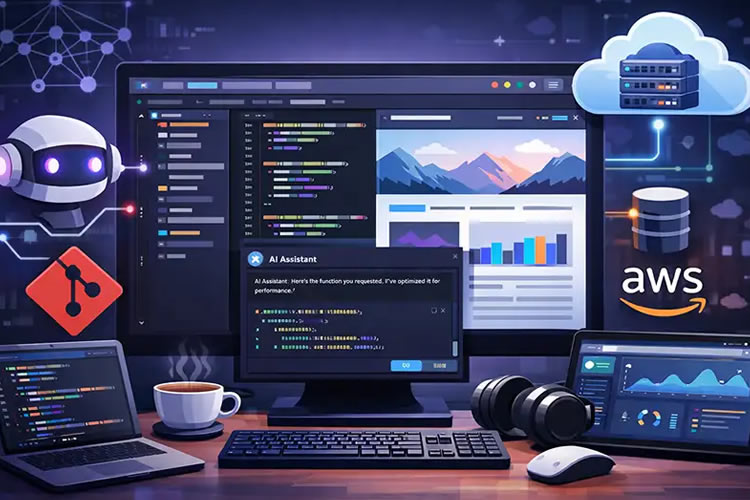
Frontends are no longer written only for humans. AI tools now actively work inside our codebases. They generate components, suggest refactors, and extend functionality through agents embedded in IDEs like Cursor and Antigravity. These tools aren't just assistants. They participate in development, and they amplify whatever your architecture already gets right or wrong. When boundaries are unclear, AI introduces inconsistencies that compound over time, turning small flaws into brittle systems with real maintenance costs.
Over the past decade, software development has undergone a massive transformation due to continuous innovations in tools, processors and novel architectures. In the past, most applications were monoliths and then shifted to microservices, and now we find ourselves embracing composability - a paradigm that prioritizes modular, reusable, and flexible software design. Instead of writing separate, tightly coupled applications, developers now compose software using reusable business capabilities that can be plugged into multiple projects. This enables greater scalability, maintainability, and collaboration across teams and organizations. At the heart of this movement is Bit Harmony, a framework designed to make composability a first-class citizen in modern web development.
Angular is a cohesive, all-in-one reactive framework for web development. It is one of the larger reactive frameworks, focused on being a single architectural system that handles all your web development needs under one idiom. While Angular was long criticized for being heavyweight as compared to React, many of those issues were addressed in Angular 19. Modern Angular is built around the Signals API and minimal formality, while still delivering a one-stop-shop that includes dependency injection and integrated routing.
By how much? Well, that would depend on the value of the <length> argument provided. Thomas Walichiewicz, who proposed :near(), suggests that it works like this: button:near(3rem) { /* Pointer is within 3rem of the button */ } For those wondering, yes, we can use the Pythagorean theorem to measure the straight-line distance between two elements using JavaScript ("Euclidean distance" is the mathematical term), so I imagine that's what would be used behind the scenes here.
Today's browsers can handle most of the problems that frontend frameworks were originally created to solve. Web Components provide encapsulation, ES modules manage dependencies, modern CSS features like Grid and container queries enable complex layouts, and the Fetch API covers network requests. Despite this, developers still default to React, Angular, Vue, or another JavaScript framework to address problems the browser already handles natively. That default often trades real user costs -page weight, performance, and SEO - for developer convenience.
The web is full of AI assistants that appear to understand application UIs, user data, and intent. In practice, however, most of these systems operate outside the application itself. When you try to build one from scratch, you quickly run into a core limitation: large language models have no native understanding of your React state, component hierarchy, or business logic.
Hi everyone! This week, we saw a lot of activity on X about the new AI skills system. Personally, what excited me most is the new Firefox release that unlocks interesting things for React developers. The React Native ecosystem is also super active, with many interesting releases. And I'm sure Expo 55 beta will drop just after we send our email 😅, so make sure to check their blog because it's coming soon. Don't miss the next email! As always, thanks for supporting us on your favorite platform: