#jean-lucas
#jean-lucas
[ follow ]


fromwww.theguardian.com
1 week agoAlexander Kluge, author and key film-maker in the New German Cinema movement, dies aged 94
Kluge was an accomplished director of intellectually rewarding, if at times oblique filmic essays, and an ever-productive writer of short fiction. He played a key role in organising the rule-breaking New German Cinema movement that brought forth better-known auteurs such as Rainer Werner Fassbinder and Werner Herzog.
Berlin
#julia-ducournau

Independent films
fromFilmmaker Magazine
2 weeks ago"Absolutely Not a Genre Film": Julia Ducournau in Conversation with Robert Eggers on Alpha
Julia Ducournau's latest film is a grounded family drama exploring themes of transformation and stigma during a viral outbreak reminiscent of the AIDS epidemic.
Television
fromQueerty
4 weeks agoThe newest heartthrob on The White Lotus went gay-for-pay in this French coming-of-age drama - Queerty
The White Lotus Season 4 set in the French Riviera adds Vincent Cassel, Nadia Tereszkiewicz, and Corentin Fila to its ensemble cast, likely playing hotel staff or local characters central to the season's drama.
#cinema


Film
fromOregon ArtsWatch * Arts & Culture News
1 week agoFilmWatch Weekly: 'Marc [Jacobs] by Sofia [Coppola],' an animated 'Magnificent Life,' and more * Oregon ArtsWatch
Cinematic extremes are evident in new films, contrasting dark horror and documentaries with light-hearted comedies and animated features like A Magnificent Life.
fromAnOther
2 weeks ago10 Reinvigorating Spring Films to Add to Your Watchlist This Season
Set on the blossom tree-lined fringes of Hyde Park in London, Herbert Wilcox's black-and-white rom-com blows in like a fresh spring breeze. The film charts the will-they-won't-they romance between Richard (Michael Wilding), a wealthy lord masquerading as a butler, and Judy (Anna Neagle), the niece of the family who employs him.
Film
fromIndieWire
2 weeks agoThierry Fremaux on Why 'Today, We Never Trust Images We See' - but We Can Trust the Lumiere Brothers and 'Apocalypse Now'
The invention of the Cinématographe was ready right away. The process of the invention was longer, and there were a lot of inventors before Lumière.
Independent films
Film
fromSlate Magazine
3 weeks agoHe Was the Losingest Filmmaker in Oscars History. To Finally Triumph, He Changed Something.
Paul Thomas Anderson ended his record 0-11 Oscar losing streak by winning three awards for One Battle After Another, including Best Director, after years of nominations without victories.
Independent films
fromwww.theguardian.com
2 weeks agoThe world was hard this movie was meant to be a hug': Ugo Bienvenu on his heartwarming eco-fable Arco
French animator Ugo Bienvenu created Arco, an Oscar-nominated animated film combining heartfelt storytelling with Studio Ghibli-inspired artistry, driven by his desire to offer hope and optimism to his future children despite his naturally pessimistic nature.
fromAnOther
3 weeks agoRoger Deakins on the Five Films Every Aspiring Cinematographer Should See
Cinematography isn't about beautiful images. It's about producing a whole series of images that serve a story. If I come out of a premiere and somebody says, 'Oh, I love the shot when such and such ...' I know I've made a mistake.
Film
Independent films
fromIndieWire
2 weeks agoIndie Film Has an Architecture Problem
The indie film model is structurally designed to fail, with misaligned incentives between investors, filmmakers, distributors, and audiences, resulting in only 0.025% of screenplays achieving profitable theatrical outcomes.
Film
fromEntrepreneur
4 weeks agoThis Cult Filmmaker Learned Something About Audiences Every Entrepreneur Needs to Know'Make Them Feel Something'
Kevin Smith built a personal brand by connecting directly with fans, which created lasting career opportunities beyond individual film projects in an unpredictable industry.
Independent films
fromInverse
3 weeks ago55 Years Later, George Lucas' Directorial Debut Is Still A Master Class Of Ingenuity
George Lucas self-financed and used cost-saving techniques like matte paintings and reused props to create the original 1977 Star Wars on an $11 million budget, applying lessons learned from his earlier film THX 1138.
fromThe Local France
2 months agoMoving from the USA, movie magic, and festivals: 6 essential articles for life in France
Whether you're thinking of moving for work, for political reasons - and the French are very sympathetic to Americans' situation - or for love (of a person or of croissants), here's our checklist of how to move to France as an American Checklist: How to move to France as an American Is there a legal way of avoiding inheritance tax in France by passing your property onto your children while you're still alive?
France news
fromOregon ArtsWatch * Arts & Culture News
1 month ago'Pushing Past the Bad': Portland filmmaking icon Penny Allen visits from France to showcase her latest film * Oregon ArtsWatch
What begins as a fairy-tale romance set in the beautiful Mediterranean town of Agde gets more complicated when Stann's family ties prove more durable, and dangerous, than he expects. Stann, the hub of a sprawling, criminally inclined clan, finds himself torn between Gloria, a vibrant Black American woman who offers him a glimpse at a life beyond the one he knows, and his inescapable family obligations.
Independent films
Film
fromAnOther
1 month agoSirat: The Year's Most Transcendent Cinematic Experience
Oliver Laxe's film Sirāt uses shocking moments and sensory immersion to suspend intellectual perception, creating a transcendental experience that leaves viewers feeling more connected to life and present in their bodies.
Film
fromwww.mercurynews.com
1 month agoSirat:' is not the movie you think it is it's better
Sirat is a sensory-driven film that transcends conventional thriller storytelling through hypnotic sound design, unexpected plot developments, and exploration of universal themes like faith, death, and redemption.
fromwww.independent.co.uk
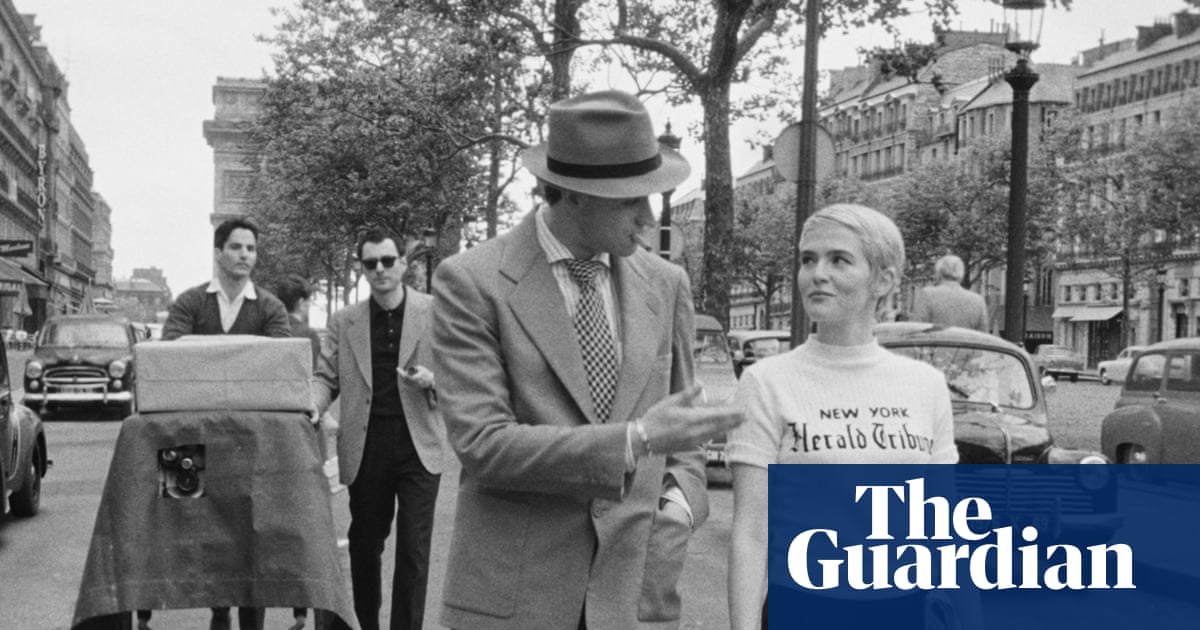
2 months agoHow Nouvelle Vague captures the formidably cool Breathless and its impact on cinema
From reproductive rights to climate change to Big Tech, The Independent is on the ground when the story is developing. Whether it's investigating the financials of Elon Musk's pro-Trump PAC or producing our latest documentary, 'The A Word', which shines a light on the American women fighting for reproductive rights, we know how important it is to parse out the facts from the messaging.
Independent films
fromThe New Yorker
1 month agoRaymond Depardon's Documentary Confrontations with Power
Films seen long ago but unavailable for rewatching often loom large, like myths shadowed by fear: Will a second viewing confirm or dispel the initial impression? I first saw "Caught in the Acts" ("Délits flagrants"), a documentary by the French director Raymond Depardon, in Paris, a few months after it opened there, in 1994, and it struck me as one of the greatest documentaries I'd ever seen.
Film

fromRoger Ebert
2 months agoTo Love Each Other: Jean-Pierre and Luc Dardenne on "Young Mothers" | Interviews | Roger Ebert
It would be hard to overstate the influence of Jean-Pierre and Luc Dardenne on traditions of realism in European cinema. The Belgian brothers, now in their seventies, have been making compassionate, uncompromising dramas about the social and economic conditions of modern life for nearly 40 years, approaching each with a direct, unvarnished style that's been imitated far and wide across the international arthouse circuit, if seldom rivaled in its emotional impact.
Film
fromAnOther
2 months agoA Guide to the Searching Cinema of Richard Linklater
It's been 40 years since Richard Linklater founded the Austin Film Society, beginning his crusade to make scrappy, personal, romantic and boisterous cinema. It's fitting for a director who first broke out in the 1990s "Indiewood" boom that his latest film, Nouvelle Vague, is an origin story of cinema's enfant terrible par excellence, Jean-Luc Godard, mounting his iconic debut film Breathless. As Linklater's first non-English film, Nouvelle Vague feels like a film fanatic has staged and animated decades' worth of behind-the-scenes anecdotes - genuine and apocryphal alike - to show a turning point for cinema as the Texan director imagines it: lively and collaborative, tetchy and confounding, an amusing slew of rules broken and manifesto points declared.
Film
fromOpen Culture
2 months agoHow the "Netflix Movie" Turns Cinema into "Visual Muzak"
A quarter-century later, it's safe to say that those days have come to an end. Not only does the streaming-only Netflix of the twenty-twenties no longer transmit movies on DVD through the mail (a service its younger users have trouble even imagining), it ranks approximately nowhere as a preferred cinephile destination. That has to do with a selection much diminished since the DVD days
Film
fromKqed
2 months ago'Arco' Is a Dystopian Tale Imbued With a Surprising Amount of Optimism
In all the dystopian visions of the future that the movies have trotted out over the last few decades, the one that sticks the most, surprisingly, is WALL-E. That's not just because of the chastening sight of an over-polluted Earth or those sedentary humans glued to their screens. It's because those quite plausible possibilities mean something different in a kids movie. It's their future, after all.
Film
fromwww.npr.org
2 months agoJodie Foster plans more French roles after 'A Private Life'
After dozens of films over a storied six-decade career, Jodie Foster is trying something new, playing the lead role in a French film for the very first time. There's hardly a trace of an American accent in Foster's turn as Parisian therapist Lilian Steiner in A Private Life (Vie privee) and she appears to be very much at home. The character she plays is an American woman who built her career in France.
Film

Film
fromwww.theguardian.com
2 months agoI haven't mellowed my violence': Park Chan-wook on cultural dominance, the capitalist endgame and why we can't beat AI
No Other Choice satirizes capitalism, portraying modern South Korea as industrially declining—downsizing, unemployment and male fragility—exacerbated by AI and precarious entertainment industries.
fromenglish.elpais.com
2 months agoFlorian Zeller, playwright, filmmaker and magnet for acting greats: I don't write what people like, but what they could like'
Every step that I have taken in my career has made me new to something, once again. I like not knowing everything and exposing myself to the unknown, he says. That same impulse led him to send a script for the film adaptation of The Father to Anthony Hopkins, an actor he had never met, and who Zeller would wind up directing in his cinematic debut, which won him an Oscar for best adapted screenplay and netted Hopkins his second Oscar for best actor.
Film
[ Load more ]