#juniper-broadcom-networking
#juniper-broadcom-networking
[ follow ]
#ai-infrastructure #ai #cisco #broadcom #cybersecurity #network-security #ai-security #data-sovereignty #edge-ai


Science
fromSilicon Canals
18 hours agoSpaceX, Amazon, and Google want orbital data centers - four engineering barriers reveal who really benefits - Silicon Canals
Orbital data centers will concentrate AI infrastructure power among a few dominant companies, limiting access for smaller competitors and national regulators.

Business intelligence
fromComputerWeekly.com
2 days agoWilson Connectivity, Autonomous Systems team for in-building wireless service | Computer Weekly
Wilson Connectivity and Autonomous Systems partner to automate in-building wireless infrastructure management, enhancing deployment and ongoing optimization.
Media industry
fromwww.morningstar.com
3 days agoCommunication Services: Alphabet and Meta's Moats Remain Despite Escalating AI Investments
Alphabet and Meta maintain strong positions despite AI investment risks, with ad revenue growth expected to continue due to improved targeting and user engagement.
fromwww.theguardian.com
4 days agoSilicon Valley city to give residents doorbells equipped with cameras
Public safety is my top priority, and this door camera initiative is about strengthening crime prevention right where it matters most at home. By equipping residents with tools and partnering closely with our Milpitas police department, we're building a stronger connection between our community and law enforcement to help deter crime and protect our neighborhoods.
Privacy technologies

#ai-infrastructure



Tech industry
from24/7 Wall St.
1 month agoForget Nvidia: This Networking Giant Just Landed $2.1 Billion in AI Orders, and Nobody's Talking About It
Cisco is experiencing a major resurgence driven by AI infrastructure demand, with hyperscalers booking $2.1 billion in a single quarter, matching its entire fiscal 2025 revenue and positioning the company for significant growth.


Marketing tech
fromTelecompetitor
2 weeks agoVendors introduce tools for the AI + broadband world: Roundup
Major vendors announce AI-integrated networking solutions for broadband service providers, including Wi-Fi 8 access points, unified platforms, and enhanced cloud services designed for enterprise edge optimization and agentic AI deployment.
Venture
from24/7 Wall St.
2 weeks agoBroadcom Just Shipped the World's First Quantum-Safe Network Encryption - 3 Reasons AVGO Investors Should Pay Attention
Broadcom shipped the first quantum-safe network encryption solution embedded at the silicon level, positioning itself as a first-mover in a compliance-driven enterprise infrastructure upgrade cycle.
fromTechzine Global
2 weeks agoNetApp launches EF50 and EF80 for AI and HPC workloads
As businesses contend with ever-increasing data volumes and performance-intensive applications such as AI model training, AI inferencing and high-performance computing, they need infrastructure that delivers speed, scalability and efficiency without added complexity.
DevOps
Mobile UX
fromTheregister
1 month agoQualcomm, Nvidia push 'AI-native' 6G - definition pending
Major tech companies are announcing 6G commercialization plans at Mobile World Congress, positioning AI as the primary catalyst for the next generation of wireless networks, despite binding 6G standards remaining undeveloped.
Venture
from24/7 Wall St.
3 weeks agoStrong Demand Outlook Boosts Tech Names Hewlett Packard Enterprise (HPE), Jabil (JBL) and CrowdStrike (CRWD)
Wall Street analysts raised price targets on HPE, CrowdStrike, and Jabil, citing accelerating AI infrastructure demand as the primary driver of growth conviction across all three technology stocks.


fromTheregister
1 month agoBroadcom says AI companies can't make their own silicon
Our custom accelerator business is progressing very well across five customers. Anthropic will soon implement one gigawatt of Broadcom-baked TPUs, and we expect the AI company plans a three-gigawatt deployment in 2027. Meta will install multiple gigawatts of Broadcom's XPU accelerators in 2027 and beyond. OpenAI will deploy over one gigawatt of compute capacity based on custom XPUs in 2027.
Artificial intelligence
fromTelecompetitor
3 weeks agoGFiber to combine with Astound
GFiber has always been about pushing the boundaries of what's possible for internet speed and service. This partnership with Astound and Stonepeak is the next step in our decade-long mission to redefine what customers can expect from their internet provider. It's a strategic opportunity to scale our customer-focused approach to connect more households to a truly different type of internet service.
Tech industry
Business
from24/7 Wall St.
1 month agoWhy Cisco Is Nothing Like Its Dot-Com Self - And Could Hit $90 by 2027
Cisco's fundamentally transformed business model, driven by AI infrastructure demand, Splunk integration, and subscription revenue growth, positions it to reach $90 per share by early 2027 despite unfavorable comparisons to pre-dot-com era.
fromTheregister
3 weeks agoGoogle's fiber biz and Stonepeak's Astound Broadband merge
Google Fiber, now just GFiber, will merge with Stonepeak's Astound Broadband to create a new network provider. Stonepeak will hold a majority ownership stake, while the existing GFiber executive team will run the company. According to the pair, the move gives GFiber the external capital and necessary focus to drive its next phase of expansion, allowing it to buildout its fiber footprint across the US.
Tech industry
fromComputerWeekly.com
1 month agoCisco, Qunnect claim quantum first with datacentre connectivity | Computer Weekly
Qunnect and Cisco have unveiled what they say is the first entanglement-swapping demonstration of its kind over deployed metro-scale fibre using a commercial quantum networking system. The demonstration combined Qunnect's room-temperature quantum hardware with Cisco's quantum networking software stack. The net result of the project is regarded by the partners as being able to bring practical quantum networks closer to scalable deployment, validating a spoke-and-hub model for scaling quantum networks through commercial datacentres.
Science
fromTelecompetitor
1 month agoAVX Networks awarded last-mile grant for subsea fiber to Catalina Island
Owned and operated by AVX Networks, the project will extend high-capacity submarine fiber connectivity originating from Huntington Beach in Orange County, delivering reliable broadband access to approximately 3,700 to 4,400 year-round residents across roughly 1,200 housing units on Catalina Island, where a significant portion of the population identifies as Hispanic or Latino. The new infrastructure will enable expanded telework, telehealth, and educational access, helping residents overcome geographic isolation while supporting workforce mobility and long-term economic participation.
California
Tech industry
from24/7 Wall St.
4 weeks agoCNBC's Partsinevelos: 'Broadcom Just Did What Nvidia Couldn't Explain'
Broadcom provided concrete AI revenue guidance through 2027 while Nvidia failed to shift market narrative despite beating earnings estimates, demonstrating the importance of forward clarity over historical performance.
#cisco-catalyst-sd-wan-manager

Information security
fromTechzine Global
1 month agoCisco details further vulnerabilities in Catalyst SD-WAN Manager
Cisco disclosed five vulnerabilities in Catalyst SD-WAN Manager with CVSS scores ranging from medium to critical, two actively exploited, requiring immediate patching with no workarounds available.
Information security
fromTechzine Global
1 month agoCisco details further vulnerabilities in Catalyst SD-WAN Manager
Cisco disclosed five vulnerabilities in Catalyst SD-WAN Manager with CVSS scores ranging from medium to critical, two actively exploited, requiring immediate patching with no workarounds available.


fromSecurityWeek
1 month agoCisco Patches Critical Vulnerabilities in Enterprise Networking Products
This vulnerability is due to an improper system process that is created at boot time. An attacker could exploit this vulnerability by sending crafted HTTP requests to an affected device. A successful exploit could allow the attacker to execute a variety of scripts and commands that allow root access to the device.
Information security
fromTechzine Global
2 months agoExtreme Networks considers acquisition of Ruckus from CommScope
Extreme Networks is investigating the acquisition of Ruckus Networks from CommScope. The deal could be worth more than $1 billion (€857 million). No decision has been made yet, and Extreme may decide not to proceed with the acquisition. This is according to Bloomberg, based on sources. At the close of trading on Monday, Extreme Networks had a market value of approximately $2.1 billion. CommScope shares rose 2.9 percent to $19.04, giving the company a market value of approximately $4.2 billion.
Business
fromSecurityWeek
1 month agoJuniper Networks PTX Routers Affected by Critical Vulnerability
The On-Box Anomaly detection framework should only be reachable by other internal processes over the internal routing instance, but not over an externally exposed port. With the ability to access and manipulate the service to execute code as root a remote attacker can take complete control of the device.
Information security
Artificial intelligence
fromComputerWeekly.com
1 month agoCisco shapes up for delivery of critical infrastructure in the AI era | Computer Weekly
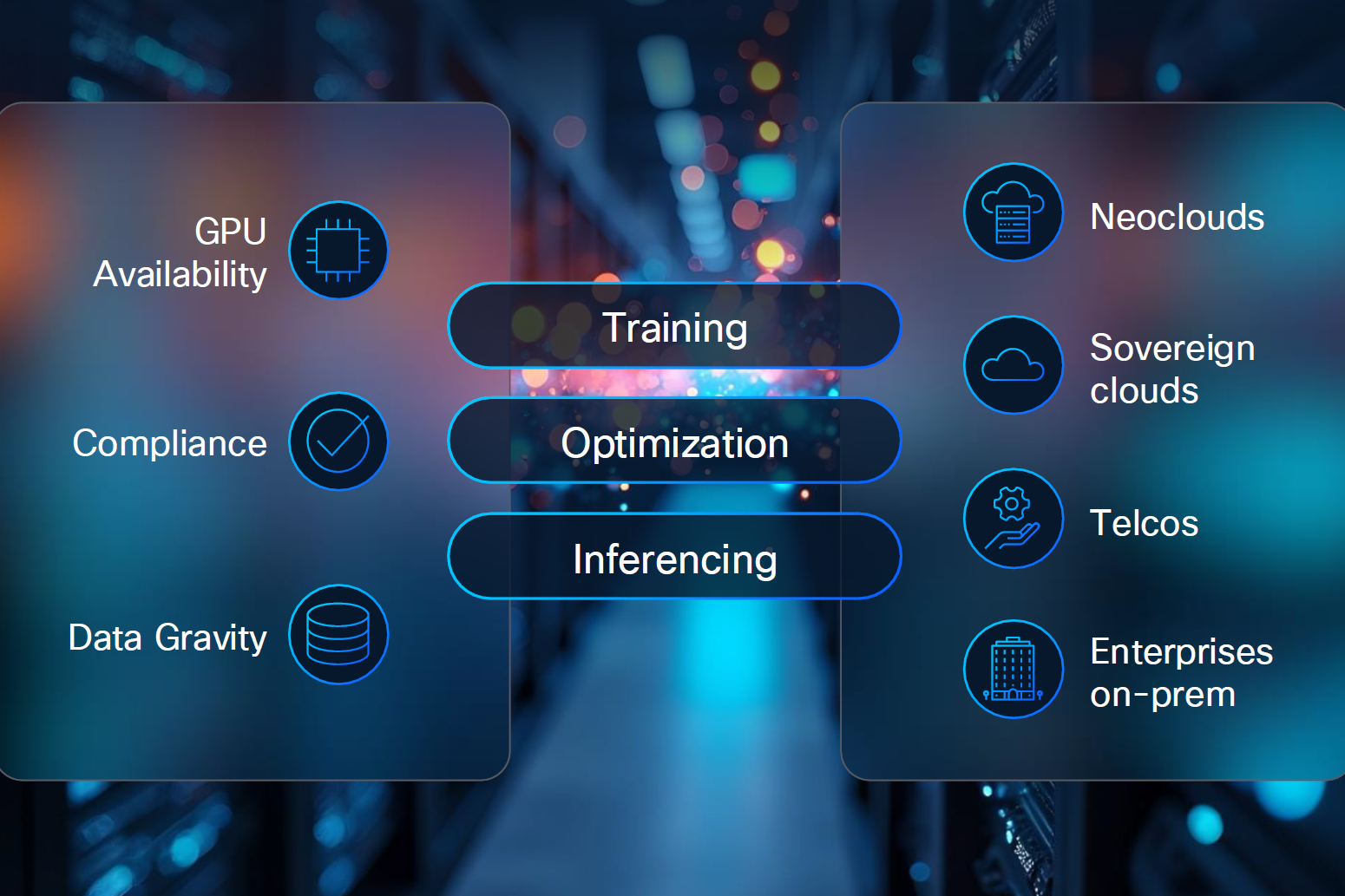
Cisco unveiled integrated infrastructure and services to help businesses adopt secure, trusted agentic AI quickly across networking, security, observability, and sovereignty.
fromTelecompetitor
2 months agoTalking quantum internet with Cisco's head of research
Cisco aims to "build high-fidelity quantum networks to unlock the potential for large-scale quantum data centers," Kompella told Telecompetitor in an interview. The company is working closely with IBM on the research, with IBM's role focused primarily on the computing side, while Cisco tackles the networking side. Quantum computers use concepts of quantum physics. They're more powerful than traditional non-quantum computers, known in quantum jargon as "classical" computers. But, as of today, there is no way to network quantum computers.
Tech industry
fromNew Relic
2 months agoTraditional Network Monitoring is Failing
For any IT department, these four words are the beginning of a familiar, often frustrating, journey. In our modern world, where business success is built on distributed applications and hybrid cloud architectures, the network is the circulatory system. When it fails, everything grinds to a halt. Yet, despite its critical importance, it often remains a black box-a source of blame that is difficult to prove or disprove.
Information security
fromTechzine Global
1 month agoTo protect browsers as the digital frontline, Zscaler buys SquareX
The common denominator of advanced attacks revolves around ever more difficult detection. Although Endpoint Detection & Response (EDR) can pick up multiple signals, the browser remains a blind spot. Zscaler has also come to this conclusion and has acquired SquareX to keep an eye on browser usage via a lightweight extension. In doing so, Zscaler is following the same philosophy as CrowdStrike: acquire a promising Browser Detection & Response (BDR) player to expand its own portfolio.
Information security
[ Load more ]