#ktc
#ktc
[ follow ]
#data-breach #5g #digital-transformation #satellite-connectivity #ai #agentic-ai #6g-technology #ai-integration

fromGSMArena.com
5 days agoHuawei Chairman promises expanded satellite connectivity across cheaper phones and watches
Richard Yu promises that Huawei will expand satellite connectivity to lower-priced devices, ensuring that it won't be confined to high-end models only. This initiative marks a new chapter in the company's journey, addressing the connectivity struggles that persist due to insufficient mobile network coverage.
Mobile UX
fromComputerWeekly.com
1 week agoStarlink launches services in UAE and Kuwait, expanding Middle East satellite internet | Computer Weekly
The launch of Starlink services in Kuwait through Sama X marks an important step in strengthening the country's digital infrastructure. At a time when reliable connectivity has become essential for business continuity and the effective functioning of key sectors, this technology provides advanced connectivity that helps organisations, governments and communities stay connected wherever they operate.
European startups
Roam Research
fromComputerWeekly.com
2 weeks agoEricsson, SK Telecom ink memorandum of understanding to strengthen AI-RAN, 5G to 6G innovation | Computer Weekly
Ericsson and SK Telecom are collaborating to enhance mobile network performance, security, and energy efficiency from 5G to future 6G networks.
Marketing tech
fromTelecompetitor
2 weeks agoVendors introduce tools for the AI + broadband world: Roundup
Major vendors announce AI-integrated networking solutions for broadband service providers, including Wi-Fi 8 access points, unified platforms, and enhanced cloud services designed for enterprise edge optimization and agentic AI deployment.


Business
from24/7 Wall St.
3 weeks agoT-Mobile's Customer Machine vs. Vodafone's Restructuring Gamble vs. SK Telecom's Surprise Rally: One Clear Winner Emerges
T-Mobile, Vodafone, and SK Telecom pursue distinct strategies in different markets: T-Mobile dominates customer acquisition, Vodafone restructures through mergers, and SK Telecom's stock surges amid limited transparency.
fromComputerWeekly.com
3 weeks agoNvidia teams with global telecom leaders for 6G development | Computer Weekly
Beyond traditional connectivity, 6G wireless networks will become the fabric for physical AI, enabling billions of autonomous machines, vehicles, sensors and robots and significantly increasing demands for security and trust. Yet legacy wireless architectures were not designed to meet these requirements, creating challenges as networks increase in complexity.
Artificial intelligence
London startup
fromLondon Business News | Londonlovesbusiness.com
3 weeks agoUnlock business potential with eSIM connectivity - London Business News | Londonlovesbusiness.com
eSIM technology enables UK businesses to manage mobile connectivity remotely, reduce logistics costs, and accelerate employee network access without physical SIM card installation.
Artificial intelligence
fromTechzine Global
1 month agoMaking sense of 6G: what will the 'agentic telco' look like?
6G networks will integrate AI across all layers to enable autonomous, physical AI applications like self-driving cars and robotic systems, with multiple industry players collaborating on open standards by 2030.

fromTechCrunch
1 month agoSouth Korea opens the door to let Google Maps operate fully | TechCrunch
South Korea has resisted Google's appeals since 2011, arguing that the company's precise satellite maps could endanger national security by exposing sensitive military sites when combined with commercial imagery and online data. Given that South Korea remains technically at war with North Korea, the government is cautious about exposing such locations.
World news
Privacy technologies
fromDataBreaches.Net
1 month agoSouth Korea considers updates to data and cyber laws - DataBreaches.Net
South Korea is strengthening cybersecurity laws through amendments to the Network Act and Personal Information Protection Act following major data breaches across telecommunications, retail, and finance sectors.
Gadgets
fromComputerWeekly.com
1 month agoAlcatel-Lucent looks to make Wi-Fi 7 affordable for everyday connectivity | Computer Weekly
Alcatel-Lucent Enterprise launches the OmniAccess Stellar AP1501, an affordable Wi-Fi 7 access point designed to overcome cost and complexity barriers limiting enterprise adoption.
Artificial intelligence
fromTechzine Global
1 month agoHuawei expands Agentic Communication Network for mobile AI era
Huawei's Agentic Communication Network transforms traditional networks to support AI agent communication through digital identity management, dynamic group communication, and task session management.
Tech industry
fromComputerWeekly.com
1 month agoNTT Data, Ericsson team to scale private 5G, physical AI for enterprises | Computer Weekly
Ericsson and NTT Data partner to deliver a standardized 5G-first architecture enabling enterprises to scale AI deployments globally across manufacturing, mining, ports, airports, energy, transportation, and smart cities.
fromCointelegraph
1 month agoSouth Korea Ends 9-Year Corporate Crypto Ban Under Strict New Rules
After a nine-year break, South Korea is set to reintegrate corporations into its cryptocurrency market. The Financial Services Commission (FSC) has established new protocols allowing listed entities and professional firms to resume trading, effectively terminating the 2017 prohibition. This move is part of the government's ambitious "2026 Economic Growth Strategy," which aims to transform the nation into a premier digital hub by introducing stablecoin laws and paving the way for spot crypto exchange-traded funds (ETFs).
World news
fromWashingtonian - The website that Washington lives by.
2 months agoSamsung Elevates Korea's Artistic Legacy as Korean Culture Captures Global Attention - Washingtonian
Korean culture has become a familiar presence in American life. K-pop dominates global charts, K-dramas have become staples on streaming platforms, Korean food has moved from specialty shops to neighborhood grocery stores, and K-beauty brands line retail shelves nationwide. As Korean culture reaches new audiences, Korean Treasures: Collected, Cherished, Shared traces the artistic traditions that have shaped today's cultural momentum.
Arts
fromComputerWeekly.com
2 months agoVodafone, Netcompany aim to deliver global travel eSIM at scale | Computer Weekly
Vodafone Group's Travel eSIM platform is supported by 700 partner networks worldwide, and is designed to meet the needs of modern, always-connected travellers, including digital nomads, business professionals and tourists. With their project, Netcompany and Vodafone claim to have eliminated one of the most persistent frustrations of international travelling: staying connected abroad without the hassle, cost or complexity of roaming. The platform allows travellers to activate a data-only eSIM in seconds and connect seamlessly across more than 200 destinations, supported by 700 partner networks.
Miscellaneous
Soccer (FIFA)
fromComputerWeekly.com
2 months agoChelsea shoots for enhanced mobile connectivity in and around Stamford Bridge | Computer Weekly
Chelsea Football Club upgraded its Stamford Bridge mobile network with O2 to boost capacity, improve mobile performance, and enhance connectivity for fans, residents, and businesses.
from24/7 Wall St.
1 month agoT-Mobile's 10% EBITDA Explosion Could Make Savvy Investors Filthy Rich
T-Mobile's Q4 results reflected strong operational momentum offset by workforce restructuring costs. Service revenue climbed 10% YoY to $18.7 billion, driven by postpaid service revenue growth of 13.9%. Operating cash flow surged 20% to $6.65 billion, while adjusted free cash flow reached $4.2 billion. The earnings miss stemmed from $390 million in severance costs ($293 million after-tax) tied to workforce transformation initiatives. Without this charge, operational performance remained robust, with full-year 2025 core adjusted EBITDA hitting $33.9 billion.
Business
E-Commerce
fromTechCrunch
1 month agoMore U.S. investors sue South Korean government over handling of Coupang data breach | TechCrunch
U.S. investors are pursuing ISDS arbitration under the Korea-U.S. FTA after Coupang's massive data breach and alleged discriminatory treatment by South Korean authorities.
fromTheregister
1 month agoSingapore spent 11 months evicting suspected telco spies
The Cyber Security Agency of Singapore said advanced persistent threat UNC3886 dug itself into the networks of all four major telecom providers, sparking an 11-month digital eviction effort involving more than 100 personnel from across government, military, intelligence, and industry. Branded "Operation Cyber Guardian," the cleanup saw the state and telco engineers teaming up to flush the intruders out while keeping the nation's phone and data pipes flowing.
Information security
fromComputerWeekly.com
2 months agoSamsung, Keysight validate satellite-to-satellite, direct-to-cell 5G mobility | Computer Weekly
The achievement was revealed at the recent CES 2026, using commercial modem silicon, with real satellite-to-satellite mobility, leading to a standard 5G phone said to stay connected while switching between satellites, using the new 3GPP Release 19 n252 band, as defined by the Third Generation Partnership Project (3GPP) under Release 1. The demo also represented the public validation of n252 in an NTN system, a band expected to be adopted by next-generation low Earth orbit (LEO) constellations.
Gadgets
Artificial intelligence
fromComputerWeekly.com
2 months agoSamsung claims virtualised RAN first, accelerating AI-native, 6G-ready nets | Computer Weekly
Single-server cloud-native vRAN deployments reduce costs, save space and energy, and support RAN and AI workloads using Intel Xeon 6 servers on live networks.
fromTheregister
2 months agoFlush with cash, SK hynix spawns mysteriously named 'AI Co.'
SK hynix is surfing the AI hype wave by setting up what it nebulously describes as a solutions biz to further exploit the hysteria. The chipmaker is already flying high on the back of booming demand for datacenters. Its share price has quadrupled in the past year as it supplies a vital component, one now in tight supply. Judging by its financials published today, the AI gravy train isn't slowing.
Tech industry
fromTheregister
1 month agoT-Mobile's new network-based AI will translate live calls
The self-described "Un-carrier" announced on Wednesday that beta signups were now available for live call translation powered not by an app or device-level capability, but AI that lives directly on the T-Mobile network. Eligible T-Mobile customers using a phone connected to 4G LTE or 5G - from flagship smartphones to bog-standard flip phones - can activate the feature by dialing * 87 *, with only one caller required to be on the carrier's network. Access is currently limited to customers admitted into the beta.
Gadgets
Tech industry
fromComputerWeekly.com
2 months agoAirbus, Keysight collaborate on sovereign, standardised 5G NTN | Computer Weekly
Airbus and Keysight will develop and test open, standards-based 5G non-terrestrial network technologies including regenerative LEO payloads to enable broadband and direct-to-handheld services.
Gadgets
fromComputerWeekly.com
1 month agoHyundai Motor Group and Vodafone IoT deploy connected cars across MENA region | Computer Weekly
Vodafone IoT and Hyundai Motor Group will deploy regulatory-compliant, locally routed Global SIM+ in-car connectivity across Bahrain, KSA, Kuwait, Qatar and the UAE for secure, seamless connected vehicle services.
fromMiami Herald
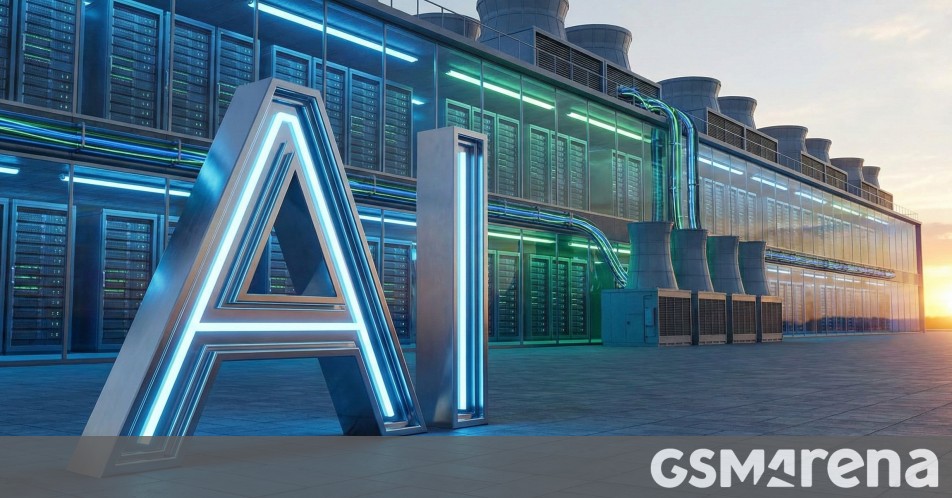
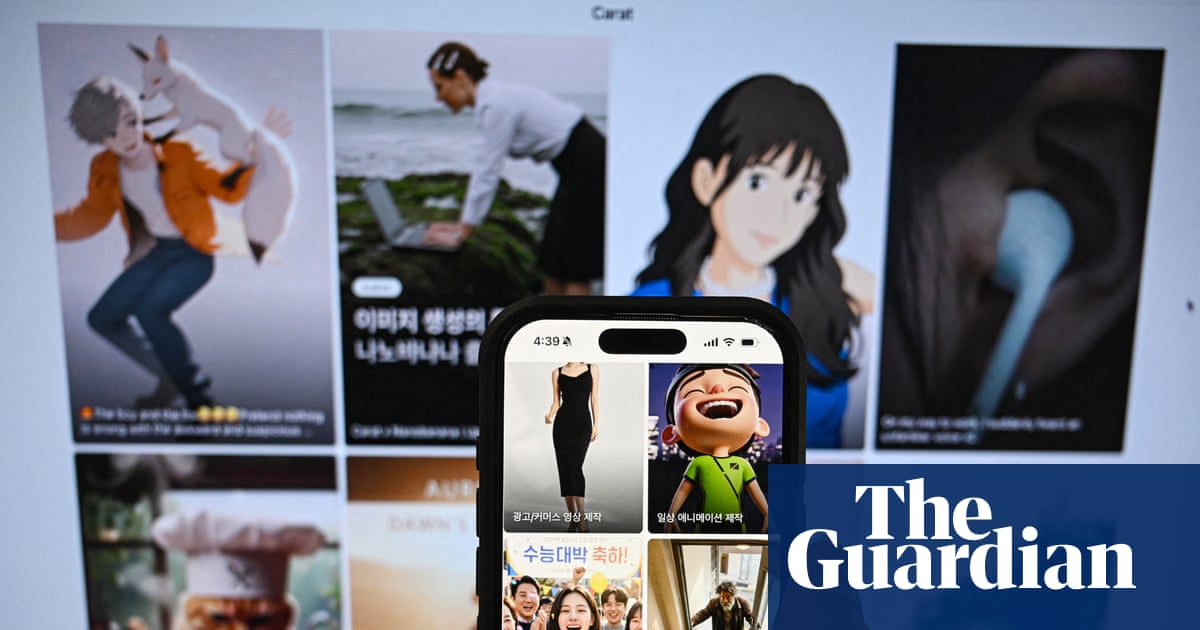
1 month agoNaver tops $9.1B in revenue, bets on AI agents and fintech monetization
Naver reported 2025 revenue of 12.35 trillion won ($9.15 billion) and operating profit of 2.21 trillion won ($1.64 billion), up 12.1% and 11.6%, respectively, from a year earlier, during its fourth-quarter earnings call. Fourth-quarter revenue rose 10.7% to 3.20 trillion won ($2.37 billion), while operating profit increased 12.7% to 610.6 billion won ($453 million), lifting the operating margin to 19.1%.
Artificial intelligence
[ Load more ]