#la-canada-flintridge
#la-canada-flintridge
[ follow ]
#luxury-real-estate #real-estate #urban-development #san-fernando-valley #san-fernando-valley-development
#real-estate


fromLos Angeles Times
7 years agoLA real estate
Adam Carolla nabs a contemporary home in La Canada Flintridge
Adam Carolla purchased a $7.327 million contemporary-style home in La Cañada Flintridge, featuring 7,300 square feet, five bedrooms, and luxury amenities including a movie theater, wine cellar, and infinity-edge pool.

Silicon Valley food
fromTravel + Leisure
1 week agoI've Traveled Southern California for 20+ Years-This Is the One Mountain Town That Everyone Should Visit
Wrightwood offers diverse outdoor activities year-round, including hiking and skiing, making it a notable destination in Southern California's mountains.
California
fromTravel + Leisure
3 weeks agoThis Suburb Was Just Named the Best Place to Live in California for Its Parks, Schools, and Quality of Life
Elk Grove, a suburban city south of Sacramento, ranks as California's best place to live based on economy, housing, amenities, safety, education, and health metrics.

#luxury-real-estate


Silicon Valley real estate
fromLos Angeles Times
7 years agoFor the right price, Hidden Valley offers a luxury haven
Hidden Valley in Thousand Oaks offers ultra-luxury estates on 20+ acre lots, with White Stallion Ranch featuring palatial homes originally developed by Sylvester Stallone, ranging from $7.999 million to $14.9 million.
East Bay real estate
fromLos Angeles Times
9 years agoSoaking up the scenery in Beverly Crest
A newly built 2016 traditional home in Beverly Hills features East Coast-inspired design with extensive glass walls, private balconies, and luxury amenities including a saltwater pool, koi pond, and detached gym on 0.61 acres, listed at $8.995 million.
Mission District
fromLos Angeles Times
8 years agoNeighborhood Spotlight: Pacoima's lackluster is hiding some bargains
Pacoima developed from agricultural land into a diverse community founded by speculator Jouett Allen in 1887, becoming a refuge for marginalized groups due to its lack of racial housing covenants.
fromKqed
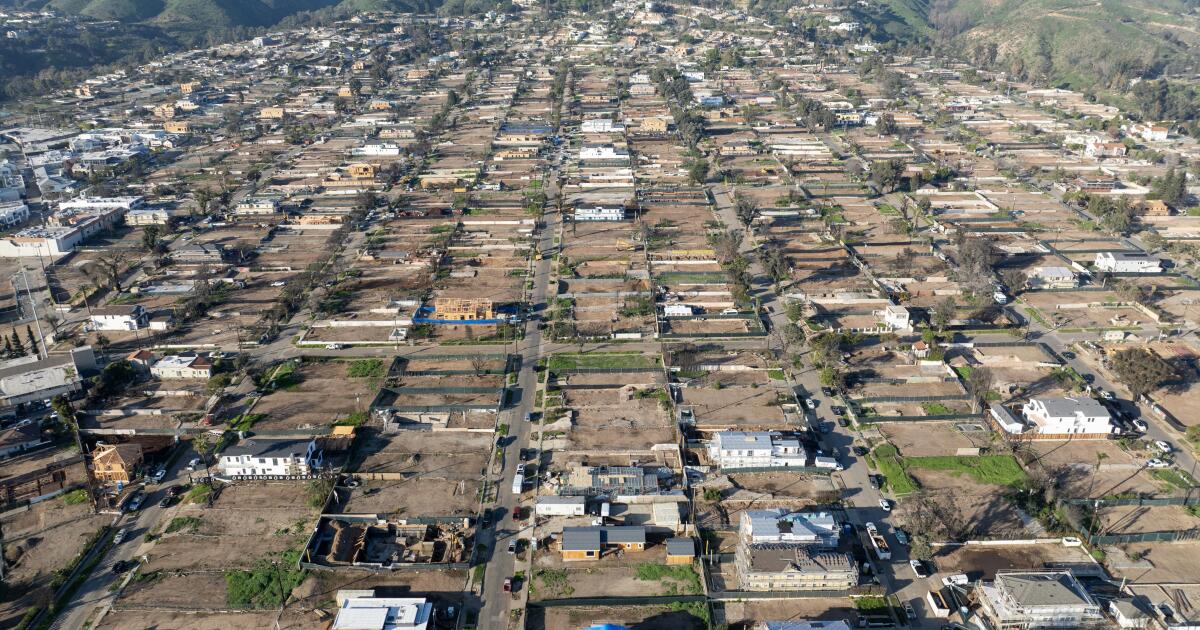
1 month agoRegrowing Altadena's Lush Greenery; Creating Connections Between Music and Memory Loss | KQED
The Eaton Fire was merciless when it came to Altadena's celebrated green spaces, destroying or damaging most of the leafy trees that lined the streets in many neighborhoods. Local advocates are scrambling to restore what was lost and save what's still standing.
Renovation
fromLos Angeles Times
7 years agoNeighborhood Spotlight: Shadow Hills has no plans to ride away from its semirural lifestyle
Relics of L.A.'s agricultural past, when the city was more renowned as a producer of lima beans than of movie stars, these outposts provide direct links to the days when the region was knit together by a network of dusty bridle paths that have long since been paved to make way for our latest beast of burden, the car.
Los Angeles
LA real estate
fromLos Angeles Times
37 years agoSubdivision Claims Beverly Hills Style--in Sherman Oaks
Mulholland Estates, a luxury gated community in Sherman Oaks near Beverly Hills, features 95 homes priced between $2.3 million and $5.1 million with extensive amenities and Beverly Hills postal service.
fromLos Angeles Times
9 years agoNeighborhood Spotlight: Pico-Robertson an evolving hub of Jewish culture
Boyle Heights was at the core of Jewish life in Los Angeles during the late 1800s and early 1900s, and the Fairfax District could claim that title until the 1980s. But the spiritual heartland of the Jewish community is now in Pico-Robertson.
Los Angeles
fromLos Angeles Times
7 years agoNeighborhood Spotlight: Panorama City is slowly shaking off its postindustrial trauma
In its scope, scale and ambition, Panorama City outstripped Greater L.A.'s prewar attempts at creating master-planned neighborhoods. It was the brainchild of Henry Kaiser, a shipbuilder keen to put his formidable industrial might, which had manufactured the famous Liberty cargo ships that transported U.S. goods around the world during World War II, to equally lucrative peacetime uses.
Silicon Valley real estate
fromLos Angeles Times
30 years agoThe Best of Both Worlds : Housing: Ornate landmark hotel in Pasadena is a rare example of low-income residents living in the same building with affluent condo owners.
I think it's probably the only one of its kind you'll ever see. Subsidized housing is usually in low-income areas. It would be like bringing Compton and Beverly Hills together in one block.
Los Angeles
fromLos Angeles Times
9 years agoNeighborhood Spotlight: Eagle Rock offers small-town vibe within the big city
This dramatic natural formation inspired the name of the town that would grow to fill that isolated valley, which in the early 1900s was 10 rugged miles of axle-breaking country road away from the thronging crowds and bright lights of downtown Los Angeles. Eagle Rock was a farming community at first, but the trolley soon snaked its way up from Los Angeles, with a line that ran along Eagle Rock Boulevard.
Los Angeles
LA real estate
fromLos Angeles Times
10 years agoWhat can you buy in the low $600,000s in Southern California?
Southern California homes in the low $600,000s range from 867 to 1,868 square feet across Los Angeles, Ventura, and San Diego counties, with median prices varying significantly by ZIP code and year-over-year appreciation rates between 6.6% and 18.2%.


Non-profit organizations
fromArchitectural Digest
2 months agoAD Partners With San Gabriel Valley Habitat for Humanity and the Foothill Catalog Foundation to Help Rebuild Homes in Altadena
Design organizations and foundations partnered with Habitat for Humanity to support residential rebuilding for Altadena wildfire survivors.
US politics
fromKqed
2 months agoSierra Foothills Community Could Provide Blueprint For Building Homes In Era Of Megafires | KQED
California debates homeowner flammable-material clearance policy for high-risk areas while Rep. Ro Khanna demands records over mistreatment at California City immigration detention facility.
Los Angeles
fromLos Angeles Times
8 years agoNeighborhood Spotlight: Calabasas is a perk-filled haven that gives celebrities their space
Calabasas evolved from a dusty 1800s agricultural crossroads named after spilled pumpkins into a modern celebrity enclave, shaped by pioneer exploitation and 20th-century residential development.
San Francisco
fromBusiness Insider
1 month agoI thrived in San Francisco, but I'm happier living in the California countryside. It feels like a great place to age.
Moved from San Francisco to the Southern California countryside in 2021 for more space, family proximity, the ability to grow food, and a calmer life.
Los Angeles
fromLos Angeles Times
7 years agoNeighborhood Spotlight: Bell Gardens has modest home prices but is rich in California history
Bell Gardens evolved from a Spanish land grant rancho through Californio and American ownership to a post-WWII suburban city, preserving its oldest adobe mansion as a landmark.
fromLos Angeles Times
9 years agoNeighborhood Spotlight: Mt. Washington keeps a rustic slant
Located just upstream from where the Arroyo Seco and Los Angeles River merge, Mount Washington has been home base to a former mayor, a world-famous yogi and the official witch of Los Angeles County. The Arroyo Seco - which, after all, begins near a place called Devil's' Gate - has always been a location known for the offbeat, a neighborhood that was keeping it weird before Portland, Ore., or Austin, Texas, ever was.
Los Angeles


fromLos Angeles Times
38 years agoLongtime Residents of Canoga Park Say They Stand by Their Community Despite the Stinging Defection of Affluent West Hills : Pride and Prejudice
I'm proud to live in Canoga Park. What's wrong with it? Perhaps it's not as elegant as Woodland Hills or Sherman Oaks, but I've produced two wonderful children from Canoga Park. The markets have fed my family. The shops have clothed my children. It will always be Canoga Park to me.
Los Angeles
Renovation
fromArchitectural Digest
1 month agoJed Lind and Jessica de Ruiter Tailor an 1930s Italianate House to the Rhythms of Modern Family Living
A designer couple transformed a 1937 Italianate estate in Silver Lake into a family-focused, stylish home while preserving its formal architecture and grounds.
fromLos Angeles Times
10 years agoPasadena home boasts onetime Van Halen owners and an architectural pedigree #TBT
The single-story house was last sold in 1988 by Van Halen rock band brothers Eddie and Alex for $450,000. During the eight years the brothers owned the 3,367-square-foot home, purchased in 1980 for $221,000, they produced such hit tunes as the Grammy-nominated "Jump" (you knew where this was heading), "Dreams" and "Love Walks In."
LA real estate
LA real estate
fromLos Angeles Times
7 years agoNeighborhood Spotlight: Porter Ranch a scenic Valley community under a lingering cloud of unease
Porter Ranch developed from a 19th-century ranching property into a modern Los Angeles neighborhood through gradual land sales and suburban expansion beginning in the 1960s.
fromLos Angeles Times
30 years agoPomona's 'Best-Kept Secret' : Ganesha Hills has family living in rural setting
Ganesha Hills is a neighborhood of some 500 homes described by one resident as 'the San Gabriel Valley's best-kept secret.' Named for the elephant-headed Hindu god of good fortune, Ganesha Hills is situated in the rolling hills north of the San Bernardino Freeway (10), just east of the Orange (57) Freeway. The community of single-family homes in a variety of architectural styles set amid chaparral and oaks is in the northwestern section of Pomona bordering La Verne and San Dimas.
LA real estate
LA real estate
fromLos Angeles Times
8 years agoNeighborhood Spotlight: Granada Hills is satisfied with its suburban status, thank you very much
Granada Hills evolved from an agricultural area marketed as a rabbit-raising community in the 1920s to a residential neighborhood after the Los Angeles Aqueduct brought abundant water in 1913.
fromLos Angeles Times
10 years agoHome of the Day: Fred Smathers-designed Mediterranean in Nichols Canyon
Smathers' style is evidenced by high ceilings, terrace balconies and formal areas designed for small and large-scale entertaining. Hedged privacy walls and eucalyptus trees, landscaped grounds feature a brick-lined patio, an outdoor dining room, a swimming pool and formal gardens.
LA real estate
fromLos Angeles Times
7 years agoNeighborhood Spotlight: El Segundo
In a widely cited (and likely apocryphal) exchange the bewildered conductor cried, 'But there's nothing here!' Alighting the stopped train, one of the Standard Oil men is said to have replied: 'No, but there will be.' Nothing is precisely what they were looking for. They needed a blank space along the coast on which to build a refinery to complement the company's existing facility nearly 400 miles to the north in Richmond.
LA real estate
fromLos Angeles Times
26 years agoAhmanson Ranch
Formal groundbreaking for the Ahmanson Ranch project, a town-style development on 2,800 acres in the Simi Hills in southeastern Ventura County, will not take place until 2001. However, the project has already achieved historic status for the size of the private-to-public land transfer it produced and for reviving a design concept that marks a major departure from the car-dependent suburban enclave typical of the postwar era.
LA real estate
fromLos Angeles Times
9 years agoNeighborhood Spotlight: Hancock Park
Architects including Wallace Neff and Lloyd Wright built in a variety of styles while preserving the essential character of the neighborhood - an upscale charm that survives to this day. Every popular style of the 1920s can be found in Hancock Park, which makes it one of those magical L.A. places where movies that are set around the world can be filmed, all without leaving the 30-mile zone.
LA real estate
fromLos Angeles Times
9 years ago1930s home in Highland Park gets a revival of its own
Updated for modern living, this remodeled home in Highland Park has stayed true to its 1930s Spanish Revival beginnings. The open living and dining room features a brick fireplace and the original hardwood floors. A courtyard sits off the master bedroom.
LA real estate
fromLos Angeles Times
24 years agoA Rooftop Retreat and a Growing Obsession
Every day I ask myself, how did I go from a successful divorce lawyer to knowing 80 varieties of palm trees? If you had told me four years ago that I would be quitting a 12-year career as a lawyer to install and design gardens, I would have laughed.
LA real estate
LA real estate
fromLos Angeles Times
14 years agoHome of the Week: South Pasadena's Paxton House
A 1920 Spanish-Mediterranean mansion designed by renowned architect Reginald Johnson was relocated from Pasadena to South Pasadena to prevent demolition and now features modern upgrades while preserving original architectural details.
LA real estate
fromLos Angeles Times
8 years agoNeighborhood Spotlight: Glassell Park's future looks greener and livelier
Rancho San Rafael, a 36,000-acre Spanish land grant from 1784, became the foundation for Northeast Los Angeles neighborhoods including Atwater Village, Highland Park, Eagle Rock, and Glassell Park after being partitioned in 1871.
fromLos Angeles Times
2 months agoThe Valley, the South Bay and beyond: These are L.A.'s newest million-dollar neighborhoods
In 2021, during the peak of the pandemic housing market that saw L.A. home prices skyrocket, The Times compiled a list of the newest neighborhoods to join the proverbial "million-dollar club," where the typical single-family home value is above $1 million. Five years later, plenty more have made the cut. Whereas the previous group featured trendy L.A. neighborhoods (Echo Park, Highland Park), South L.A. enclaves (Crenshaw, Leimert Park) and slices of the San Fernando Valley (Porter Ranch, Woodland Hills),
LA real estate
[ Load more ]