#lanzante
#lanzante
[ follow ]
#sustainability #climate-change #agriculture #soil-health #coffee #home-gardening #agroforestry #biodiversity
fromwww.theguardian.com
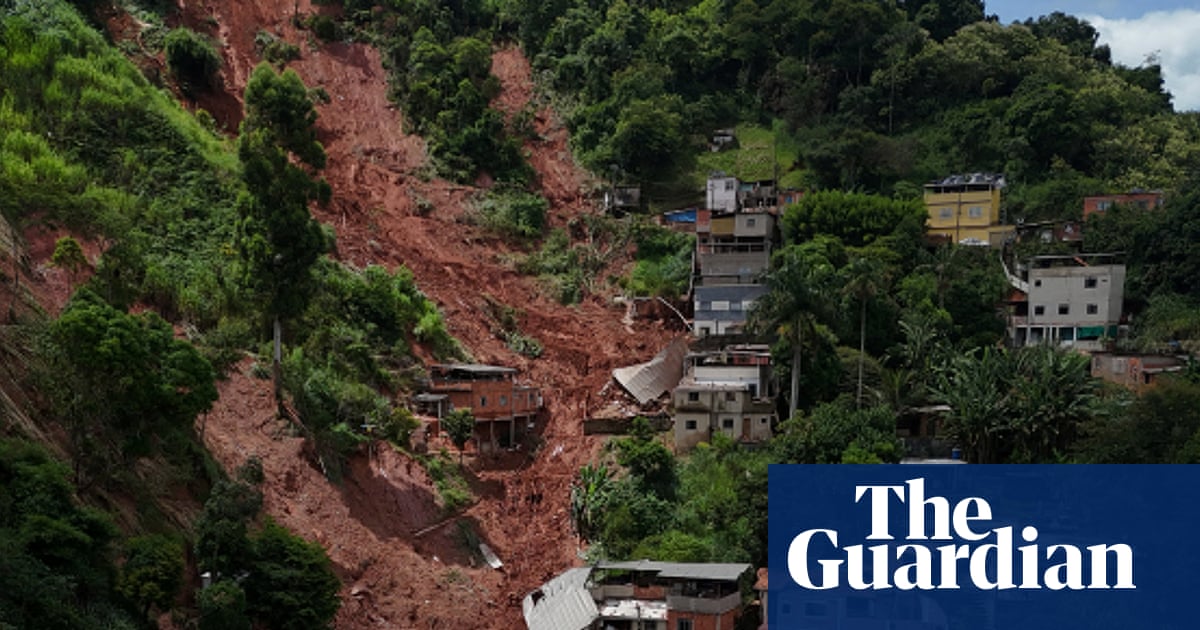
1 week agoVisible from space': why Spain has the world's biggest concentration of greenhouses
More than 30,000 hectares of land are covered in plastic, a geometric labyrinth five times the size of Manhattan, where 3.5m tons of vegetables are produced every year from tomatoes to cucumbers, peppers to courgettes, aubergines to melons, enough to feed half a billion people and generate a turnover of more than 3bn euros.
Madrid food
#sustainability
Online Community Development
fromDaily Coffee News by Roast Magazine
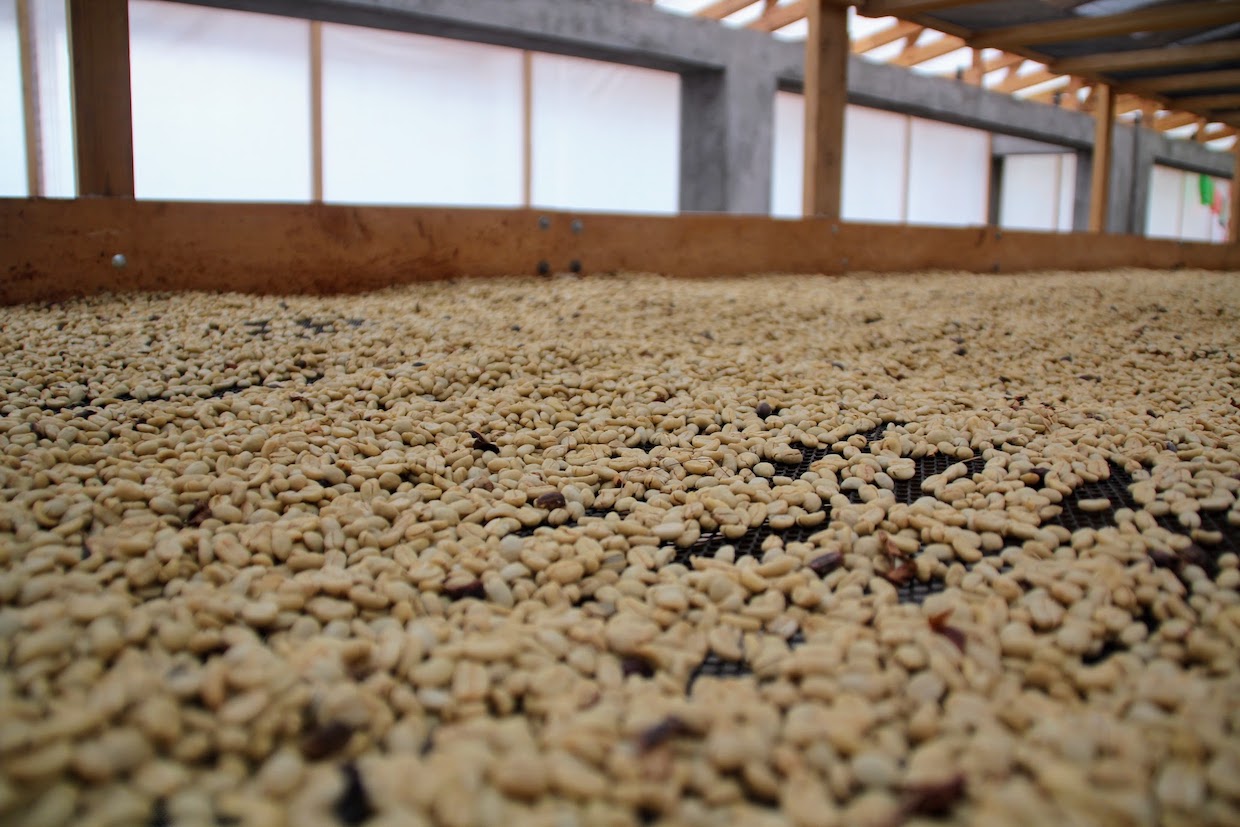
1 week agoStudy: Social Enterprises Beat Corporate Sustainability in Farmer Well-Being
Social enterprises significantly enhance farmer well-being compared to traditional corporate sustainability programs and cooperatives in the coffee and cocoa sectors.
fromwww.theguardian.com
2 weeks agoA robust future? Why Brazil's bitter' coffee is thriving as the climate crisis hits global crops
When the Paiter Surui community expelled the last invaders of their land in 1981, they faced a divisive decision. Should they keep the coffee plantations left by the colonisers? Some destroyed them because of the death and violence contact with the non-Indigenous world had caused. Others felt sorry for the trees and couldn't kill them.
Coffee
fromTruthout
3 weeks agoEcuador Is Suspending the Bank Accounts of Environmental Activists
Financial strangulation, as he put it, is the latest weapon in the government's escalating effort to clear the way for expanded mining and oil development in one of the world's most biodiverse countries. Months earlier, officials had temporarily frozen the accounts of several of Ecuador's most prominent environmental defenders, including Tapia, citing investigations into unjust private enrichment and financing terrorism.
Social justice
fromArchDaily
3 weeks agoBuilding with Earth: Traditional Knowledge in Contemporary Architecture
Rather than representing a simple return to the past, this renewed interest reflects a broader reconsideration of how architecture engages with materials, local resources, and environmental conditions.
Renovation
fromThe Art Newspaper - International art news and events
3 weeks agoTomas Saraceno and Indigenous communities build art complex in Argentine salt flats
We don't eat batteries. They take away the water; they take away life. This pronouncement, in Spanish, appears in a photograph that the artist Tomás Saraceno sent via WhatsApp last month from Salinas Grandes, a high-altitude salt flat in northern Argentina. There, in one of the world's largest lithium reserves, the artist is working alongside 11 Indigenous communities to build El Santuario del Agua (The Water Sanctuary), a monumental work about the global energy transition.
SOMA, SF
Coffee
fromwww.theguardian.com
3 weeks agoEveryone feels like they are being scammed': can Central America's small coffee growers survive as global prices fall?
Climate change is making coffee farming unviable for Latin American producers through unpredictable weather, rising temperatures, and increased production costs.
fromBusiness Matters
1 week agoThe Long Game: Edwin Masimba Moyo on Agriculture, Innovation, and Impact
Dr. Edwin Masimba Moyo has been instrumental in shaping modern horticulture in Africa, particularly through his pioneering work in Zimbabwe's blueberry industry, which opened doors to international markets.
Agriculture
Education
fromArchDaily
1 month agoWhen the School Becomes the City: Community-Centered Projects in the Global South
School architecture functions as a catalyst for social transformation by creating multifunctional civic spaces that integrate education, culture, sports, and community engagement within urban territories.
fromEarth911
1 week agoSeed, Sprout, Spectacular: Tips for Starting Your Garden From Scratch
Starting plants from seed extends your relationship with the garden, gives you more control over seed sourcing, and saves real money compared to buying nursery starts, sometimes as much as 90% per plant.
Agriculture
Canada news
fromRealagriculture
1 month agoA clean pass under pressure: Why farmers need to take the next shift on plant breeding
Canadian agricultural research faces structural funding pressures and requires a new, diversified research strategy to preserve critical knowledge, regain lost ground, and compete globally.
Environment
fromEarth911
1 month agoClassic Sustainability In Your Ear: The Ocean River Institute's Natural Lawn Challenge for Climate Action
Natural lawn practices reduce water consumption, eliminate harmful chemicals, support pollinators, and store significantly more carbon than chemically-treated lawns, making healthy lawns powerful climate change solutions.
fromNature
2 months agoDeveloping super-tortillas to address malnutrition in Latin America
The humble tortilla is an iconic food staple in Mexico. Everyone eats them, regardless of age or income. The ingredients for the tortilla I was frying in this photo have been fermented to include probiotics and prebiotics for gut health. My research focuses on developing such fermented nutraceuticals - nutritious products with pharmaceutical benefits - to help improve people's metabolic health and combat the malnutrition prevalent in some of Mexico's poorest communities.
Food & drink
Agriculture
fromRealagriculture
2 weeks agoAg Policy Connection: Innovation at the heart of food security and resilience, says Alison Sunstrum
Canada must treat agriculture as critical national security infrastructure rather than solely an economic sector, requiring systemic innovation across processing, supply chains, and digital infrastructure.
Food & drink
fromenglish.elpais.com
2 months agoA recipe for resistance: Indigenous peoples politicize their struggles from the kitchen
Indigenous food cultures preserve biodiversity, seed sovereignty, and traditional techniques, resisting homogenizing Western diets through communal knowledge, cultivation, fishing, and shared recipes.
fromDaily Coffee News by Roast Magazine
2 months agoBrazilian Researchers Promote Targeted Application of Bees for Coffee
A small, stingless bee may be able to raise coffee yields while fitting into real-world pest control programs, according to a new study from Brazil. In a field study on full-sun arabica farms, researchers reported a 67% higher fruit yield on coffee branches closer to colonies of the native stingless bee Scaptotrigona depilis, compared with branches farther away. The study was recently published in Frontiers in Bee Science.
Coffee
Design
fromArchDaily
2 months agoFrom the Courtyard to the Neighborhood: Latin American Lessons on Collective Placemaking
Everyday encounters in Latin America primarily occur in intermediate informal spaces—courtyards, verandas, sidewalks—where spontaneous social practices continually reshape urban life.
Agriculture
fromRealagriculture
1 month agoDon't cut the science that pays the bills
Closing AAFC research stations undermines Canada's agricultural competitiveness by eliminating the only coordinated system for validating crop genetics across diverse agro-ecological zones, despite wheat breeding generating a 32:1 benefit-cost ratio.
fromModern Farmer
1 month agoYour February Soil Checklist: What to Do Now for Healthy Soil
The term "soil fatigue" or exhaustion refers to the condition that soil profiles take on when they've been heavily monocropped and untended. This soil is devoid of the microbial content that offers plants bioavailable food. It lacks the fungal and bacterial organisms that interact with plant nutrients.
Agriculture
fromwww.theguardian.com
2 months agoHumanity's favourite food': how to end the livestock industry but keep eating meat
For someone aiming to end the global livestock industry, Bruce Friedrich begins his new book called Meat in disarming fashion: I'm not here to tell anyone what to eat. You won't find vegetarian or vegan recipes in this book, and you won't find a single sentence attempting to convince you to eat differently. This book isn't about policing your plate.
Environment
fromwww.theguardian.com
2 months agoViolence, death and stolen land: people need to know the true cost of an avocado | Claudia Ignacio Alvarez
I grew up in San Andres Tzirondaro, a Purepecha community on the shores of Lake Patzcuaro in the Mexican state of Michoacan. My childhood was shaped by water, forests and music. The lake fed us. The forest protected us. In the afternoons, people gathered in the local square while bands passed through playing pirekua, our traditional music. That way of life is now under threat as our land is extracted for profit.
Environment
fromwww.theguardian.com
2 months agoWe're in danger of extinction': can Bolivia's water people' survive a rising tide of salt and migration?
In the small town of Chipaya, everything is dry. Only a few people walk along the sandy streets, and many houses look abandoned some secured with a padlock. The wind is so strong that it forces you to close your eyes. Chipaya lies on Bolivia's Altiplano, 35 miles from the Chilean border. The vast plateau, nearly 4,000 metres above sea level, feels almost empty of people and animals, its solitude framed by snow-capped volcanoes. It raises the question: can anybody possibly live here?
Environment
fromInsideHook
2 months agoAn Essential Part of Farming Has Two Wings and a Beak
When you think of farming, what ingredients do you generally associate with a successful harvest? The basics certainly come to mind: fertile soil, plenty of sunlight and lots of water. But there are other variables that can also mean the difference between a crop of healthy fruits and vegetables and a large heap of organic waste. And it turns out that one of those variables is a very small hawk.
Agriculture
fromDaily Coffee News by Roast Magazine
1 month agoIn Wake of India's "Green Revolution," Scientists Find Organic Soils Healthier
As concepts such as "regenerative" and "biodynamic" continue to enter the mainstream coffee lexicon, scientists continue to literally dig into the soil to give them meaning. A recent peer-reviewed study from India's Western Ghats argues that one of the clearest signals of healthy, sustainable coffee farms lies in the ground itself, with organic coffee soils performing better than soils from conventional farms treated with synthetic inputs.
Agriculture
Agriculture
fromIndependent
2 months ago'It's a kind of rock-star lifestyle... but I always loved farming': Why ex-pro surfer swapped chasing waves for regenerative farming
Fergal Smith left a professional surfing career to practice regenerative farming and train Ireland’s next generation of sustainable farmers on Moy Hill Farm.
fromRealagriculture
2 months agoWhat sets successful farm transitions apart?
Based on years of post-transition reviews, MNP has identified seven traits common to successful farm families, MacLean says. First, they start early. Early planning allows flexibility and time to work through the tough stuff. Clear, respectful communication is the second trait - and it's essential. Families who talk openly and establish expectations avoid the dangerous territory of unspoken assumptions. Farms that navigate the process well have a shared vision.
Agriculture


Agriculture
fromRealagriculture
2 months agoRealAg Radio: 7 traits of successful farms, subsoiling soybeans, and the polar vortex, Jan 27, 2026
Seven traits define successful farms; subsoiling improves field performance; agronomy and weather (polar vortex) significantly influence farm management decisions.
fromTasting Table
2 months ago15 Fruits And Vegetables You Can Start Growing In Late Winter - Tasting Table
Late winter is when keen gardeners can get a little restless. The weather is still cold, and spring still feels far away. Thankfully, you don't need to wait until the weather warms to start your growing season. There are plenty of fruits and vegetables that can be started in the late winter, ready for a bountiful harvest in the coming months. Each of these plants needs unique care in order to thrive, but thankfully, I can guide you through exactly the right steps.
[ Load more ]