#latino-journalism
#latino-journalism
[ follow ]
#local-news #journalism #immigration-enforcement #immigration #student-journalism #local-journalism #venezuela
fromThe New Yorker
6 days agoThe Rise of a Spanish-Language News Influencer
Espina humorously admitted to oversleeping on a significant news day, stating, 'Breaking news, mi gente! I can't believe it.' His videos celebrated Maduro's fall but also expressed concern about the complexities of the situation.
US Elections
fromCity & State NY
5 days agoRuben Diaz Jr. says Latinas from the Bronx are ready to take charge
Bronx politics has changed dramatically over the past 20 years. Since 2006, only Carl Heastie, Jeff Dinowitz, and maybe Jose M. Serrano remain elected. The demographic shift is evident, with areas like Throggs Neck and Morris Park now represented by Latino women, reflecting a growing Latino population, particularly Dominicans.
NYC politics
#local-news
Fundraising
fromPoynter
2 weeks agoHow philanthropy moved money at the 'speed of news' during Minnesota's immigration surge - Poynter
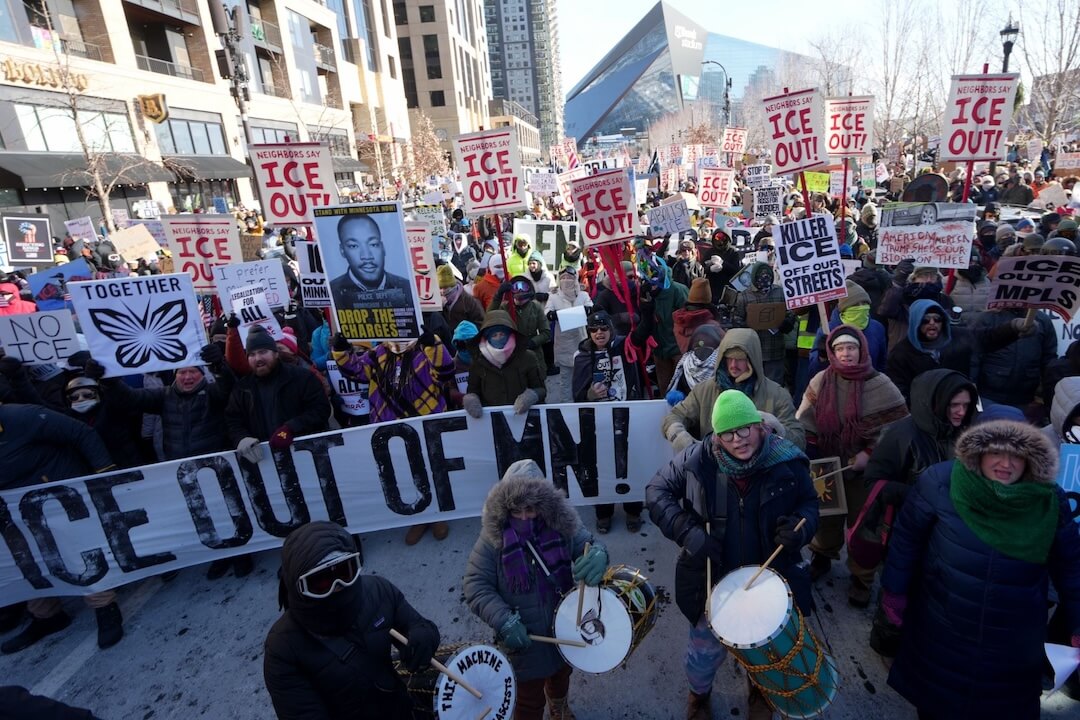
Local news organizations received $750,000 in rapid funding to cover immigration enforcement actions in the Twin Cities, demonstrating the need for quick philanthropic responses.


Fundraising
fromPoynter
2 weeks agoHow philanthropy moved money at the 'speed of news' during Minnesota's immigration surge - Poynter
Local news organizations received $750,000 in rapid funding to cover immigration enforcement actions in the Twin Cities, demonstrating the need for quick philanthropic responses.
#journalism
US politics
fromNonprofit Quarterly | Civic News. Empowering Nonprofits. Advancing Justice.
1 week agoThe ICE Detention of Colombian Journalist Fuels Press Freedom Concerns | Nonprofit Quarterly | Civic News. Empowering Nonprofits. Advancing Justice.
Estefany Rodríguez was arrested by ICE in a targeted operation, raising concerns about press freedom and First Amendment rights.
Media industry
fromPoynter
6 days agoASU's Cronkite School and Poynter Institute launch training collaboration to support journalists and media professionals - Poynter
A collaboration between Arizona State University and the Poynter Institute enhances professional development for journalists through integrated resources and training opportunities.
fromThe Conversation
3 weeks agoYoung Latinos - and their commitment to social justice - are shaping the future of the Catholic Church
On Ash Wednesday, 2026, two Roman Catholic priests and a religious sister entered an Immigration and Customs Enforcement facility in Broadview, Illinois, to celebrate Mass with detainees inside. It might seem like a simple, routine event: a religious service to mark the start of Lent. But the Mass represented a legal win for the Coalition for Spiritual and Public Leadership, based in Chicago.
Philosophy
fromABC7 Los Angeles
2 weeks agoABC's John Quinones calls Cesar Chavez allegations 'devastating' after reporting on him for decades
She is the co-founder of UFW, of all alleged victims, and she calls herself a survivor. She doesn't call herself a victim. Who would have thought? And she kept it quiet for all those decades because she believed in the cause, she didn't want to destroy the cause, she says. She only came out now because these other women had spoken out about their attacks, their sexual assaults, and she didn't want them hanging out there on their own.
NYC LGBT
Media industry
fromNonprofit Quarterly | Civic News. Empowering Nonprofits. Advancing Justice.
5 days agoPolitics in an Attention Economy | Nonprofit Quarterly | Civic News. Empowering Nonprofits. Advancing Justice.
Candidates must be cultural figures to succeed in today's American politics, navigating an attention economy shaped by algorithms.
Social justice
fromwww.theguardian.com
3 weeks agoWho decides what's news these days? For all the diversity talk, it certainly isn't Black journalists | Omega Douglas
British journalism fails to reflect societal diversity, with Black journalists significantly underrepresented in major awards and newsrooms, despite ethical requirements for inclusive representation.
fromPrx
1 month agoThe World
The US Supreme Court has struck down much of the Trump administration's tariffs on foreign goods, which have been a cornerstone of its trade and foreign policies. Also, Iran prepares for a possible US military strike. And, the International Energy Agency has removed climate change from its list of priorities for the next two years, following threats from the US
World news
Media industry
fromNieman Lab
3 weeks agoA new report looks at 559 funding proposals to determine local journalism's biggest problems
Local journalism funding suffers from too many competing nonprofit solutions, inefficient intermediaries, and philanthropic institutions failing to select viable winners or allow unsuccessful projects to fail.
Media industry
fromPoynter
3 weeks agoAs newsroom jobs shrink, some journalism schools teach students to go solo - Poynter
Journalism schools are integrating creator economy and entrepreneurial curriculum to prepare students for independent publishing and subscription-based business models in a transformed media landscape.
New York City
fromThe Verge
2 months agoHow one newsroom reaches immigrant communities where they live online
Documented NYC uses WeChat, WhatsApp, and Nextdoor to directly connect Chinese-speaking and other immigrants with local news, services, and immigration guidance during intensified immigration raids.
fromNonprofit Quarterly | Civic News. Empowering Nonprofits. Advancing Justice.
1 month agoWho Holds Narrative Authority? Reflections from "Reframing Resistance" | Nonprofit Quarterly | Civic News. Empowering Nonprofits. Advancing Justice.
In the environmental nonprofit sector, "centering frontline voices" has become a familiar slogan, often detached from how decisions are made or resources allocated. It appears in grant proposals, conference agendas, and organizational values statements. And yet, too often, those voices are still positioned as illustrative rather than authoritative-invited to animate strategies already decided, asked to translate lived experience into language legible to funders, or flattened into narratives that travel more easily than the truths they carry.
Environment
fromPoynter
2 months agoI'm a community journalist in New York City. Here's why Mamdani's 'influencer presser' stung. - Poynter
Epicenter, a multiplatform community and news organization founded during the pandemic to help New Yorkers navigate COVID-19 while spotlighting arts, small businesses and ensuring resources reached those who needed them most, has faced this challenge repeatedly. Community, ethnic and small media outlets have long struggled to get responses from government and corporate press teams that prioritize outlets with perceived scale and reach.
New York City
Media industry
fromNieman Lab
1 month ago"Same values, same mission, same ethics": How the Houston Chronicle chooses creators to work with
The Houston Chronicle partnered with local creators like Shawn Singh to expand food content reach, leveraging creator audiences to drive traffic and engagement through collaborative storytelling.


fromPoynter
2 months agoAbandoned cars, long days and no clear end for Minneapolis reporters - Poynter
The most telling scenes for Andrew Hazzard are the abandoned cars in the middle of the streets. On a recent Friday morning, the Sahan Journal reporter was out in south Minneapolis, where he lives, looking for federal immigration activity. "I know they're very active in the morning," he said. Over the past several weeks, Hazzard has noticed trends, but the one that encapsulates what he says "feels like an occupation" is the abandoned vehicles.
US politics
fromNieman Lab
1 month agoJournalism lost its culture of sharing. Here's how we rebuild it
If you've worked in a technical role in news for long enough, you likely remember when the "show your work" spirit was everywhere. Newsroom nerds shared code on GitHub, swapped tips on social media and unfurled long blogs guiding others on how to get things done. You might also have a vague sense that - like reaction GIFs, demotivational posters, and that guy who sang "Chocolate Rain" - you're seeing less of it these days.
Media industry
Media industry
fromPoynter
2 months agoIn Minneapolis, journalism students are learning to report under pressure amid an immigration surge - Poynter
Journalism students trained in hostile-environment first aid became actively involved in protests and engaged in faculty-led conversations about the distinct role of journalists versus bystanders.
[ Load more ]