#legal-climate-assessment
#legal-climate-assessment
[ follow ]
#climate-change #paris-agreement #public-health #climate-policy #environmental-impact #sustainability





Environment
fromwww.theguardian.com
2 days agoIf they pollute our rivers, what will become of us?': the town divided between hope and fear in Brazil's Amazon oil rush
Oiapoque, Brazil, is poised for development through oil production, raising concerns about environmental impacts and Indigenous rights amid a global energy transition.
fromwww.theguardian.com
2 days agoWhy reducing air pollution deaths isn't just about reducing air pollution
Air pollution is the second-largest risk factor for early death globally. Traditionally, our response has focused on reducing the levels of pollution people breathe, but this is only part of the story.
Public health
fromArs Technica
2 weeks agoTrump's plan to shut down weather and climate center triggers lawsuit
The National Center for Atmospheric Research, or NCAR, provides a home for interdisciplinary and collaborative research focused on anything atmospheric. Many of the country's leading academic researchers in the field have spent time working there or have been involved in collaborations that involve NCAR.
OMG science
fromwww.theguardian.com
1 month agoHow UK cuts to climate finance could bankrupt ecosystems at home and abroad
Last year the JIC produced a hard-hitting report which found the collapse of globally important ecosystems around the world including the potential shift of the Amazon from rainforest to savannah, the demise of coral reefs, and the loss of glaciers would threaten the UK's national security, through food shortages at home and the potential for conflict overseas.
UK news
California
fromLos Angeles Times
1 month agoCalifornia's plastic bill faces challenges from federal court and GOP attorneys general
California's single-use plastic law faces legal challenges from federal courts and Republican attorneys general who claim plastic reduction initiatives violate antitrust laws and harm consumers through corporate collusion.
fromEngadget
2 weeks agoStates are suing the EPA for relinquishing its role as a greenhouse gas emissions regulator
The lawsuit specifically argues that the EPA's decision to rescind a 2009 study that determined greenhouse gases are dangerous to public health was illegal. The study, which is the source of what's called the "Endangerment Finding," was one of several justifications - along with things like the Clean Air Act - for the agency's ability to regulate emissions.
Environment
Environment
fromwww.aljazeera.com
2 weeks agoUS states file lawsuit challenging Trump's revocation of climate finding
Twenty-three states filed a legal challenge against Trump's revocation of the 2009 endangerment finding that established climate change as a threat to human health and environment, which formed the basis for federal greenhouse gas emission regulations.
#climate-litigation
Environment
fromArs Technica
2 weeks agoEmerging legislation would shield polluters from liability for climate change
Republican lawmakers are advancing proposals to shield fossil fuel companies from climate liability lawsuits while communities and states pursue legal action for climate damages and deceptive practices.

Environment
fromArs Technica
2 weeks agoEmerging legislation would shield polluters from liability for climate change
Republican lawmakers are advancing proposals to shield fossil fuel companies from climate liability lawsuits while communities and states pursue legal action for climate damages and deceptive practices.
fromState of the Planet
2 weeks agoCan Capitalism Solve the Climate Crisis?
Absolutely, I have experienced investing in a way that green growth has led to both equitable growth and decarbonization, but also have lived experience of what degrowth can do to a country, and how, in my view, [degrowth] is not really a solution.
Environment
fromwww.cbc.ca
2 months agoTop court asked to reopen climate case after Ontario scraps emissions target law | CBC News
Young activists behind a legal challenge of Ontario's climate plan are set to ask the province's highest court to revive their case. Premier Doug Ford's government put the case in limbo late last year when it gutted its own climate legislation days before it was to answer for its weakened 2018 emissions target in court. Courts had previously found the gap between that target and what's required to help avoid severe climate impacts was large and without any apparent scientific basis.
Canada news
fromwww.theguardian.com
1 month agoDaunting but doable': Europe urged to prepare for 3C of global heating
as the EU's climate advisory board urges countries to prepare for a catastrophic 3C of global heating. Maarten van Aalst, a member of the European Scientific Advisory Board on Climate Change (ESABCC), said the continent was already paying a price for its lack of preparation but that adapting to a hotter future was in part common-sense and low-hanging fruit. It is a daunting task, but at the same time
Europe politics
fromThe Nation
3 weeks agoA World on Fire Needs More Climate Reporting-Not Less
Covering Climate Now was formed in 2019 in response to the climate silence that then prevailed in much of the press, especially in the United States. Over the years that followed, hundreds of newsrooms joined our effort, and press coverage of the story began to reflect the scale of the crisis. Newsrooms beefed up their climate reporting teams; they confronted misinformation that sought to play down the problem; they thought creatively about how to find the climate connection on every beat.
Environment
fromwww.theguardian.com
1 month agoExtreme heat lab: enduring the climate of the future
"So whenever people think about hot weather, they always talk about the temperature," he says. "There's two issues with that. First of all, most people don't realise that the temperature is measured in the shade. So if you're in direct solar radiation, the amount of heat stress you're exposed to is much greater as it will stress your body out a lot more."
Public health
fromwww.theguardian.com
2 months agoTrump's move to pull US from key UN climate treaty may be illegal, experts say
In a Wednesday presidential memorandum, the president said the US shall withdraw from the UN Framework Convention on Climate Change (UNFCCC), along with 65 other organizations, agencies and commissions that it deemed contrary to the interests of the United States. It marks the first time any country has ever moved to exit the agreement. The UN climate body requires one year's notice for withdrawal, so the United States will not cease being a party for a year.
US politics
fromwww.theguardian.com
1 month agoClaims that AI can help fix climate dismissed as greenwashing
Tech companies are conflating traditional artificial intelligence with generative AI when claiming the energy-hungry technology could help avert climate breakdown, according to a report. Most claims that AI can help avert climate breakdown refer to machine learning and not the energy-hungry chatbots and image generation tools driving the sector's explosive growth of gas-guzzling datacentres, the analysis of 154 statements found.
Artificial intelligence
Environment
fromNature
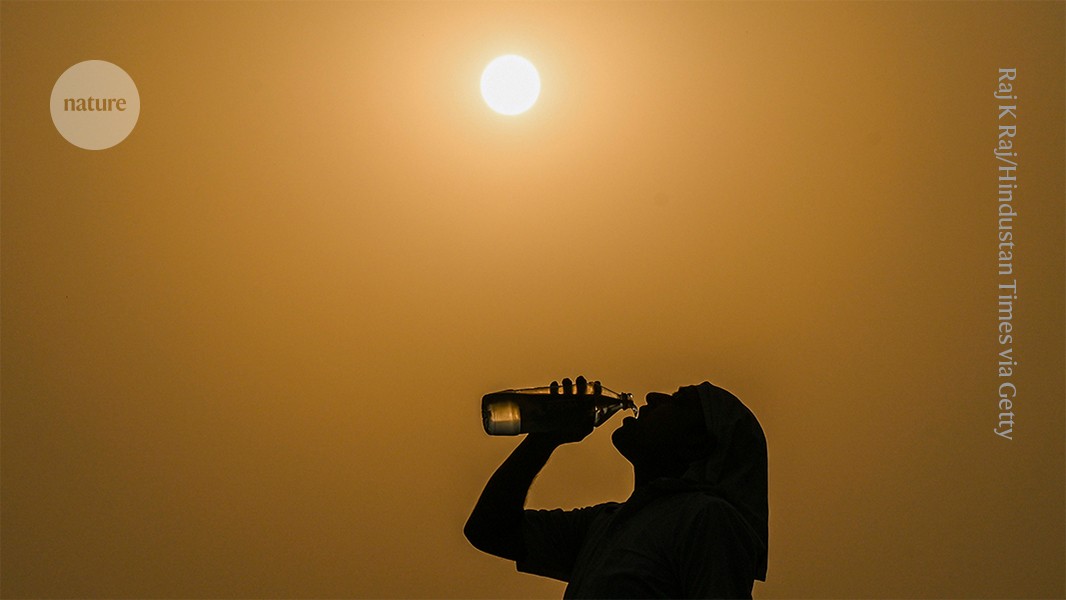
1 month agoClimate change and geopolitics threaten water supplies - but disaster is not inevitable
Global water systems face crisis from overuse, pollution, and climate change, requiring urgent strengthening of international water-sharing treaties with dynamic monitoring systems.
Environment
fromwww.mercurynews.com
1 month agoOpinion: AI is destroying our planet. We must act to check its growth and save ourselves.
AI's environmental impact is severe, with 2025 freshwater consumption exceeding global bottled water use and projected energy demands by 2034 matching India's entire consumption, requiring immediate action.
fromwww.theguardian.com
1 month agoHow extreme weather is leaving thousands of homes uninsurable
We're seeing more frequent, more severe extreme weather events and that inevitably affects claims and affects pricing it can't not. And this is happening all over the globe. More, after this week's most important reads.
Environment
fromwww.aljazeera.com
1 month agoUN approves first carbon credits under Paris Agreement market mechanism
The UN-run market allows companies and countries to offset their excess emissions by financing projects that cut greenhouse gases in other nations. The new initiative involves a clean cooking project in Myanmar, which distributes efficient cookstoves that reduce pressure on local forests. Implemented in partnership with a South Korean company, the project will generate credits that will count towards the climate targets of South Korea and Myanmar.
Environment
fromwww.mercurynews.com
1 month agoSupreme Court agrees to hear from oil and gas companies trying to block climate change lawsuits
The Supreme Court said Monday that it will hear from oil and gas companies trying to block lawsuits seeking to hold the industry liable for billions of dollars in damage linked to climate change. The conservative-majority court agreed to take up a case from Boulder, Colorado, among a series of lawsuits alleging the companies deceived the public about how fossil fuels contribute to climate change.
Environment
Environment
fromSocial Media Explorer
1 month agoEntorno Law and the Role of Public Interest Law in Protecting Communities and the Environment - Social Media Explorer
Public interest law ensures accountability and enforces environmental and consumer protections to safeguard public health, community welfare, and natural resources while promoting sustainability and fairness.
fromwww.theguardian.com
1 month agoEnforcement of laws against polluters nearly non-existent in US, analysis finds
Enforcement of environmental laws against major polluters has virtually ground to a halt under the Trump administration, a new analysis of Environmental Protection Agency records from January 2025 to January 2026 shows. Major polluters typically include companies that are among the largest in the oil, gas, coal and chemical industries. Records show the EPA filed just one Clean Air Act consent decree compared with 26 in the first year of Trump's first term, and 22 during Biden's first year.
Environment
Environment
fromEarth911
2 months agoGuest Idea: Climate Risk Has Become A Defining Economic Issue
Climate-driven financial risks threaten housing and public budgets while large-scale clean-energy and durable carbon-removal investments (geothermal, biochar, novel hydrogen) accelerate to build resilience.
fromAbove the Law
2 months agoJob Of The Month: Senior Attorney For Fossil Fuels - Above the Law
Earthjustice seeks a Senior Attorney to join the Fossil Fuels Program. We use the power of the law to challenge the onslaught of new oil and gas infrastructure development that threatens climate, communities, and the environment. This position will focus on oil and gas infrastructure and related projects in the U.S. Gulf region, particularly Louisiana and Texas. The attorney in this position will be place-based in the New Orleans' satellite office space shared
Environment
fromState of the Planet
2 months agoCan Carbon Markets Offset the Emissions We Can't Eliminate?
Carbon markets are simultaneously promoted as an essential climate financing tool, and criticized as a license to pollute. A carbon market puts a price on greenhouse gas emissions via carbon credits that get bought and sold, almost like stocks. A credit represents one metric ton of CO 2 that has been avoided or removed through a specific project. A project could target emissions through agricultural practices, CO 2 capture or reforestation.
Environment
fromTruthout
2 months agoNew Lawsuit Challenges Trump's Exemptions for Polluters
Last spring, the Environmental Protection Agency made a surprise announcement: President Donald Trump would consider giving some polluters exemptions from a handful of Clean Air Act rules. To get the ball rolling, all it would take was an email from a company making its case. The EPA set up a special inbox to receive these applications, and it gave companies about three weeks at the end of March to submit their requests for presidential exemption.
Environment
fromPsychology Today
2 months agoDo Multinational Corporations Care About Biodiversity?
You have probably heard about voluntary carbon offset-if not from elsewhere, from buying plane tickets, where, after you have paid for the ticket, the tax, the seats, maybe the luggage fee, and the priority boarding, you have an option to also pay to offset your carbon footprint. Companies get to do this, too, and, unlike you, they get to brag about it.
Environment
fromNature
2 months agoTo improve resilience to climate change, track what endures
When the category-5 storm Hurricane Melissa struck Jamaica in October, its path crossed communities that had varying levels of preparedness. Many with maintained coastal protections, upgraded drainage and reliable early-warning systems had power and water restored in days. Others were immobilized for weeks.
Environment
fromwww.dw.com
2 months agoThe business of saving nature
The world spends 30 times more money destroying nature than protecting it. That's according to a new report from the United Nations Environment Programme (UNEP) that exposes a massive gulf between so-called "harmful investments" and financing that promotes nature preservation. The global environment agency's latest "State of Finance for Nature" (SNF) report is calling to phase out the US$7.3 trillion (6.2 trillion) in global investments that damage nature including into high-emissions energy infrastructure and manufacturing, for example.
Environment
fromWIRED
1 month agoThe Fight Over US Climate Rules Is Just Beginning
On Thursday, the Environmental Protection Agency is expected to roll back the endangerment finding, which underpins the US's ability to regulate the greenhouse gases that cause climate change. The rollback, the result of more than 15 years of work from right-wing special interest groups, represents the most aggressive move against climate regulation in the US to date-and will introduce a lengthy fight that's almost certain to wind up in front of the Supreme Court.
Environment
Environment
fromwww.scientificamerican.com
2 months ago2025 Wasn't the Hottest Year on Record. Earth Is Still Barreling to the Climate Brink
Global average temperatures have exceeded 1.5°C above preindustrial levels for three consecutive years, putting the world on track to breach the Paris Agreement limits.
[ Load more ]