#lithiumbattery-industry
#lithiumbattery-industry
[ follow ]
#electric-vehicles #tesla #automotive-industry #stock-market #energy-storage #ev-sales #byd #ai #market-trends #china
#electric-vehicles



Alternative transportation
fromLondon Business News | Londonlovesbusiness.com
6 days agoElectric car drivers hit with eye-watering energy costs - London Business News | Londonlovesbusiness.com
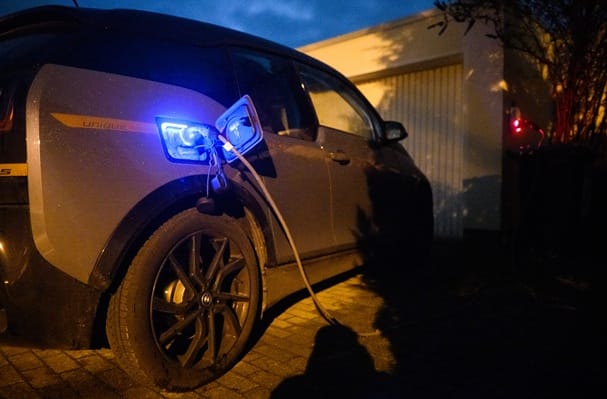
Rising energy costs amid the Middle East oil crisis are significantly increasing electric vehicle charging expenses, potentially deterring drivers from switching from fossil fuels.
#tesla

Toronto startup
from24/7 Wall St.
2 days agoBloomberg: Tesla's AI dreams don't change reality, cars still pay the bills
Tesla's Q1 2026 vehicle deliveries fell short of expectations, highlighting challenges in the automotive sector despite excitement over future technologies.
Toronto startup
fromTESLARATI
3 days agoTesla's Q1 delivery figures show Elon Musk was right
Tesla's Q1 2026 delivery figures show a shift towards Optimus, with traditional auto business becoming less central to its future.




fromScary Mommy
3 days agoHow To Store Lithium Batteries Safely So You Don't Spark A House Fire
Lithium-ion batteries are used in so many of the tech items we own today - phones, laptops, tablets, wireless headphones, e-bikes and scooters, cameras, portable chargers, and vapes. Every American household has roughly 40 lithium-ion batteries inside, according to the United Fire Authority.
Environment
fromSilicon Canals
1 week agoChina now controls 92% of rare earth processing. Every Western EV and defense firm depends on a supply chain they can't replicate - Silicon Canals
China controls the overwhelming majority of global rare earth processing capacity, a figure that has remained structurally stable for nearly two decades despite sustained Western policy attention. The problem has never been geology. It's always been industrial chemistry at scale.
Environment
Europe politics
fromTheregister
1 month agoEurope's EV battery cost gap with China could shrink to 30%
Europe's EV battery cost gap with China could narrow from 90% to 30% by 2030 through proper government support, factory scaling, and manufacturing improvements, requiring a €500 sovereignty premium per vehicle.
European startups
frominsideevs.com
3 weeks ago'The Chinese Will Eat Our Lunch': Europe's EV Trucking Industry Is Scared As Hell
Chinese EV truck manufacturers are targeting Europe's commercial trucking market with vehicles priced 30% below European alternatives, positioning electric freight trucks as the next major global EV competition battleground.
Alternative transportation
fromThe Verge
1 month agoThe world's biggest automaker has one of the dirtiest supply chains: report
Tesla, Ford, and Volvo lead a ranking of 18 global automakers on eliminating emissions, environmental harms, and human rights violations from supply chains, though no automaker achieves 50 percent compliance.
fromEntrepreneur
2 months agoThe Lithium Gold Rush Just Minted a $1B Unicorn
Demand for lithium is fueling a modern-day gold rush. The industries that define our modern world, like artifiial intelligence (AI), robotics, EVs, and energy, all depend on lithium, which is used to make batteries and other energy storage systems. Microsoft CEO, Satya Nadella believes that the AI race will be won based on energy costs, not on who has the best models.That's why lithium demand is projected to grow a staggering 5X by 2040.
Venture


from24/7 Wall St.
2 months agoMarket Movers: Albemarle Exploding on Lithium Supply-Demand Story
Helping, Deutsche Bank upgraded ALB to a buy rating with a $185 price target. Analysts at Baird also upgraded ALB to a buy with a price target of $210. "We are incrementally positive given the recent increase in lithium prices... and our view that demand strength stemming from stationary storage will continue to propel ALB higher," Baird analysts wrote, as noted by Seeking Alpha. Analysts at Truist also just upgraded ALB to a buy rating with a price target of $205.
Business
fromTechCrunch
2 months agoTesla's energy storage business is growing faster than any other part of the company | TechCrunch
Last year, the company's profit fell 45% compared with 2024, driven in large part by falling sales of its electric vehicles. Investors anticipated the decline in sales, but Tesla still beat Wall Street earnings and revenue estimates thanks to its energy storage business. Tesla deployed a record 46.7 gigawatt-hours of energy storage products in 2025, a 48% increase from last year, according to the company's official filings.
Business
fromBusiness Insider
2 months agoElon Musk ended Tesla's earnings call with an urgent plea
The Tesla CEO argued that too many companies are underestimating their exposure to geopolitical risks posed by fragile supply chains, particularly for critical materials used in electric vehicles and energy storage. "There are so many companies out there that are asleep at the switch with regard to geopolitical risk - or they just have their head in the sand and hope nothing bad will happen," Musk said. "I'm way more paranoid than that."
Business
Cars
fromwww.npr.org
1 month agoHow long do electric vehicle batteries actually last?
Electric vehicle lithium-ion batteries are lasting significantly longer than the seven-year estimates from 2010, with real-world data from tens of thousands of vehicles showing better longevity than initially predicted.
[ Load more ]