Running
fromiRunFar
1 day agoRunning and Aging: Finding Surprise Improvements
Crown King Scramble 50k offers a consistent and challenging course for runners, fostering a strong community and personal growth through endurance.
I have evolved from someone who didn't think much of the bar except for resting my legs to thinking of it as an obvious life-saving precaution. Dr. Bourne shared several examples from Mammoth in which the bar could have saved lives, including the death of her former ski coach, who fell from a chairlift to his death, most likely from a medical event which may have been treatable.
Yeah, training's gone really well. I'm very happy with where I am. As you get into an indoor season and you start racing and running faster and the reps get shorter and the recovery gets longer, I think you just naturally come into even more shape, which is obviously really exciting.
Super shoes and ultralight gear make a difference, but with new advancements in artificial intelligence (AI) that can look at our running form and compare it to the ideal, analyze our nutrition intake from a simple photo and help us plan our diets, and offer guidance on training and recovery, the interwovenness of technology and running is only set to increase.
Cross training and running go together like peanut butter and jelly. If you build it into your schedule intentionally, strategically, and with a clear understanding of what you're trying to accomplish, you'll thrive. Megan makes the case that cross-training serves runners for several distinct reasons, and the right reason for you will shape how you approach it.
Those of us who watch the Olympics as bystanders tend to smugly judge athletes for succumbing to pressure without understanding what we even mean by the term. The first thing to know about pressure is that it has actual physical properties. Feeling it is not a sign of a too-thin veneer of character. Pressure might as well be a snakebite, given its very real qualities in the bloodstream and how it can paralyze even the strongest legs. The way to deal with pressure, and become
Jadin O'Brien thought she was being scammed. The Milan Cortina Olympics and the sport of bobsled, for that matter were not anywhere near O'Brien's radar a couple years ago, when the Notre Dame track and field star saw that someone sent her a direct message on Instagram. The message was ignored. Several months later, the same person slid into O'Brien's DMs again.
If you're watching the Olympics this year, or have watched in the past, you've probably wondered how the top athletes in the world bolster themselves emotionally for high- stress situations, being exposed and visible to millions of viewers in difficult moments, and how they deal with failure and defeat and become resilient. Dr. Cindra Kamphoff, whose MD-level background in sports psychology, two decades of work with professional and Olympic athletics, and The High Performance Mindset podcast, has developed techniques that are helpful to people inside or outside of the sports arena.
For runners, the hips can be one of the most confounding and frustrating parts of the physiological puzzle for efficient movement. Every runner knows how crucial hip strength is - and how mobile hips are essential for both fast and pain-free running. Yet healthy, happy hips remain elusive. For many of us, our hips stay stiff no matter how much we massage and stretch them.
In 2017, Bjorn Mannsverk's phone rang. A year before, what was meant to be a special 100th anniversary for Bodo/Glimt ended in heartbreak as the Norwegian club were relegated from the top flight. A fresh approach was needed to get the club back on track. Having been stationed in Bodo before in his role as a fighter pilot with the Royal Norwegian Air Force, Mannsverk was familiar with the town, but not the football club.
It's just what it looks like: I time my planks then file them away, determined to last a little longer tomorrow. And sometimes I do, for several days in a row, then one day I'll collapse nearly a minute short of my personal best. I'll pound the mat like Charlton Heston at the end of Planet of the Apes, then I'll get myself together - you've got to stay cool at Equinox - and move on with my day.
"We have a golden retriever, and so I walk her three or four miles a day, and I do a weight training class twice a week," says Brown, 62, of Arlington, Va. She knows muscle mass will decline without regular strength training. "We have a fun group with a personal trainer and we call ourselves the Beastie Girls," she says, describing how her group helps her stick with it. She also plays tennis and golf.
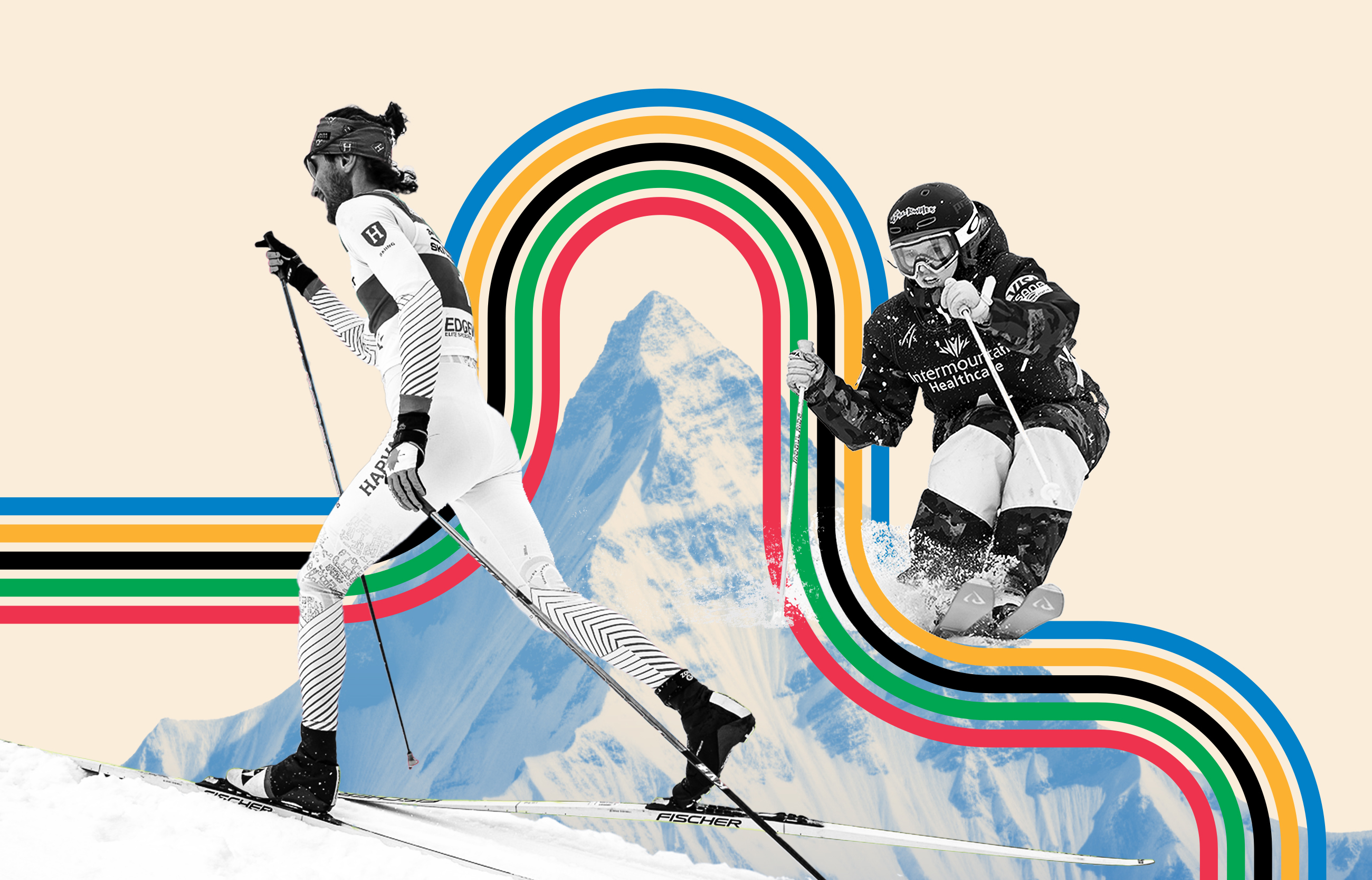
On June 24 2022 the International Olympic Committee 'IOC' announced the addition of two new disciplines to the Winter Olympics. These disciplines are dual moguls and women's large hill ski jumping. The addition of women's large hill jumping leaves Nordic Combined as the last men-only Winter Olympic event. Today we'll take a closer look at dual moguls, which will premier at the ski resort of Livigno, Italy, at the Milano-Cortina 2026 Olympics for both men and women.
Men's four-person bobsledding made its Olympic debut in Chamonix, France, in 1924; women's two-person bobsledding didn't enter the Games until 2002 in Salt Lake City. Women's monobob arrived in 2022. While the earliest bobsleds were made of wood, the sport has been synonymous with steel for years, although in recent decades it has been replaced by carbon fiber, which provides greater lightness and strength.
One short week after Lindsey Vonn crashed in Crans-Montana, Switzerland, and tore her left anterior cruciate ligament, she was tearing down the hill in Cortina d'Ampezzo, Italy, a light knee brace warping the fabric of her racing suit the only obvious sign of anything amiss. When she finished the training run Friday, clocking the third-fastest time for a U.S. woman on the day, she casually fist bumped an American teammate at the finish line.
BRIAN KENNY: Welcome to Cold Call, the podcast where we dive deep into the groundbreaking ideas in Harvard Business School case studies. Today on Cold Call, we're looking at a sport where innovation doesn't come from flash or funding, but from rethinking first principles. The sport is speed skating and we're dropping this episode during the 2026 Winter Olympics. The US men's Speed Skating team is coming off years of disappointment, searching for a breakthrough in the team pursuit event. The innovation works.
In this episode of the On Coaching Podcast, Steve Magness and Jon Marcus discuss the concept of 'fit but flat,' exploring the phenomenon where athletes excel in metabolic fitness but fail to perform competitively due to a lack of neuromuscular coordination. Using examples like middle-distance runner Ingram Brion, the hosts delve into how metabolic training alone can lead to race failures.
The crowds have disappeared and so has the sun, dipping behind the frigid Dolomites as another day of Olympic racing is in the books. This is the golden hour for the hidden heroes of the sport. You can find them in metal storage containers and dimly-lit concrete garages, warmed by space heaters and hunkered over skis that will carry their clients down harrowing hills, places where 80 mph is routine and a seemingly miniscule mistake can spell disaster.
In this episode of the On Coaching podcast, hosts Steve Magness and John Marcus dive deep into the insights and lessons from the recent NCAA Championships. They highlight key performances, such as record-breaking steeple chases and tactical 1500 meters races, and discuss the evolving dynamics of modern racing, including the impact of super shoes. Additionally, they emphasize the importance of mental preparation, holistic athlete development, and how coaches can foster environments that encourage risk-taking and peak performances.
Nobody knows for certain when luge the French word for sled started, since nobody surely took note of the first time someone slid feet-first down a slope. Some say the 15th century, with evidence that there were races in Norway around that time. USA Luge believes that the sport could date all the way back to around 800 B.C., citing research that Vikings used sleds that had two runners, kind of like those kids have gotten for decades.