#m5-chip
#m5-chip
[ follow ]
#apple #technology #ai #innovation #intel #macbook-pro #macbook-air-m5 #nvidia #stock-market #apple-silicon



fromThe Verge
3 weeks agoApple's new M5 Max feels like a huge upgrade if you bought your laptop 3 years ago
Apple claims that its 2026 models can deliver "up to 2x" the sustained read and write speeds of the M4 Pro and Max laptops. In our testing, the 4TB SSD in the 16-inch M5 Max MacBook Pro bore that out: our unit could sustain a 13.6GB/s read speed and an even higher 17.8GB/s write speed.
Gadgets
fromTechRepublic
3 weeks agoMeta's New AI Chips Reveal a Faster, More Self-Reliant Hardware Strategy
Meta is building these chips because buying AI hardware at scale is expensive, and relying too heavily on external suppliers leaves less room to shape that hardware to its own needs. Building more in-house could help the company keep AI costs in check.
Artificial intelligence
#apple-m5-chips
Apple
fromArs Technica
1 month agoM5 Pro and M5 Max are surprisingly big departures from older Apple Silicon
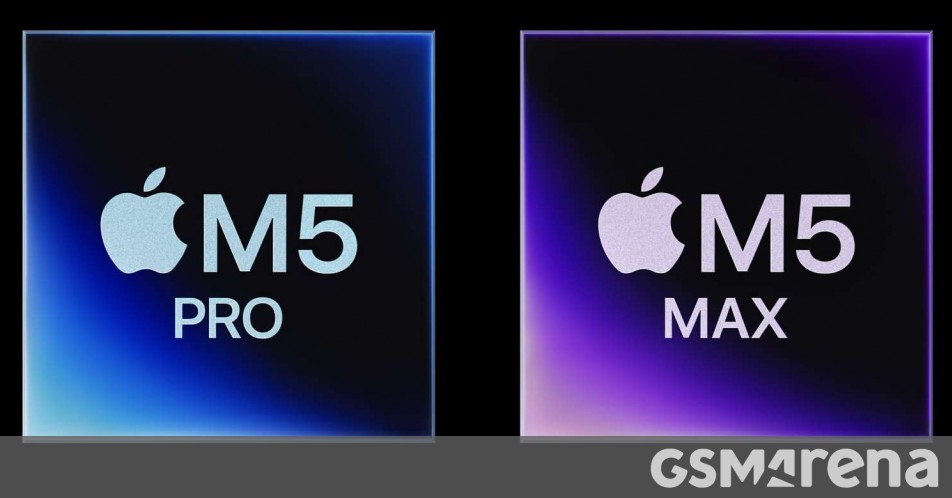
Apple's M5 Pro and M5 Max chips feature distinct GPU configurations, with M5 Max doubling M5 Pro's GPU cores, encoding engines, and memory bandwidth, plus a new third CPU core type optimized for multi-threaded performance.
Apple
fromArs Technica
1 month agoM5 Pro and M5 Max are surprisingly big departures from older Apple Silicon
Apple's M5 Pro and M5 Max chips feature distinct GPU configurations, with M5 Max doubling M5 Pro's GPU cores, encoding engines, and memory bandwidth, plus a new third CPU core type optimized for multi-threaded performance.
fromEsquire
2 days agoTim Cook (Still) Believes in Crazy Ideas
The man's voice is menacing, and British, as he says, 'Today we celebrate the first glorious anniversary of the Information Purification Directives' in a 'garden of pure ideology, where each worker may bloom secure from the pests obeying contradictory thoughts.'
Apple

#macbook-air-m5


Apple
fromThe Verge
2 weeks agoMacBook Air M5 review: a small update for the 'just right' Mac
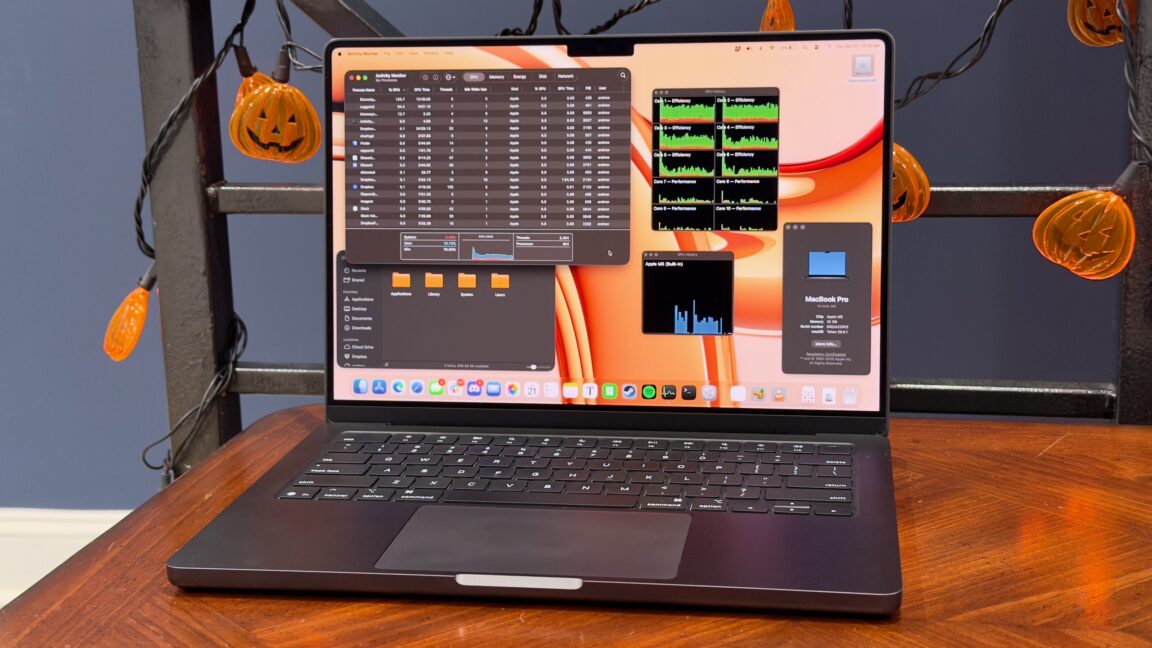
The 2026 MacBook Air gains M5 chip, Wi-Fi 7, and larger base storage, maintaining excellence while costing $100 more, now positioned as a middle-tier option between the new $500-cheaper MacBook Neo and premium MacBook Pros.
Apple
fromgizmodo.com
3 weeks agoM5 MacBook Air Review: A Laptop With Real Middle Child Energy
The M5 MacBook Air occupies a crowded middle position between the affordable MacBook Neo and powerful MacBook Pro, offering solid performance for demanding tasks but facing positioning challenges in Apple's expanded laptop lineup.

fromArs Technica
3 weeks agoTesting Apple's 2026 16-inch MacBook Pro, M5 Max, and its new "performance" cores
The M5 Pro and M5 Max are no longer monolithic chips with all the CPU and GPU cores and everything else packed into a single silicon die. Using an 'all-new Fusion Architecture' like the one used to combine two Max chips into a single Ultra chip, Apple now splits the CPU cores (and other things) into one piece of silicon, and the GPU cores (and other things) into another piece of silicon.
Apple

[ Load more ]