#micron-technology
#micron-technology
[ follow ]




from24/7 Wall St.
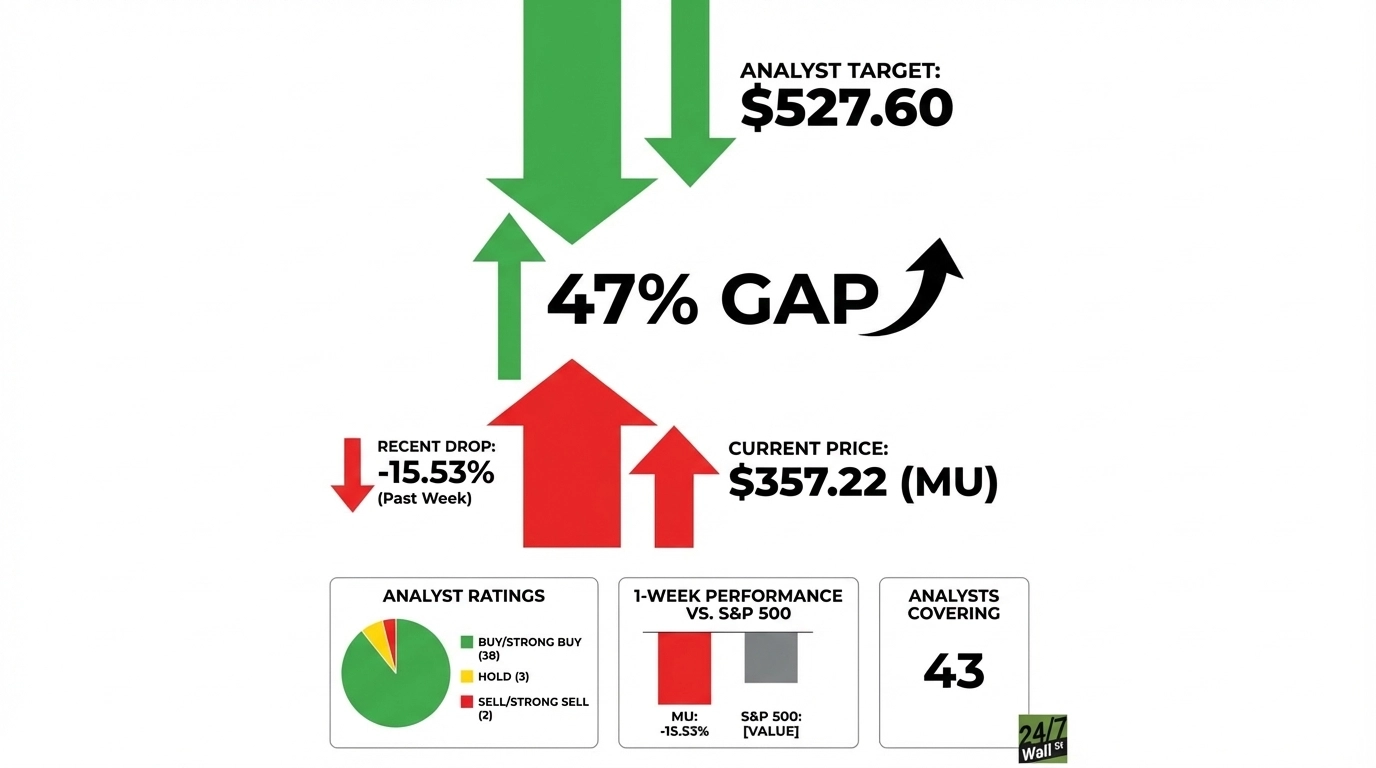
3 days agoWall Street Tells Investors Its Less Excited About Micron Stock
Citi's concern is mainstream DDR5 16GB DRAM prices have fallen 6% since Micron's earnings report, driven by fears that TurboQuant, an algorithm-based memory compression technology, will structurally reduce memory demand. Citi isn't buying it.
Tech industry


from24/7 Wall St.
3 weeks agoAMAT and Micron still winning in AI trade despite QQQ and sector weakness
The need for higher performance and more energy-efficient chips is driving high growth rates for leading-edge logic, high-bandwidth memory and advanced packaging. These are areas where Applied is the process equipment leader, and we expect to grow our semiconductor equipment business over 20 percent this calendar year.
Artificial intelligence



from24/7 Wall St.
1 month agoMicron is Up 44% in 2026: Is It a Better Buy Than Camtek or Cohu?
Micron had an outstanding finish to fiscal 2025, delivering fiscal Q4 revenue, gross margin, and EPS all above the high end of our updated guidance ranges, driven by pricing execution and strong performance across end markets.
Tech industry

from24/7 Wall St.
3 months ago3 Top Tech Stocks to Buy if You Want to Outperform Next Year
All three are riding the AI megatrend and have strong revenue visibility beyond 2026. These companies are on the "frontline" when it comes to AI hardware. Data centers are being built out at a record pace, and is not the only company that is benefiting from it. The market is starting to move past NVDA stock and is pouring into other satellite AI beneficiaries who are seeing explosive upward momentum one after the other.
Business
from24/7 Wall St.
5 months agoWall Street Just Realized This Overlooked AI Stock Is Ready to Explode
Micron Technology ( ) has emerged as a key player in the artificial intelligence (AI) ecosystem through its high-bandwidth memory (HBM) chips, which provide the high-speed data processing essential for training large language models and running inference tasks. These chips enable AI accelerators from companies like Nvidia ( NASDAQ:NVDA ) to handle massive datasets efficiently, positioning MU as a vital supplier amid surging demand from data centers.
Business
from247wallst.com
6 months agoCould Micron's Memory Boom Make It the New Oracle?
The chipmaker's pivotal role in supplying high-bandwidth memory (HBM) and storage solutions for AI data centers positions it for explosive growth without the hype. While Nvidia dominates GPUs, Micron fuels the backbone DRAM and NAND chips essential for AI training and inference, where data volume is exploding. This under-the-radar status has kept its valuation attractive, with a forward P/E of just 12 and a price-to-earnings-to-growth (PEG) ratio of a minuscule 0.22, signaling significant undervaluation amid AI's boom.
Business
[ Load more ]