#migration-stories
#migration-stories
[ follow ]
#immigration #immigration-policy #human-rights #deportation #trump-administration #asylum #migration #citizenship








Relationships
fromSilicon Canals
1 day agoThe most painful version of not belonging isn't being rejected by strangers. It's sitting at your own family's dinner table, surrounded by people who share your last name, and feeling like you're watching the evening through glass. - Silicon Canals
Belonging can exist alongside profound loneliness, where one feels unseen even in the presence of family and friends.


fromwww.theguardian.com
4 days agoA moment that changed me: for the first time in my life, a stranger pronounced my name correctly
I would squirm in my chair as my new teacher worked their way through the class register, and my stomach would drop as they attempted to say my full name: Priti Ubhayakar.
Writing

London politics
fromLondon Business News | Londonlovesbusiness.com
5 days agoLondoners are most likely to emigrate as the UK exodus trends emerge - London Business News | Londonlovesbusiness.com
Londoners show the highest intention to emigrate in England, driven by cost of living and economic concerns.
France news
fromLondon Business News | Londonlovesbusiness.com
4 days agoTwo migrants dead as Channel crossing ends in tragedy amid UK-France deal talks - London Business News | Londonlovesbusiness.com
Two migrants died and one is missing after attempting to cross the English Channel, prompting a rescue operation.

Psychology
fromSilicon Canals
2 weeks agoThere's a version of loneliness that belongs to people who moved far from where they grew up and built a beautiful life somewhere new, only to realize that nobody in their current world knew who they were before. And sometimes being fully known matters more than being fully comfortable. - Silicon Canals
Loneliness can stem from not being known, even in social environments full of warmth and connection.
fromwww.theguardian.com
2 weeks agoNaima review triumphant note of hope fuels engrossing insight into the immigrant experience
Naima dives deep into life goals with a fierce passion, yet she often finds herself buffeted by currents. Sixteen years ago, she had moved to the country for love, only to be mistreated by her Swiss husband. Since her diploma was not recognised in Switzerland, she went from managing a team of 48 to being wholly dependent on her partner.
Women in technology
fromSilicon Canals
3 weeks agoPeople who moved countries for love and people who moved countries for work carry completely different versions of displacement. One chose a person and lost a place. The other chose a place and discovered that without their people in it, a better country can still feel like a beautiful room with no furniture - Silicon Canals
She said she stood in her new kitchen, which had radiant floor heating and a view of the fjord, and cried because the bread smelled wrong. She'd moved from São Paulo for a man she'd met at a data science conference. The apartment was beautiful. The healthcare was extraordinary. The man was kind. And the bread smelled wrong, and that wrongness cracked open something in her she hadn't known was load-bearing.
Remote teams
US news
fromwww.theguardian.com
2 weeks agoReader Q&A: post your questions for US immigration reporter Maanvi Singh
Increased ICE enforcement operations in American cities have resulted in deaths, community mobilization, and detention of individuals including minors, prompting investigative journalism coverage.
fromFortune
3 weeks agoMore than 3 million Iranians have been displaced so far since the war started, setting up a potential migration crisis | Fortune
If they let me, I will stay in Van until the war ends. If the war doesn't end, maybe I'll go back and die. Pourkaz is one of the 3.2 million people in Iran who the U.N. refugee agency estimates have been displaced since the U.S.-Israel war with Iran started. While some are seeking shelter in safer parts of Iran or one of its neighboring countries, others are returning from abroad, heading toward the fighting to protect their families and homes.
Europe news
fromwww.theguardian.com
1 month agoAsylum seekers waiting over a year for claim in UK may be allowed to work under new measures
Up to 21,000 asylum seekers who have waited for a year for their claims to be processed could be allowed to enter the jobs market so they can support themselves, the Home Office has said, as part of a package of measures to be announced on Thursday. As the government seeks to empty asylum hotels, claimants who break the law, work illegally or are found to have enough assets to live without support will from June be ejected and lose their support payments.
UK news
fromenglish.elpais.com
3 weeks agoThe shattered dream of migrating to the US and the odyssey of returning: I was in jail for four months. That's the only way I got to know New York'
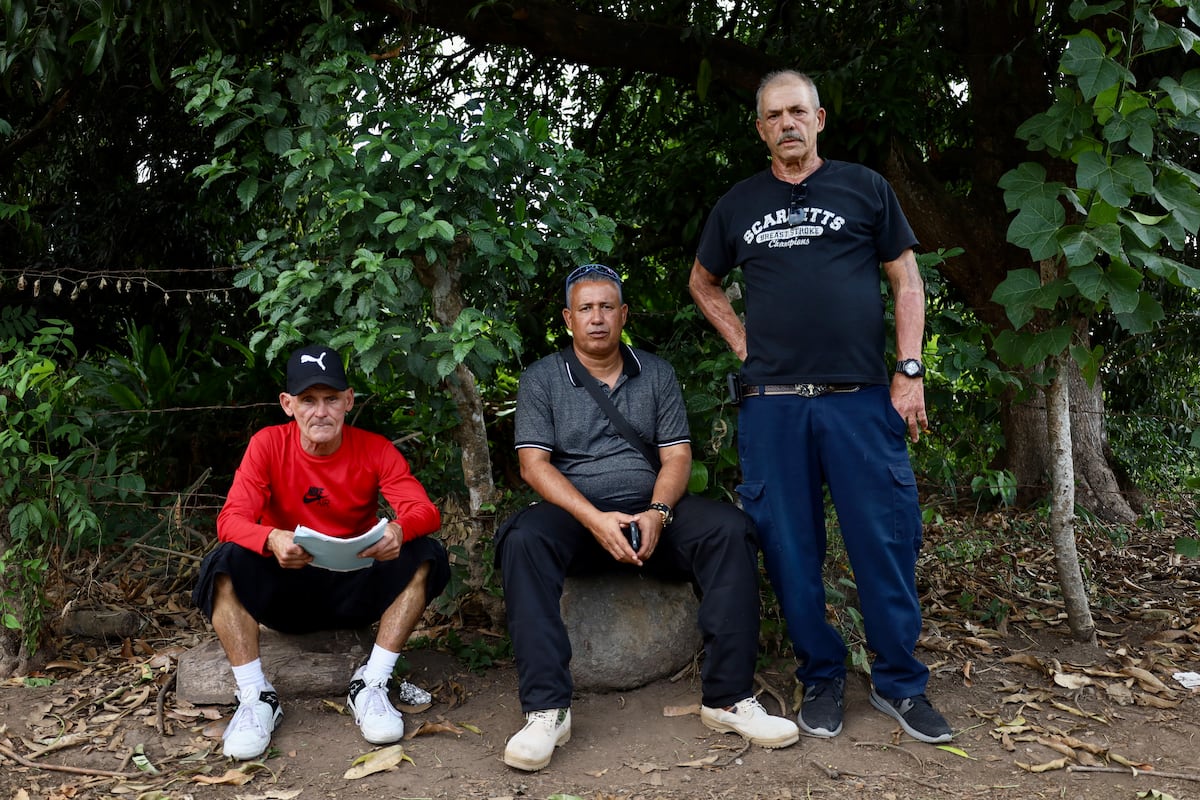
Laime Arold, a 26-year-old Haitian, buys energy bars at a small shop on the side of the Pan-American Highway in southern Chiapas, Mexico. Jose Adan, a Honduran, prays aloud in a park in Tapachula, asking God to protect him from kidnappers and the police along the way. Gerardo Aguilar, a Venezuelan, travels at 60 miles per hour, lying across two seats on a bus headed for Guatemala. The three all have something in common: they are in Mexico and they are migrants. None of them are heading north. They are heading south.
Miami food
Miscellaneous
fromwww.aljazeera.com
1 month agoDeadly journeys: Refugees, migrants risk everything to reach Europe
Mediterranean crossings from North Africa to Europe result in record deaths, with over 560 missing in early 2025, while refugees in Libya face systematic abuse from militias and traffickers.
fromwww.theguardian.com
4 weeks agoI am trying to live': Haitians in Mexico seek community despite broken immigration systems
With time, as his research led to police intervention, he caught the attention of the city's gangs. In November 2024, during a period of escalating violence in the Haitian capital, gang members entered the compound where Gensley lived. They burned the radio station, my home and many other things in the area. They even killed his dog.
US news
UK politics
fromPinkNews | Latest lesbian, gay, bi and trans news | LGBTQ+ news
1 month agoTemporary refugee status poses 'constant threat' to LGBTQ+ asylum seekers
UK asylum rules now limit refugee protection to 30 months instead of permanent status, creating ongoing vulnerability for LGBTQ+ individuals facing persecution in countries designated as 'safe'.
fromwww.dw.com
1 month agoGermany news: New rules aim to give asylum-seeker job access
SPD Secretary General Tim Klussendorf told the newspapers of the Redaktionsnetzwerk Deutschland on Sunday that the ruling coalition should now move swiftly to make the ban a reality. "We finally need clear rules on digital platforms. Addiction-inducing algorithms, hate, and bullying are a massive problem for our entire society and can be particularly dangerous and harmful to children and young people," he said.
Miscellaneous
fromwww.aljazeera.com
1 month agoCitizens of Nowhere: What It Means to Be Stateless in the US
Citizens of Nowhere is a documentary short about stateless people in the United States individuals who, through circumstance or legal technicality, belong to no nation. Without passports, citizenship or legal recognition, they live in a state of uncertainty. From finding work and accessing education, to simply existing within a system that does not officially recognise them, stateless people face endless bureaucratic barriers.
Film
fromIndependent
1 month agoUkrainian stories: 'When we arrived here, we were like aliens from another planet. I had to start my life from scratch'
Four years on from the invasion, we talk to the Ukrainians who have settled in Co Kerry, why they chose to come here, the heartbreaking stories from their homeland, and dealing with the 'small percentage of haters'
Miscellaneous
US politics
fromwww.theguardian.com
1 month agoTell us: are you an American living abroad who has tried to renounce your citizenship?
American expats who tried renouncing US citizenship are invited to securely share detailed experiences, including motives, obstacles, future-return concerns, and anecdotes; contributions can be anonymous.
fromVulture
2 months agoOne in a Million Is a Stunning Real-Life Refugee Epic
In Cologne, the family is greeted with a small but comfortable new home, and Israa enters a school where her classmates and teachers seem kind and curious to learn more about her. Over the years, however, things change. Israa begins to feel the prying eyes of others, and she begins to react against her family, in particular her father, Tarek, with whom she was once incredibly close but who now seems like a man out of time and place, wedded to traditions left behind.
Film
Miscellaneous
fromwww.aljazeera.com
2 months agoFrom Crimea to Cameroon: Ukraine's minorities reflect on life during war
A Muslim cultural centre offered shelter to displaced Ukrainians, fostering cohesion, dispelling anti-Muslim misconceptions, and promoting understanding of Ukraine's longstanding Muslim heritage.
fromwww.dw.com
2 months agoEU asylum policy: What changes for refugees in Germany?
The Common European Asylum System (CEAS) is the European Union's legal framework to create uniform, fair, and efficient standards for processing asylum applications. The system's reform, agreed in 2024, will become legally binding in Germany and throughout the EU in June, 2026. EU member states had a two-year implementation period during which the new rules including stricter border procedures were transposed into national law.
Europe politics
fromwww.dw.com
2 months agoHow does Germany deport people?
Germany has no equivalent of the US' specialized Immigration and Customs Enforcement (ICE) agency, though that would change if the Bavarian branch of the far-right Alternative for Germany (AfD) had its way. Apparently directly inspired by the actions of ICE under President Donald Trump's administration, an internal paper from the far-right party seen by the German newspaper taz this week proposed that a new authority be created within the Bavarian state police named the Asyl-, Fahndungs- und Abschiebegruppe (AFA), or the "Asylum, Tracing and Deportation group."
Germany news
US politics
fromArchitectural Digest
2 months agoWhen Politics Drives You From Home: 5 Americans Who Uprooted Their Lives Because of the State of the Nation
Politics has become a major driver of relocation, with many Americans choosing new communities that align with their political beliefs despite logistical and emotional costs.


[ Load more ]