#migration-strategies
#migration-strategies
[ follow ]
#immigration #immigration-policy #trump-administration #human-rights #migration #deportation #germany

#immigration

US politics
fromenglish.elpais.com
1 day agoHow Trump uses non-immigration government agencies to aid his deportation campaign
The Trump administration's new HUD regulations target undocumented immigrants in rental assistance households, risking family separation and affecting thousands of eligible citizens.


US politics
fromenglish.elpais.com
1 day agoHow Trump uses non-immigration government agencies to aid his deportation campaign
The Trump administration's new HUD regulations target undocumented immigrants in rental assistance households, risking family separation and affecting thousands of eligible citizens.

London politics
fromLondon Business News | Londonlovesbusiness.com
3 days agoLondoners are most likely to emigrate as the UK exodus trends emerge - London Business News | Londonlovesbusiness.com
Londoners show the highest intention to emigrate in England, driven by cost of living and economic concerns.

France news
fromLondon Business News | Londonlovesbusiness.com
2 days agoTwo migrants dead as Channel crossing ends in tragedy amid UK-France deal talks - London Business News | Londonlovesbusiness.com
Two migrants died and one is missing after attempting to cross the English Channel, prompting a rescue operation.
#germany
Germany politics
fromwww.dw.com
2 days agoGermany's Merz sees backlash over Syrian refugee comment
Chancellor Friedrich Merz stated that 80% of Syrians in Germany should return home, sparking controversy and denial from Syrian President Ahmed al-Sharaa.

fromSilicon Canals
3 weeks agoPeople who moved countries for love and people who moved countries for work carry completely different versions of displacement. One chose a person and lost a place. The other chose a place and discovered that without their people in it, a better country can still feel like a beautiful room with no furniture - Silicon Canals
She said she stood in her new kitchen, which had radiant floor heating and a view of the fjord, and cried because the bread smelled wrong. She'd moved from São Paulo for a man she'd met at a data science conference. The apartment was beautiful. The healthcare was extraordinary. The man was kind. And the bread smelled wrong, and that wrongness cracked open something in her she hadn't known was load-bearing.
Remote teams
fromwww.theguardian.com
3 weeks agoI am trying to live': Haitians in Mexico seek community despite broken immigration systems
With time, as his research led to police intervention, he caught the attention of the city's gangs. In November 2024, during a period of escalating violence in the Haitian capital, gang members entered the compound where Gensley lived. They burned the radio station, my home and many other things in the area. They even killed his dog.
US news
Miscellaneous
fromwww.aljazeera.com
1 month agoDeadly journeys: Refugees, migrants risk everything to reach Europe
Mediterranean crossings from North Africa to Europe result in record deaths, with over 560 missing in early 2025, while refugees in Libya face systematic abuse from militias and traffickers.
fromFortune
2 weeks agoMore than 3 million Iranians have been displaced so far since the war started, setting up a potential migration crisis | Fortune
If they let me, I will stay in Van until the war ends. If the war doesn't end, maybe I'll go back and die. Pourkaz is one of the 3.2 million people in Iran who the U.N. refugee agency estimates have been displaced since the U.S.-Israel war with Iran started. While some are seeking shelter in safer parts of Iran or one of its neighboring countries, others are returning from abroad, heading toward the fighting to protect their families and homes.
Europe news
#uk-immigration-policy

UK politics
fromwww.independent.co.uk
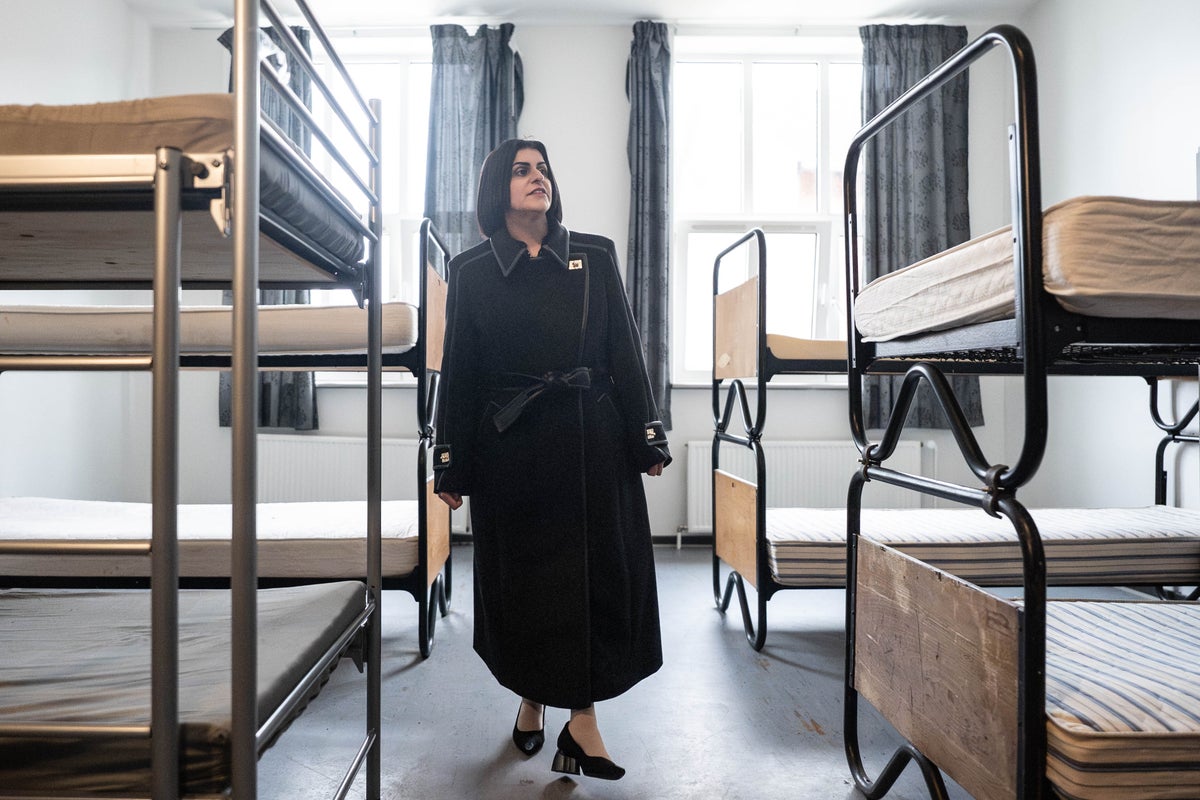
1 month agoHow many visas go to countries that have been affected by the halt on grants?
The UK government banned study visas for citizens from Afghanistan, Cameroon, Myanmar, and Sudan, despite these nations representing less than one percent of all study visas issued.
Right-wing politics
fromThe American Conservative
3 weeks agoClose Foreign Consulates in U.S. Sanctuary Cities
Migrant-sending countries maintain extensive consulate networks in the United States primarily to serve their large diaspora populations, including undocumented immigrants, contributing to immigration enforcement challenges.
fromwww.dw.com
1 month agoGermany cuts funding for integration of refugees
Muge Tuzcu Karakoc is certain that without an integration course, she would probably still not have properly settled in Germany by now. The Turkish journalist has been living in Germany for seven years. But it was only in 2024, when she started studying German every day alongside Ukrainians, Syrians, and Iranians that she felt the country she now lives in really opened its doors to her.
Germany news
fromwww.dw.com
2 months agoEU asylum policy: What changes for refugees in Germany?
The Common European Asylum System (CEAS) is the European Union's legal framework to create uniform, fair, and efficient standards for processing asylum applications. The system's reform, agreed in 2024, will become legally binding in Germany and throughout the EU in June, 2026. EU member states had a two-year implementation period during which the new rules including stricter border procedures were transposed into national law.
Europe politics
[ Load more ]