Science
fromThe Cipher Brief
5 hours agoA Wartime Budget Without an Innovation Strategy
Collaboration between the NSF and defense sectors is essential for national security and innovation, despite proposed budget cuts to NSF funding.
When civilian banks, logistics platforms, and payment processors share physical data center infrastructure with military AI systems, those facilities become legitimate military targets under international humanitarian law - and the civilian services housed inside lose their legal protection.
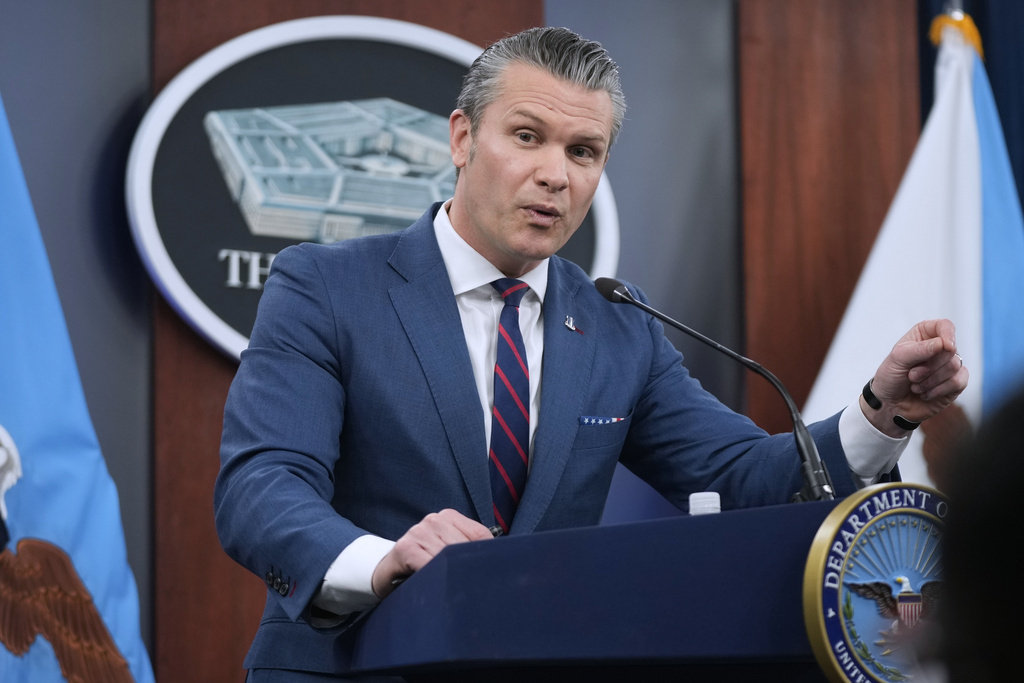
Hegseth stated that current policies have essentially turned US military installations into gun-free zones, leaving those who live and work on the installations vulnerable. He emphasized that the war department's uniformed service members are trained at the highest standards and are entitled to exercise their God-given right to keep and bear arms.
Our war fighters are leveraging a variety of advanced AI tools. These systems help us sift through vast amounts of data in seconds so our leaders can cut through the noise and make smarter decisions faster than the enemy can react. Humans will always make final decisions on what to shoot and what not to shoot and when to shoot, but advanced AI tools can turn processes that used to take hours and sometimes even days into seconds.
Pentagon staffers had banned photographers from major news wires like Reuters and the Associated Press after they became angry over what they believed were unflattering pictures of Defense Secretary Pete Hegseth during a March 2 briefing. Two anonymous sources said the department then barred photographers from two subsequent briefings on March 4 and March 10, only allowing Defense Department staff photographers inside the room.
For some weapons, the hardest fight wasn't against the enemy, in fact it was more so against wear and time. Advanced technology has delivered decisive advantages but in some cases has imposed relentless upkeep on crews and logistics chains. Here, 24/7 Wall St. is taking a closer look at how these systems became a maintenance nightmare for the U.S. Military.
Though the 83-year-old (who will turn 84 in two weeks) is rarely spotted in the Capitol these days, his vocal opposition to President Donald Trump on a myriad of issues is louder and more present than ever when deemed useful for the motivated liberal press. For instance, McConnell was quoted far and wide last month after he criticized Trump's desire to acquire Greenland, a move the Kentuckian suggested would "incinerate" the threadbare alliance that remains between the United States and NATO.
But logistical consistency, like coherence and gravitas, does not characterize the new NDS. It is a document that supposedly nests within the National Security Strategy, explaining at greater length the implications of overall policy for the armed forces. The 2026 version does not do that. Rather, it restates some of the basic priorities of the Trump administration but for the most part confines itself to flattery of the president, insults, and bombast.
"Frankly, if Congress doesn't codify it, they'll go into court. My sense [is] it's really difficult to justify tax changes because the president wanted to change them,"