#military-style
#military-style
[ follow ]
#iran #us-military #iran-conflict #pentagon #military-leadership #military-strategy #military-technology #us-army






World news
fromLondon Business News | Londonlovesbusiness.com
2 days agoPentagon confirms fighter jet shot down over Iran as rescue mission underway - London Business News | Londonlovesbusiness.com
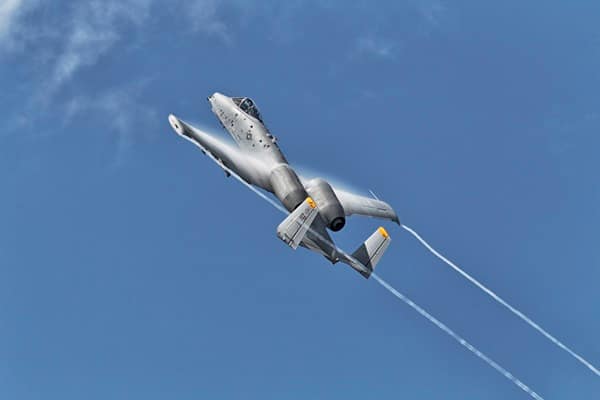
An F-15E Strike Eagle was shot down over Iran, initiating a combat search and rescue operation for its two crew members.
European startups
fromwww.businessinsider.com
1 week agoThe US military is pushing up production for the weapons that could matter most in a major war
The Department of Defense is increasing production of critical weapons, including THAAD interceptors, to meet rising demand and address stockpile concerns.

History
from24/7 Wall St.
3 weeks ago25 Weapons That Changed Warfare Over the Last Century
Technological breakthroughs over the last century transformed warfare by introducing tanks, missiles, stealth aircraft, and precision-guided weapons that forced armies to continuously adapt tactics and reshape military doctrine globally.

Russo-Ukrainian War
fromLondon Business News | Londonlovesbusiness.com
1 week agoHigh 'intensity battles' leaves more than 6,000 'soldiers killed and wounded' in four days - London Business News | Londonlovesbusiness.com
Russia suffered over 6,000 casualties in four days during intensified offensives against Ukraine, while Ukrainian forces maintained strong defensive positions.
fromemptywheel
3 weeks agoGreat Tactics Mean Nothing if You Have No Strategy - emptywheel
The conduct of War is, therefore, the formation and conduct of the fighting. If this fighting was a single act, there would be no necessity for any further subdivision, but the fight is composed of a greater or less number of single acts, complete in themselves, which we call combats, as we have shown in the first chapter of the first book, and which form new units.
US politics
from24/7 Wall St.
3 weeks agoThe Warplanes and Ordinance That Carried Out Operation Epic Fury
Air campaigns today are built around cooperation between many different aircraft, each performing a specific task. Stealth fighters lead the way into contested airspace, electronic warfare aircraft disrupt enemy radar, and bombers or strike fighters deliver precision weapons. Supporting aircraft provide intelligence, command and control, and the fuel needed to keep the entire operation moving.
Roam Research
World politics
fromwww.mediaite.com
3 weeks agoPete Hegseth Calls For No Quarter' For US Enemies In Apparent Violation of International Law
Defense Secretary Hegseth's statement that the U.S. will give 'no quarter' to Iranian enemies violates international humanitarian law, which prohibits refusing to spare lives of surrendering combatants or those unable to defend themselves.


Right-wing politics
fromThe American Conservative
3 weeks agoIs It Still the Department of 'War' or Not?
The Trump administration renamed the Department of Defense to Department of War and subsequently engaged in military conflict with Iran while Republican Congress members avoided formally acknowledging it as war.
fromenglish.elpais.com
4 weeks agoDoes the United States have enough munition for a prolonged war?
We've got no shortage of munitions. Our stockpiles of defensive and offensive weapons allow us to sustain this campaign as long as we need. Iran is hoping that we cannot sustain this, which is a really bad miscalculation.
US politics


fromwww.aljazeera.com
2 weeks agoUS weighs sending thousands of troops to region as Iran war rages: Report
The deployments could help provide Trump with additional options as he weighs expanding US operations, with the Iran war well into its third week, Reuters reported on Thursday, at the same time further entrenching the US in a foreign war, the like of which he had repeatedly promised never to do.
World news
World politics
fromBusiness Insider
1 month agoThe war with Iran is more evidence that winning the fights you can't see is critical in modern combat
US military operations increasingly rely on space and cyber forces to disrupt enemy capabilities before kinetic strikes, making non-kinetic warfare critical to modern combat effectiveness.
fromInfoWorld
2 months agoStop treating force multiplication as a side gig. Make it intentional
Lead without authority. You may not have direct reports, yet you shape architecture, quality and the roadmap. Your leverage comes from artifacts, reviews and clear standards, not from title.I started by publishing a lightweight architecture template and a rollout checklist that the team could copy. That reduced ambiguity during design and cut review cycles by nearly 30 percent
DevOps
fromIPWatchdog.com | Patents & Intellectual Property Law
7 months agoMilitary Discipline Meets Patent Proficiency: A Conversation with Ted Wood
In the latest episode of IPWatchdog Unleashed, I had the opportunity to sit down with Ted Wood-a unique figure whose career spans military service, engineering and patent law. After spending time both in-house and at Am Law 100 firms, today Ted is Managing Partner of Wood IP. Our conversation, which took place August 8, was not only interesting and fun but a testament to the diverse pathways one can take to success, both in life and, specifically, in the engineering and patent law fields.
Law
Miscellaneous
fromLondon Business News | Londonlovesbusiness.com
2 months agoGovernment warned UK 'can't win wars' with a small army - London Business News | Londonlovesbusiness.com
Unemployed graduates would be targeted for military conscription while defence-industry workers could be exempt or conscripted into industrial roles during a major war.
fromAxios
1 month agoTrump warns more U.S. troops will "likely" die in Iran attacks
Sadly, there will likely be more before it ends. We'll do everything possible where that won't be the case, but America will avenge their deaths and deliver the most punishing blow to the terrorists who have waged war against, basically, civilization.
World news
Artificial intelligence
fromBusiness Insider
1 month agoUS Army leaders say soldiers are drowning in so much battlefield data that AI is needed to make sense of it all
Army AI prototype processes vast battlefield sensor data, retaining context and patterns humans miss, to reduce information overload and improve decision-making.
fromThe American Conservative
2 months agoCommander-in-Tired
Though the 83-year-old (who will turn 84 in two weeks) is rarely spotted in the Capitol these days, his vocal opposition to President Donald Trump on a myriad of issues is louder and more present than ever when deemed useful for the motivated liberal press. For instance, McConnell was quoted far and wide last month after he criticized Trump's desire to acquire Greenland, a move the Kentuckian suggested would "incinerate" the threadbare alliance that remains between the United States and NATO.
Right-wing politics
from24/7 Wall St.
2 months agoMilitary Aircraft That Only Succeeded Because of Their Skilled Crews
Some aircraft succeeded even though they made life harder for the people flying them. They demanded constant attention, punished mistakes, and left little margin for error. Instead of relying on forgiving design, these platforms forced crews to compensate through skill, planning, and coordination. Over time, combat proved that the human element was the decisive factor behind their success. Here, 24/7 Wall St. is taking a closer look at these aircraft that embodied the human factor.
History
from24/7 Wall St.
2 months agoWhy Navy SEAL Weapons Training Breaks All the Rules
At a glance, Navy SEALs don't appear to use radically different weapons than conventional infantry units. The difference is not the rifle or the optic, but how those weapons are trained and judged under pressure. SEAL missions rarely allow clean sight pictures or predictable engagements, and their training reflects that reality. Here, 24/7 Wall St. is taking a closer look at how Navy SEAL weapons training differs from conventional infantry.
US news
US politics
fromNextgov.com
2 months agoThe revolutionary new weapon in the Pentagon's pocket - and why it matters now more than ever
Transforming Pentagon acquisition processes to remove administrative burdens will enable U.S. companies to deliver cutting-edge military capabilities faster, producing a decisive battlefield advantage.
fromBusiness Insider
1 month agoHow the US military Is preparing for a potential war with Iran
The US is mounting its largest military buildup in the Middle East since 2003. Here's a list of the weapons and hardware that it's sent to the region as the Trump administration pressures Iran to strike a deal that would limit its nuclear and military capabilities.At least a dozen warships collectively worth an estimated $50 billion have been deployed to the region.
World news
from24/7 Wall St.
2 months agoWeapons That Performed Well Except For Desert, Jungle, or Arctic Conditions
On paper, many of the world's most famous weapons looked like reliable successes. In practice, desert sand, jungle humidity, and arctic cold often had other ideas. Systems that performed well in testing or early combat sometimes broke down once environmental stress became unavoidable. Here, 24/7 Wall St. is taking a closer look at how the environment, not enemy fire, can quietly expose limits that designers never fully anticipated.
World news
World news
fromBusiness Insider
2 months agoUS wins against Russian and Chinese air defenses in other countries risk teaching the wrong lessons
US forces destroyed Venezuelan Russian- and Chinese-made air defenses during a complex raid, aided by operator, maintenance, and cohesion failures—success may not generalize.
fromBusiness Insider
2 months agoThe 25 largest militaries in the world, ranked by active troops
Active-duty force size is a tally of a country's uniformed troops: airmen, soldiers, sailors, special operators, and Marines. Armies, in particular, depend on size to gain and occupy ground. Militaries can also be a tool of domestic repression, a focus that undercuts its capabilities against an external foe. North Korea, for example, is one of the world's most repressive states, led by a dictator who has repeatedly threatened neighboring South Korea.
World news
[ Load more ]