Venture
from24/7 Wall St.
12 hours agoWhy Marvell's Breakout Deserves Investors' Attention
Marvell stock shows potential for long-term growth following Nvidia's $2 billion investment, despite short-term market fluctuations.
RAM prices are skyrocketing, driving up the cost of products that rely heavily on memory. The price of Raspberry Pi boards has now soared to the point where two 16GB Raspberry Pi 5 boards will cost you as much as a new laptop.
Both work with Linux's existing swapping mechanism. Swapping (called paging in Windows) is a way for the kernel to handle running low on available RAM. It chooses pages of memory that aren't in use right now and copies them to disk, then those blocks can be marked as free and reused for something else.
The new Arduino Ventuno Q is a very different beast. For one, it's powered by the Dragonwing IQ-8275 chipset. This contains an 8-core Kryo CPU (2x Gold Prime at 2.35GHz + 2x Gold at 2.1GHz + 4x Silver at 1.95GHz) and an Adreno 623. The Ventuno Q offers up to 16GB of RAM and up to 64GB of eMMC storage plus an M.2 NVMe Gen 4 connector for SSDs.
Four generations, MTIA 300, 400, 450, and 500, have been produced within less than two years, with several already in production and others scheduled for mass deployment in 2026 and 2027. The quick pace is deliberate. Rather than betting on a single chip generation and waiting years for results, Meta has adopted a roughly six-month cadence per generation, using modular chiplet architecture to enable incremental upgrades without replacing entire rack systems.
Meta is building these chips because buying AI hardware at scale is expensive, and relying too heavily on external suppliers leaves less room to shape that hardware to its own needs. Building more in-house could help the company keep AI costs in check.
Sorano will be available with up to 84 Zen 5 cores - up from 64 on Siena - in a power envelope of just 225 watts. AMD isn't ready to spill all the beans on its latest Epyc just yet, but based on core count alone, we surmise the chip will either feature six density-optimized Zen 5c chiplets with 14 of 16 cores enabled or 12 of the frequency-optimized Zen 5 variety with one of the eight cores fused off.
The company, which is based in San Francisco and has an office in Pune, India, is targeting up to $35 million this year as it builds a royalty-driven on-device AI business. That growth has buoyed the company, which now has post-money valuation of between $270 million and $300 million, up from around $100 million in its 2022 Series B, Kheterpal said.
AMD clarified those estimates are based on a comparison between an eight-GPU MI300X node and an MI500 rack system with an unspecified number of GPUs. The math works out to eight MI300Xs that are 1000x less powerful than X-number of MI500Xs. And since we know essentially nothing about the chip besides that it'll ship in 2027, pair TSMC's 2nm process tech with AMD's CDNA 6 compute architecture, and use HBM4e memory, we can't even begin to estimate what that 1000x claim actually means.
Scientists are showing that neuromorphic computers, designed to mimic the human brain, are not only useful for AI, but also for complex computational problems that normally run on supercomputers. This is reported by The Register. Neuromorphic computing differs fundamentally from the classic von Neumann architecture. Instead of a strict separation between memory and processing, these functions are closely intertwined. This limits data transport, a major source of energy consumption in modern computers. The human brain illustrates how efficient such an approach can be.
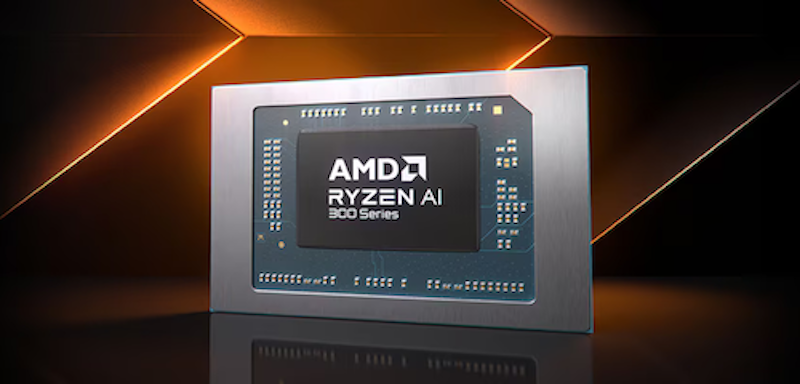
The Ryzen 7 9850X3D features the same 8-core, 16-threads design as the 9800X3D, as well as the same 96MB L3 cache that makes these chips especially suited for gaming workloads. Thanks to the higher level of binning, the 9850X3D can now hit 5.6GHz clock speeds, up from the 9800X3D's 5.2GHz, at the same 120W TDP. This is an almost 8% increase in clock speed, and should make the 9850X3D the fastest gaming CPU in AMD's lineup, and consequently, on the market.