#mips-technology
#mips-technology
[ follow ]
#intel #amd #ai #stock-market #semiconductors #panther-lake #arm-holdings #nvidia #technology #data-center #ai-chips
fromZDNET
2 days agoMy two Raspberry Pi boards cost as much as a laptop now - and AI is to blame
RAM prices are skyrocketing, driving up the cost of products that rely heavily on memory. The price of Raspberry Pi boards has now soared to the point where two 16GB Raspberry Pi 5 boards will cost you as much as a new laptop.
Gadgets





fromTheregister
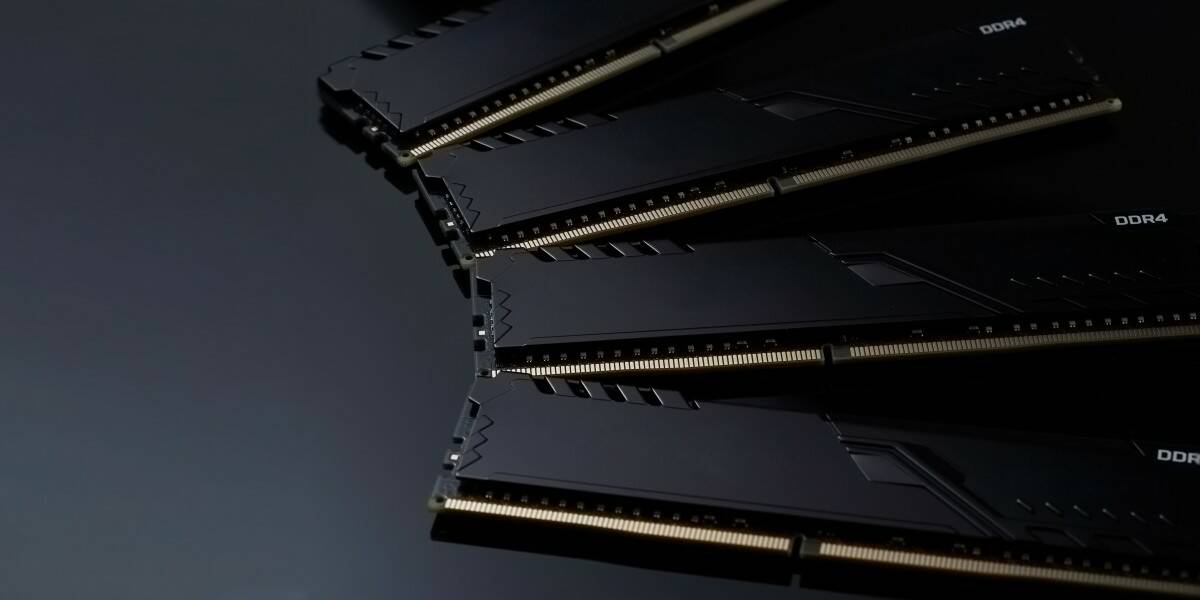
3 weeks agoRAM is getting expensive, so squeeze the most from it
Both work with Linux's existing swapping mechanism. Swapping (called paging in Windows) is a way for the kernel to handle running low on available RAM. It chooses pages of memory that aren't in use right now and copies them to disk, then those blocks can be marked as free and reused for something else.
Software development

Tech industry
fromTheregister
2 weeks agoYour next car night need 300GB of RAM, and so will robots
Micron Technology projects sustained growth driven by AI demand, with autonomous vehicles and humanoid robots requiring 300+ gigabytes of DRAM, while the company tripled revenue year-over-year to $23.86 billion in Q2 2026.
fromTheregister
1 month agoAMD's edgiest Epycs get a Zen 5 boost with 84-core Sorano
Sorano will be available with up to 84 Zen 5 cores - up from 64 on Siena - in a power envelope of just 225 watts. AMD isn't ready to spill all the beans on its latest Epyc just yet, but based on core count alone, we surmise the chip will either feature six density-optimized Zen 5c chiplets with 14 of 16 cores enabled or 12 of the frequency-optimized Zen 5 variety with one of the eight cores fused off.
Artificial intelligence
#ryzen-ai-400-series
Gadgets
fromArs Technica
1 month agoAMD will bring its "Ryzen AI" processors to standard desktop PCs for the first time
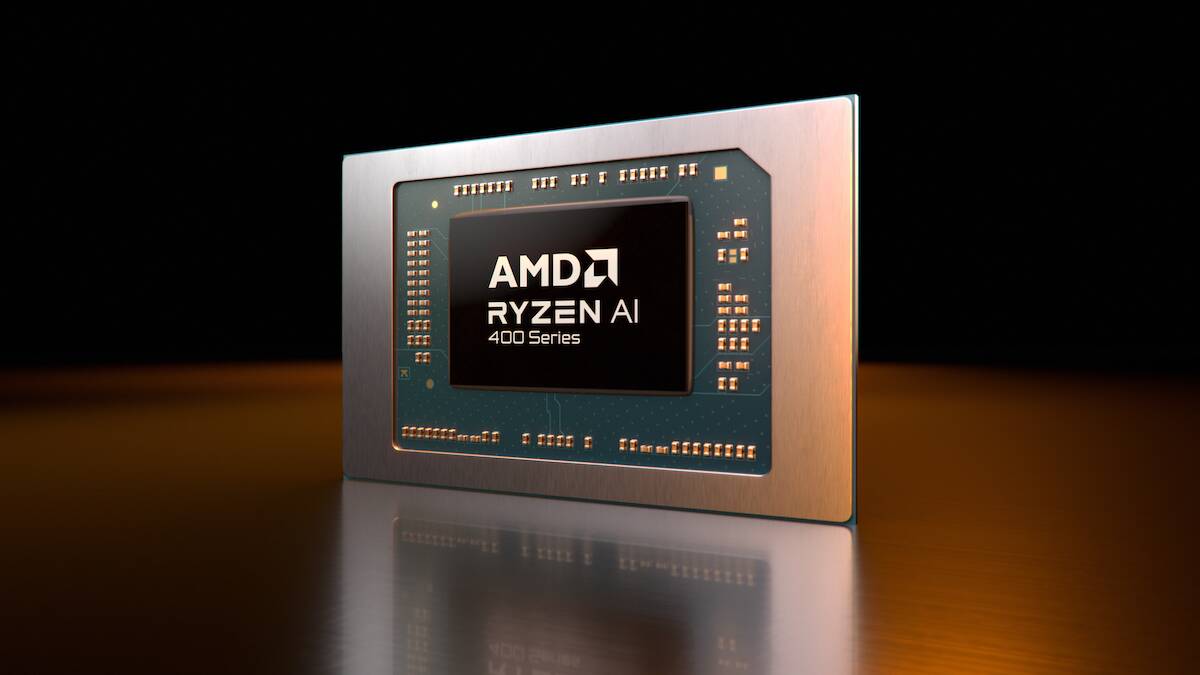
AMD's Ryzen AI 400-series desktop processors are repackaged laptop chips with up to 8 CPU cores and Radeon 860M GPUs, targeting business desktops rather than gaming due to high DDR5 memory costs.

Gadgets
fromArs Technica
1 month agoAMD will bring its "Ryzen AI" processors to standard desktop PCs for the first time
AMD's Ryzen AI 400-series desktop processors are repackaged laptop chips with up to 8 CPU cores and Radeon 860M GPUs, targeting business desktops rather than gaming due to high DDR5 memory costs.
Tech industry
from24/7 Wall St.
1 month agoAMD Looks to Displace Intel With World's First Copilot+ Desktop Chips
The AI PC market will grow at 30% annually from 2025 to 2034, reaching $967 billion, driven by on-device AI demand, with AMD's Ryzen AI 400 Series challenging Intel's x86 dominance through superior AI performance capabilities.
fromTechzine Global
2 months agoNeuromorphic computers prove suitable for supercomputing
Scientists are showing that neuromorphic computers, designed to mimic the human brain, are not only useful for AI, but also for complex computational problems that normally run on supercomputers. This is reported by The Register. Neuromorphic computing differs fundamentally from the classic von Neumann architecture. Instead of a strict separation between memory and processing, these functions are closely intertwined. This limits data transport, a major source of energy consumption in modern computers. The human brain illustrates how efficient such an approach can be.
Artificial intelligence


fromTechCrunch
2 months agoQuadric rides the shift from cloud AI to on-device inference - and it's paying off | TechCrunch
The company, which is based in San Francisco and has an office in Pune, India, is targeting up to $35 million this year as it builds a royalty-driven on-device AI business. That growth has buoyed the company, which now has post-money valuation of between $270 million and $300 million, up from around $100 million in its 2022 Series B, Kheterpal said.
Artificial intelligence
Artificial intelligence
fromComputerworld
2 months agoMicrosoft launches its second generation AI inference chip, Maia 200
Maia 200 is a high-performance, energy-efficient inference accelerator optimized for large reasoning models, delivering superior FP4/FP8 throughput and memory compared with rival cloud accelerators.
fromWIRED
2 months agoThe Daring Attempt to End the Memory Shortage Crisis
When I asked him how bad things really were, Clarke looked at me with a sigh. "Look, I've been at this a long time. This is the worst shortage I've ever seen. Demand is way ahead of supply. And it's driven by AI. It's driven by infrastructure. You've seen the spot market price-it's up to five times from September. That will manifest. It already has in contract pricing."
Gadgets

fromTheregister
2 months agoUnpacking AMD's latest datacenter CPU and GPU announcements
AMD clarified those estimates are based on a comparison between an eight-GPU MI300X node and an MI500 rack system with an unspecified number of GPUs. The math works out to eight MI300Xs that are 1000x less powerful than X-number of MI500Xs. And since we know essentially nothing about the chip besides that it'll ship in 2027, pair TSMC's 2nm process tech with AMD's CDNA 6 compute architecture, and use HBM4e memory, we can't even begin to estimate what that 1000x claim actually means.
Artificial intelligence
fromZDNET
2 months agoHow much RAM does your Linux PC actually need in 2026? An expert's sweet spot
Modern Linux is powerful, flexible, stable, and secure. With the exception of some of the more lightweight Linux distributions, it's also far more resource-dependent (just like all modern operating systems). Also: 5 things to consider before leaping from one Linux distribution to another Consider this: The minimum system requirements for Ubuntu Desktop today include just 4GB of RAM. I've run Ubuntu on a virtual machine with only 3GB of RAM.
Gadgets
fromGSMArena.com
2 months agoAMD announces the new Ryzen 7 9850X3D gaming CPU
The Ryzen 7 9850X3D features the same 8-core, 16-threads design as the 9800X3D, as well as the same 96MB L3 cache that makes these chips especially suited for gaming workloads. Thanks to the higher level of binning, the 9850X3D can now hit 5.6GHz clock speeds, up from the 9800X3D's 5.2GHz, at the same 120W TDP. This is an almost 8% increase in clock speed, and should make the 9850X3D the fastest gaming CPU in AMD's lineup, and consequently, on the market.
Gadgets
[ Load more ]