#mobile-shooting-range
#mobile-shooting-range
[ follow ]


Information security
fromSecuritymagazine
4 days agoThe Rising Tide of Executive Protection: Corporations Ramp Up Security in an Era of Heightened Threats
Companies are increasingly investing in executive protection due to rising threats, making it a strategic necessity for business continuity and resilience.
fromLos Angeles Times
2 weeks ago'One in a million' malfunction rained shrapnel onto 5 Freeway near Camp Pendleton, report says
Of all days for this very low probability event to happen, why this one? What was different from the thousands of times before this event employing the same shell-fuze combination, weapons system, and highly trained Marines? There is no definitive answer to these questions.
California


Information security
fromSecuritymagazine
3 weeks agoDiscussing Use of Force in Security: A Challenging Discussion?
Use of force in security cannot be entirely avoided but should be deployed only as a last resort when lesser options fail, requiring comprehensive training in tactics, de-escalation, and legal authority.
Miscellaneous
from24/7 Wall St.
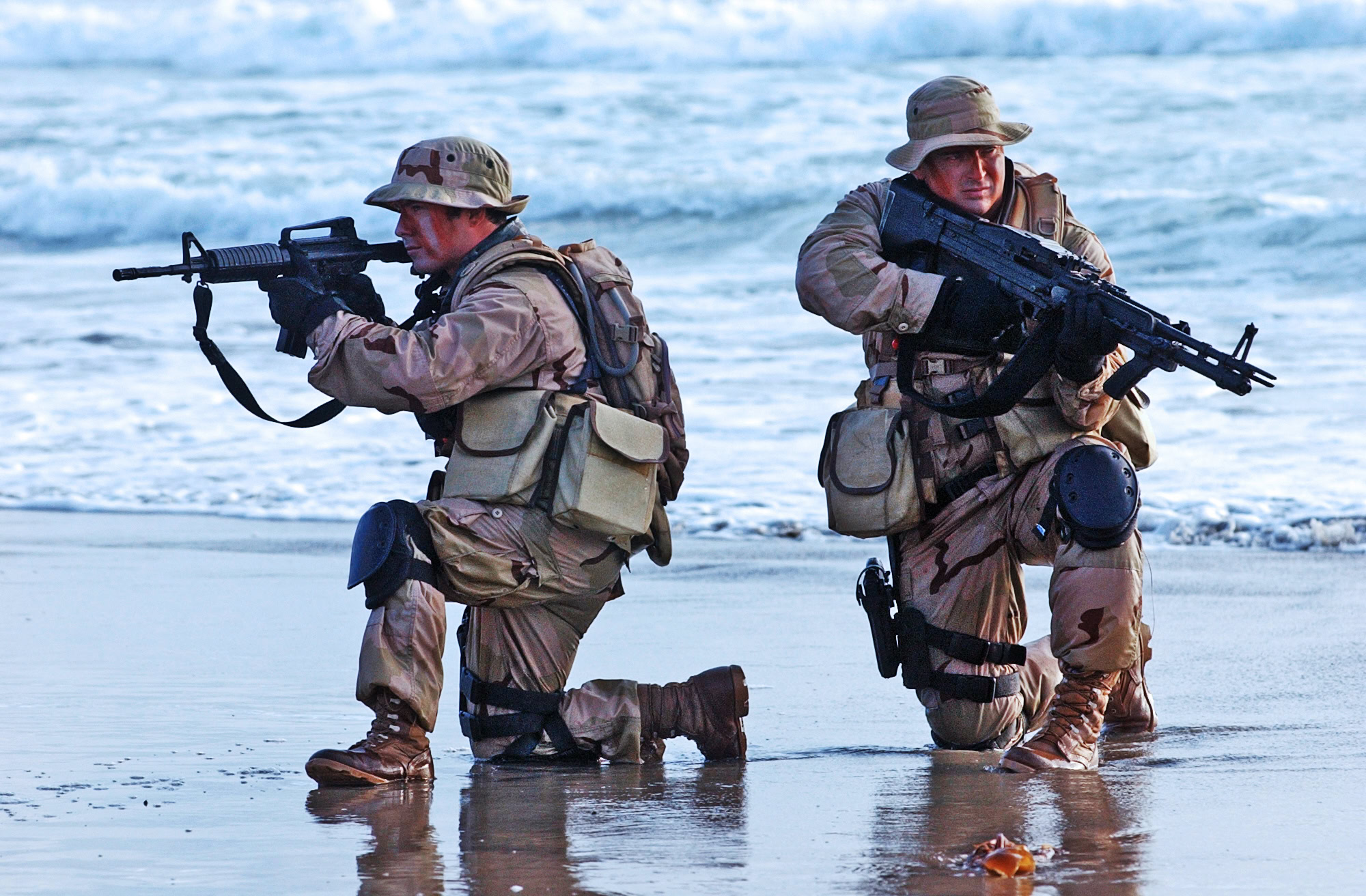
1 month agoThe Firearms That Gave Navy SEALs an Edge in Urban Combat
Navy SEAL firearms for urban combat are specifically selected based on operational experience to provide speed, precision, and reliability in close-quarters environments where reaction time is critical.
US news
fromNew York Post
1 month agoWild LI geezer built basement shooting range and staggering gun lab - just steps from Chaminade High School: DA
A 67-year-old Long Island man operated an illegal basement gun manufacturing and shooting range near multiple schools, possessing 10 mostly illegal firearms including homemade machine guns and thousands of rounds of ammunition.
from24/7 Wall St.
2 months agoFirearms That Required Extensive Training to Use Effectively
Military history is filled with firearms that looked formidable on paper but proved far less impressive in the hands of average troops. In many cases, the issue was not flawed engineering, but unrealistic assumptions about training and doctrine. Some weapons were built with elite users in mind, soldiers who could manage the weapon and tactical nuance at a level most forces never reached.
History
fromArs Technica
1 month agoWhoops: US military laser strike takes down CBP drone near Mexican border
The Defense Department didn't realize the drone was being flown by CBP when it shot it down, and had not first coordinated the use of the laser system with the US Federal Aviation Administration. The military hasn't been coordinating counter-drone measures with the FAA, and CBP drone operators didn't inform the military's laser unit that it was launching.
US news
from24/7 Wall St.
2 months agoThe Sniper Systems That Performed Better in Combat Than Anyone Predicted
Snipers often discover a weapon's true potential only after it leaves the range and enters combat. Dust, cold, heat, and chaos expose weaknesses, but sometimes they reveal strengths no one planned for. Across multiple wars, certain sniper systems proved tougher, more accurate, and more versatile than expected, allowing operators to push ranges and missions far beyond the original design brief. Here, 24/7 Wall St. is taking a closer look at sniper systems that exceeded expectations in combat.
History
fromeLearning Industry
2 months agoUtilizing VR And AR In High-Risk Scenarios For Manufacturing Training
Manufacturing environments are becoming more advanced, automated, and electrified-but they are also becoming more dangerous. High-voltage (HV) systems, robotics, advanced machinery, and tightly coupled production lines introduce risks that traditional training methods are no longer equipped to address effectively. Instructor-led classroom training, PDFs, videos, and even supervised shadowing have long been the foundation of manufacturing training. However, when the consequences of error include severe injury, fatal accidents, equipment damage, or production downtime,
Education
fromAbove the Law
2 months agoJudge And Wife Shot At Home - Above the Law
I worry about the safety of all our judges," she said. "As you work to peacefully resolve more than 1 million cases a year, you must not only feel safe, you must also be safe. Any violence against a judge or a judge's family is completely unacceptable. As public servants, you are dedicated to the rule of law.
Law


from24/7 Wall St.
2 months agoWeapons That Performed Well Except For Desert, Jungle, or Arctic Conditions
On paper, many of the world's most famous weapons looked like reliable successes. In practice, desert sand, jungle humidity, and arctic cold often had other ideas. Systems that performed well in testing or early combat sometimes broke down once environmental stress became unavoidable. Here, 24/7 Wall St. is taking a closer look at how the environment, not enemy fire, can quietly expose limits that designers never fully anticipated.
World news


from24/7 Wall St.
2 months agoHow Precision Sniper Technology Reduced the Need for Massed Infantry
Infantry once relied on numbers to solve uncertainty. When soldiers could not see or hit targets precisely, the answer was more troops and more fire. Sniper technologies quietly overturned that logic. By extending range, improving accuracy, and increasing awareness, they allowed small teams to dominate space once controlled only by massed formations. Precision replaced presence, and patience became a battlefield advantage. Here, 24/7 Wall St. is taking a look at the sniper technologies that totally changed the game.
Science
from24/7 Wall St.
2 months agoThese Dangerous Weapons Are Surprisingly Legal in America
In the United States, the right to bear arms is an important aspect of law and culture, yet many people are surprised by just how powerful certain legal-to-own weapons can be. Beyond standard guns, a range of weapons often associated with military or high-risk use are lawful under federal or state regulations, provided specific conditions are met. The legality of these highly dangerous weapons is due to a mix of constitutional rights, public safety concerns, and decades of changing legislation.
US politics
fromBusiness Insider
2 months agoSnowmobiles, skis, and laser tag: How NATO soldiers train for Arctic assaults
The encounter took place during a recent winter combat exercise involving roughly 20 NATO troops, beginning with an assault on skis and snowmobiles before shifting into a simulated firefight using blanks and lasers instead of live ammo. The drill was part of a monthlong course led by Finland's Jaeger Brigade that trains allied forces in Arctic warfare and cold-weather survival. Business Insider observed the battle's start at a training site 75 miles north of the Arctic Circle in Finland's snow-blanketed Lapland region.
Miscellaneous
fromTheregister
1 month agoGhost gun legislation casts shadow over 3D printing
Buried in Part C is a provision requiring all 3D printers sold or delivered in New York to include 'blocking technology,' the company said in a blog post. This is defined as software or firmware that scans every print file through a 'firearms blueprint detection algorithm' and refuses to print anything it flags as a potential firearm or firearm component.
US politics
US news
fromBusiness Insider
1 month agoWest Coast Marines want to train 500 new drone pilots a year in a crash course on everything from flying to explosions
Marines run a 15-day drone pilot course training aerial navigation, attack drone operation, and safe explosive payload preparation, aiming to certify 500 operators annually.
US news
fromIndependent
2 months agoMeet the Rocky Mountains' Irish Police Chief: 'I would take holidays from my job in Ireland, fly over, do my firearms test and that night I was out driving a police car'
Greg Daly left banking in Ireland to become a proud police chief in a Colorado mountain town, inspired by CHiPs and lifelong martial-arts training.
fromwww.mediaite.com
2 months agoBorder Patrol Chief: Shooting Victim Wanted to Cause Maximum Damage' and Massacre' Agents With Handgun
The suspect also had two loaded magazines and no accessible ID. This looks like a situation where an individual wanted to do maximum damage and massacre law enforcement.
US news
[ Load more ]