#modular-spacecraft-design
#modular-spacecraft-design
[ follow ]
#nasa #artemis-ii #space-exploration #moon-mission #spacex #space-mission #orion-spacecraft #space-technology









Science
fromSilicon Canals
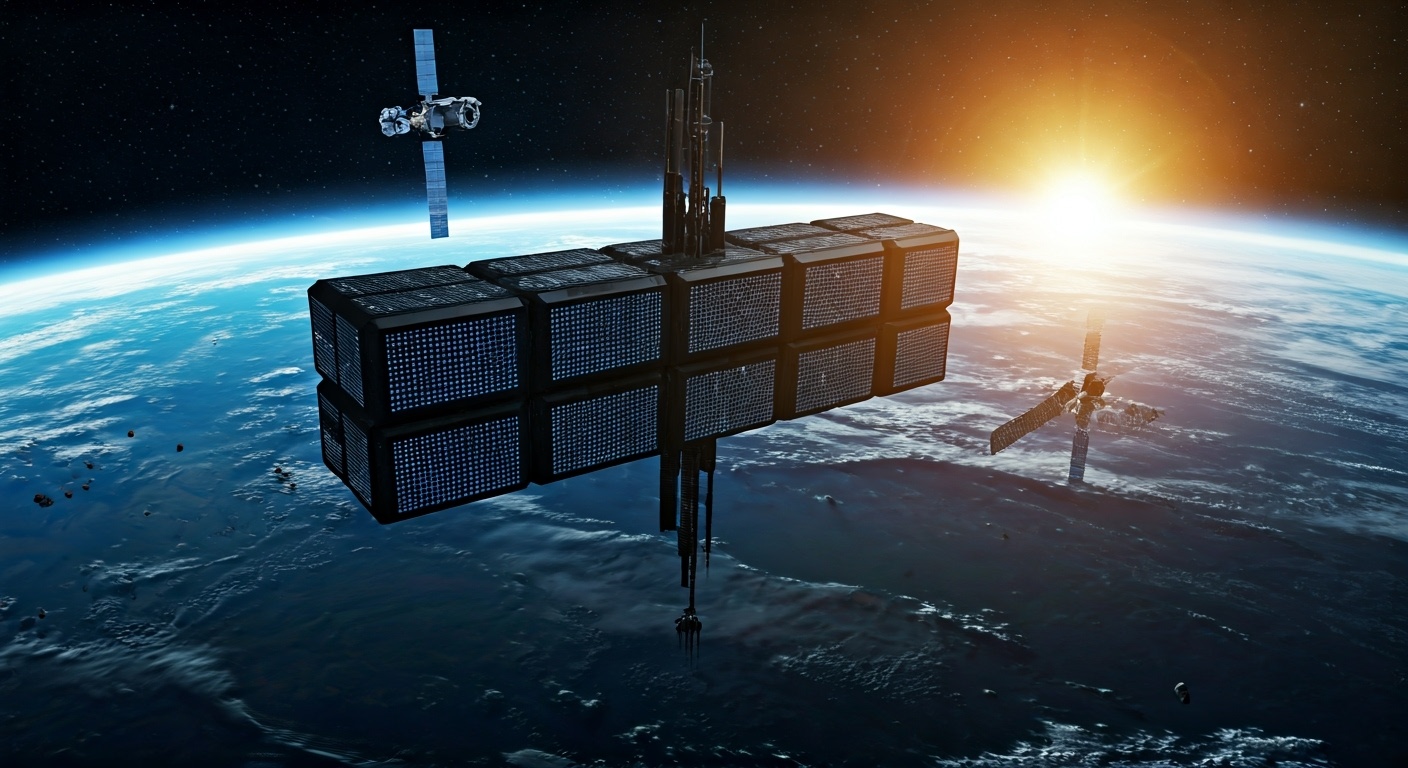
1 day agoSpaceX, Amazon, and Google want orbital data centers - four engineering barriers reveal who really benefits - Silicon Canals
Orbital data centers will concentrate AI infrastructure power among a few dominant companies, limiting access for smaller competitors and national regulators.
Venture
fromTechCrunch
3 weeks agoThis SpaceX veteran says the next big thing in space is satellites that return to Earth | TechCrunch
Lux Aeterna develops reusable satellites with integrated heat shields enabling payload return to Earth, securing $10 million seed funding for 2027 demonstration mission.
Science
fromYanko Design - Modern Industrial Design News
2 days agoThis $349 NASA Mars Perseverance Rover Kit Lets You Build an AI-Powered Mars Robot at Home - Yanko Design
CircuitMess offers a buildable AI-capable replica of NASA's Perseverance rover for $309, emphasizing hands-on learning and modular expansion.
from24/7 Wall St.
1 month agoThe Space Infrastructure Builder Stumbles While the Launch Provider Burns Through Cash Faster
Redwire focuses on space infrastructure and autonomous systems. The company completed its Edge Autonomy acquisition and reported 50.7% year-over-year revenue growth. Management maintained full-year guidance of $320 to $340 million, and the book-to-bill ratio of 1.25 suggests demand is holding. But the business is bleeding cash with a net loss of $41.2 million in Q3, nearly double the $21 million loss from the prior year. Gross margin sits at just 16.3%, leaving almost no room for error.
Startup companies

Miscellaneous
fromArs Technica
2 months agoESA considers righting the wrongs of Ariane 6 by turning it into a Franken-rocket
ArianeGroup proposes replacing Ariane 6's solid side boosters with liquid, partially reusable boosters derived from MaiaSpace's methane-fueled design to cut costs and increase launch rate.
Science
fromArchDaily
3 weeks agoGateway in Lunar Orbit: Extending Architecture Beyond Earth
The technosphere—humanity's 30 trillion-ton network of artifacts—is expanding beyond Earth through NASA's Artemis program, establishing permanent orbital infrastructure around the Moon via the Gateway space station.
Science
fromwww.scientificamerican.com
3 weeks agoNASA space probe expected to reenter the atmosphere with a chance of raining debris
NASA's Van Allen Probe A is reentering Earth's atmosphere with a one-in-4,200 risk of debris harm to people, expected around 7:45 P.M. EDT with a 24-hour uncertainty window.
Science
fromMail Online
3 weeks agoScientists to launch 50,000 MIRRORS into space for sunlight on demand
Reflect Orbital plans to launch 50,000 mirrors into space to beam sunlight to Earth for 24-hour solar power generation, disaster relief lighting, and street lighting, though scientists warn of significant environmental and biological impacts.
Science
fromArs Technica
4 weeks agoDing-dong! The Exploration Upper Stage is dead
NASA's Exploration Upper Stage, a Boeing-developed upgrade for the SLS rocket, was cancelled in favor of United Launch Alliance's next-generation upper stages, ending a project that survived primarily through political support rather than technical necessity.
fromArs Technica
1 month agoSpaceX takes down Dragon crew arm, giving Starship a leg up in Florida
Pad 40 has been the primary Falcon 9 launch site for most of the rocket's history, while Pad 39A provided a location for crew launches and an augmentation to support SpaceX's growing launch cadence. But there are signs the Falcon 9 launch cadence, which reached 165 missions last year, may be peaking as the company turns its attention to Starship. And SpaceX has steadily reduced the time it takes to reconfigure Pad 40 between launches, cutting the turnaround time to less than 48 hours.
Science
Science
fromwww.scientificamerican.com
1 month agoThe largest-ever satellite of its kind just unfurled its wings in low-Earth orbit
AST SpaceMobile's BlueBird 6 deployed a roughly 2,400-square-foot communications antenna—the largest commercial communications array in low-Earth orbit—aiming to enable smartphone cellular broadband.
Science
fromArs Technica
1 month agoULA's Vulcan rocket suffers another booster problem on the way to orbit
Northrop Grumman-built GEM 63XL solid boosters suffered manufacturing-related nozzle insulator failures that reduced thrust, yet Vulcan successfully placed military satellites into geosynchronous orbit.
fromArs Technica
1 month agoTo reuse or not reuse-the eternal debate of New Glenn's second stage reignites
The first stage, of course, would be fully reusable. But what about the upper stage of New Glenn, powered by two large BE-3U engines? Around the same time, in the early 2010s, SpaceX was also trading the economics of reusing the second stage of its Falcon 9 rocket. Eventually SpaceX founder Elon Musk abandoned his goal of a fully reusable Falcon 9, choosing instead to recover payload fairings and push down manufacturing costs of the upper stage as much as possible.
Science
fromArs Technica
1 month agoRocket Report: Say cheerio to Orbex; China is getting good at booster landings
"You absolutely have to have a plan to compete with SpaceX on price." Welcome to Edition 8.29 of the Rocket Report! We have a stuffed report this week with news from across the launch spectrum. Long-term, probably the most significant development this week was a subscale version of the Long March 10 rocket successfully launching and then executing a picture-perfect ocean landing. China is catching up rapidly to the United States when it comes to reusable launch.
Science
fromTheregister
1 month agoVulcan Centaur reaches orbit after booster anomaly
United Launch Alliance's Vulcan Centaur reached orbit on February 12 despite "a significant performance anomaly" that saw one of its four solid rocket boosters burn through its nozzle during ascent. Viewers of the launch from Cape Canaveral at 0422 EST (0922 UTC) were treated to some impressive fireworks as the part detached in a shower of fragments. It was the fourth launch of ULA's replacement for the Atlas V and Delta IV rocket, and the second in which an anomaly was noted with the booster.
Science
[ Load more ]