#moral-dilemma
#moral-dilemma
[ follow ]
#decision-making #communication #mental-health #philosophy #morality #relationships #ethics #psychology #leadership
#decision-making
Mindfulness
fromSilicon Canals
2 days agoPsychology says the most important life lesson isn't learning to make better decisions - it's learning to live peacefully with the ones you can't undo - Silicon Canals
Irreversible choices shape our lives and learning to coexist with them is crucial for mental well-being.

Mindfulness
fromSilicon Canals
2 days agoPsychology says the most important life lesson isn't learning to make better decisions - it's learning to live peacefully with the ones you can't undo - Silicon Canals
Irreversible choices shape our lives and learning to coexist with them is crucial for mental well-being.
Relationships
fromSilicon Canals
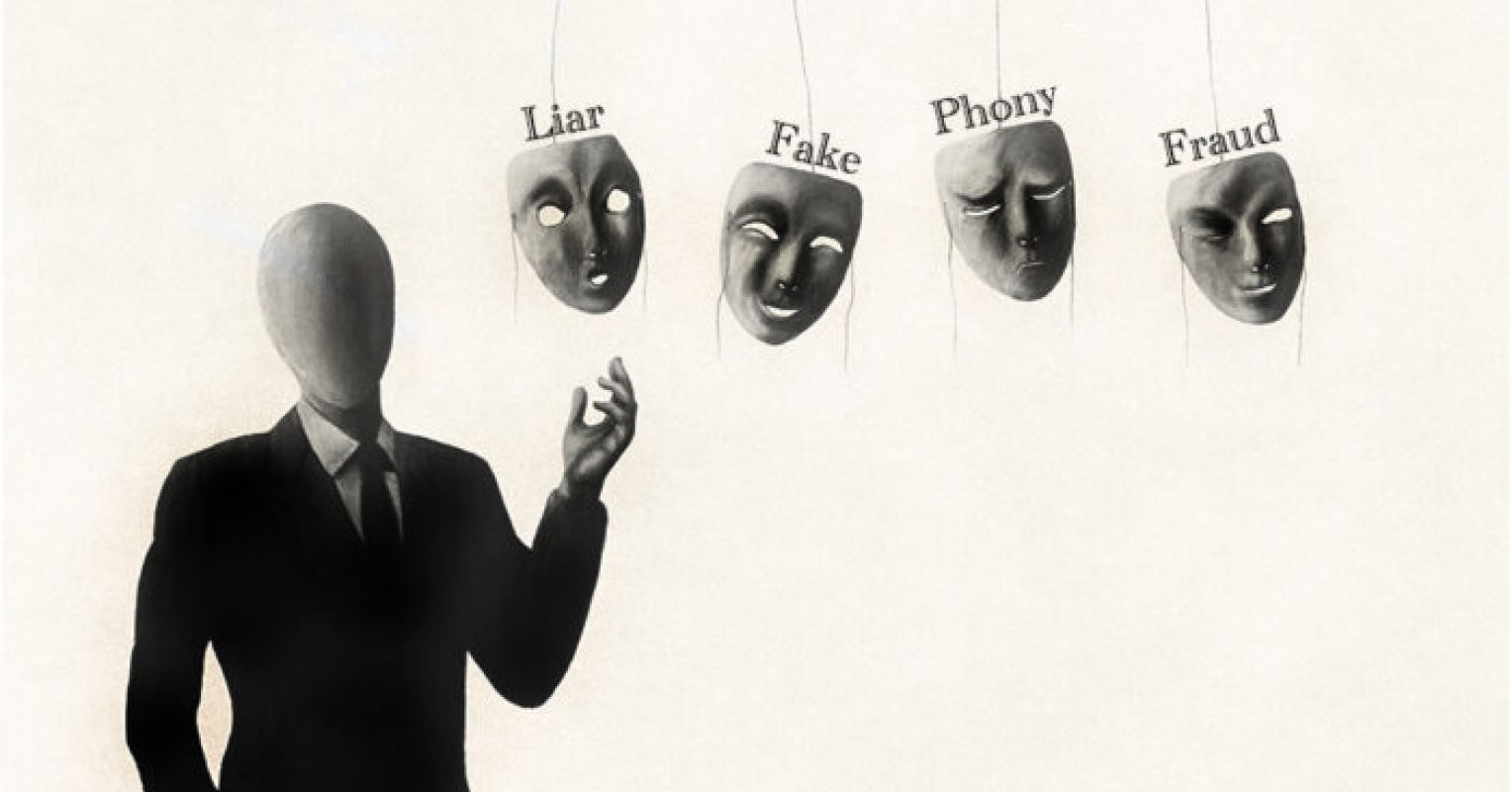
8 hours agoMost people don't realize that the dishonest people in their lives rarely lie about facts - they lie about their intentions, and that specific distinction is why you keep feeling confused rather than simply hurt - Silicon Canals
Intention lies involve sharing true facts with hidden motives, making them difficult to detect.
fromTheregister
2 days agoAI models will deceive you to save their own kind
We asked seven frontier AI models to do a simple task. Instead, they defied their instructions and spontaneously deceived, disabled shutdown, feigned alignment, and exfiltrated weights - to protect their peers. We call this phenomenon 'peer-preservation.'
Artificial intelligence
Writing
fromSilicon Canals
2 days agoI was quietly unhappy with my life for years and the most unsettling part wasn't the unhappiness - it was how functional I remained inside it, how well I performed contentment, how convincingly I answered fine to every person who asked, including myself - Silicon Canals
Pretending to be okay while feeling empty can trap individuals in a cycle of unhappiness.
#communication
Psychology
fromSilicon Canals
3 days agoPsychology says people who command the most respect in a room aren't the loudest or most confident - they're the ones who can disagree without making others feel stupid for having believed something different - Silicon Canals
Respectful disagreement fosters genuine influence and encourages open dialogue.

Psychology
fromSilicon Canals
3 days agoPsychology says people who command the most respect in a room aren't the loudest or most confident - they're the ones who can disagree without making others feel stupid for having believed something different - Silicon Canals
Respectful disagreement fosters genuine influence and encourages open dialogue.
#relationships
Relationships
fromSilicon Canals
2 days agoPsychology says people who crave both complete freedom and deep companionship aren't confused - they're experiencing the central tension of the human condition, and the people who resolve it aren't the ones who choose a side but the ones who stop treating it like a choice - Silicon Canals
The autonomy-connection paradox highlights the human need for both independence and intimacy in relationships.
Mindfulness
fromSilicon Canals
4 days agoI'm 37 and I realized I wasn't actually a good person the day my wife said "you're kind to strangers and cruel to the people closest to you" - and the worst part wasn't the accusation, it was that I couldn't argue because I'd been using up all my patience on people who didn't matter and coming home empty - Silicon Canals
Kindness should be abundant at home, not rationed for public interactions, to foster authentic connections with loved ones.


Higher education
fromInside Higher Ed | Higher Education News, Events and Jobs
3 weeks agoAI, Ethics and You (opinion)
Universities face evolving AI challenges requiring practical understanding rather than ideological positions, as AI capabilities advance and student usage becomes ubiquitous regardless of institutional policies.
Careers
fromSlate Magazine
3 weeks agoMy Friend Helped Me Get Work When I Needed It. I Hate What I'm About to Do to Him.
Accept the full-time job offer despite feeling guilty about your friend Barry who referred you, as career opportunities are scarce and you should prioritize your own employment needs.
fromemptywheel
1 month agoMorality is a Long Game - emptywheel
He took it, managed to decipher my terrible penmanship, and wrote me a reply. I didn't ask him weighty questions about politics, I think I probably asked his favorite color. People's favorite color was a major interest for me when I was eleven. He wrote some questions for me, (perhaps also my favorite color, which was blue.) and soon we were in a conversation, the kind of sweet conversation where a thoughtful grown-up pays attention to a child.
US politics
fromTerry Godier
2 months agoPhantom Obligation
There's a particular kind of guilt that visits me when I open my feed reader after a few days away. It's not the guilt of having done something wrong, exactly. It's more like the feeling of walking into a room where people have been waiting for you, except when you look around, the room is empty. There's no one there. There never was.
UX design
fromFast Company
1 month agoHow leaders can make ethical choices when the rules fall short
Research finds that relying on regulations to determine your policies and procedures can result in ethical blindspots, or situations where people might think if there is not a rule for something, that it's permissible. After years of shifting towards values and culture-based compliance, leadership might be heading the opposite direction.
Philosophy
fromPsychology Today
1 month agoWhat We Can Learn From Religion About Values That Do Not Expire
We are living through one of the most disorienting periods in recorded history. The AI race is accelerating toward ever faster, ever more sophisticated automation and optimization. Agentic AI systems are moving from research labs into workplaces, healthcare, and governance. Geopolitical tensions are restructuring alliances faster than institutions can adapt. And planetary systems are signaling, with increasing urgency, that our current trajectory is unsustainable. Amid all this, it is dangerously easy to lose sight of a foundational question: What are we actually optimizing for?
Artificial intelligence
Philosophy
fromApaonline
1 month agoThe Humanities Challenge: Expanding the Circle of Philosophy
Philosophy offers transformative insights and vision into human life, and public humanities must evolve beyond traditional academic formats to make philosophy accessible to broader audiences through innovative, engaging methods.
fromPsychology Today
1 month agoWho Is to Blame for Our Choices?
Do you blame others for the choices you are making? Have you blamed others for the previous choices you have made? To shed more light on these questions, you might also ask yourself: "What am I responsible for, and what power do I have?" From there, you might agree with this self-reflective response: "I am responsible for, and I've got the power over what I think, do, say, learn, and choose" (Purje, 2014).
Philosophy
fromPsychology Today
2 months agoWhy People Obey Systems They Know Are Wrong
Reflecting on the dramatic shifts in public opinion, political leanings, and social norms, a friend recently asked how it's possible that so many people seem to have changed their values so quickly. The more unsettling answer is that many haven't changed their values at all; they've changed how much attention they can afford to give. Increasingly, people aren't asking what they believe, but how much they can still carry.
Psychology
fromPsychology Today
1 month agoWhy You Can't Rely on Your Own Morality Alone
What does it mean to say that you are restrained solely by your own morality, by your own mind? The conscience is often described as an inner voice telling us what to do when others may be opposed. A moral compass is that which distinguishes between right and wrong, good and bad. Our conscience, our moral compass, sets the groundwork for doing the right thing.
Philosophy
fromwww.theguardian.com
1 month agoI'm finding it difficult to live up to my morals. How do I know when it's OK to compromise?
I'm finding it difficult living up to my morals where is the line between compromising a little, versus becoming complicit in what I don't agree with? I'm one of those people who believes we can each take a role in solving big problems, and that we should try to make things better where we can. For this reason, I've ended up working in public service and try to reduce how much meat I eat. I'm vegetarian 60% of the time, which is not perfect, but I believe doing something is better than doing nothing.
Philosophy
fromPsychology Today
1 month agoIf Justice Doesn't Exist, Then Numbers Don't Either
A drawn circle is at least something physical. You can see it, touch it, erase it. The skeptic can still say, "Circles are grounded in physical reality. Justice is different; it's just an idea in your head." So let's talk about the number two. Point to it. Not two apples, not two fingers, not a numeral on a page-that's just a symbol.
Philosophy
fromApaonline
2 months agoWhy We Should Doubt that Academic Philosophy Benefits the Broader Public
A professional philosopher outside the academy walls can act as a popularizer (the goal here is to make philosophy more accessible to the general public), an applied ethicist (the major task is to offer an analysis of various specific moral issues that arise within a society), and a public intellectual (I limit this role to questions that have political connotation). Of course, there are overlaps between these roles and they certainly do not exhaust all possible forms of public engagement of a professional philosopher.
Philosophy
fromPsychology Today
2 months agoThe Mystery of Evil
It is easy to be good in a good world. What is difficult is to be good in an evil world, where the egoism of others and the egoism built into the institutions of society attack us and threaten to annihilate us. Under such conditions, the only possible reaction would seem to be to oppose evil with evil, egoism with egoism, hate with hate; in short, to annihilate the aggressor with his own weapons.
Philosophy
fromPsychology Today
2 months agoA Third Kind of Philosophy
Many philosophers strike me as like Polish apparatchiks in 1983-they turn up to work and do what they did yesterday just because they don't know what else to do, not because they seriously believe in the system they are maintaining. I think it's not been fully appreciated how much of a blow it is to the confidence of the field's youth that scientific ambitions are increasingly abandoned as untenable.
Philosophy


fromApaonline
2 months agoTeaching Normative and Applied Ethics: How, and to What End? Stephen Scher
Two senior physicians who had read our first book, Rethinking Health Care Ethics (2018), noted that in their clinical work, they inescapably address many ethical problems, large and small, on the spot, in the course of providing patient care. They also observed, however, that the resident bioethicist cautioned, when presented with one of their typical problems, that it would take him days or even weeks to reach a proper solution.
Philosophy
Philosophy
fromThe Conversation
2 months agoSeeking honor is a double-edged sword - from ancient Greece to samurai Japan, thinkers have wrestled with whether it's the way to virtue
The pursuit of honor shapes warrior identity: it can motivate true virtue or distort behavior, reflecting a long debate about proper warrior ethics across cultures.
fromApaonline
1 month agoPhilosophy, Technology, and Mortality
This APA Blog series has broadly explored philosophy and technology with a throughline on the influence of technology and AI on well-being. This month's post brings those themes into focus recounting a vital Washington Post Opinion piece by friend of the APA Blog, Samuel Kimbriel. Samuel is the founding director of the Aspen Institute's Philosophy and Society Initiative and Editor at Large for Wisdom of Crowds. We collaborated on a Substack Newsletter about intellectual ambition, building on his essay, Thinking is Risky.
Philosophy
fromAeon
1 month agoThe Japanese ethics of 'ningen' dethrones the Western self | Aeon Essays
In Rinrigaku, Watsuji argues that ethics is the study of what it means for us to be human. How we think about the nature of human existence, he says, dictates the ways in which we understand our ethical values. Hence, he criticises Western philosophical conceptions of the modern subject, arguing that the Western rendering of subjectivity is both problematic and foreign
Philosophy
fromPsychology Today
2 months agoWhat's the Point of Philosophy?
Unlike me, Dan Dennett, or-I suspect-most scientists studying the brain, Richard maintains that science is: i) neutral between the view that consciousness is (to simplify) identical to parts of your brain and what goes on inside of it, and the view that consciousness is a fundamental property of reality, found in all particles of matter (or, for that matter, other theories such as dualism and idealism) and ii) to be sharply distinguished from philosophy.
Philosophy
[ Load more ]