Music production
fromThe Verge
9 hours agoA folk musician became a target for AI fakes and a copyright troll
AI-generated covers of public domain songs were uploaded to streaming platforms under Murphy Campbell's name, leading to copyright issues.
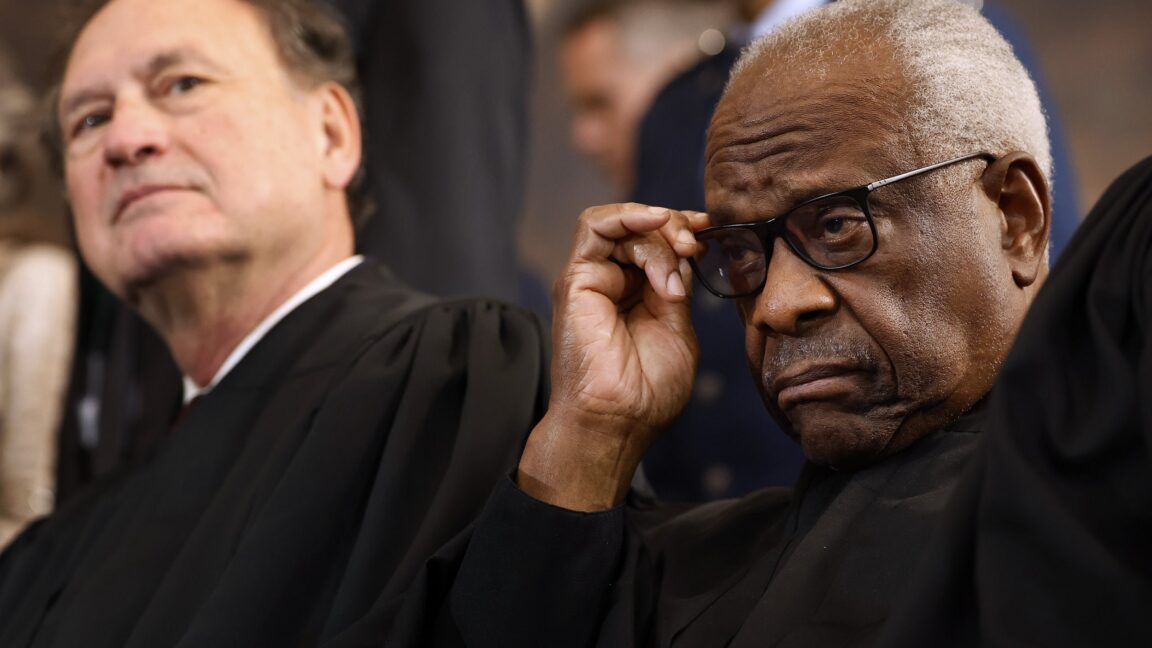
"Under our precedents, a company is not liable as a copyright infringer for merely providing a service to the general public with knowledge that it will be used by some to infringe copyrights," Justice Clarence Thomas wrote for the court.
On Tuesday, a day after the Justice Department revealed in court it had reached a settlement with Live Nation that a handful of states had agreed to, Judge Arun Subramanian held a hearing on the future of the case. He ordered Live Nation CEO Michael Rapino, DOJ Antitrust Division acting chief Omeed Assefi, and representatives of states that hadn't settled to stay at the Manhattan courthouse and attempt to reach a broader deal.
Today, the concert ticket industry is broken, in fact the concert industry itself is broken. It is controlled by a monopolist. It is controlled by Live Nation. Ticketmaster keeps more in fees than competitors such as AXS, according to an expert's estimate cited by Jonathan Hatch, an attorney for New York state.
In recent years, multimedia content has firmly established itself online, fueled by the development of high-speed Internet technologies as well as the growing availability of tools for creating and editing video. The global lockdowns also contributed to this process by forcing people to look for similar alternatives on the web. If integrating video into your communications sounds like an overwhelming investment, start leveraging your products with music and audio that are often underestimated by marketers.
Of the $43.9 billion that advertisers in the U.S. are expected to spend on creator marketing in 2026, most of that money - 55% - will go towards ads amplifying the creators' content, not to the actual creation and posting of content by the creators themselves. And that spend is only increasing as creator content becomes a more popular choice for ad creative and paid amplification provides brands with the analytics to be able to more effectively gauge the impact of creators' content.
In a series of posts on X, formerly Twitter on Tuesday (20 January), 33-year-old "Broken" singer Kim Petras stated that she had officially asked to be dropped by her record label Republic Records, a brand owned by Universal Music. "I'm tired of having no control over my own life or career. I want to continue to self fund and self curate my own music. This is why I have formally requested to be dropped by @RepublicRecords," Petras wrote.
In an audacious action starting to attract media attention, last month a group of piracy actors called Anna's Archive copied about 86 million music files from Spotify. The intention was to release the hoard on the BitTorrent file-sharing platform. All three of the major labels (UMG, Sony Music Entertainment, and Warner Music Group), along with Spotify, launched the unsurprising lawsuit in September. The presiding judge, Jed . Rakoff, issued an injunction (HERE).
As 2025 fades into the rearview mirror, many of the entertainment and media industry's biggest legal questions remain unresolved. In this episode of The Briefing, Weintraub Tobin partners Scott Hervey and Tara Sattler take a forward-looking approach to the cases and doctrines that could shape 2026. In this episode, they cover: The unsettled future of fair use in AI training and copyright infringement How courts are approaching lawful versus unlawful acquisition of training data The growing split in AI cases involving market substitution and fair use
Bandcamp has announced it will no longer allow AI-generated music to be hosted on its platform. In a post shared on Reddit, the company's support team revealed their plans to implement a policy prohibiting "any use of AI tools to impersonate other artists or styles," elaborating more firmly that "music and audio that is generated wholly or in substantial part by AI is not permitted on Bandcamp."
Free YouTube Music accounts are now seeing their access to lyrics limited, according to multiple reports. Google started testing lyrics as an exclusive feature for Premium users in September, but it appears that it's now receiving a wider rollout. It seems that free users will be limited to viewing lyrics for five songs per month, though we've reached out to Google for confirmation.