Film
fromVulture
20 hours agoThe Twist in The Drama Is Not the Problem
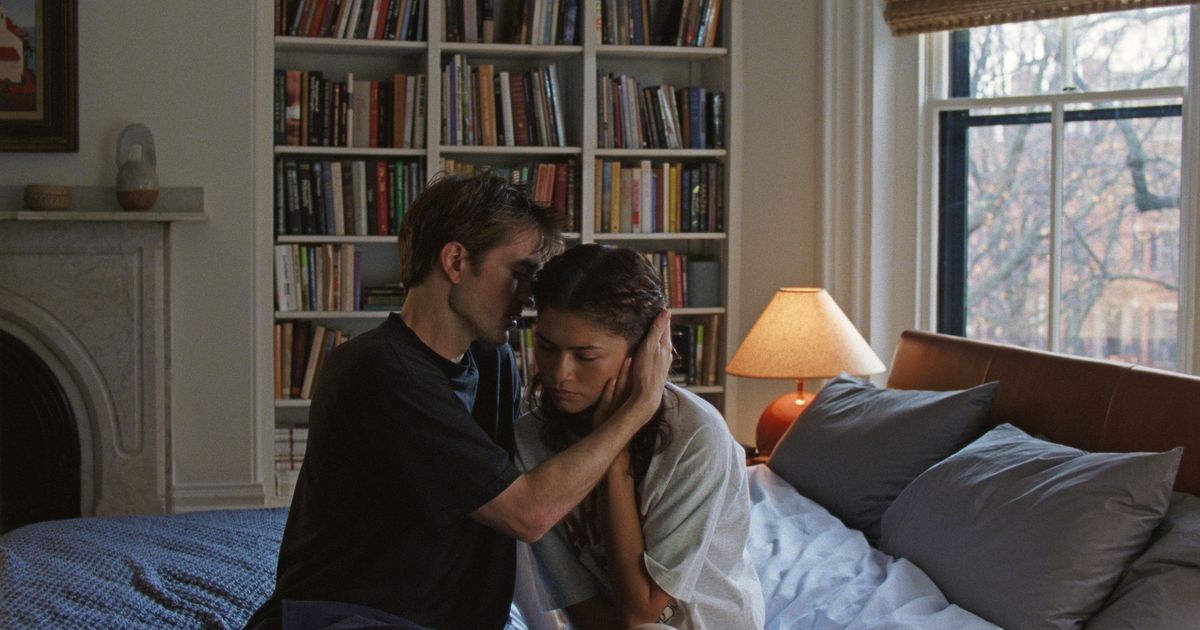
The film features a controversial plot twist involving a character's past plan for a school shooting, sparking significant online speculation and backlash.
To deny one's own experiences is to put a lie into the lips of one's own life. It is no less than a denial of the soul. The concept I stick to - my core principle - is simple: I write in plain English, and only when I actually have something to say.
Enrigue's 'penchant for shooting the facts of history through the prism of the absurd' makes him singular-but it also puts him firmly in a long literary tradition. The book 'distills a byzantine swirl of historical events through the lives of a handful of very colorful characters,' intertwining several real and invented incidents with major moments in the Apache Wars, a series of skirmishes involving Native Americans, the U.S., and Mexico across the Southwest borderlands.
The new chapter will include not only a game but a novel and music, the company said in a press release. The developer revealed the new IP via a live-action teaser, with an actor reading lines from William Blake's poem, The Sick Rose. A painting then fell from the wall, and the actor then turned over an hourglass with red sand, with a tagline stating "The door won't stay closed."
10 Cloverfield Lane Mary Elizabeth Winstead, John Goodman and John Gallagher Jr are locked in an underground bunker for the majority of this left-field sequel to Cloverfield, with thrilling results. In the film's final throes, Winstead's character exits the bunker, and finds that her captor was telling the truth about an alien invasion above - a twist that completely and ruinously dissipates the hard-earned tension that came before.
When the people who are after me get here, they'll arrest me and put me on trial, or they'll disappear me to some black site. Or they won't bother with any of that and they'll just kill me. All of these seem like plausible outcomes, but in the novel's prologue, the narrator seems much more confident of her success: I am a fucking genius, a gorgeous fucking genius, and the only thing left to do is sit down and write.
Trope, POV, backstory, character arc. In the 30 years since I was a student of that benign, pipe-smoking, elbow-patched man of letters Malcolm Bradbury, the private language of creative writing workshops has taken over the world. What writers used to say to small circles of students in an attempt to help them improve their storytelling technique has become a familiar way, often parodic and self-knowing, of interpreting the grand and not-sogrand narratives of our time.
A writer is a kind of magician. Their job is to create living, three-dimensional people out of the ordinary stuff of ink and paper. This is no easy task, because readers can't literally hear, touch, or observe a character. Everything that defines a human being in real life-the physical space they occupy, or how they smell, feel, and sound-is stripped away, replaced by description. But authors have one major, mystical advantage: They can show you what's happening inside of someone's brain.
At least one fundamental human trait persists in the smartphone era: People seem to love a challenge. The internet teems with viral competitions, gamified health apps, and "life-maxxing" exercises of many kinds. Even those who resist the lure of screens-by, for instance, reading books-are frequently doing so with a kind of competitive zeal. A University of Pennsylvania professor has built a strict, rules-based classroom cult around reading.
You are leaving work, your suit still damp from the morning's downpour, the skin on your palms peeling. You are clutching two supermarket bags, tins of cream soup and tuna knocking against one another. The rain is hard and your anorak is cheap. You are on your way to Stockbridge, to your parents' house, which only your father inhabits now that your mother is gone.
Tropes, as these bullet-point ideas have come to be known, have taken over romance. Those who write, market and read romantic fiction use them to pinpoint exactly what to expect before the first page is turned. On Instagram, Amazon and bookshop posters you'll find covers annotated with arrows and faux-handwritten labels reading slow-burn or home-town boy/new girl in town. Turn over any romance title and they'll be there listed in the blurb.