#national-endowments
#national-endowments
[ follow ]
#higher-education #philanthropy #arts-funding #fundraising #museum-funding #community-engagement #museums


Non-profit organizations
fromNonprofit Quarterly | Civic News. Empowering Nonprofits. Advancing Justice.
2 days agoHow Dissolving Your Nonprofit Can Strengthen the Sector | Nonprofit Quarterly | Civic News. Empowering Nonprofits. Advancing Justice.
Nonprofit leaders must sometimes choose to dissolve organizations intentionally rather than forcing survival in a weakened state.
#higher-education

Higher education
fromPsychology Today
3 days agoShould You Serve on the Board of Your Alma Mater?
Higher education is essential for the U.S. economy and requires significant institutional change to adapt to current challenges.
fromInside Higher Ed | Higher Education News, Events and Jobs
3 days agoHigher education
Higher Ed Denounces GSA's Proposed Federal Funding Strings
The Trump administration's proposed pledge for colleges on diversity and inclusion is seen as vague and burdensome, risking federal funding for non-compliance.
Higher education
fromInside Higher Ed | Higher Education News, Events and Jobs
3 days agoHigher Ed Denounces GSA's Proposed Federal Funding Strings
The Trump administration's proposed pledge for colleges on diversity and inclusion is seen as vague and burdensome, risking federal funding for non-compliance.
Media industry
fromNonprofit Quarterly | Civic News. Empowering Nonprofits. Advancing Justice.
4 days agoPolitics in an Attention Economy | Nonprofit Quarterly | Civic News. Empowering Nonprofits. Advancing Justice.
Candidates must be cultural figures to succeed in today's American politics, navigating an attention economy shaped by algorithms.
Left-wing politics
fromNonprofit Quarterly | Civic News. Empowering Nonprofits. Advancing Justice.
5 days agoHow to Undermine Authoritarian Control: On Empowering Parallel Institutions | Nonprofit Quarterly | Civic News. Empowering Nonprofits. Advancing Justice.
Civil society must demonstrate the necessity of democratic institutions and social services to protect them from dismantling efforts by ultra-elites.
fromwww.theguardian.com
6 days agoThe UK's free-to-access museums are the envy of the world. Charging for entry would be a big mistake | Karin Hindsbo
Twenty-five years ago, the UK made the bold and generous gesture of making its national museums free to all. Suddenly, anyone from anywhere in the world could gaze at iconic works of art by the greatest artists in history without having to pay a penny.
London
#nonprofit
Fundraising
fromNonprofit Quarterly | Civic News. Empowering Nonprofits. Advancing Justice.
2 days agoUsing AI for Fundraising Still Requires Human Strategy | Nonprofit Quarterly | Civic News. Empowering Nonprofits. Advancing Justice.
AI should support strategy in nonprofit fundraising, not replace the essential human elements of trust and relationship building.
Non-profit organizations
fromNonprofit Quarterly | Civic News. Empowering Nonprofits. Advancing Justice.
3 days agoAI in the Nonprofit Sector Is a Question of Governance, Not Just Technology | Nonprofit Quarterly | Civic News. Empowering Nonprofits. Advancing Justice.
Nonprofits face a critical choice in shaping AI governance or risk external control over its implementation and impact.
fromHarvard Business Review
1 week agoTreat Nonprofits as Strategic Partners, Not Just Philanthropic Recipients
Most for-profit companies still confine nonprofit relationships to corporate philanthropy. Donations flow through foundations, annual reports highlight community contributions, and nonprofit engagement is framed as evidence of corporate responsibility.
Non-profit organizations
fromOregon ArtsWatch * Arts & Culture News
3 weeks agoArts & Business Alliance of Eugene: Advocates for the arts * Oregon ArtsWatch
WolfBrown found that Eugene had an abundance of art; however, the town needed more support from the business sector. The results showed that "we punched above our weight for a community our size," said Kelly Johnson, executive director of the nonprofit Arts & Business Alliance of Eugene, which the city created in 2008 to link the arts and business communities.
Portland
.png?trim=0,0,0,0&width=1200&height=800&crop=1200:800)

fromEntrepreneur
3 weeks agoShe Invited Homeless Men to Run. That Instinct Fueled Her $100M Business.
Why do I get to be the runner, and these guys get to be the homeless guys on the corner? Why can't we all be runners? She didn't have an answer. It would've been easy to let that question dissolve with her footsteps. Most people would have. But Mahlum saw something in those men that others had missed.
Running
fromOregon ArtsWatch * Arts & Culture News
3 weeks agoPortland facing $1 billion-plus in arts, culture and entertainment infrastructure requests * Oregon ArtsWatch
We can find a middle ground. PSU could reduce the size of its planned theater to between 800 and 1,200 seats, clearing the way for the Keller to be remodeled as a mid-size 1,500 to 1,800 seat venue.
Portland
Non-profit organizations
fromNonprofit Quarterly | Civic News. Empowering Nonprofits. Advancing Justice.
2 weeks agoDisability Inclusion Isn't "Special Needs"-It's Smart Philanthropy | Nonprofit Quarterly | Civic News. Empowering Nonprofits. Advancing Justice.
Cuts to special education oversight threaten funding and services for millions of children with disabilities, risking progress in disability inclusion.
#arts-funding
Portland
fromOregon ArtsWatch * Arts & Culture News
3 weeks ago'Love Letter' No. 2: Oregon Community Foundation gives $7 million for Oregon arts * Oregon ArtsWatch
The Oregon Community Foundation awarded $7,048,300 in grants to 277 arts and cultural organizations across all 36 Oregon counties as part of a $51.8 million three-year funding initiative.
Non-profit organizations
fromOregon ArtsWatch * Arts & Culture News
3 weeks agoPortland art organizations ask for unspent Arts Tax funds, more public support * Oregon ArtsWatch
Over 50 Portland arts organizations request $8.5 million in unspent Art Tax funds to stabilize the sector after a 44% funding reduction and federal cuts.

Portland
fromOregon ArtsWatch * Arts & Culture News
3 weeks ago'Love Letter' No. 2: Oregon Community Foundation gives $7 million for Oregon arts * Oregon ArtsWatch
The Oregon Community Foundation awarded $7,048,300 in grants to 277 arts and cultural organizations across all 36 Oregon counties as part of a $51.8 million three-year funding initiative.
Non-profit organizations
fromOregon ArtsWatch * Arts & Culture News
3 weeks agoPortland art organizations ask for unspent Arts Tax funds, more public support * Oregon ArtsWatch
Over 50 Portland arts organizations request $8.5 million in unspent Art Tax funds to stabilize the sector after a 44% funding reduction and federal cuts.
Media industry
fromNieman Lab
3 weeks agoA new report looks at 559 funding proposals to determine local journalism's biggest problems
Local journalism funding suffers from too many competing nonprofit solutions, inefficient intermediaries, and philanthropic institutions failing to select viable winners or allow unsuccessful projects to fail.
Online Community Development
fromNonprofit Quarterly | Civic News. Empowering Nonprofits. Advancing Justice.
1 month agoWellbeing Is Infrastructure | Nonprofit Quarterly | Civic News. Empowering Nonprofits. Advancing Justice.
NPQ launches a seven-part series examining how technology, systems, and processes shape workplace wellbeing and organizational sustainability in nonprofits.
#local-news
Fundraising
fromPoynter
2 weeks agoHow philanthropy moved money at the 'speed of news' during Minnesota's immigration surge - Poynter
Local news organizations received $750,000 in rapid funding to cover immigration enforcement actions in the Twin Cities, demonstrating the need for quick philanthropic responses.

Fundraising
fromPoynter
2 weeks agoHow philanthropy moved money at the 'speed of news' during Minnesota's immigration surge - Poynter
Local news organizations received $750,000 in rapid funding to cover immigration enforcement actions in the Twin Cities, demonstrating the need for quick philanthropic responses.
fromThe Art Newspaper - International art news and events
1 week agoComment | Museums must be the leaders in a moral revolution
Bregman claims, 'Today the whole of Europe risks turning into one big Venice, a beautiful open-air museum. A great destination for Chinese and American tourists. A place to admire what was once the centre of the world.' This statement encapsulates the concern that Europe is losing its cultural significance.
Arts
fromNonprofit Quarterly | Civic News. Empowering Nonprofits. Advancing Justice.
3 weeks agoRotating the Clipboard Built Our Workplace Democracy | Nonprofit Quarterly | Civic News. Empowering Nonprofits. Advancing Justice.
Losing staff could be detrimental to the projects we worked on, and there was a growing dissatisfaction with how meetings were run. These mostly one-sided discussions left the quieter half of us feeling pushed aside, like our thoughts didn't matter much. If things stayed this way, I worried the good people on our team would start quitting one by one.
Non-profit organizations
Portland
fromOregon ArtsWatch * Arts & Culture News
1 month agoDowntown Portland arts centers need $336 million in deferred maintenance * Oregon ArtsWatch
Portland's three downtown performing arts buildings require approximately $336 million in deferred maintenance over the next 10-30 years, with Metro transferring management to the city.
fromwww.theguardian.com
1 month agoReaders reply: what would be the most socially useful way to spend a billion dollars?
I've always thought it would be good to acquire an old warehouse in every town throughout the land and convert it into low-rent community workspaces for artists, local charities and small businesses getting off the ground. A kind of people's WeWork. What would others do with a humungous, but not unlimited, pile of dosh to benefit society? Roland Freeman, West Yorkshire Send new questions to nq@theguardian.com.
Left-wing politics
Arts
fromThe Art Newspaper - International art news and events
3 weeks agoComment | Why museum leadership needs to decentralise
Traditional museum leadership models are failing under contemporary pressures, requiring a fundamental shift from centralized, individual authority to distributed, collaborative leadership structures.
fromOregon ArtsWatch * Arts & Culture News
3 weeks agoArts advocates praise 2026 Oregon Legislature but face challenges before 2027 session * Oregon ArtsWatch
These cuts threaten shovel-ready projects, major employers, and rural and urban communities across the state. And they come at a time when [Oregon] arts funding is already among the lowest in the nation. Legislators had been considering cutting nearly $900,000 in arts and culture funding when the session started on Feb. 2.
Arts
Fundraising
fromNonprofit Quarterly | Civic News. Empowering Nonprofits. Advancing Justice.
1 month agoInformation as Civic Infrastructure-and How Philanthropy Can Support the Ecosystem | Nonprofit Quarterly | Civic News. Empowering Nonprofits. Advancing Justice.
Philanthropy should prioritize funding the information ecosystem as foundational infrastructure, since well-designed programs fail without reliable, trusted information enabling public understanding and collective decision-making.


fromFast Company
2 months agoOur embrace of individuals over institutions isn't serving us well
In the early 20th century, sociologist Max Weber noted that sweeping industrialization would transform how societies worked. As small, informal operations gave way to large, complex organizations with clearly defined roles and responsibilities, leaders would need to rely less on tradition and charisma, and more on organization and rationality. He also foresaw that jobs would need to be broken down into specialized tasks and governed by a system of hierarchy,
History
fromThe American Conservative
2 months agoThe Trump Administration's NEH Agenda
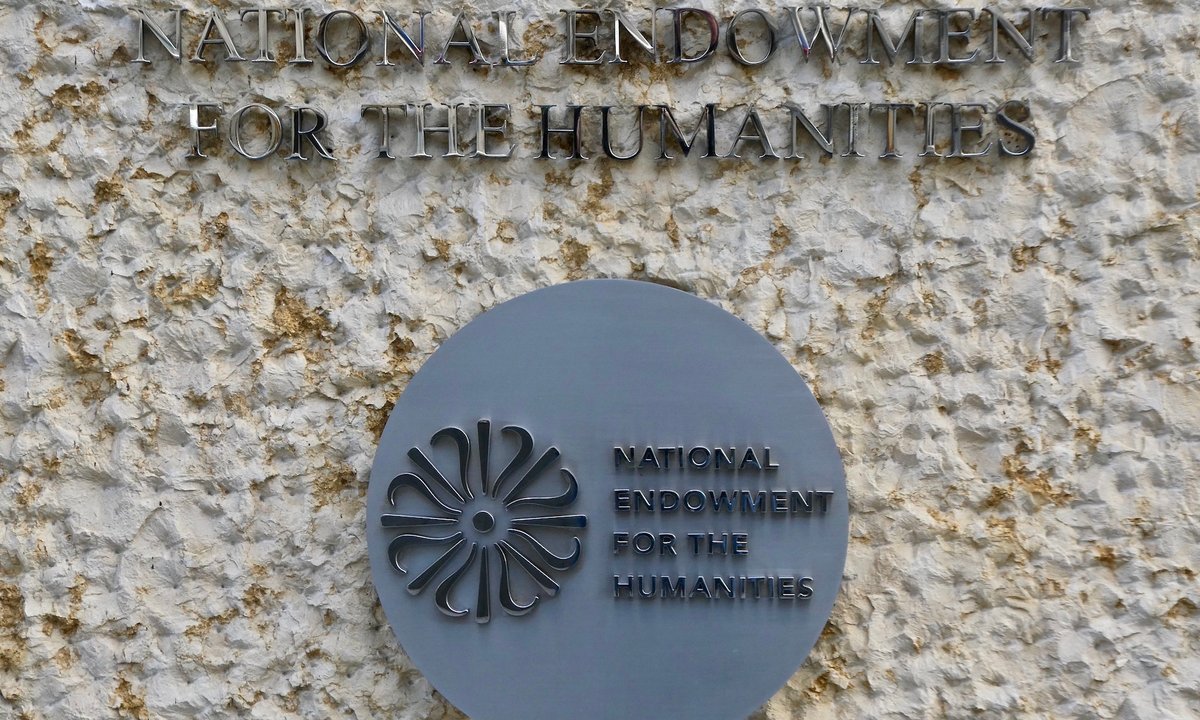
On January 15, the National Endowment for the Humanities (NEH) announced $75.1 million for humanities projects across the country. Presented as part of President Donald Trump's January 25, 2025 executive order, "Celebrating America's Birthday," the move is the latest example of how the Trump administration is increasingly using federal funding as a vehicle to achieve its broader goals of reshaping higher education.
Right-wing politics
Social justice
fromNonprofit Quarterly | Civic News. Empowering Nonprofits. Advancing Justice.
2 months agoFor Every $100 Foundations Give, Only 19 Cents Go to Volunteer Support | Nonprofit Quarterly | Civic News. Empowering Nonprofits. Advancing Justice.
Volunteers are essential to nonprofit capacity and social change, deserving transformative investment rather than being dismissed as merely "nice".

US politics
fromNonprofit Quarterly | Civic News. Empowering Nonprofits. Advancing Justice.
2 months agoFunders Must Support Advocates Fighting Back Against Pronatalism | Nonprofit Quarterly | Civic News. Empowering Nonprofits. Advancing Justice.
The Trump administration prioritized pronatalist policies grounded in reproductive futurism, promoting heteronormative family ideals while eroding rights for transgender, queer, and marginalized people.
US politics
fromNonprofit Quarterly | Civic News. Empowering Nonprofits. Advancing Justice.
2 months agoS.O.S.-Nonprofits Need Funding for "Staff Operating Support" | Nonprofit Quarterly | Civic News. Empowering Nonprofits. Advancing Justice.
Invest significantly in the nonprofit workforce through new funding to restore sector momentum, address chronic underinvestment, and recognize nonprofits as major employers.
fromNonprofit Quarterly | Civic News. Empowering Nonprofits. Advancing Justice.
1 month agoThis Is Not a Retreat | Nonprofit Quarterly | Civic News. Empowering Nonprofits. Advancing Justice.
The change in the administration's tactics in Minneapolis is not a retreat. Instead, they are regrouping and planning another mode of attack, with the hopes that their repression might be met with resistance that is easier to control and contain. People who garner their relevancy and power through the dehumanization and oppression of others will do whatever it takes to cling to their soulless sense of self.
US politics
fromNonprofit Quarterly | Civic News. Empowering Nonprofits. Advancing Justice.
2 months agoNonprofits Devise Creative Solutions to Address Federal Funding Cuts | Nonprofit Quarterly | Civic News. Empowering Nonprofits. Advancing Justice.
Over the years, I've worked as a consultant on numerous federal grant projects from the US Department of Agriculture and elsewhere that focused on local economic development and were granted to nonprofits serving their communities. But since the 2024 elections, the focus of my work-and that of the small New Mexico-based consulting firm, Prospera Partners, that I lead-has shifted to help nonprofits develop strategies to sustain themselves despite federal cuts in funding and to programs that once supported their work.
Non-profit organizations
Higher education
fromInside Higher Ed | Higher Education News, Events and Jobs
1 month agoGreat Grants Need Far Away Deadlines
Unreasonably tight grant timelines and limited grant-writing capacity disadvantage community colleges, reducing their ability to compete for Workforce Pell and civil discourse funding.
Higher education
fromInside Higher Ed | Higher Education News, Events and Jobs
1 month agoThe Collective Impact of Higher Ed Is Its Best Story
An HBCU museum exhibit shows that colleges can demonstrate impact through cultural storytelling, community programs, and preserved artifacts instead of costly mass-media advertising.
fromNonprofit Quarterly | Civic News. Empowering Nonprofits. Advancing Justice.
2 months agoDoes Personal Investment Hurt Fundraising? | Nonprofit Quarterly | Civic News. Empowering Nonprofits. Advancing Justice.
I've seen this before-many times, in fact. What you're describing is not unheard of in the nonprofit sector. Founder energy is one of the most powerful forces driving new missions into the world. It can also be one of the riskiest. Many organizations, especially those built from lived experience, passion, and necessity, begin with little more than a vision, a problem to solve.
Fundraising
Fundraising
fromOregon ArtsWatch * Arts & Culture News
2 months agoArtsWatch Insider: We met the end-of-year fund-raising goal! * Oregon ArtsWatch
The community donated $27,827 during the Nov. 1–Dec. 31, 2025 campaign, surpassing the $25,000 goal and demonstrating strong support for local arts journalism.
fromOregon ArtsWatch * Arts & Culture News
1 month agoArts and culture supporters urged to lobby for funding at 2026 Oregon Legislature * Oregon ArtsWatch
The day after Whitelaw testified, the state economist said that Oregon now has about $300 million more to spend than previously expected. The new revenue forecast does not mean the budget is in the black, however. There are new demands for the available dollars, including $600 million in upgrades to the Moda Center to retain the Portland Trail Blazers, a recently announced $50 million shortfall in Portland Public School funding,
Arts
fromSan Jose Spotlight
1 month agoUrbanowski: The arts need more investment from the state - San Jose Spotlight
Artists make California vibrant, innovative and culturally rich, yet our state ranks 35th nationally in per capita arts funding. When the state budget allocates just 53 cents per person to the arts, it's clear how little we're investing in the creative workers who shape the state's identity and economy. California's artists are delivering extraordinary value with minimal investment. Imagine what a stronger commitment to the arts could do for our communities, our economy and our future.
Arts
from48 hills
2 months agoDrama Masks: Does City Hall even care about the arts anymore? - 48 hills
Both of those ideas were torpedoed when I read this article about Daniel Lurie's's 31 hand-picked avatars meant to reshape San Francisco's charter (and we all know that his picks never result in any blunders). I looked at this 31-faced cavalcade of (mostly) capitalists and thought it only slightly less oligarch-ish than his onboarding team from last year. Sure, this one doesn't have Sam Altman, but this one's so nakedly appealing to business interests that it doesn't need Altman.
Arts
Arts
fromThe Art Newspaper - International art news and events
2 months agoWhy is the French government spending millions on art no one sees?
French government scrutiny of the CNAP reflects a political shift debating public cultural spending, acquisitions policy, and state support for contemporary art.
fromHyperallergic
1 month agoThe Commissioner We Need
It's impossible to imagine New York City without art, or contemporary art without New York City. This is where you come to see the best of the best, or to take part in making it. This country's international standing is down in the gutter, thanks to Trump, but this city is still a living, rolling dream. Right now, we're waiting to see who's going to be Mayor Mamdani's pick for cultural affairs commissioner. It's an important role that determines where the city's budget priorities will lie and who'll get a seat at the table. Gonzalo Casals, who served as culture commissioner under Mayor de Blasio, and Mauricio Delfín, who co-directs the Culture & Arts Policy Institute with Casals, have some urgent thoughts on the matter. It's a must-read not just for Zohran (send him a link if you're on texting terms), but for everyone who cares about art in this city.
Arts
[ Load more ]