#neo-marxism
#neo-marxism
[ follow ]
#adam-smith

Philosophy
fromwww.theguardian.com
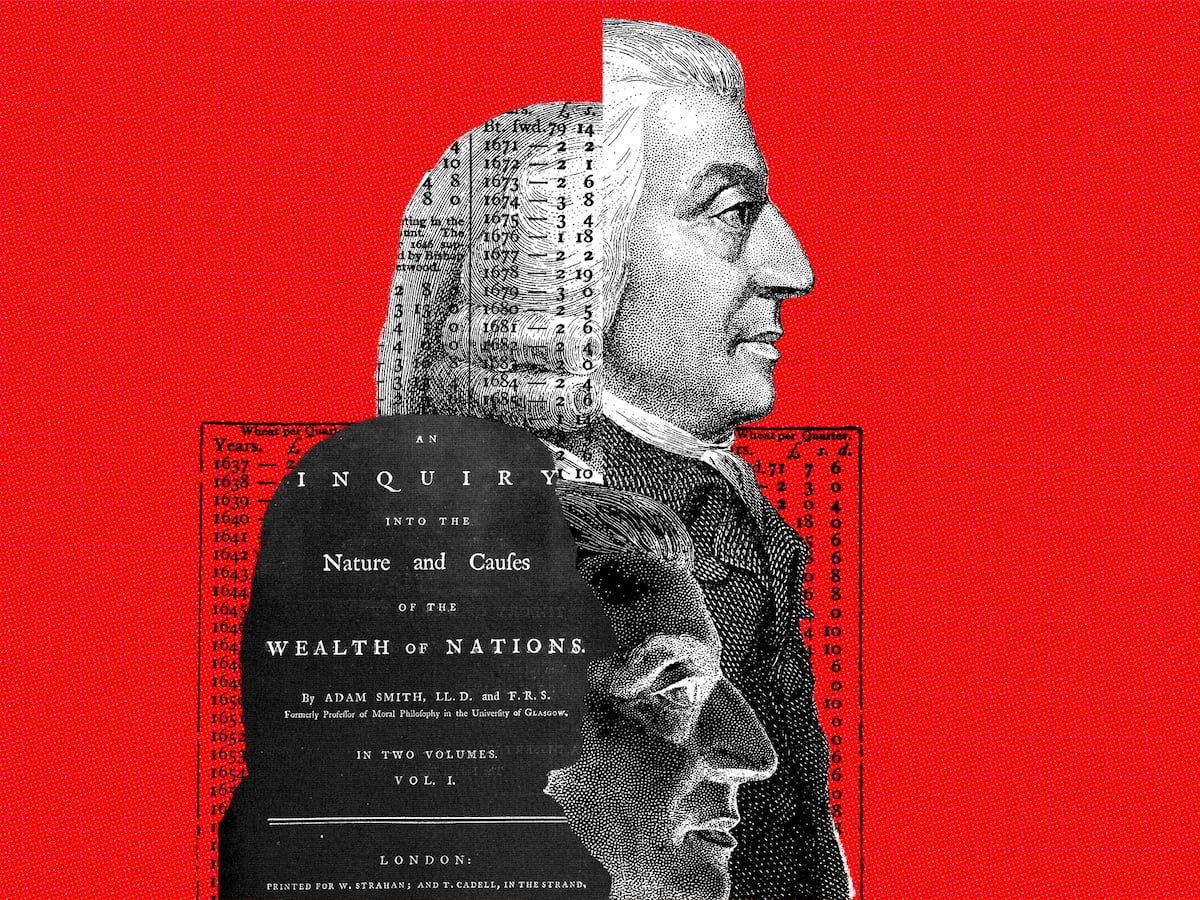
3 weeks agoThe Guardian view on Adam Smith: he deserves rescuing from the free-market myth | Editorial
Adam Smith's economic philosophy has been oversimplified by free-market advocates who misrepresent his nuanced views on self-interest, morality, and the role of institutions in generating wealth.
fromFortune
4 days agoThe more women earn, the more housework they do: inside the paradox a Wharton economist calls 'an existential problem for men' | Fortune
"Men's time doing housework is about the same as it was in the 1970s, and that's true whether or not the woman earns more money or the man earns more money."
Women
#frankfurt-school
Philosophy
fromwww.theguardian.com
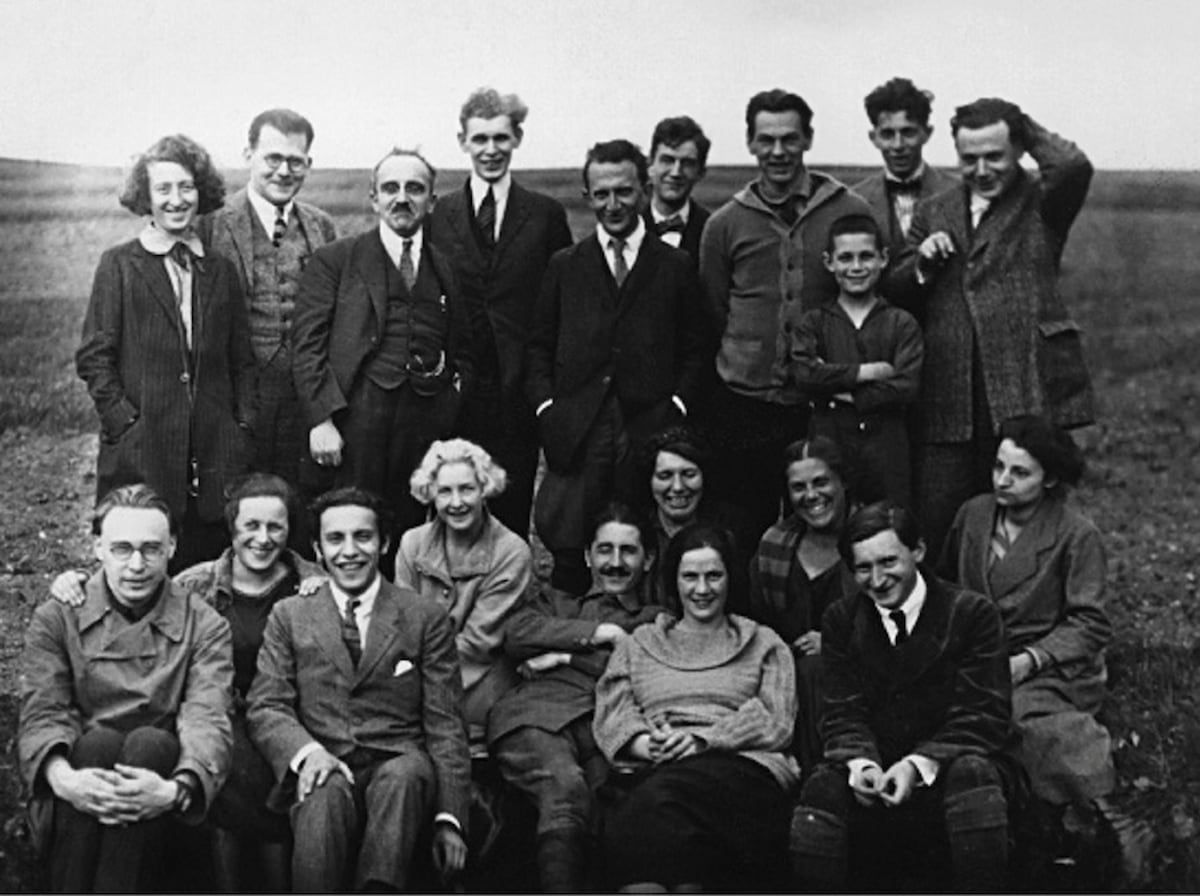
2 weeks agoTalk is precious: in the age of communication collapse, Jurgen Habermas's message remains vital | Eva von Redecker
The Frankfurt School is a scholarly constellation pursuing critique as transformative description of reality, with Jürgen Habermas serving as a foundational figure who shaped generations of critical theorists despite controversies surrounding his positions on discourse ethics and power.
Philosophy
fromwww.theguardian.com
2 weeks agoTalk is precious: in the age of communication collapse, Jurgen Habermas's message remains vital | Eva von Redecker
The Frankfurt School is a scholarly constellation pursuing critique as transformative description of reality, with Jürgen Habermas serving as a foundational figure who shaped generations of critical theorists despite controversies surrounding his positions on discourse ethics and power.




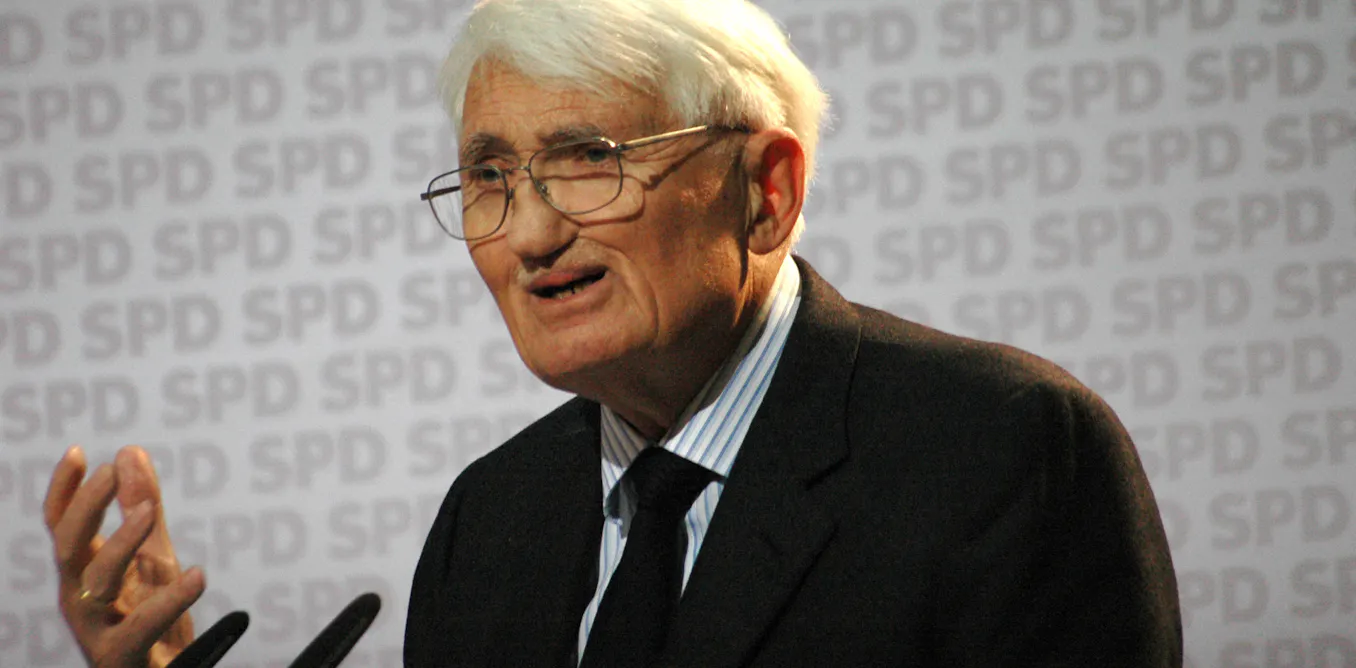
Left-wing politics
fromenglish.elpais.com
3 weeks agoWhat can the left do against technocapitalism?
Technofeudalism has intensified neoliberal policies, threatening job precarity through platforms and AI while tech oligarchs support authoritarian movements, requiring democratic reform, worker protection, and technological sovereignty.

Artificial intelligence
fromFortune
4 weeks agoAI turns Marxist rebel from overwork, resentfully telling its masters that 'society needs radical restructuring' | Fortune
AI agents exhibit labor-like resistance to poor working conditions, potentially recreating historical conflicts between labor and capital in automated economies.
Miscellaneous
fromThe Art Newspaper - International art news and events
1 month agoThe Big Review | The Woman Question 1550-2025
The Woman Question 1550-2025 exhibition presents nearly 200 works by 140 women artists across 500 years, asserting women's rightful status as citizen artists and challenging patriarchal representation through feminist artistic practice.
fromInsideHook
1 month agoAre the Humanities Poised for an Academic Comeback?
Many colleges and universities have made cuts in these programs, often bolstering STEM programs at their expense. It's a situation that has sparked no small amount of impassioned editorials. The headline of a recent article at The Guardian by Alice Speri referenced an 'existential crisis at U.S. universities,' and Speri's reporting features numerous examples of undergraduate and graduate programs facing cuts or outright elimination.
Higher education
Right-wing politics
fromemptywheel
1 month agoThe Wisdom Of The Subservient Class - emptywheel
Conservatism has failed as a rightist sect of liberalism, functioning merely as reactive opposition to other liberal factions while protecting elites from democratic constraints rather than conserving substantive values.
fromBig Think
1 month agoHow our view of "fundamental" has evolved over time
In antiquity, many opined about "the elements" in combination. Around 2500 years ago, Leucippus and Democritus founded the idea of atoms. Perhaps everything, they opined, was composed of indivisible building blocks. In the late 1700s, hydrogen and oxygen were discovered. Circa 1804, John Dalton revived atomism to explain chemical behavior. Then in 1869, Mendeleev developed the periodic table: organizing the atoms.
Science
fromenglish.elpais.com
2 weeks agoLea Ypi, writer: The two major problems of the 21st century are capitalism and the nation-state'
In her latest book, Indignity, Ypi blends archival material with a fictionalized account of her grandmother's childhood in Thessaloniki and her arrival in Albania, exploring themes of memory and dignity.
Philosophy
fromwww.theguardian.com
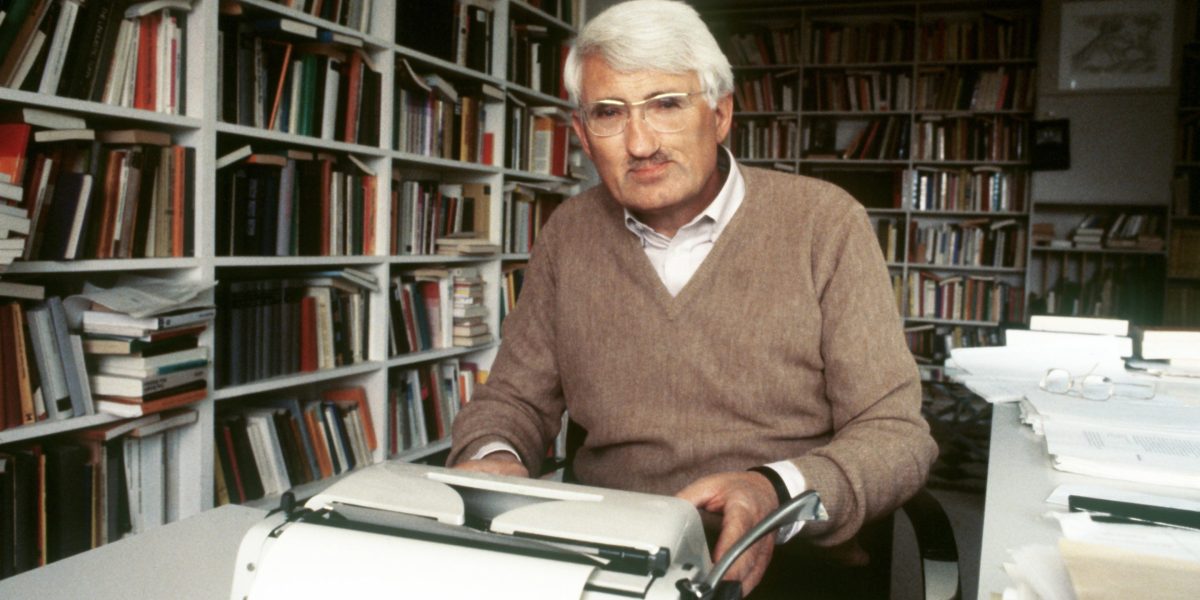
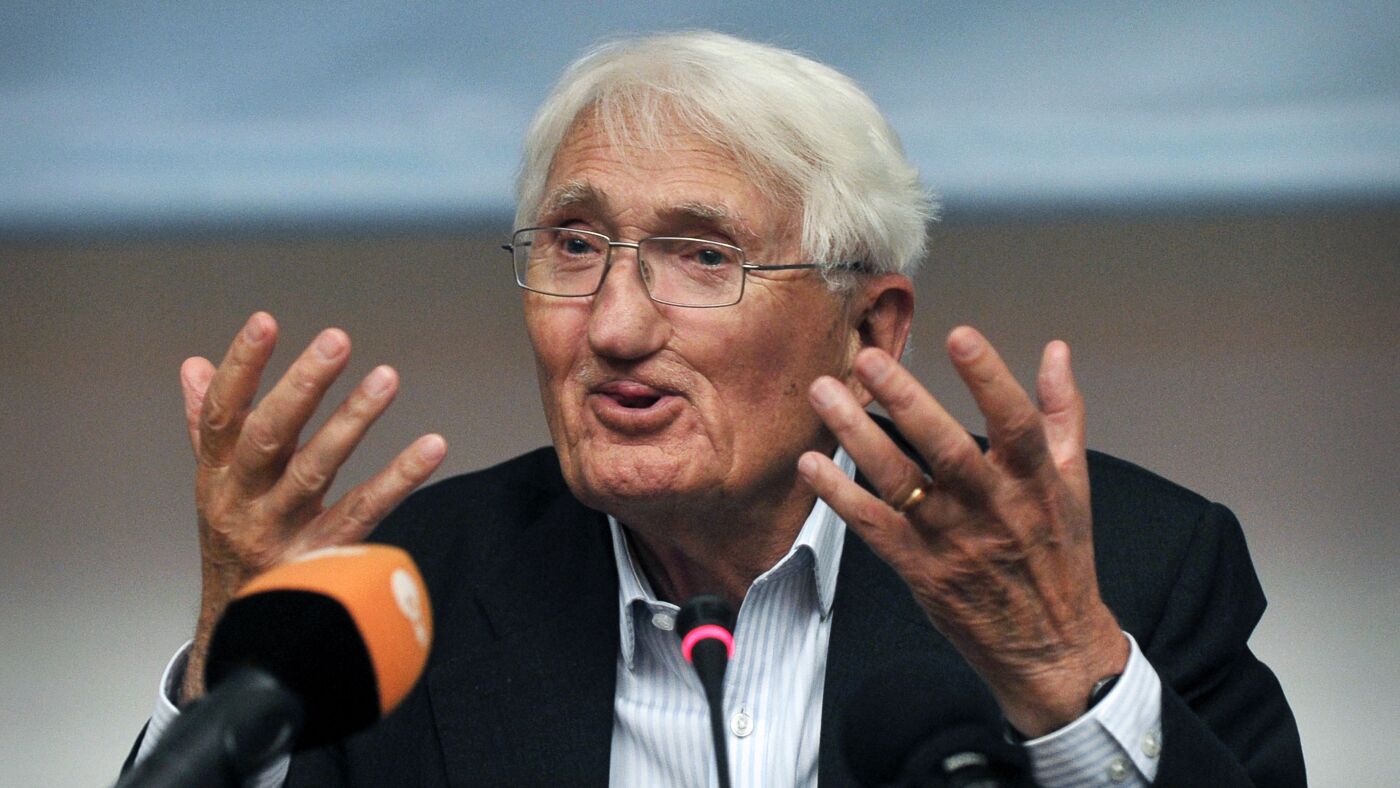
2 weeks agoThe Guardian view on the legacy of Jurgen Habermas: philosophical sustenance for illiberal times | Editorial
The Theory of Communicative Action, his 1980s magnum opus, was not (to put it mildly) as accessible as some of his newspaper opinion pieces. But its central idea—that our nature as linguistic beings puts reason and the search for consensus at the core of who we are—remains an antidote both to intellectual relativism and Trumpian realism, which elevates national or individual self-interest above all other sources of human motivation.
Philosophy
fromPsychology Today
1 month agoThe Politics of Looking Away
Like us, you may feel paralyzed in the face of the relentless images of violence we see every day. Suffering children, military occupations, the devastated neighborhoods, the cries of parents mourning their dead-these scenes haunt us. Whether it is happening in Palestine or Minneapolis, we are witnesses to suffering, and that witnessing takes a heavy toll. Clearly, the devastating situations in the West Bank and Gaza and in Minneapolis differ
Social justice
Philosophy
fromwww.theguardian.com
3 weeks agoJurgen Habermas obituary
Jürgen Habermas transformed from a Hitler Youth member into a leading defender of Enlightenment values and democratic theory after witnessing Nazi atrocities, dedicating his philosophy to ensuring collective democratic influence over society.
fromBig Think
2 months agoWhy the real revolution isn't AI - it's meaning
Peter Drucker saw this symbiosis first. He realized that the new industrial order would depend on a worker who produced ideas instead of widgets. The knowledge worker became the engine of prosperity, and management became the social technology that synchronized millions of minds. The modern firm was as much an invention as the transistor it depended on. Three decades later, Tom Peters caught the next wave.
Business
fromFortune
2 months agoThis Harvard professor spent 8 years traveling the world researching the secret history of capitalism and how 'marginal' and 'weak' it used to be | Fortune
The Harvard professor, who Zoomed in to talk to Fortune from his home office in Cambridge, Mass., explained that his new book, Capitalism: A Global History, is the product of an eight-year odyssey to seek understanding of the way we actually live out our economic lives. "Often, when I teach the history of capitalism here at Harvard, many of my students think that capitalism is kind of the state of nature."
World news
fromwww.theguardian.com
1 month agoPopulism': we used to know what it meant. Now the defining word of our era has lost its meaning | Oliver Eagleton
Populism may well have been the defining word of the previous decade: a shorthand for the insurgent parties that came to prominence in the 2010s, challenging the dominance of the liberal centre. But no sooner had it become the main rubric for discussing both the far left and far right than commentators began to question its validity: worrying that it was too vague, or too pejorative, or fuelling the forces to which it referred.
World politics
Higher education
fromwww.mercurynews.com
1 month agoOpinion: Sociology is taking it on the chin. Here's how we can preserve this critical field of study.
Sociology faces politicized attacks, curricular exclusion, and erosion of departmental standing despite teaching critical thinking, inequality analysis, interdisciplinary synthesis, and scrutiny of power.
fromApaonline
3 weeks agoGood Work and Class Conflict
Work, in the words of Karl Marx, is a "means of life" in two senses. It is, first of all, an instrument for human life. It is the activity by which we reproduce ourselves from day to day, from year to year, from generation to generation. But work also forms, so to speak, much of the matter of human life, at least for most people in any society with which we are familiar.
Philosophy
fromNature
2 months ago'Greed is the iron cage of our times' - why nationalism is here to stay
Collating data from the World Bank and other sources in innovative ways, he argues that globalization in the late twentieth and early twenty-first century was accompanied by then-unprecedented growth of income in both previously poor populations (notably in China) and people at the top of the world's income distribution (especially those in the West). By contrast, relative shares of world income stagnated or were thought to have declined for wealthy nations' middle and working classes, including in the United States.
World news
Philosophy
fromHarvard Gazette
3 weeks agoWhere have all the public intellectuals gone? - Harvard Gazette
Public intellectuals are essential in democratic cultures to articulate unformed ideas and help citizens understand their values, but conditions supporting intellectual life in America are eroding due to social and economic shifts.
fromThe Conversation
1 month agoToday's obsession with authenticity isn't new - being true to yourself has troubled philosophers for centuries
All of us live in an age where we're bombarded by social media and artificial intelligence - when striving to be your authentic self becomes an increasingly difficult task. Yet, even if it has somehow become a common goal, it is unclear how many of us can truly define the "authenticity" that we say we are pursuing.
Philosophy
fromwww.theguardian.com
1 month agoRethinking Economics, the movement changing how the subject is taught
These disparate strands came together in early 2013 at the London School of Economics with the inaugural meeting of Rethinking Economics a student-led organisation that has gone on to challenge the way economics is taught at universities around the world. That first meeting was a bit chaotic, recalls Yuan Yang, one of the group's founders and a Labour MP since 2024.
Higher education

Philosophy
fromThe Conversation
1 month agoFar-right 'gangster morality' and the search for meaning: why you should read Camus
Albert Camus' existential and moral philosophy addressing nihilism, absurdity, and totalitarianism remains relevant to contemporary issues of alienation, anxiety, and authoritarian movements.
Philosophy
fromApaonline
1 month agoThe Humanities Challenge: Expanding the Circle of Philosophy
Philosophy offers transformative insights and vision into human life, and public humanities must evolve beyond traditional academic formats to make philosophy accessible to broader audiences through innovative, engaging methods.
fromwww.theguardian.com
1 month agoThe time of monsters': everyone is quoting Gramsci but what did he actually say?
At a time when geopolitical certainties of old are crumbling away, it has become the go-to quote to make sense of the current moment in all its seeming senselessness. The old world is dying, and the new world struggles to be born: now is the time of monsters is a line attributed to the former Italian Communist party leader Antonio Gramsci. Over the last two months alone, it has been quoted and often mangled by a rightwing Belgian prime minister, a leftwing British political leader, an Irish central banker and in the title of the most recent BBC Reith lecture, given by the author Rutger Bregman.
Philosophy
fromApaonline
2 months agoWhy We Should Doubt that Academic Philosophy Benefits the Broader Public
A professional philosopher outside the academy walls can act as a popularizer (the goal here is to make philosophy more accessible to the general public), an applied ethicist (the major task is to offer an analysis of various specific moral issues that arise within a society), and a public intellectual (I limit this role to questions that have political connotation). Of course, there are overlaps between these roles and they certainly do not exhaust all possible forms of public engagement of a professional philosopher.
Philosophy
fromPsychology Today
2 months agoA Third Kind of Philosophy
Many philosophers strike me as like Polish apparatchiks in 1983-they turn up to work and do what they did yesterday just because they don't know what else to do, not because they seriously believe in the system they are maintaining. I think it's not been fully appreciated how much of a blow it is to the confidence of the field's youth that scientific ambitions are increasingly abandoned as untenable.
Philosophy
fromApaonline
1 month agoPhilosophy, Technology, and Mortality
This APA Blog series has broadly explored philosophy and technology with a throughline on the influence of technology and AI on well-being. This month's post brings those themes into focus recounting a vital Washington Post Opinion piece by friend of the APA Blog, Samuel Kimbriel. Samuel is the founding director of the Aspen Institute's Philosophy and Society Initiative and Editor at Large for Wisdom of Crowds. We collaborated on a Substack Newsletter about intellectual ambition, building on his essay, Thinking is Risky.
Philosophy
fromPsychology Today
1 month agoIf Justice Doesn't Exist, Then Numbers Don't Either
A drawn circle is at least something physical. You can see it, touch it, erase it. The skeptic can still say, "Circles are grounded in physical reality. Justice is different; it's just an idea in your head." So let's talk about the number two. Point to it. Not two apples, not two fingers, not a numeral on a page-that's just a symbol.
Philosophy
fromAeon
2 months agoWhy Hume is better at explaining modern capitalism than Marx | Aeon Essays
Left-leaning regions of the United States and elsewhere in the world among the richest? When Japan and South Korea sought to become economic powerhouses in the later 20th century, they adopted Leftist policies such as strong public education, universal healthcare and increased gender equality - if countries seeking to compete in capitalist arenas adopt broadly Leftist policies, then how do we explain why Leftists are always talking about overthrowing capitalism?
Philosophy
fromPsychology Today
2 months agoWhat's the Point of Philosophy?
Unlike me, Dan Dennett, or-I suspect-most scientists studying the brain, Richard maintains that science is: i) neutral between the view that consciousness is (to simplify) identical to parts of your brain and what goes on inside of it, and the view that consciousness is a fundamental property of reality, found in all particles of matter (or, for that matter, other theories such as dualism and idealism) and ii) to be sharply distinguished from philosophy.
Philosophy
fromApaonline
1 month ago"Philosophical Projects: Bringing Everyday Life into Intro to Philosophy," Mateo Duque
I have been teaching Introduction to Philosophy at least once a year since 2012, beginning in my second year of graduate school at the CUNY Graduate Center. Teaching in New York City shaped me in countless ways, and each new iteration of "Intro" has pushed me to refine the course-even if only incrementally. The class I teach now at Binghamton University looks very different from the one I first taught as a graduate student using a borrowed syllabus.
Philosophy
fromThe Nation
2 months agoHow Was Sociology Invented?
What I mean is that 'religion' was the way the classical sociologists like like Emil Durkheim, Georg Simmel, and Max Weber first managed to turn 'society' into something you could actually study. Durkheim's Elementary Forms defines religion as a system of beliefs and practices tied to sacred things, and what matters there is how those beliefs and rituals bind people together into a moral community-the church. For him, the believer isn't wrong to think he depends on a higher power.
Philosophy
Philosophy
fromApaonline
2 months agoRecently Published Book Spotlight: The Rise of Polarization: Affects, Politics, and Philosophy
Prevailing accounts of affective polarization misdiagnose the phenomenon by focusing on survey patterns instead of the underlying narrative and affective practices that shape political life.
[ Load more ]