#neutral-atom-quantum-computing
#neutral-atom-quantum-computing
[ follow ]






#quantum-mechanics
Philosophy
fromwww.scientificamerican.com
2 weeks agoA 100-year-old theory might explain what's wrong with quantum mechanics
Pilot wave theory, developed by Louis de Broglie a century ago, potentially resolves quantum mechanics' paradoxes by describing particles guided by attendant waves rather than existing in superposition.
Venture
from24/7 Wall St.
2 weeks agoBroadcom Just Shipped the World's First Quantum-Safe Network Encryption - 3 Reasons AVGO Investors Should Pay Attention
Broadcom shipped the first quantum-safe network encryption solution embedded at the silicon level, positioning itself as a first-mover in a compliance-driven enterprise infrastructure upgrade cycle.
Artificial intelligence
fromTechCrunch
2 weeks agoMultiverse Computing pushes its compressed AI models into the mainstream | TechCrunch
Multiverse Computing offers on-device AI models that eliminate counterparty risk by running locally without requiring external compute infrastructure or cloud providers.
#superconductivity
OMG science
fromHarvard Gazette
2 weeks agoUltra-cool step toward transformative technologies - Harvard Gazette
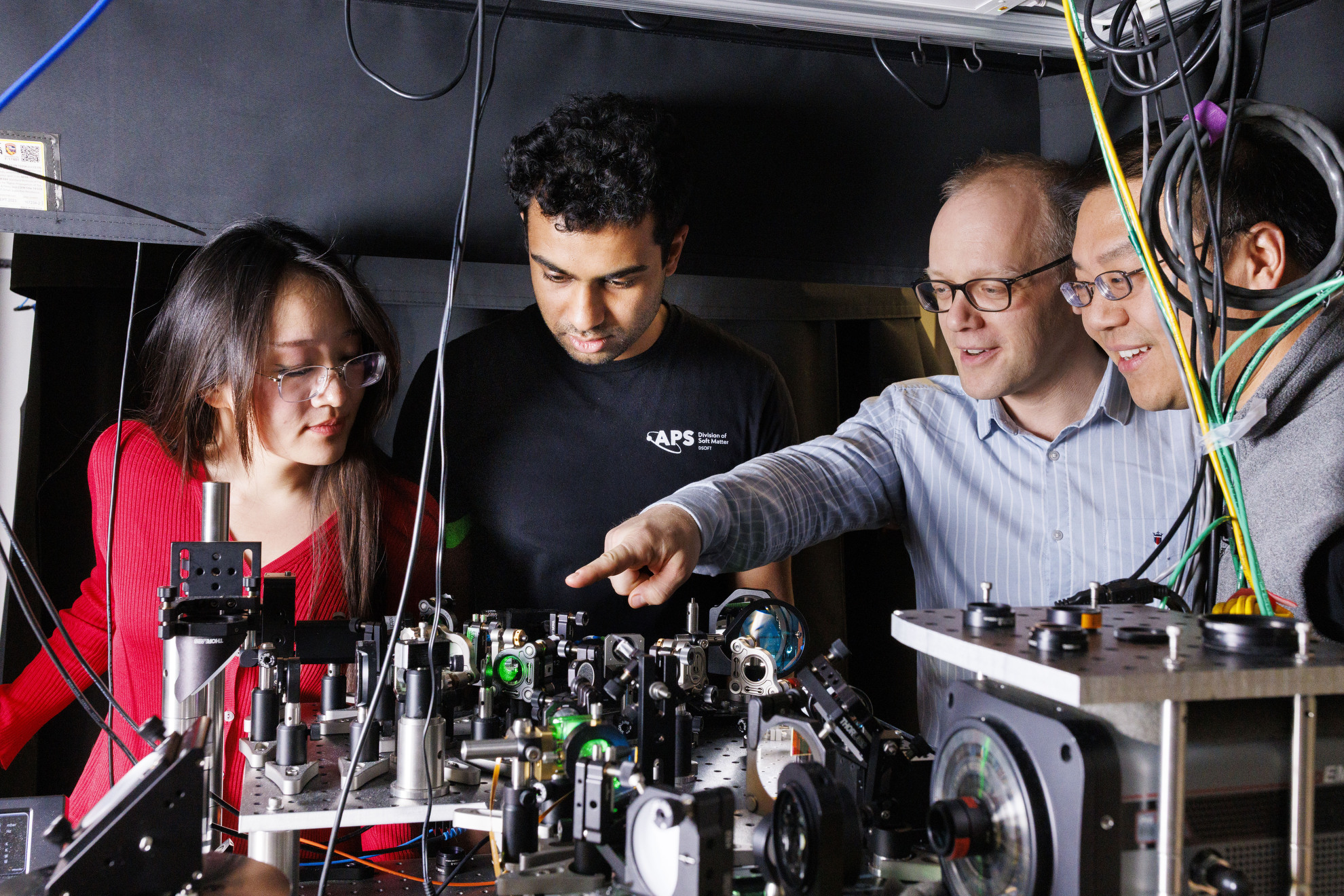
Harvard physicists enhanced a pressure measurement device with quantum sensors to study superconductors, revealing new insights into why promising superconductor materials produce inconsistent results.
#post-quantum-cryptography


fromThe Hacker News
4 weeks agoInformation security
Preparing for the Quantum Era: Post-Quantum Cryptography Webinar for Security Leaders
Attackers are collecting encrypted data today to decrypt later using quantum computers, requiring organizations to adopt quantum-resistant encryption now to protect long-term sensitive data.
Information security
fromComputerWeekly.com
3 weeks agoTrump looks to power up post-quantum, AI security | Computer Weekly
The Trump administration's cyber strategy prioritizes maintaining US technological superiority in post-quantum cryptography, artificial intelligence, and securing innovation against emerging threats.
Information security
fromThe Hacker News
4 weeks agoPreparing for the Quantum Era: Post-Quantum Cryptography Webinar for Security Leaders
Attackers are collecting encrypted data today to decrypt later using quantum computers, requiring organizations to adopt quantum-resistant encryption now to protect long-term sensitive data.

fromwww.theguardian.com
3 weeks agoPlease drive carefully: scientists plan to transport volatile antimatter for first time
A core question we want to understand is where did matter come from. And then, if you know about antimatter, it's natural to ask, why is that not here? The process is not understood and we are hunting for clues as to why it happened, says Dr Christian Smorra, a physicist on the Baryon Antibaryon Symmetry Experiment (Base) at Cern.
OMG science


Cryptocurrency
fromCointelegraph
3 weeks agoBitcoin's Quantum Defense Plan: What BIP-360 Actually Changes
BIP-360 formally adds quantum resistance to Bitcoin's roadmap through Pay-to-Merkle-Root, reducing elliptic curve exposure by eliminating Taproot key path spending while preserving smart contract flexibility.
Science
fromwww.nature.com
2 weeks agoBistable superlattice switching in a quantum spin Hall insulator
Monolayer TaIrTe4 exhibits bistable superlattice switching between two lattice configurations with dramatically different periodicities, controllable through electrostatic tuning of electronic states.
Venture
fromFast Company
1 month agoQuantum computing stocks soar: IonQ, D-Wave, Rigetti, and QUBT are rising today. But why-and will it last?
The Quantum Four—IonQ, D-Wave, Rigetti, and Quantum Computing Inc.—experienced significant stock price gains over two consecutive trading days, reversing earlier year-to-date declines of 15-25%.
Science
fromwww.scientificamerican.com
4 weeks agoIBM scientists unveil the first ever half-Mobius molecule, with the help of quantum computing
IBM researchers created a novel ring-shaped molecule with twisted electron motion resembling a complex Möbius strip, confirmed through quantum computers and advanced microscopy.

fromTechzine Global
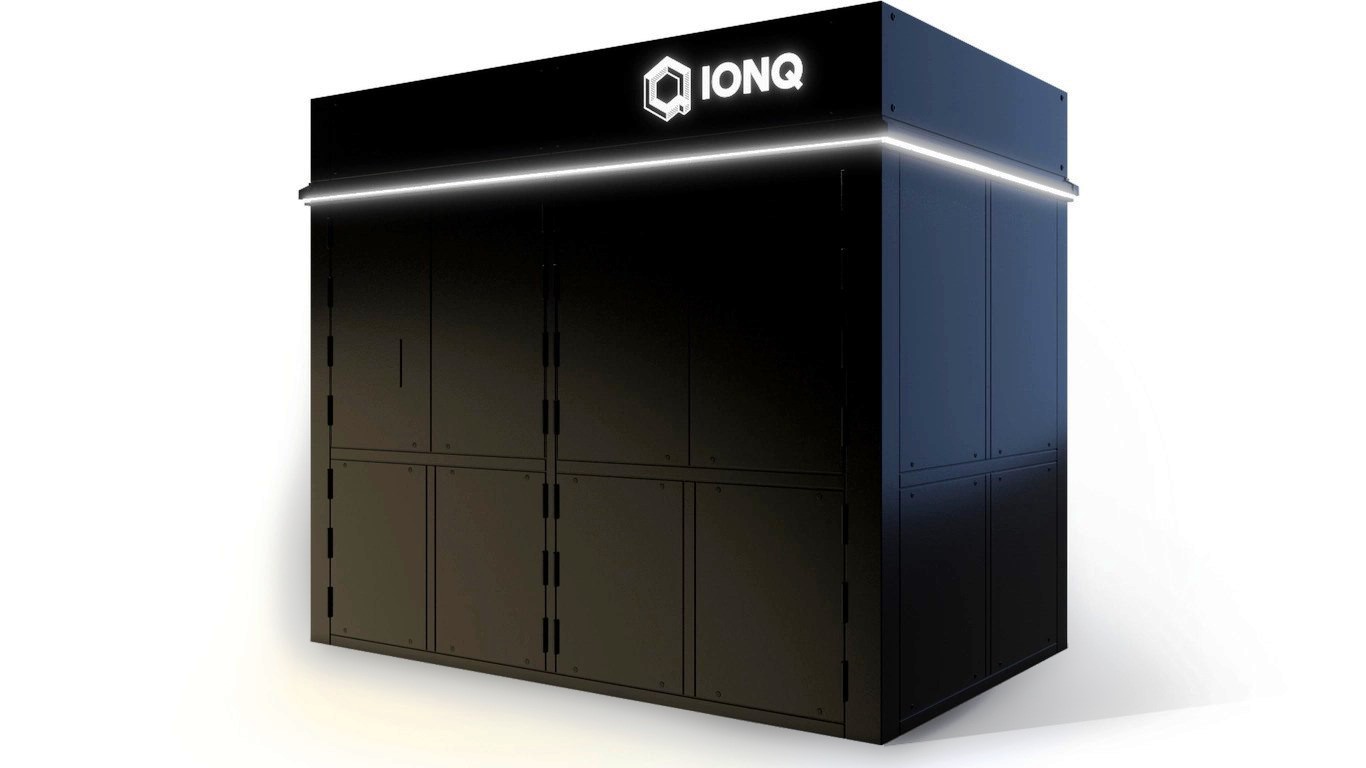
2 months agoNeuromorphic computers prove suitable for supercomputing
Scientists are showing that neuromorphic computers, designed to mimic the human brain, are not only useful for AI, but also for complex computational problems that normally run on supercomputers. This is reported by The Register. Neuromorphic computing differs fundamentally from the classic von Neumann architecture. Instead of a strict separation between memory and processing, these functions are closely intertwined. This limits data transport, a major source of energy consumption in modern computers. The human brain illustrates how efficient such an approach can be.
Artificial intelligence
fromNature
1 month agoCavity-altered superconductivity - Nature
A grand aspiration of cavity quantum materials research is to uncover fundamentally new routes for controlling properties of matter by judiciously tailoring the quantum electromagnetic environment. Experiments with dark cavities revealed modified transport properties in the integer and fractional quantum Hall states of a 2D electron gas, as well as cavity-assisted thermal control of the metal-to-insulator transition in charge-density-wave systems.
Science
fromSecurityWeek
1 month agoNIST's Quantum Breakthrough: Single Photons Produced on a Chip
NIST has developed a chip that reliably emits a single photon on demand. This ability will improve the efficiency of QKD (quantum key distribution) as we prepare for the arrival of quantum computers. Quantum computers will upend current cryptology by using Shor's algorithm to rapidly negate the current public/private key secure encryption methods. This has largely been solved by NIST's post quantum cryptology (PQC) algorithms.
Information security
fromComputerWeekly.com
1 month agoCisco, Qunnect claim quantum first with datacentre connectivity | Computer Weekly
Qunnect and Cisco have unveiled what they say is the first entanglement-swapping demonstration of its kind over deployed metro-scale fibre using a commercial quantum networking system. The demonstration combined Qunnect's room-temperature quantum hardware with Cisco's quantum networking software stack. The net result of the project is regarded by the partners as being able to bring practical quantum networks closer to scalable deployment, validating a spoke-and-hub model for scaling quantum networks through commercial datacentres.
Science
fromNature
1 month agoLarge-scale analogue quantum simulation using atom dot arrays - Nature
Analogue quantum simulations are a useful tool for investigating these systems, particularly in regimes in which the applicability of numerical techniques is limited. For different simulator platforms, figures of merit include the electron bandwidth and interaction strength, temperature and the number of simulated lattice sites. Their use is further underscored by the ability to realize distinct lattice geometries, on-site degrees of freedom and by the physical observables that are accessible to experimental measurement.
Science


fromNature
2 months agoLong-lived remote ion-ion entanglement for scalable quantum repeaters - Nature
Hefei National Research Center for Physical Sciences at the Microscale and School of Physical Sciences, University of Science and Technology of China, Hefei, Anhui, China Wen-Zhao Liu, Ya-Bin Zhou, Jiu-Peng Chen, Ao Teng, Xiao-Wen Han, Guang-Cheng Liu, Zhi-Jiong Zhang, Yi Yang, Feng-Guang Liu, Chao-Hui Xue, Bo-Wen Yang, Jin Yang, Chao Zeng, Yi-Zheng Zhen, Feihu Xu, Ye Wang, Yong Wan, Qiang Zhang & Jian-Wei Pan
fromNextgov.com
2 months agoLawmakers expected to reintroduce quantum initiative authorization
The National Quantum Initiative Reauthorization Act has been drafted and is expected to be introduced this week after struggling to gain traction in previous years following the original National Quantum Initiative's expiration in late 2023, two people familiar with the matter told Nextgov/FCW. Reintroduced by Sens. Maria Cantwell, D-Wash., and Todd Young, R-Ind., the new bill comes as quantum technology, particularly quantum computing, is expected to pose a significant threat to current cryptographic security schemes.
Science
Science
fromenglish.elpais.com
2 months agoThe technology that reveals what happens in 0.00000000000000000000001 second
Attosecond-scale light pulses reveal ultrafast electron dynamics, enabling new studies of materials, quantum processes, and biological structures, and have earned major scientific awards.
[ Load more ]