#new-jersey-budget-proposal
#new-jersey-budget-proposal
[ follow ]
#new-jersey #tax-policy #legislation #new-york-city #california-budget #affordability-crisis #state-budget
NYC parents
fromNew York Post
2 days agoHochul in talks to make fat pork union deal that could lower retirement age for teachers to 55 - at staggering cost to taxpayers
Gov. Kathy Hochul is considering a $1.5 billion deal to lower retirement age for public workers from 62 to 55, impacting taxpayers significantly.
fromGothamist
3 days agoNew York pension sweeteners could cost $1.5 billion a year
"I think this is a worthwhile investment in the future so that we are protecting the workforce and people can live with the dignity they deserve" when they retire, said state Sen. Jessica Ramos, a Queens Democrat.
Retirement
from24/7 Wall St.
3 days agoThe US Government Could End The Federal Gas Tax
The tax provides more than $23 billion per year in revenue for federal highway and public transit programs. The federal gas tax has been in place, in one way or another, since 1919 and was last raised in 1993.
Alternative transportation


fromStreetsblog Empire State
1 week agoLawmakers Want More Funding For Upstate Transit Than Hochul Is Offering - Streetsblog Empire State
"We need at least a 15-percent increase in state operating assistance in order for the Upstate systems to address their structural budget deficits. What that means is we need that 15-percent increase so that we are not faced with having to reduce service. We're not faced with having to increase fares."
Alternative transportation
US news
fromThe Washington Post
2 weeks agoA state's rule for housing that promotes diversity is dividing neighbors
New Jersey municipalities face intense community backlash while implementing state-mandated affordable housing plans rooted in the 1970s Mount Laurel Doctrine requiring racial desegregation through housing development.
Fundraising
fromGothamist
2 weeks agoJersey City says it desperately needs $150M in state aid. That would obliterate records.
Jersey City seeks record $150 million state aid to address a $255 million budget deficit, equivalent to 28% of its annual budget, while the new mayor implements cost-cutting measures and warns of inevitable tax increases.
NYC real estate
fromtherealdeal.com
2 weeks agoThe Daily Dirt: Transfer tax debates on the rise
New York Democrats proposed increasing transfer taxes on residential properties valued at $5 million or more, with rates ranging from 3.675% to 5.325%, while existing rates below $5 million remain unchanged.
fromwww.housingwire.com
3 weeks agoNew Jersey Realtors calls for graduated percent fee relief
At a time when affordability remains one of the state's most pressing challenges, adding additional transaction costs makes it harder for buyers and sellers to participate in the market that so desperately needs participation. New Jersey Realtors said the state should consider reducing or reforming the fee as it applies to residential housing.
Real estate
#new-york-state-budget


NYC politics
fromGothamist
3 weeks ago7 things to watch as New York's budget battle heats up
New York's state Assembly and Senate passed competing budget resolutions against Governor Hochul's $263 billion plan, with major disagreements over taxes and spending priorities before the March 31 fiscal year deadline.
NYC politics
fromNew York Daily News
3 weeks agoNY state lawmakers propose boosting taxes on the rich, challenging Hochul and aligning with Mamdani
New York state lawmakers propose tax increases on wealthy individuals and corporations to provide $5 billion to New York City, aligning with Mayor Mamdani's affordability agenda while challenging Governor Hochul's opposition to personal income tax hikes.
fromwww.amny.com
3 days agoMamdani fires back at Menin over City Council's budget response, charges it ignores bigger financial problems | amNewYork
Mamdani stated that the City Council's budget strategy effectively ensures this structural deficit will continue indefinitely, impacting vital city services and failing to solve deep financial problems.
New York City
NYC real estate
fromwww.housingwire.com
3 weeks agoNew Jersey proposal could reduce senior property tax relief
New Jersey proposes reducing Stay NJ property tax relief eligibility from $500,000 to $250,000 income and cutting maximum combined benefits from $6,500 to $4,000 to target relief toward low- and middle-income seniors.
DC food
fromwww.amny.com
1 month agoAppeals court to rule on whether Gateway Tunnel funding can remain temporarily unfrozen | amNewYork
Gateway Tunnel construction faces potential halting if federal appeals court relieves Trump administration of temporary funding obligation for the $16 billion rail project.
fromStreetsblog
3 weeks agoBREAKING: State Lawmakers Cut Hochul's Car Insurance Scheme From Their Budget - Streetsblog New York City
The Uber-backed plan to lower car insurance rates has drawn criticism from legal professionals and crash victim advocates who say the legislative changes would strip crash victims of rights while misstating the drivers of high costs. Hochul and the car insurance industry have argued that fraud and "jackpot" payouts have increased costs for insurance companies so much that they can't reduce premiums.
US politics
SF politics
fromwww.ocregister.com
3 weeks agoSacramento Snapshot: Could California pause the gas tax or start charging drivers fees based on mileage? A look at dueling proposals in the statehouse
California Republicans are pushing to suspend the state gas tax for one year, citing a perfect storm of affordability crisis, Middle East tensions, and refinery closures that may increase legislative support.
fromFingerlakes1.com
4 weeks agoState lawmakers pushes for more CHIPS road funding | Fingerlakes1.com
In the governor's proposed budget, $648 million is allocated for CHIPS to be divided among every town and the 62 counties in the state, while $4.5 billion is proposed for downstate transit and the New York City subway system.
Fundraising
Alternative transportation
fromGothamist
1 month agoNJ Gov. Sherrill wins praise for killing plan to expand roadways headed to Holland Tunnel
Governor Sherrill approved a $6.7 billion Newark Bay Bridge replacement project while rejecting plans to widen highway infrastructure and increase lane capacity.
NYC parents
fromGothamist
3 weeks agoSherrill's $60.7B NJ budget boosts school funding but risks tax fight
Governor Sherrill's $60.7 billion budget proposes record property tax relief and historic school funding while closing business tax loopholes to address a revenue gap, risking her campaign pledge against tax increases.
fromFox Business
1 month agoBlue state loses over 180K residents in past 5 years as high taxes weigh
With domestic out-migration levels growing prior to the pandemic and remaining significantly elevated beyond it, it is clear out-migration is a structural phenomenon that is here to stay and not just a byproduct of remote work and the pandemic.
US news
fromGothamist
1 month agoDemocrats and Republicans unite against NJ detention warehouse. Just don't say 'abolish ICE.'
The Trump administration purchased a giant warehouse in rural Roxbury Township, New Jersey, for $129.3 million with plans to convert it into one of the largest immigration detention centers in the country. The plan is not only unpopular among a bipartisan swath of residents, but it's also roiling what was already shaping up to be a gripping and crowded Democratic primary in the state's 7th Congressional District.
US politics
New York City
fromwww.amny.com
2 weeks agoEditorial | NYC spends too much money. It's time to get things under control. | amNewYork
New York City faces a $7.3 billion budget deficit over two fiscal years due to chronic overspending relative to revenue, with structural imbalances threatening municipal bond ratings.
fromNew York Post
1 month agoMamdani's corporate tax push could cause exodus to Jersey, business honcho claims
"I don't think the tax conversation is productive because we are going to be 100% higher than New Jersey if we take that proposal. New Jersey's current corporate tax rate is 11%. If we do what the Mayor has recommended, will be at 22% - 100% over New Jersey," Steve Fulop, the new CEO of the Partnership for The City of New York said Sunday on 77 WABC's the "Cats Roundtable" program.
New York Knicks


US politics
fromGothamist
1 month agoNorth Jersey Republicans support ICE detention centers. Just not in their town.
New Jersey Republicans oppose a federal immigration detention facility in their affluent community while supporting the administration's mass deportation policies, exemplifying NIMBY opposition.

US politics
fromStreetsblog
1 month agoLawmakers Question Hochul's Insurance Claims In Leadup To Budget Rebuttal - Streetsblog Empire State
New York lawmakers question whether fraud and lawsuits truly drive high insurance rates, expressing concerns that Governor Hochul's premium reduction plan may unfairly reduce crash victims' compensation without sufficient evidence.
NYC politics
fromStreetsblog
1 month agoNJ Scales Back Part of Gov. Murphy's Turnpike Boondoggle - Streetsblog New York City
New Jersey Governor Mikie Sherrill cancelled a plan to expand the Newark Bay bridge to eight lanes, instead choosing a four-lane replacement that maintains current capacity while modernizing infrastructure.
fromwww.amny.com
2 months agoHochul presents $260B executive budget without taxes on the rich as Mamdani insists the city needs one to fix its finances amNewYork
The governor's budget proposal, the first step in hammering out a new spending deal with the state Legislature by April 1, includes plans to provide free childcare to children aged two and over in New York City and children aged four and up throughout the rest of New York State, pledging $4.5 billion to expand free childcare statewide. That investment represents a $1.7 billion increase compared to the 2025 state budget.
New York Islanders
fromSustainable Bus
2 months agoNew Jersey State awards $32 million for 53 electric school buses and 41 chargers - Sustainable Bus
More than $18 million was distributed through the second round of the Electric School Bus Grant Program, supporting the purchase of 53 battery-electric school buses and associated charging equipment. The program, authorized in 2022 and financed through the New Jersey Board of Public Utilities' Clean Energy Fund, provides up to $45 million over three years to replace diesel school buses with zero-emission alternatives. Grant recipients include school districts and private transportation contractors located across northern, central, and southern New Jersey.
Environment



fromBikerumor
2 months agoNew Jersey Law Now Requires License, Registration, and Insurance for E-Bikes
On Monday, New Jersey Governor Phil Murphy signed a new bill into state law that sets a precedent for e-bikes in the state. New Jersey's most recent bill requires e-bike riders to have a license, register their e-bike, and insure it. You can read the bill in its entirety here. And this applies to all e-bikes in the state. Over the last handful of years, "e-bikes" have been much more prominent in local and even national news. But, generally not for good reasons.
Bicycling
fromnj
1 month agoWhat happens to commuters if Gov. Sherrill makes recommended changes to NJ Transit
The Transportation and Infrastructure team report included 20 recommendations, with suggestions to moving two light rail line expansions and designing a bus rapid transit system for South Jersey. They suggested allowing traffic enforcement cameras to address safety issues and to study an idea from Sherrill's Republican challenger.
US politics
New York Islanders
fromwww.amny.com
1 month agoMAMDANI'S FIRST 100 DAYS: Mayor tells Albany budget gap shrunk by $5 billion, pushes wealth tax to further close it | amNewYork
Mayor Mamdani said administration cut the projected deficit by $5 billion but warned the city still faces a $7 billion gap without new recurring revenue.
US politics
fromnj
1 month agoWhy this backroom deal between 2 governors matters for millions of New Jersey and New York commuters
Kathryn Garcia becomes Port Authority executive director while Jean Roehrenbeck becomes deputy executive director, restoring a 13-year-vacant position and increasing New Jersey's influence.



US politics
fromFortune
1 month agoNo, judge tells Trump. You can't cripple $16 billion in funding for New York City and New Jersey | Fortune
A federal judge ordered restoration of federal funding for the Hudson Tunnel rail project, temporarily blocking the administration's freeze and averting an immediate construction shutdown.
fromStreetsblog
1 month agoOp-Ed: Is N.J.-Style Bikelash Coming For Your State Next? - Streetsblog USA
E-bike safety advocates like myself have long warned about "bikelash": the predictable backlash that occurs when policymakers misdiagnose the e-moto problem as an e-bike problem. The recently enacted - and extraordinarily restrictive - New Jersey law is a textbook example of bikelash unleashed. It is also a case study in legislative malpractice. The law was reportedly triggered by the tragic death of a 13-year-old riding what was described as an "e-bike" in a collision with a truck in Scotch Plains, New Jersey.
US politics
from24/7 Wall St.
2 months ago10 States Crushing Wallets with Sky-High Tax Burdens In 2026
When it comes to tax season, it's always an annual reminder that where you live does determine how much of your paycheck actually stays in your pocket. While federal taxes apply equally across state lines, state and local taxes can vary, often dramatically, and for residents of the highest-taxed states, the difference can amount to thousands of dollars every year.
US politics
fromAxios
1 month agoThe left smells blood after shock Democratic primary result
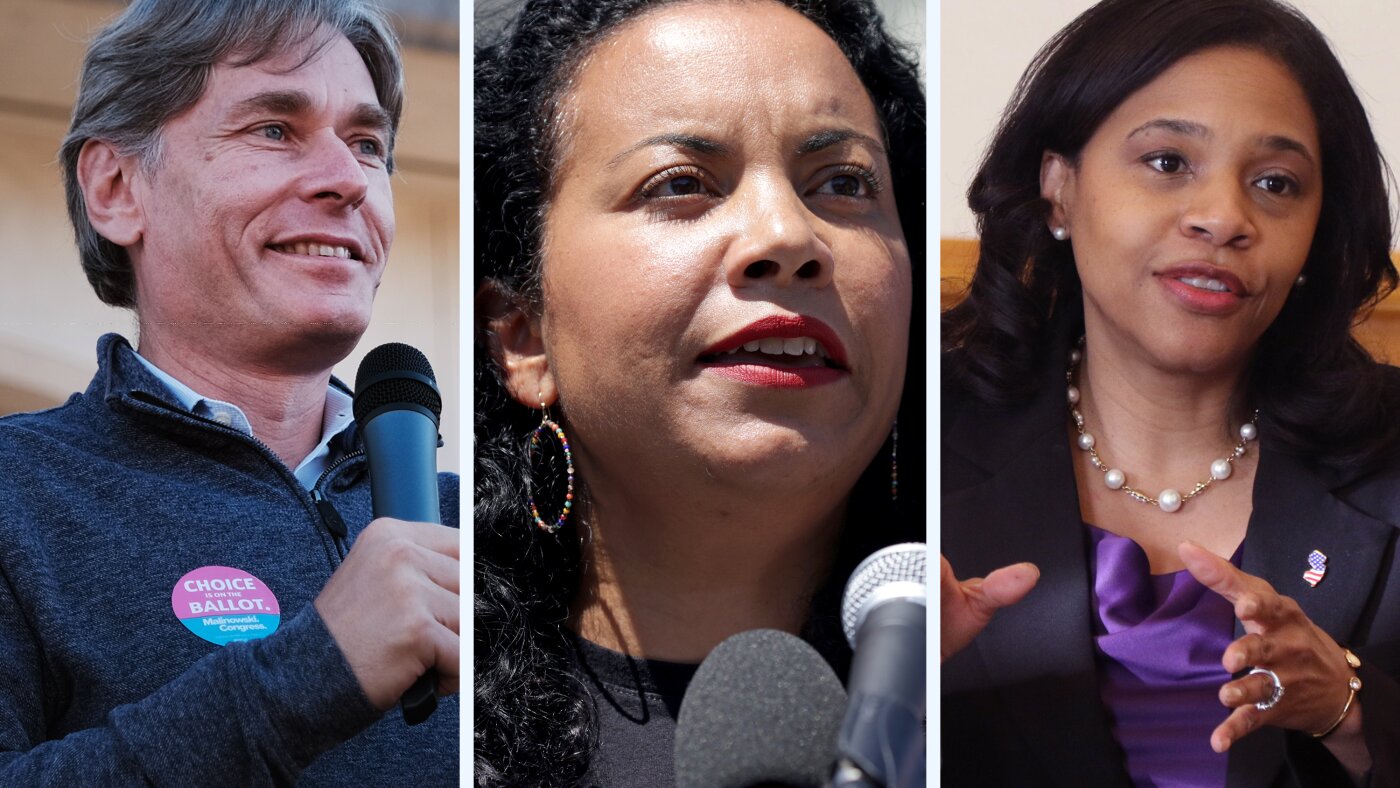
Driving the news: The 13-candidate Democratic primary to replace now-Gov. Mikie Sherrill in New Jersey's 11th congressional district ended in a dead heat between progressive organizer Analilia Mejia and former Rep. Tom Malinowski. With several thousand provisional and late mail-in still to be counted as of Friday, Mejia led Malinowski by 500 votes, 28.75% to 27.97%, according to the Associated Press. Mejia trailed many of her opponents in fundraising, bringing in just $420,000 to Malinowski's $1.2 million.
US politics
[ Load more ]