#non-dom-regime
#non-dom-regime
[ follow ]
#tariffs #trade-policy #supreme-court #international-expansion #trade-agreements #regulatory-compliance
#ieepa-tariffs
Intellectual property law
fromPatently-O
1 month agoForthwith, Part II: CIT Orders Refunds for All Importers, Not Just Litigants
After the Supreme Court invalidated IEEPA tariffs, CBP continued collecting unlawful duties without issuing refunds until a federal judge ordered comprehensive relief for all affected importers regardless of litigation status.
#international-expansion


Bootstrapping
fromLondon Business News | Londonlovesbusiness.com
3 weeks agoFive international expansion tips for businesses to expand sustainably - London Business News | Londonlovesbusiness.com
International expansion requires thorough market research, local partnerships, localized marketing strategies, and technology infrastructure to succeed.
fromwww.dw.com
1 week agoWTO talks end in stalemate over e-commerce
"We worked hard," WTO Director-General Ngozi Okonjo-Iweala said, adding that the US and Brazil in particular "need more time" to work out their differences over the agreement to impose levies on cross-border online orders.
World politics
#tariffs


US politics
fromFortune
1 month agoTrump's plan B to impose new tariffs is also illegal as a balance-of-payments deficit doesn't exist, trade experts say | Fortune
Trump invoked Section 122 to reimpose tariffs, but experts say the law's balance-of-payments requirement is not met, undermining the legal basis.
US politics
fromenglish.elpais.com
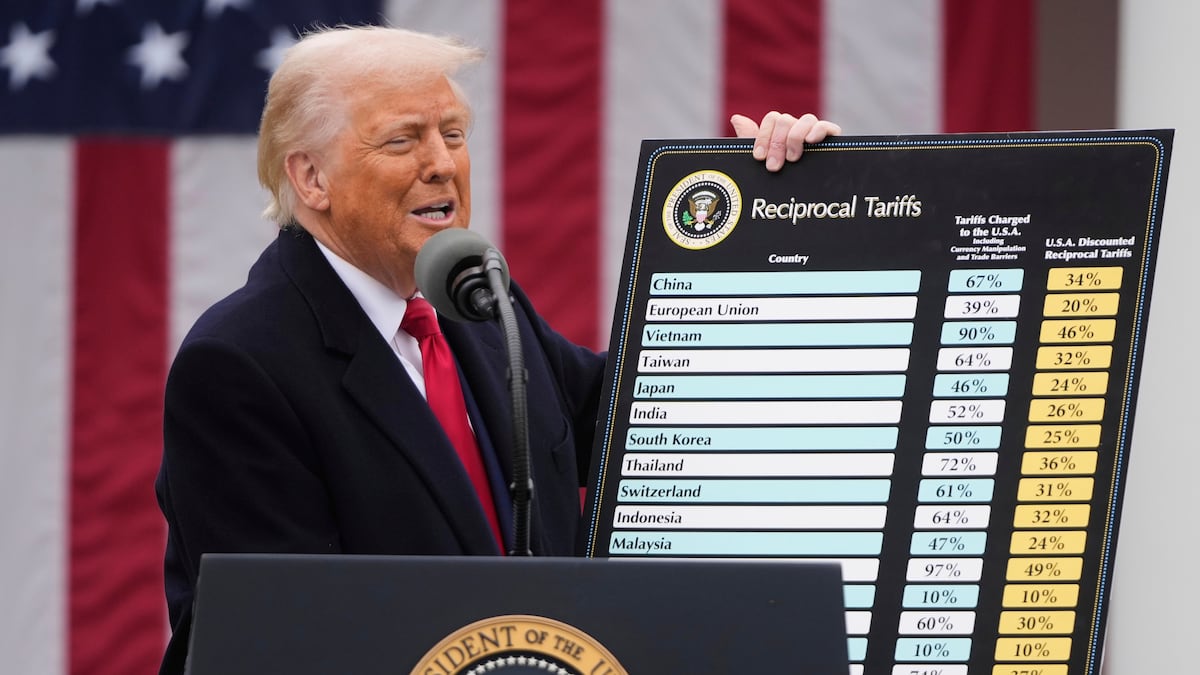
1 month agoThese are the (many) countries that stand to gain from the Supreme Court ruling overturning Trump's tariffs
Supreme Court struck down broad US reciprocal tariffs as unconstitutional; the president imposed a temporary global 10% tariff under Section 122 of the Trade Act.
Europe news
fromLondon Business News | Londonlovesbusiness.com
3 weeks agoTrump Weighing Up Fresh Tariff Framework and Markets - London Business News | Londonlovesbusiness.com
European markets decline amid rising energy prices and stagflation concerns, while defence stocks gain on Iran conflict tensions and oil prices surge past $94 despite IEA's strategic reserve release.
Intellectual property law
frompatentlyo.com
3 weeks agoGuest Post: Protectionist PTO Memo is on a Collision Course with TRIPS
USPTO Director's new policy considers U.S. manufacturing status when deciding whether to institute IPR and PGR proceedings, potentially conflicting with WTO TRIPS obligations requiring nondiscriminatory patent treatment.
European startups
fromComputerworld
3 weeks agoEuropean companies warn EU leaders: reduced reliance on US tech could hurt profitability
European companies warn that EU technological sovereignty initiatives risk reducing profitability and competitiveness while creating costly, complicated transitions from established US technology platforms.
fromFast Company
1 month agoSmart businesses don't adapt to crony capitalism
Defense Secretary Pete Hegseth took the unprecedented step of designating a U.S. firm-Anthropic-as a supply chain risk. Anthropic's crime? It refused to violate industry-wide protocols against using AI for mass surveillance or autonomous weapons. Hegseth's designation, which has until now been reserved for foreign firms, bars U.S. military contractors from doing business with the company.
US politics
European startups
fromwww.dw.com
3 weeks agoUS trade probes could lead to new tariffs for EU, China
The US launched two trade investigations targeting excess industrial capacity and forced labor imports, potentially leading to new tariffs on major trading partners after the Supreme Court limited Trump's tariff authority.
Remote teams
fromEntrepreneur
1 month agoGoing Global? The Game Has Changed. Here's the New Playbook.
Global expansion leaders strategically blend entity-based employment, EOR solutions, and contractor relationships, selecting the optimal model for each market, role, and business objective rather than applying uniform approaches.
Bootstrapping
fromEntrepreneur
1 month agoAvoid These Tax Pitfalls When Expanding Your Startup Overseas
U.S. entrepreneurs expanding internationally must plan early and obtain expert advice to avoid unexpected tax obligations, compliance requirements, and permanent establishment issues in foreign countries.
EU data protection
fromTechRepublic
1 month agoThe Global Fight Over Who Controls Your Data Just Escalated - Here's What the Numbers Say
Regions with mature data sovereignty frameworks and strong enforcement experience fewer incidents, while areas with developing regulatory infrastructure face significantly higher breach rates.
#tariff-refunds
US Elections
fromwww.npr.org
1 month agoNo lawsuits required: U.S. Customs is working on a system to refund tariffs
U.S. Customs is developing a streamlined refund system for unconstitutional tariffs, expecting completion within 45 days, avoiding individual lawsuits for the $166 billion owed to over 330,000 businesses.

US Elections
fromwww.npr.org
1 month agoNo lawsuits required: U.S. Customs is working on a system to refund tariffs
U.S. Customs is developing a streamlined refund system for unconstitutional tariffs, expecting completion within 45 days, avoiding individual lawsuits for the $166 billion owed to over 330,000 businesses.
World politics
fromwww.aljazeera.com
4 weeks agoWhy international law is still the world's best defence
The post-World War II international legal order faces erosion from ultranationalism, great-power rivalries, and norm violations, risking a return to force-based politics where power supersedes principle.
Business
fromHarvard Business Review
1 month agoRethinking Strategy in a Hyperpolitical World
Corporate decisions face intense public scrutiny for political implications, resulting in boycotts, revenue loss, reputational damage, and executive terminations, yet political engagement remains unavoidable for businesses.
EU data protection
fromInfoWorld
1 month agoSovereignty isn't a toggle feature
European cloud alternatives like Hetzner and Scaleway can deliver comparable performance and capabilities to AWS while significantly reducing costs, though they require greater operational responsibility and architectural commitment to sovereignty.
fromIPWatchdog.com | Patents & Intellectual Property Law
1 month agoOpinion: The ITC Has Lost Sight of the Public Interest
The U.S. International Trade Commission (ITC)-an agency with the extraordinary power to block imports and, in turn, influence the direction of American technology policy-has drifted out of that balance. To align with the Trump Administration's intellectual property priorities and pro-investment agenda, the ITC is in urgent need of reform.
Intellectual property law
fromwww.aljazeera.com
1 month agoHong Kong-linked company decries search of Panama Canal port offices
Panama Ports Company (PPC), part of the Hong Kong conglomerate CK Hutchison, said the Panamanian government acted in disregard for the rule of law. It decried what it called the latest steps to invade and take the property of PPC during a search on Thursday. It also accused authorities of entering a private storage site without notice and ignoring requests to safeguard sensitive corporate data.
World politics
fromEntrepreneur
1 month agoWhy Global Brands Struggle When Local Markets Push Back
Companies enter new markets with momentum. Press coverage looks promising. Campaigns launch on schedule. Local teams are hired. Early dashboards suggest traction. Then progress slows. Customer interest plateaus. Partnerships take longer than expected. Internally, the conversation almost always turns to execution. Messaging must not be clear enough. The market probably needs more education. What I have learned is that this conclusion is usually wrong. What looks like market resistance is more often a signal that the brand is communicating from the wrong position.
Venture
fromLondon Business News | Londonlovesbusiness.com
2 months agoGovernment backs businesses with new guidance to get employment law changes right - London Business News | Londonlovesbusiness.com
Creating a modern, fair and dynamic labour market is central to this Government's plan for growth. We want to make it easier for employers to find the people they need, while ensuring that work pays and feels secure. Through clear guidance, we are giving businesses the practical support they need to understand these changes and get things right first time.
UK news


fromwww.theguardian.com
2 months agoIMF warns tariffs and geopolitical tensions threaten markets and global growth
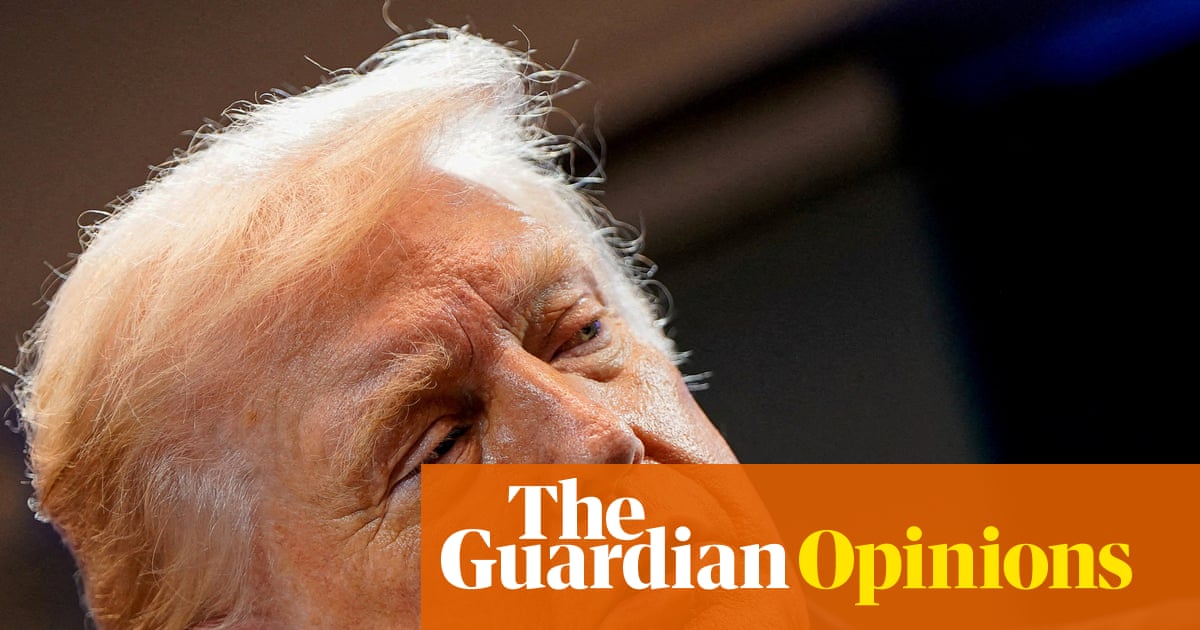
The International Monetary Fund has warned mounting geopolitical tensions and an escalation of Donald Trump's tariff war could hit global economic growth and trigger a backlash in financial markets. In an update as Trump threatens to impose tariffs on Nato allies opposed to his ambitions in Greenland, the Washington-based fund said a renewed eruption in trade tensions was among the biggest risks to global growth in 2026.
World news
fromFortune
1 month agoHoping for a tariff refund? Trump officials say they are waiting for lower courts to provide instructions. 'They created the situation' | Fortune
That's after Trump attempted to use the International Emergency Economic Powers Act for the first time as a vehicle for imposing tariffs, when he unveiled his "Liberation Day" duties last year. The tariffs were quickly challenged in court. While arguing the case last spring, Justice Department lawyers acknowledged that if the tariffs were deemed unlawful, then the government would issue refunds to the plaintiffs.
US politics

Remote teams
fromLondon Business News | Londonlovesbusiness.com
1 month agoTop seven mistakes companies make when hiring international employees: Critical risks and how to avoid them - London Business News | Londonlovesbusiness.com
Plan and follow structured, locally compliant hiring processes to avoid legal, financial, and cultural failures when hiring across borders.
from24/7 Wall St.
2 months agoThe Cross-Border Specialist Posts 25% Growth but Its Platform Rival Delivers Better Returns
Global-E posted $220.8 million in revenue, up 25.5% year-over-year, with gross margins at 45.1%. The company generated $13.2 million in net income, but profit margin remained razor-thin at 0.83%. Operating margin reached 7.7%, showing the business model works operationally, but capital efficiency remains a problem. Return on equity sits at just 0.81%, meaning the company barely generates returns on deployed capital. That's the core issue Wall Street keeps circling back to.
E-Commerce
fromwww.dw.com
1 month agoChina overtakes US to become Germany's top trading partner
The sum of exports and imports between the two countries last year totalled 251.8 billion (roughly $296.6 billion), a 2.1% increase, according to Destatis. China was Germany's most important trading partner from 2016 all the way through to 2023. In 2024, the US briefly held the title. German Chancellor Friedrich Merz is also set to visit China next week, where he is set to discuss trade and other topics.
Miscellaneous


fromNextgov.com
2 months agoTrust, trade and the new data diplomacy
Data has become the defining currency of global power. The nations and organizations that can manage, protect, and share it responsibly will shape the future of economic resilience and international cooperation. In an era where artificial intelligence and digital interdependence connect every market and mission, the ability to build and maintain trust in data is now a central pillar of both commerce and diplomacy.
World news
fromwww.theguardian.com
1 month agoUK shelves 110m frictionless post-Brexit trade border project
The government hoped a single trade window (STW) would simplify border processes after Brexit by creating a single digital platform in which importers and exporters could upload all documentation linked to goods before they are transported. However, the STW project was paused in 2024 amid concerns over the cost of implementing the scheme. Government responses to freedom of information requests, submitted by the thinktank TaxWatch and seen by the Financial Times, now suggest no money has been spent on the project since January last year, with the Treasury writing that the programme had been brought to an early closure.
UK politics
Business
fromHarvard Business Review
2 months agoFor Multinational Companies, Localization Matters More Than Ever
Global companies must localize core operations, duplicating supply chains and integrating regional suppliers to meet data-sovereignty and local sourcing mandates, sacrificing scale for resilience.
World news
fromwww.theguardian.com
2 months agoThe post-US world is already taking shape look at the massive EU-India trade deal | Ravinder Kaur
EU and India signed a comprehensive trade and strategic agreement opening Indian markets and deepening defence, security, and economic ties driven by shifting geopolitical dynamics.
fromFortune
2 months agoIndia, EU reach 'mother of all' trade agreements after nearly 20 years of talks | Fortune
After nearly two decades of negotiations, India and the European Union announced Tuesday they have reached a free trade agreement to deepen economic and strategic ties. The accord, which the EU chief described as the "mother of all deals," could affect as many as 2 billion people. The deal between two of the world's biggest markets comes as Washington targets both India and the EU with steep import tariffs, disrupting established trade flows and pushing major economies to seek alternate partnerships.
Miscellaneous
fromFortune
2 months agoA spectre is haunting Europe - the spectre of Trump. Cue the Asian trade deals | Fortune
Stability. Consistency. Ever-changing complexity. With language like that, deployed in separate meetings in three Asian capitals this week, government leaders forged closer ties driven in part by a figure halfway around the world: the president of the United States. And much of the time, they didn't even mention Donald Trump's name. IN BEIJING: The U.K. and Chinese leaders called Thursday for a "long-term, stable, and comprehensive strategic partnership" between their two countries. The important words are long-term and stable. The two countries committed a decade ago to building a comprehensive strategic partnership but progress has been halting at best.
World politics
fromFortune
2 months agoEU moves closer to another major Asian power on trade, upgrading ties with Vietnam | Fortune
The upgrade places the EU on the same diplomatic footing as the United States, China and Russia and was announced during a visit to Hanoi by European Council President António Costa. "At a moment when the international rules-based order is under threat from multiple sides, we need to stand side by side as reliable and predictable partners," Costa said, adding that the partnership is about "developing spheres of shared prosperity."
Miscellaneous
[ Load more ]