#northern-rockies
#northern-rockies
[ follow ]
#snow-levels #weather #tetons #snowstorm #skiing #spring-conditions #mountain-snow #cold-front #snow-accumulation

Snowboarding
fromSnowBrains
3 weeks agoSnowBrains Forecast: Windy Weekend Snow Then Springlike Warmth in the Northern Rockies - SnowBrains
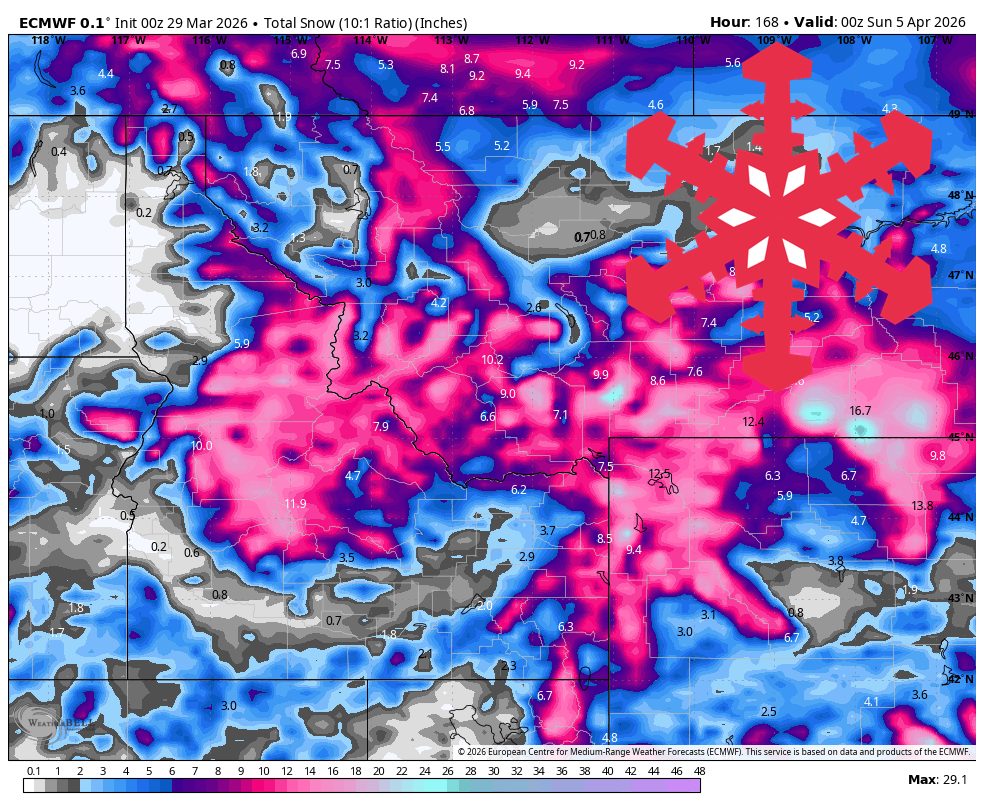
A cold front Saturday and lighter snow Sunday night into Monday will deliver 5-7 inches at Big Sky and 4-5 inches at Whitefish Mountain, Jackson Hole, and Bridger Bowl, followed by spring conditions with warming and firming mornings.
Snowboarding
fromSnowBrains
3 weeks agoSnowBrains Forecast: 1-2 Feet for the Northern Rockies Through Saturday - SnowBrains
A major windstorm with heavy snow will impact the Northern Rockies Wednesday through Saturday, with the deepest accumulation in northwest Montana and central Idaho while southwest areas remain mostly windy with minimal snow.
Snowboarding
fromSnowBrains
1 month agoSnowBrains Forecast: 1-2 Feet for Southwest Montana and the Tetons Through Saturday in the Northern Rockies - SnowBrains
Southwest Montana and the Tetons receive 10-17 inches of snow Thursday-Friday, followed by milder weekend conditions and another storm threat early next week.
Snowboarding
fromSnowBrains
1 month agoSnowBrains Forecast: Up to 20" in the Northern Rockies Through Friday, Then a Lower-Confidence Weekend Split - SnowBrains
Northern Rockies will see a warm-to-cool storm cycle Monday night through Friday, producing 8–20″ snow at favored central Idaho, Tetons, and Canadian Rockies resorts.


Snowboarding
fromSnowBrains
1 month agoSnowBrains Forecast: 1 Foot for the Rockies This Week, Active Pattern Continues Next Week - SnowBrains
Northern Rockies will see frequent snow this week, with western Wyoming and southwest Montana getting the most dependable powder; varying snow quality across regions.
fromSnowBrains
1 month agoSnowBrains Forecast: A Foot of Snow for the Northern Rockies Into Next Week - SnowBrains
WeatherThe Northern Rockies stay mild into Saturday, then a Sunday night-Monday front delivers the first meaningful refresh, with central Idaho and the Tetons favored for the deepest totals. Snow levels start high as the pattern flips, so lower elevations see denser snow early before colder air settles in and improves quality by Monday night. A lighter, colder midweek follow-up keeps turns fresh, and the broader mid-February signal stays active with more chances to add on later in the week.
Snowboarding
fromSnowBrains
3 months agoSnowBrains Forecast: 6 to 20 Inches for the Northern Rockies - SnowBrains
A warm, windy midweek storm cycle across the Northern Rockies will be followed by a sharper cool-down late week, improving snow quality as snow levels crash and temperatures tumble. Early light snow favors the Canadian Rockies, then a milder surge Wednesday night through Friday brings higher snow levels and denser accumulations at many Idaho and Wyoming resorts before a colder Friday night into Saturday finish drops snow levels to the valley floors and boosts SLRs into much fluffier territory;
Snowboarding


fromSnowBrains
3 months agoSnowBrains Forecast: 2 Feet of Warm & Wet Snow for the Rockies This Week - SnowBrains
A warm, moisture-loaded pattern dominates the Northern Rockies this week, favoring deep but often dense midweek snow in the BC interior and Tetons, then gradually shifting to colder, higher-quality powder in the Canadian Rockies as we head into the weekend. Snow levels start quite high with this event, so the best accumulation focuses on upper-mountain terrain, especially at Big White, Revelstoke, and the higher Teton and southwest Montana peaks, while valley bases see more rain or heavy, wet snow.
Snowboarding
fromSnowBrains
4 months ago[NOVEMBER UPDATE] NOAA Winter 2025-26 Forecast: New Forecast Pinpoints Snowiest (and Driest) Regions - SnowBrains
General Pattern: La Niña conditions are expected to persist through winter, favoring a split temperature pattern across the US. Colder Areas: Below-normal temperatures are favored from the Upper Mississippi Valley, Northern and Central Great Plains west to the Northern Rockies and parts of the Pacific Northwest. Early December is likely to be colder-than-normal in the Midwest and northern states due to atmospheric patterns including a negative Arctic Oscillation and a modulating Madden-Julian Oscillation.
Snowboarding
[ Load more ]