#oauthoidc-account-recovery
#oauthoidc-account-recovery
[ follow ]
#cybersecurity #age-verification #privacy #access-control #data-breach #discord #identity-management #security








Healthcare
fromNextgov.com
3 weeks agoCMS touts early uses of new biometric verification tools for Medicare.gov
CMS launched modern identity verification options (Login.gov, ID.me, CLEAR) on Medicare.gov, with 25% of users adopting them within five to six days and 60% of new accounts using these credentials.
fromTheregister
3 weeks agoBug that wiped customer data saved the day - and a contract
I looked at the config and noticed the customer did not have a default route set. He wasn't sure if that was the problem, so he made some changes he thought might be useful. The router Caleb worked on then rebooted, which he expected. But when it restarted, its previous configuration was gone.
Tech industry
Privacy professionals
fromMedCity News
2 weeks agoThe Evolving Landscape of Privacy and Cybersecurity: Essential Strategies for Legal and Compliance Professionals - MedCity News
Organizations must combine strong controls with comprehensive employee training and accountability culture to effectively protect sensitive data and comply with evolving privacy laws.
#ai-agent-security
Information security
fromTechzine Global
2 weeks agoOkta launches platform to secure AI agents
Okta for AI Agents provides organizations with discovery, access management, and immediate revocation capabilities to secure non-human identities and address the 88 percent of organizations experiencing AI agent security incidents.
Privacy professionals
fromTheregister
2 weeks agoAge verification isn't sage verification inside OSes
California's Digital Age Assurance Act attempts age verification for minors but is vague, incoherent, and creates liability risks without clearly defining compliance requirements or addressing practical implementation across diverse computing devices.
Privacy technologies
fromAzure DevOps Blog
2 weeks agoAuthentication Tokens Are Not a Data Contract - Azure DevOps Blog
Authentication tokens should only validate authorization, not serve as data interfaces; upcoming encryption will make token payloads unreadable, breaking applications that decode token claims.
Privacy technologies
fromArs Technica
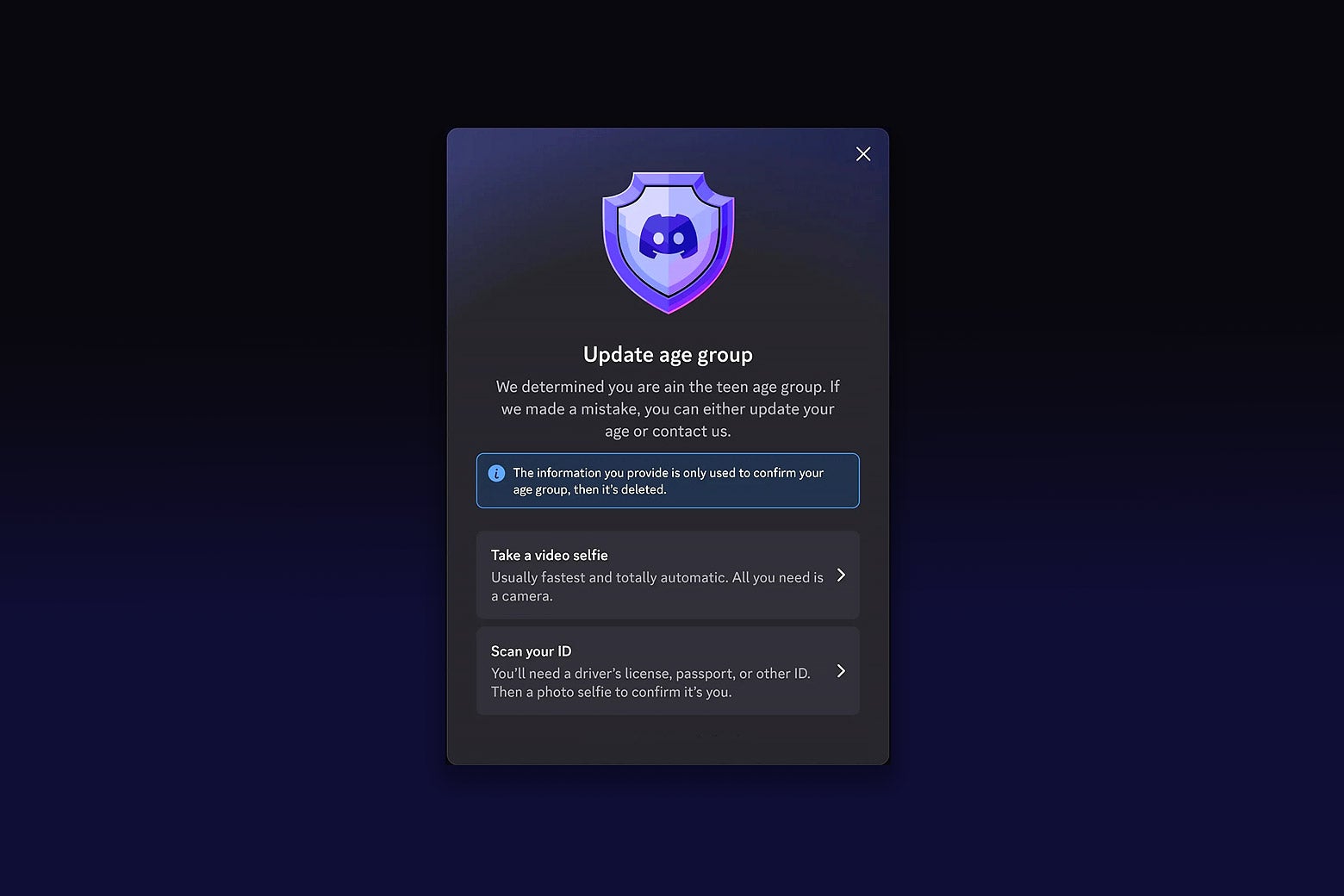
2 weeks agoAfter Discord fiasco, age-check tech promises privacy by running locally. Does it work?
Age-verification systems using on-device face scans and cross-platform age keys reduce privacy risks, but widespread distrust of vendors and past data breaches undermine user confidence in these technologies.
Information security
fromSecurityWeek
2 weeks agoCritical HPE AOS-CX Vulnerability Allows Admin Password Resets
HPE released patches for a critical vulnerability in Aruba Networking AOS-CX switches that allows remote, unauthenticated attackers to reset administrator passwords and gain full system control.
Privacy professionals
fromwww.socialmediatoday.com
1 month agoConcerns with third party partner could derail LinkedIn's verification push
LinkedIn implements expanded verification requirements for company, workplace, and executive-level roles to combat scams and misrepresentation, though concerns about verification partner Persona may hinder progress.
fromblog.logrocket.com
2 months agoWhat are the key challenges in scaling MFA for large organizations? - LogRocket Blog
Most design specs break down in development because they're built for designers, not developers. This article shows how to write specs that reflect real-world logic, states, constraints, and platform behavior not just pixels. Rafael Basso Jan 20, 2026 11 min read A practical guide to AI in UX design, covering predictive UX, generative assistance, personalization, automation, and the risks of overusing AI. Shalitha Suranga Jan 14, 2026 11 min read
UX design
Information security
fromTheregister
1 month agoMicrosoft OAuth scams abuse redirects for malware delivery
Microsoft warns of ongoing OAuth abuse scams using phishing emails and URL redirects to deliver malware and compromise organizational devices, primarily targeting government and public-sector entities.







fromNieman Lab
1 month agoWhy "magic links" and passcodes are taking over news logins
Passwords get hacked all the time, but they can't be hacked if they don't exist...this allows a small team like 404 to spend less time managing security administration, and more time investing in bringing you stories you care about.
Privacy technologies




fromWIRED
1 month agoPassword Managers Share a Hidden Weakness
An FBI informant helped run the Incognito dark web market and allegedly approved the sale of fentanyl-laced pills, including those from a dealer linked to a confirmed death, WIRED reported this week. Meanwhile, Jeffrey Epstein's ties to Customs and Border Protection officers sparked a Department of Justice probe. Documents say that CBP officers in the US Virgin Islands were still friendly with Epstein years after his 2008 conviction, illustrating the infamous sex offender's tactics for cultivating allies.
Information security
fromLogRocket Blog
1 month agoHow to design 2FA: Comparing methods, user flows, and recovery strategies - LogRocket Blog
2FA or two-factor authentication is a specific type of multi-factor authentication. As the name suggests, 2FA requires two distinct forms of user verification factors to access a specific protected, registered user-only software system. In the past, software teams used only a one-factor authentication strategy with users' passwords, but nowadays, with growing security concerns and user authentication evolution, every digital product uses 2FA with password-based authentication, starting from simple SMS OTPs (One Time Tokens) to futuristic AI-powered adaptive 2FA methods and high-security hardware keys.
Information security
Information security
fromKotaku
1 month agoHackers Raise The Alarm About Discord's Recent Age-Verification Partner - Kotaku
Persona's weak security enabled hackers to access biometric data and revealed extensive surveillance, including facial scanning against watchlists, raising privacy and government-collaboration concerns.



fromComputerworld
1 month ago11 steps to smarter Google account security
While you're thinking about third-party add-ons for your computer and phone, take a moment to review everything you have installed on both fronts and consider how many of those programs you actually still use. The fewer cracked windows you allow on your Google account, the better - and if you aren't even using something, there's no reason to keep it connected.
Information security
fromThe Hacker News
2 months agoThe Hidden Risk of Orphan Accounts
Traditional IAM and IGA systems are designed primarily for human users and depend on manual onboarding and integration for each application - connectors, schema mapping, entitlement catalogs, and role modeling. Many applications never make it that far. Meanwhile, non-human identities (NHIs): service accounts, bots, APIs, and agent-AI processes are natively ungoverned, operating outside standard IAM frameworks and often without ownership, visibility, or lifecycle controls.
Information security



fromThe Hacker News
2 months agoPassword Reuse in Disguise: An Often-Missed Risky Workaround
Near-identical password reuse occurs when users make small, predictable changes to an existing password rather than creating a completely new one. While these changes satisfy formal password rules, they do little to reduce real-world exposure. Here are some classic examples: Adding or changing a number Summer2023! → Summer2024! Appending a character Swapping symbols or capitalization Welcome! → Welcome? AdminPass → adminpass Another common scenario occurs when organizations issue a standard starter password to new employees, and instead of replacing it entirely, users make incremental changes over time to remain compliant.
Information security
fromTechzine Global
2 months agoMicrosoft requires MFA for Microsoft 365 admin center
Starting February 9, 2026, Microsoft will enforce multi-factor authentication (MFA) for all users who want to access the Microsoft 365 admin center. Administrators without MFA will face login blocks starting next month. The measure is part of Microsoft's strategy against credential-based attacks, which remain a significant attack vector. The company began a soft rollout in February last year, but starting next month, the requirement will be fully enforced for all tenants.
Information security
Information security
fromFortune
2 months agoYou probably use the same password for 30 different websites. It's time for a passkey. | Fortune
Passkeys offer secure, user-friendly authentication but adoption lags due to low awareness, misconceptions, AI concerns, and implementation challenges; treat passkeys as UX initiatives.
Information security
fromSecurityWeek
1 month agoWebinar Today: Identity Under Attack - Strengthen Your Identity Defenses
Adopt an identity-first security strategy to protect sensitive data, meet compliance requirements, and balance security, user experience, and operational efficiency against identity threats.
fromSecurityWeek
2 months agoAccess System Flaws Enabled Hackers to Unlock Doors at Major European Firms
Vulnerabilities discovered by researchers in Dormakaba physical access control systems could have allowed hackers to remotely open doors at major organizations. The security holes were discovered by experts at SEC Consult, a cybersecurity consulting firm under Atos-owned Eviden, in Dormakaba's Exos central management software, a hardware access manager, and registration units that enable entry via a keypad, fingerprint reader, or chip card.
Information security
Information security
fromthehackernews.com
1 month agoOrchid Security Introduces Continuous Identity Observability for Enterprise Applications
Continuous identity observability uncovers embedded credentials, application-level authorization, and unmanaged identity paths to eliminate Identity Dark Matter and reduce unseen identity risk.
Information security
fromwww.housingwire.com
2 months agoReducing risk: The importance of administrative access responsibilities
Clearly defined and strictly managed administrative access reduces cybersecurity risk while preserving operational efficiency in real estate, title insurance, and mortgage systems.
fromInfoWorld
2 months agoDescope introduces Agentic Identity Hub 2.0 for managing AI agents
Descope has announced Agentic Identity Hub 2.0, an update to its no-code identity platform for AI agents and Model Context Protocol (MCP) servers. The new release gives developers and security teams a dedicated UI and control plane to manage authorization, access control, credentials, and policies for AI agents and MCP servers, Descope said. Unveiled January 26, Agentic Identity Hub 2.0 lets MCP developers and AI agent builders use the platform to manage AI agents as first-class identities alongside human users,
Information security
[ Load more ]