#open-water-ep
#open-water-ep
[ follow ]
#trail-running #running #swimming #training #olympics #ultramarathon #endurance-sports #ocean-conservation
fromAlternative Medicine Magazine
1 day agoWhat You Do After Training Matters More Than You Think
After a tough workout, your body enters a state of stress: muscle fibers are damaged, energy stores are depleted, and hydration levels drop. This is a critical moment. If your body gets the right nutrients, it starts rebuilding immediately. If not, recovery slows down, and so does progress.
Alternative medicine
fromArs Technica
4 weeks agoFishing crews in the Atlantic keep accidentally dredging up chemical weapons
Recovered CWMs continue to pose worker and food safety risks. Because of ocean drift, storms, and offshore industries, sea-disposed CWMs locations are largely unknown and potentially far from their originally documented dump site. The three incidents exposed at least six crew members to mustard agent, which causes blistering chemical burns on skin and mucous membranes.
Miami Marlins
fromEsquire
4 weeks agoHow Can Custom-Fit Goggles Really Change the Game for Swimmers?
Enter THEMAGIC5, makers of the world's first custom-fitted swim goggles. Born out of necessity by Danish triathletes Bo Habber and Rasmus Barfred, its newly launched model-Vector with Formfit-uses proprietary technology to create one-of-a-kind goggles based on a facial scan via their smartphone app with stabilization points specific to your face.
Wearables
fromBusiness Insider
4 weeks agoA longevity and sports medicine doctor who completed 15 Ironmans shares his workout routine. It includes a run-commute.
It's the most ubiquitous, effective, totally no-side-effects drug in the world. Exercise is also something Metzl feels is sometimes overlooked in the longevity space, in favor of fancier products. A lot of this stuff we talk about with longevity is not validated, like full-body MRIs and these supplement stacks.
Health
Skiing
fromwww.cbc.ca
1 month agoKatie Ledecky beats Summer McIntosh in 800m freestyle showdown at Pro Swim Series meet | CBC Sports
Katie Ledecky defeated Summer McIntosh by nearly two seconds in the 800-metre freestyle at a Pro Swim Series meet, retaining her competitive advantage over the Canadian swimmer.
US news
fromwww.npr.org
4 weeks agoThey were led off course in a big race. But a fix is more complicated than prize money
The top three finishers in the USATF Half Marathon Championships were misdirected off course by an official race vehicle, resulting in incorrect final standings and jeopardizing their qualification for the 2026 World Road Running Championships.
fromwww.theguardian.com
1 month agoDigested week: Just when you thought it was safe to go back in the water ' but this time, it's real | Emma Brockes
The three-part docudrama Dirty Business, which started on Channel 4 on Monday and concluded midweek, has made the notion of going into the sea in the UK terrifying and unlike Jaws, this story is real. It is an example of what good drama can do that even the best reporting can't quite achieve.
Environment
fromiRunFar
3 weeks agoAI-Powered Optimization: New Frontiers in Peak Running Performance
Super shoes and ultralight gear make a difference, but with new advancements in artificial intelligence (AI) that can look at our running form and compare it to the ideal, analyze our nutrition intake from a simple photo and help us plan our diets, and offer guidance on training and recovery, the interwovenness of technology and running is only set to increase.
Running
fromStrength Running
1 month agoCross Training and Running: How to Add Other Sports to Your Training - Strength Running
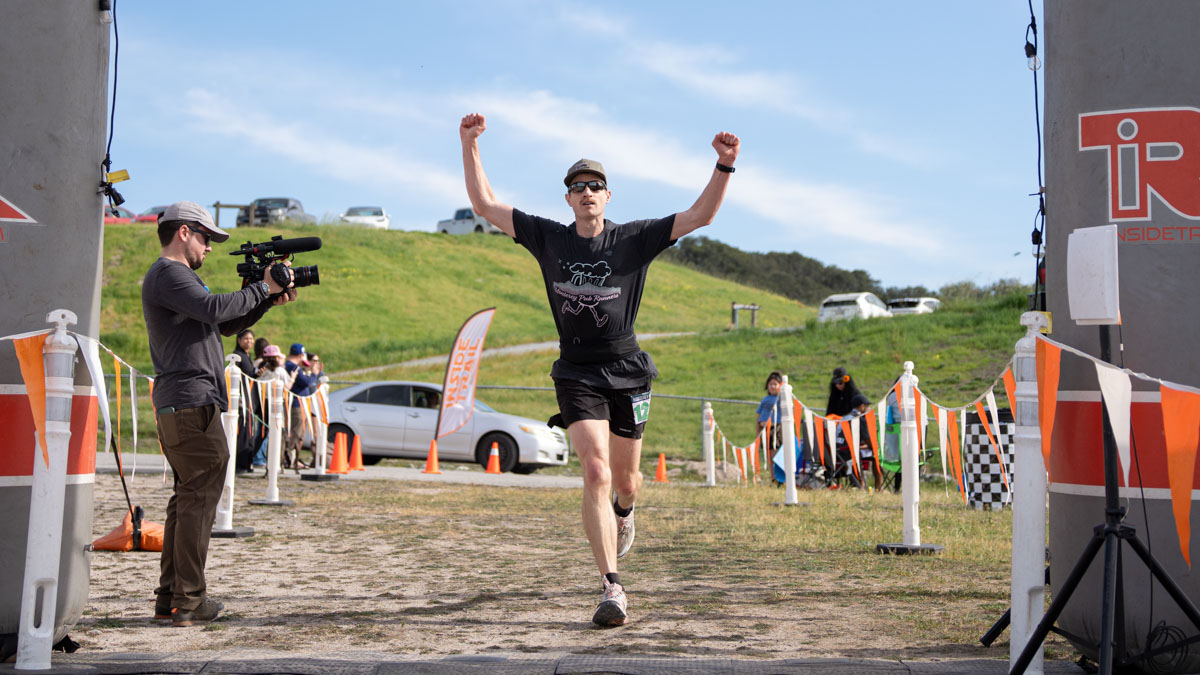
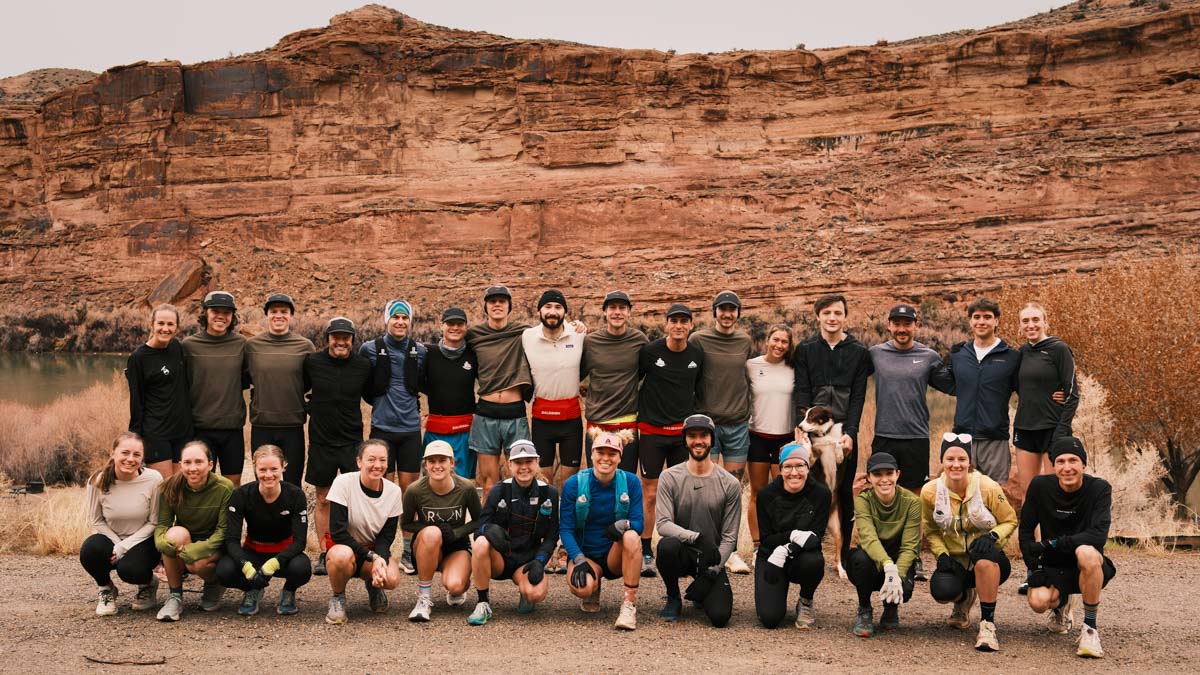
Cross training and running go together like peanut butter and jelly. If you build it into your schedule intentionally, strategically, and with a clear understanding of what you're trying to accomplish, you'll thrive. Megan makes the case that cross-training serves runners for several distinct reasons, and the right reason for you will shape how you approach it.
Running
fromBuzzFeed
1 month ago19 Athletes In Their First Olympic Games, Last Olympic Games, And Now
ICYMI: The 2026 Winter Olympics are currently underway in Milano Cortina. From the "Quad God" to all the athletes winning gold, there has been a ton of buzz around this year's games. And while we watch history happen, let's take a walk down memory lane and see how fan-favorite Olympians have transformed over the years: 1. To start, Michael Phelps made his first Olympic appearance at the 2000 Summer Games in Sydney, Australia, when he was just 15 years old:
World news
Running
fromESPN.com
1 month agoOlympic swimmer Hunter Armstrong to compete in Enhanced Games
Olympic swimmer Hunter Armstrong plans to compete in the Enhanced Games while maintaining eligibility for the 2028 Los Angeles Olympics, testing boundaries between traditional and performance-enhancing drug-friendly competition.
fromwww.bbc.com
1 month agoSwimming spots that could become designated dips
The government said the plans would increase the number of England's official bathing sites to 464. An official bathing spot on the Thames in London would mark a "vast transformation" in water quality in the river which was declared biologically dead in the 1950s due to pollution, officials said. Water minister Emma Hardy said rivers and beaches were "at the heart of so many communities, where people come together, families make memories and swimmers of all ages feel the benefits of being outdoors safely".
UK news
fromLos Angeles Times
2 months agoSpeedo moves U.S. headquarters to Long Beach ahead of Olympics
Speedo's parent company, Pentland Brands, plans to move its North American headquarters from Orange County to Long Beach, which has emerged as a hub for aquatic sports for the upcoming Summer Olympics in Los Angeles. The privately held, U.K.-based company that manages a portfolio of fashion and sportswear brands - including outdoor gear brand Berghaus and cycling apparel brand Endura - plans to move to a 25,000-square-foot facility at Aero Long Beach this summer.
Business
fromwww.theguardian.com
2 months agoMy rookie era: I'm learning to swim in the ocean, braving the waves and marine life
I've wanted to be an ocean swimmer ever since I moved to Sydney. The idea of getting out past the waves and braving the elements excited me. I would tell anyone who would listen: Once I live closer to the beach, I'm going to be out there. Just you wait. I've lived walking distance to the beach for more than a year now. During this time, I've read a lot about ocean swimming: how swimmers overcame challenges or life-altering moments.
Mindfulness
Science
fromSocial Media Explorer
2 months agoSaltwater vs. Traditional Chlorine - Social Media Explorer
Saltwater pools generate chlorine on-site via electrolysis, producing steadier sanitizer levels, softer-feeling water, and different maintenance and equipment requirements compared with manually dosed chlorine systems.
fromwww.theguardian.com
2 months agoI've never felt such a skin-zinging feeling of being alive': my year of swimming in Nordic seas
Warm lights shine from the houses that dot the wintry slopes of Mount Flyen and a cold wind blows as I stand in a swimming costume trying to talk myself into joining my friends in Bergen harbour. Stars are already appearing in the inky mid-afternoon sky. Life-changing moments are easy to spot in retrospect, but at the time they can feel so ordinary. I didn't know then that my wintry swim would lead to a year of adventures.
Travel
Television
fromwww.theguardian.com
2 months agoMeet the merpeople: Once I put the tail on, my life was changed forever'
Mermaiding has become a global industry requiring trained free-diving performance, bespoke costume-making, formal instruction, international retreats, and career opportunities for professionals and hobbyists.
fromInsideHook
2 months agoWhat's the Point of Chasing a Plank PR?
It's just what it looks like: I time my planks then file them away, determined to last a little longer tomorrow. And sometimes I do, for several days in a row, then one day I'll collapse nearly a minute short of my personal best. I'll pound the mat like Charlton Heston at the end of Planet of the Apes, then I'll get myself together - you've got to stay cool at Equinox - and move on with my day.
Exercise
fromInsideHook
1 month agoForever Chemicals Lead to Olympic Disqualifications
But there's also the matter of making sure one's equipment is up to snuff - and, beginning with this year's Winter Olympics, that means not having any PFAS, or "forever chemicals," in the mix. What happens if a competitor does turn out to have such chemicals in their equipment? They'll find themselves disqualified. As GearJunkie's Mary Andino reports, three skiiers have been disqualified so far due to their use of fluorocarbon wax, also known as "fluoro wax."
Skiing
fromwww.independent.co.uk
1 month agoSporting event abandoned after competitors sustain multiple injuries
A high-speed collision occurred between the New Zealand and French yachts during the SailGP race in Auckland on Saturday, leading to the abandonment of the day's competition. New Zealand grinder Louis Sinclair suffered compound fractures to both legs and is in stable condition in Auckland Hospital; a sailor from the French team also sustained injuries. The incident unfolded when the New Zealand vessel reportedly lost control at high speed, spinning directly into the path of the French yacht, which then rode over it.
World news
fromSnowBrains
1 month agoDual Moguls: The Newest and Fastest Paced Olympic Discipline Explained - SnowBrains
On June 24 2022 the International Olympic Committee 'IOC' announced the addition of two new disciplines to the Winter Olympics. These disciplines are dual moguls and women's large hill ski jumping. The addition of women's large hill jumping leaves Nordic Combined as the last men-only Winter Olympic event. Today we'll take a closer look at dual moguls, which will premier at the ski resort of Livigno, Italy, at the Milano-Cortina 2026 Olympics for both men and women.
Snowboarding
World news
fromwww.mercurynews.com
2 months agoHigh-speed chaos on ice: What to know about short track speedskating at the Winter Olympics
Arianna Fontana, the most decorated short-track speedskater, will aim for more Olympic medals at Milan Cortina; short track features group races, protections, and frequent collisions.
fromiRunFar
2 months agoThis Week In Running: January 5, 2026
The six-day event featured over a dozen races, taking place from December 28, 2025, to January 3, 2026. Everything was run on a 1.42-mile loop. Sierra DeGroff was the women's and overall six-hour winner with 43.7 miles. Women took the first four overall finish spots, and Andrea Mucchietto was the first man with 36.6 miles in fifth place overall. Six-day world-record holder Megan Eckert was the women's and overall 12-hour winner with 81.2 miles. Men's winner Matt Heacock totaled 70.5 miles over the fixed time.
Running
fromScience of Running
1 month agoFit and Fast: Achieving Robustness in Training
In this episode of the On Coaching Podcast, Steve Magness and Jon Marcus discuss the concept of 'fit but flat,' exploring the phenomenon where athletes excel in metabolic fitness but fail to perform competitively due to a lack of neuromuscular coordination. Using examples like middle-distance runner Ingram Brion, the hosts delve into how metabolic training alone can lead to race failures.
Running
[ Load more ]