#opportunity-zones
#opportunity-zones
[ follow ]
#housing-affordability #affordable-housing #real-estate #housing-development #housing-crisis #housing-supply
#housing-development


fromwww.amny.com
2 weeks agoBoston real estate
Expert Analysis
Cities can unlock 100,000+ housing units by leveraging 50+ million square feet of unused development rights on municipal properties and transit facilities through strategic air-rights deployment and alternative ownership models beyond traditional ground leases.
fromLos Angeles Times
27 years agoEast Bay real estate
Housing Permits Urged for 3 Projects
Ventura Planning Commission unanimously approved three east Ventura developments totaling 245 housing units: a 100-unit apartment complex and two single-family home projects, allocating the city's limited annual housing permits.
Boston real estate
fromwww.amny.com
2 weeks agoExpert Analysis
Cities can unlock 100,000+ housing units by leveraging 50+ million square feet of unused development rights on municipal properties and transit facilities through strategic air-rights deployment and alternative ownership models beyond traditional ground leases.
East Bay real estate
fromLos Angeles Times
27 years agoHousing Permits Urged for 3 Projects
Ventura Planning Commission unanimously approved three east Ventura developments totaling 245 housing units: a 100-unit apartment complex and two single-family home projects, allocating the city's limited annual housing permits.
#homeownership


NYC real estate
fromwww.businessinsider.com
1 day agoWe bought a house that's too small so we could afford our dream neighborhood. A $300,000 third-party loan will help us renovate.
The Feinbergs purchased a small home in Wayne, Pennsylvania, and planned to expand it using RenoFi financing based on future value.



#affordable-housing

Real estate
fromFast Company
1 week agoThe housing squeeze is quietly reshaping where Americans can live and work
Finding affordable housing is a significant challenge for various groups of renters in the U.S. economy.
Renovation
fromwww.npr.org
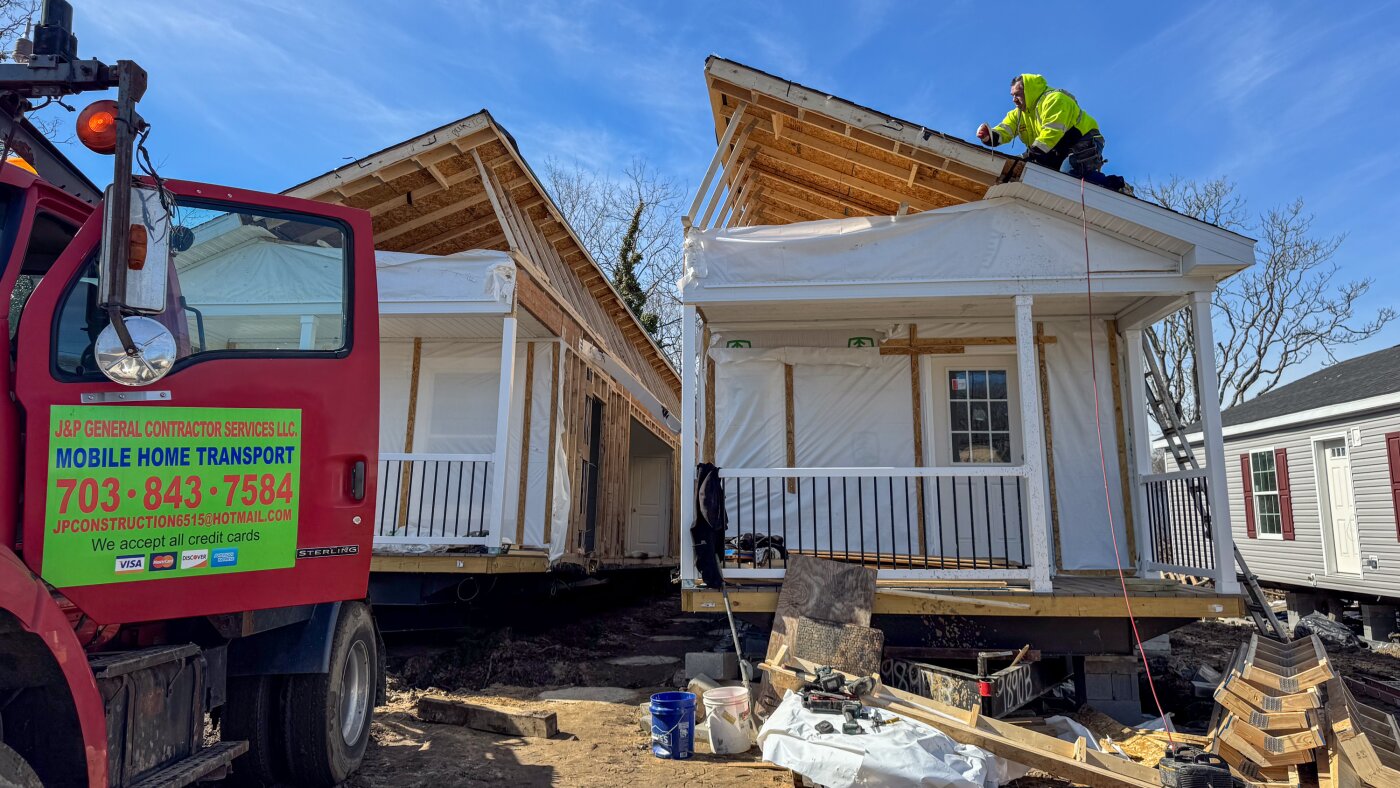
3 weeks agoBucking stigma, more places turn to factory-built for affordable housing
Factory-built manufactured homes with modern designs are being deployed in residential neighborhoods to address housing shortages and provide affordable housing for low- and moderate-income families.


fromwww.housingwire.com
1 week agoHUD investigates Washington covenant homeownership program
The Covenant Homeownership Program provides a zero-interest secondary loan to help cover down payments and closing costs, widely viewed as the first explicitly race-conscious housing finance program of its kind.
Washington DC
fromFast Company
2 weeks agoIf you want housing abundance, let the market work
Good urbanism should transcend politics. Socialists and capitalists can walk the same neighborhood and agree it's a pleasant place to live. They can each appreciate the tree canopy, the corner café with people spilling onto the sidewalk, the mix of ages on bikes and on foot, the architectural details of older buildings, and so on.
Philosophy
fromwww.bbc.com
2 weeks agoNeighbourhoods to get 20m funding boost
We've had enough of politicians standing up and telling people what needs to happen in their area. It's time to listen to local people themselves. We're putting money behind local voices so they can choose for themselves how they put pride back in communities that felt ignored for so many years.
UK politics
#housing-affordability


Real estate
fromwww.housingwire.com
3 weeks agoLocal investors outpace builders in delivering starter homes
Housing affordability crisis stems from insufficient entry-level homes below $300,000, while millions of vacant properties remain underutilized despite investor-led renovation efforts restoring starter homes.

Real estate
fromwww.housingwire.com
1 month agoHere's what will actually move the needle on housing affordability
Housing affordability requires land-use reform and builders must shift focus to market segments where they can control outcomes, as traditional solutions like lower rates, off-site construction, subsidies, and value engineering are individually insufficient.
Washington DC
fromwww.housingwire.com
3 weeks agoTrump executive order targets regulatory barriers to homebuilding
The White House issued an executive order to reduce regulatory barriers to homebuilding by directing federal agencies to review and revise environmental, permitting, and programmatic restrictions affecting housing development and affordability.
Real estate
fromwww.housingwire.com
3 weeks agoLocal investors outpace builders in delivering starter homes
Housing affordability crisis stems from insufficient entry-level homes below $300,000, while millions of vacant properties remain underutilized despite investor-led renovation efforts restoring starter homes.
Boston real estate
fromwww.housingwire.com
1 month agoDemocrats propose bill targeting corporate housing tax breaks
Democrats introduce legislation to restrict institutional investors and hedge funds from bulk-purchasing single-family homes to address housing affordability crisis and preserve homeownership opportunities.
Real estate
fromwww.housingwire.com
1 month agoHere's what will actually move the needle on housing affordability
Housing affordability requires land-use reform and builders must shift focus to market segments where they can control outcomes, as traditional solutions like lower rates, off-site construction, subsidies, and value engineering are individually insufficient.


#housing-legislation
US politics
fromJezebel
3 weeks agoIf the House and Senate Quit Squabbling, We Could Actually Make Housing More Available
The Senate passed the 21st Century ROAD to Housing Act, the largest housing legislation in 36 years with bipartisan support, but faces uncertain prospects in the House and potential presidential veto.
Real estate
fromwww.housingwire.com
3 weeks agoTrade groups push for changes to ROAD to Housing Act provisions
A bipartisan housing bill combining House and Senate provisions faces concerns from mortgage bankers over provisions that could reduce housing supply and increase lender costs through FHA loan limit decreases and expanded disclosure requirements.
fromwww.housingwire.com
2 weeks agoHow Public Financing Wins Projects Before You Build
Through Community Facilities Districts (CFD), Municipal Utility Districts (MUD), Public Improvement Districts (PID), Community Development Districts (CDD) and reimbursement districts (RD), builders can potentially shift infrastructure costs off their balance sheets and onto special districts that homebuyers ultimately absorb through property taxes without potentially adding debt to the builder's books.
LA real estate
US news
fromwww.npr.org
1 month agoAmerica has a housing affordability crisis. Building houses for rent can help
Build-to-rent single-family homes are rapidly expanding, with 7% of new single-family houses now built for rent rather than sale, offering an alternative to both apartment living and homeownership.
US politics
fromStreetsblog
3 weeks agoTrump's Funding Freeze Has Derailed Transit, Undermining Growth and Economic Opportunity For All Americans: Report - Streetsblog USA
The Trump administration has not signed any new transit rail contracts under the Capital Investment Grant program, causing state and local rail funding to drop to its lowest level in 15 years.
fromwww.housingwire.com
4 weeks agoCompromise Indiana housing reform law trims local zoning power
House Bill 1001's final version broadens by-right approval for certain housing types and reduces some local zoning, design and fee authority. However, it permits communities to opt out of key provisions and introduces new rules for impact fees, residential tax-increment financing and state housing infrastructure financing.
SF politics
East Bay real estate
fromwww.housingwire.com
3 weeks agoSenate passes 21st Century ROAD to Housing Act
The Senate passed the 21st Century ROAD to Housing Act with overwhelming bipartisan support, combining housing supply and affordability measures, though industry groups seek revisions to BTR disposition rules, FHA loan limits, and delinquency counseling requirements.
#housing-policy


Real estate
fromwww.housingwire.com
3 weeks agoROAD to Housing Act sparks debate over investor limits, inventory
The Senate approved a bipartisan housing bill that includes provisions to shift corporate-owned properties to individual homeowners through rent-to-own requirements, though critics argue it does not increase overall housing supply.
Real estate
fromwww.housingwire.com
3 weeks agoCongress nears a housing deal and the investor fight is inside it
The bipartisan 21st Century ROAD to Housing Act addresses America's housing crisis by streamlining environmental reviews, expanding financing for manufactured housing, and encouraging communities to accelerate production to close a supply shortage of one to seven million homes.
Real estate
fromLos Angeles Times
26 years agoGuidelines Altered for Obtaining Tax Credits to Build Affordable Housing
California's Tax Credit Allocation Committee adopted new objective rules for distributing over $400 million annually in federal tax credits to affordable housing developers, replacing a lottery system that previously determined funding allocation.
#manufactured-housing
Real estate
fromwww.housingwire.com
4 weeks agoCan innovation, policy reform redeem manufactured housing's image?
Manufactured housing offers a hidden solution to U.S. housing affordability through low cost, portability, and scalability, but negative stigmas and outdated perceptions prevent significant market adoption despite growing government support.

Real estate
fromLos Angeles Times
11 years agoLoan gives low-income borrowers a chance to build equity fast
A new 15-year Wealth Building Home Loan allows low- and moderate-income borrowers to build equity faster than 30-year mortgages through lower rates, minimal down payments, and residual income-based underwriting.
fromLos Angeles Times
41 years agoLoan Arranged for Rehab Development
First Interstate Mortgage Co.'s income property division has arranged a $2.3-million construction loan and $2.6-million permanent loan for the rehabilitation of an existing three-story building in Pasadena, located at 95 N. Marengo St.
Real estate
fromBusiness Matters
1 month agoAndres Aiza: Building Trust in Houston's Industrial Real Estate
Working inside an operating business changed how I look at buildings. You stop seeing square footage and start seeing workflow. That perspective still guides his work today. It helps him understand tenants and advise property owners with more clarity.
Real estate
fromRedfin | Real Estate Tips for Home Buying, Selling & More
1 month agoHow to Buy a House with Low Income Even If You Have Little Savings
Many buyers assume homeownership is out of reach if they earn less than the area's median income - but that's not always true. From FHA and USDA loans to down payment assistance programs, there are real pathways to homeownership - even if you have little savings.
Real estate
fromForbes
1 month agoTransit-Oriented Housing On Track For Continued Growth
Once a nice-to-have niche urban design concept, TOD has become an essential part of many urban neighborhoods. It has helped address the shortage of housing by enabling the development of higher-density residential communities near transit stations. It has helped revitalize countless once-deteriorating or static urban enclaves near transit hubs by activating sidewalks near the developments. And it has spurred walking and transit use, enabling residents of TODs to reduce or eliminate automobile dependency.
Real estate
US politics
fromwww.housingwire.com
2 months agoFair housing is more than a compliance issue: It's an opportunity to modernize the process.
Fair Housing is a legal framework prohibiting housing discrimination that faces shifting federal policy, enforcement battles, and intense local-federal political conflict.
fromwww.housingwire.com
1 month agoBPC Action presses Congress to advance bipartisan housing bills
The legislation focuses on reducing regulatory and procedural barriers to housing development, aiming to accelerate the construction of both market-rate and affordable housing nationwide. The Housing for the 21st Century Act is the House counterpart to the ROAD to Housing Act. The bill seeks to accelerate housing development by encouraging zoning reforms, supporting accessory dwelling units and small multifamily projects, and lowering costs tied to permitting and design. It also includes grants for preapproved building plans intended to shorten approval timelines.
Real estate
fromBusiness Insider
2 months agoSee the US cities where institutional investors have the strongest grip on housing
President Donald Trump put big investors who own single-family rental homes in the spotlight this week by announcing he wants to ban "large institutional investors" from buying more of this type of housing. Overall, major investors own only about 2 to 3% of the country's single-family rental housing stock, researchers have found. But they control a much larger share of the single-family rental industry in certain markets, particularly in the Sun Belt.
Real estate
fromtherealdeal.com
2 months agoBuilders get their remedy, and some cities tweak their defenses
Cedar Street just came out victorious in a multi-year saga with the city of La Canada Flintridge, winning the first successful builder's remedy case in California Superior Court for its 80-unit mixed-use project at 600 Foothill Boulevard and setting a path for other developers to build. But the fight may have left its scars, in time, stress and now soured relationships with some officials.
Real estate
fromSlate Magazine
2 months agoWe Can't Afford to Buy Homes in Our City. So My Friends and I Are Considering Something Radical.
My friends and I are early 30s professionals living in one of America's most expensive cities and making middle-class incomes. None of us can afford to buy or save for a home here. We all rent, but we're not broke. We save for kids and retirement and illness, but a home isn't in the cards. But recently, we think we might have found an unconventional loophole.
Real estate
fromwww.housingwire.com
2 months agoNAR prioritizes housing affordability in 2026 advocacy, legislative goals
including seeing membership of the Congressional Real Estate Caucus, a bipartisan group working to tackle housing supply and affordability, grow to 100 members; having over 1000 grants, programs and initiatives funded to advance pro-housing policies and elect legislators focused on housing at the state and local level; defeating 11 harmful tax proposals over the past decade, which NAR said prevented $1.3 trillion in new taxes on real estate;
Real estate
[ Load more ]