#osha
#osha
[ follow ]




#occupational-health
Public health
fromMetro Silicon Valley | Silicon Valley's Leading Weekly
2 weeks agoSilicosis Epidemic in California Leads to New Worker Safety Law
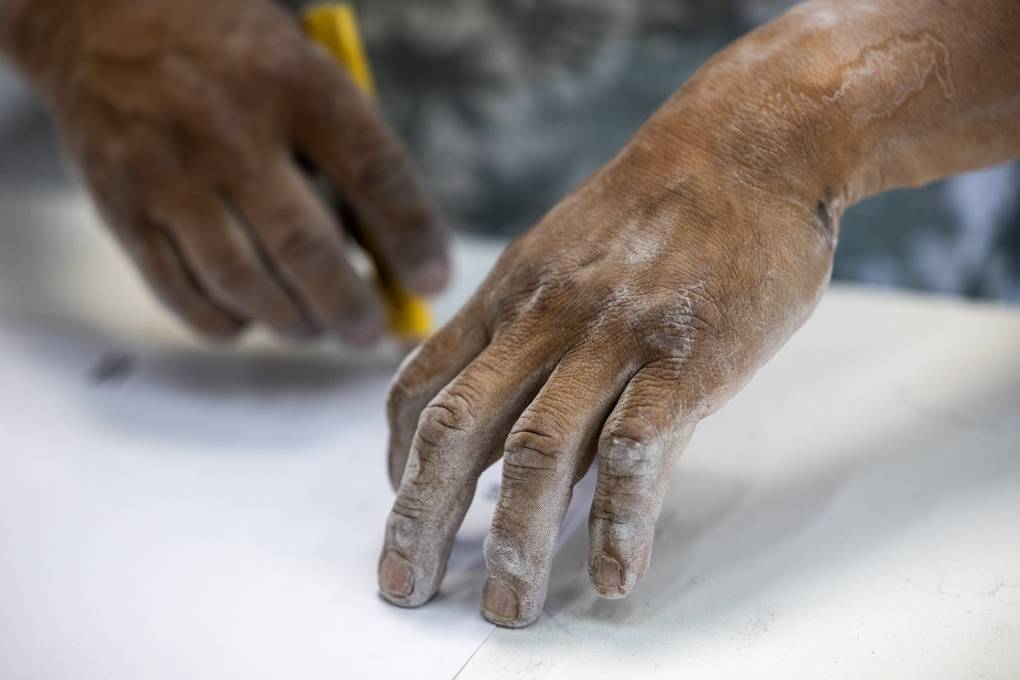
Engineered stone fabrication workers face a silicosis epidemic in California, with 29 deaths and hundreds sickened, prompting the state's first-in-nation protective law effective January 1.
Public health
fromMetro Silicon Valley | Silicon Valley's Leading Weekly
2 weeks agoSilicosis Epidemic in California Leads to New Worker Safety Law
Engineered stone fabrication workers face a silicosis epidemic in California, with 29 deaths and hundreds sickened, prompting the state's first-in-nation protective law effective January 1.

fromFast Company
1 week agoMade a mistake at work? Here's how to fix it in three easy steps
To successfully repair after a mistake, you need to acknowledge and name the mistake, validate the other person's feelings and viewpoint, and create a plan for the specific actions you will take to prevent this mistake from occurring again.
Careers
fromBloomberglaw
3 weeks agoPunching In: Labor Department Watchdog Pressed on His Future
I'm here on this panel today answering your questions as the inspector general. I hope if you are indeed doing this that you do resign. I am well aware of the Hatch Act. The inspector general is currently heading an investigation into both Labor Secretary Lori Chavez-DeRemer, who is accused of committing travel fraud and having an affair with her bodyguard, and the secretary's husband Shawn DeRemer, who allegedly assaulted at least two female department employees.
US politics
Careers
fromeLearning Industry
2 weeks ago10 Signs Of A Toxic Workplace (And How Employees Can Protect Themselves)
Toxic workplaces develop from unaddressed negative behaviors, poor leadership, and unhealthy practices, manifesting through poor communication, hostile behavior, and lack of transparency that damage employee well-being and productivity.
Remote teams
fromHR Brew
4 weeks agoEEOC publishes guidance on using social media in reasonable accommodation process
The EEOC permits federal agencies to review social media evidence when evaluating telework accommodations, but employers must rely primarily on medical documentation and interactive processes rather than social media as definitive proof.
Information security
fromSecuritymagazine
3 weeks agoDiscussing Use of Force in Security: A Challenging Discussion?
Use of force in security cannot be entirely avoided but should be deployed only as a last resort when lesser options fail, requiring comprehensive training in tactics, de-escalation, and legal authority.
World news
fromBusiness Insider
1 month agoWhat US companies are telling their Middle East-based employees during the Iran conflict
US companies operating in the Middle East are implementing work-from-home policies for employees following Iranian retaliatory strikes on Gulf states, with infrastructure damage reported across the region.
Renovation
fromLondon Business News | Londonlovesbusiness.com
1 month agoHow to evaluate a scaffold hire company for safety and reliability in the UK - London Business News | Londonlovesbusiness.com
Evaluate scaffold hire companies based on safety certifications, regulatory compliance, equipment quality, and staff training to protect workers and project timelines.



Information security
fromSecuritymagazine
3 weeks agoWhy Security Culture Metrics Matter More Than Dashboards
Traditional cybersecurity metrics create false confidence by masking hidden risks; culture metrics measuring employee engagement and responsiveness are essential for actual security effectiveness.
Careers
fromEntrepreneur
3 weeks agoHalf of Your Employees Don't Trust You. Here's How to Change That
Leaders build trust by showing up physically, remaining present, inviting difficult questions, maintaining transparency, communicating consistently, living their values, and empowering teams with genuine ownership and decision-making authority.





fromDataBreaches.Net
2 months agoOCR's Latest HIPAA Guidance and Common HIPAA Pitfalls - DataBreaches.Net
As Theresa Defino recently reported, HHS OCR will prioritize risk assessments and expand its investigations into risk management in 2026. Alisa Chestler and Layna Cook Rush of Baker Donelson have summarized some recent recommendations from HHS OCR's January 2026 Cybersecurity Newsletter that regulated entities may want to pay increased attention to at this point: Patching Is a Required Risk Management Activity Legacy Systems and Unpatchable Vulnerabilities Are Not Excuses Unnecessary Software and Default Accounts Create Hidden Risk
Healthcare


fromwww.hrdive.com
2 months agoDigital surveillance may increase worker anxiety, injuries
Digital surveillance can affect workers' physical and mental health in both positive and negative ways, according to a recent report from the U.S. Government Accountability Office. For instance, monitoring tools or apps can alert employees about potential health problems or increase their sense of safety. However, these technologies can also increase anxiety or the risk of injury by pushing workers to move faster to meet productivity goals.
Privacy professionals
UK politics
fromLondon Business News | Londonlovesbusiness.com
2 months agoEmployment law experts outline crucial advice for employers and employees in 2026 - London Business News | Londonlovesbusiness.com
Cutting the unfair-dismissal qualifying period from two years to six months will force employers to revise recruitment and probation practices.
fromFast Company
2 months ago80% of employees struggle with this hidden workplace bias. Here's what employers can do
Around the office, people clutch coffee like a life raft, waiting for their brains to come online and cursing the 8 a.m. meeting. And the cheerful colleague. But at least they got in early enough to find parking and grab coffee before it ran out-this time. Now: which person are you? The early riser, or the one watching them, wondering why you can never feel that awake at this hour no matter how hard you try?
Mental health
fromTravel + Leisure
2 months agoWhy Flight Attendants Always Sit on Their Hands During Takeoff and Landing
"What passengers often interpret as cabin hosts 'sitting on their hands' is actually a deliberate brace-ready position. Cabin hosts sit upright in the jump seat with feet flat on the floor and hands secured on their thighs or beneath the legs," Drossos says. "This posture stabilizes the body, minimizes the risk of injury during sudden movement or turbulence, and ensures hands are immediately available to respond if an evacuation or safety action is required."
Travel
UK news
fromBusiness Matters
2 months agoImplementation of the Employment Rights Act 2025: what employers need to know
Major employment rights change from April 2026: day-one paternity and parental leave, day-one SSP, expanded whistleblowing protection, doubled redundancy awards, and Fair Work Agency launch.
fromeLearning
2 months agoHow Security Awareness Training Reduces Cyber Attack Risks - eLearning
In today's digital workplaces, cyber threats rarely begin with broken systems. They begin with everyday actions-opening emails, sharing information, or accessing online platforms. Security awareness training helps reduce cyber attack risks by strengthening how individuals recognize and respond to these situations. Rather than focusing on technical controls alone, organizations are increasingly prioritizing cyber awareness as a core defense strategy. When users understand common threats such as phishing, social engineering, and unsafe online behavior, they are better equipped to prevent incidents before damage occurs.
Online learning
fromEntrepreneur
1 month agoHow to Keep Your Health Plan Costs Manageable - Without Shortchanging Your Team
If you run a business, there's a familiar email you probably opened this fall: the one from your benefits broker with your 2026 health insurance renewal. You scroll. You see a double-digit increase, and your stomach drops. You want to do right by your team. You also have a P&L to protect. And the three standard options you're handed - pay the increase, raise deductibles or push more cost onto employees - all feel bad in different ways.
Business
Privacy professionals
fromSupercar Blondie
1 month agoWhat your employer can actually see when you're browsing at work is a truth everyone should be aware of
Employers can often monitor most browsing activity on company devices, VPNs, or work Wi‑Fi, and may access corporate app data even when working from home.
fromhttps://scoop.upworthy.com
2 months agoBoss called her 'unproductive' and forced her to return to office. When she stopped replying after work hours, he knew he messed up
Several offices have lifted the work-from-home mandate after the pandemic ended, claiming that workers are more productive in offices. A user who goes by u/furrows_diocese-8q shared a post on January 18 about how their sister dealt with the situation when her boss made the same claim. The crew was doing their job well and were content with their prior remote arrangement, but were forced to come to the office.
Remote teams
fromForbes
2 months agoAs Tax Season Opens, Be Aware: Your Workplace Devices Aren't Private
Chances are that you're reading this at work. Or maybe you work from home, and you're reading it on a work-issued computer. Most of us carry our work laptop or phone everywhere (I currently have mine with me on holiday). We answer messages on the couch, check email in line at the grocery store, and occasionally use the same device to sign an agreement, upload a tax form, or grab a boarding pass.
Privacy professionals
Public health
fromBusiness Matters
2 months agoFrom Boardrooms to Desks: How Disc Injuries Are Reshaping Return to Work in London
Herniated disc recovery times are often longer and less predictable than employers and employees expect, causing presenteeism, reduced productivity, and misaligned return-to-work planning.
fromSecuritymagazine
1 month agoFive Top Tips for Building a Strong Security Culture
Building security into the framework of an organization prevents security from being seen as a barrier to daily activities. If an employee feels as if a security measure is inhibiting them from completing their daily tasks, they're far more likely to find a way around that measure. This can range from propping open a door to using the same easy-to-remember password for every account.
Information security
fromLondon Business News | Londonlovesbusiness.com
2 months agoA practical guide to personal track safety for new rail workers - London Business News | Londonlovesbusiness.com
Personal Track Safety refers to the rules, procedures, and behaviours that allow workers to operate safely on or near live railway lines. It's designed to minimise risks from moving trains, electrical systems, and environmental hazards. PTS is not just about memorising rules. It's about understanding why they exist and how they apply in real working conditions. When workers grasp this early, they're far more likely to act decisively and safely when situations change.
Careers
[ Load more ]