Alternative medicine
fromEarth911
1 day agoMother Nature's Medicine: 4 Natural Remedies for Healthy Kids
Parents are increasingly seeking natural health products for children, with a market exceeding $300 billion.
I am open-minded; I believe in integrative practices, and I agree that the medical establishment can be arrogant and unduly influenced by the pharmaceutical industry, which now funds so much of medical research. But I fully understand Scherer's frustration with his interminable discussions with Kennedy about scientific articles.
In children below the age of five, whose immune systems are still developing, the infections can lead to malnourishment; they cause up to 42,000 deaths annually. Soon there may be a vaccine to protect against these infections. In the Lancet Infectious Diseases last month, scientists shared the results of the first study to evaluate the safety and efficacy of an ETEC-controlling vaccine in a large pediatric population in Gambia.
A report last year found unnecessary surgeries were carried out, cancers were missed and poor standards of care were delivered at the University Hospital of North Durham and Darlington Memorial Hospital. CDDTF said it wanted to support the patients it had let down, including by offering access to psychological support, and to ensure they knew how to make a claim or raise concerns with police.
It is really, really hard. He said the family had 'cried and begged for help' in meetings at home. 'Does our family unit have to break down? Does it have to get to a point where we no longer sustain this and then they'll step in and give you support? Because right now that's where we're at. We don't have any alternatives. If grandparents were an option, we'd already be doing it.'
The child, treated in 2023, went from experiencing around 20 seizures a month to having only about one a year, according to the neurologist. Gil-Nagel's young patient received the therapy at Great Ormond Street Hospital for Children in London. The improvement was immediate, from the first injection.
Whether it's investigating the financials of Elon Musk's pro-Trump PAC or producing our latest documentary, 'The A Word', which shines a light on the American women fighting for reproductive rights, we know how important it is to parse out the facts from the messaging. At such a critical moment in US history, we need reporters on the ground. Your donation allows us to keep sending journalists to speak to both sides of the story.
The Missing Social Unit From middle school onward, American children don't belong to a "class" in any stable sense. They move continuously - subject to subject, room to room, teacher to teacher. There's extensive discourse around respect, equity, and inclusion. But there's remarkably little structured attention to the actual social life of any group. Because there isn't really a group.
Are we overmedicating our children? My answer is yes. But not for the reason most people assume. The overmedication of children is not a story about reckless doctors or careless parents. It is not an argument against psychiatric medication. I prescribe medications to children and adolescents regularly, and I have seen them reduce suffering and save lives. The real problem lies elsewhere:
Every day, many thousands of parents across the U.S. face the difficult question of whether to place their child or teenager on a psychotropic medication. Receiving a diagnosis of a mental disorder can be scary and confusing, for the youth as well as their parents/caretakers. What is ADHD? Depression? Anxiety? OCD? Bipolar? What are the available treatments? Do we have to use medications to treat the symptoms?
It arose out of safety concerns in 2022 in relation to the treatment of a number of patients with Spina Bifida who had spinal surgery at CHI at Temple Street. These concerns related to poor clinical outcomes of some complex spinal surgery, including a high incidence of post-operative complications and infections, and two particularly serious surgical incidents, which occurred in July and September 2022.
You know that parental instinct when something just isn't quite right with your child? You text your mom friends and gut check with your partner, but you don't think you're being anxious - something might really be wrong. Well, odds are your instinct could be spot-on: A new study published in the JAMA Network found that parents were right 9 times out of 10 when they suspected their child was seriously ill or injured.
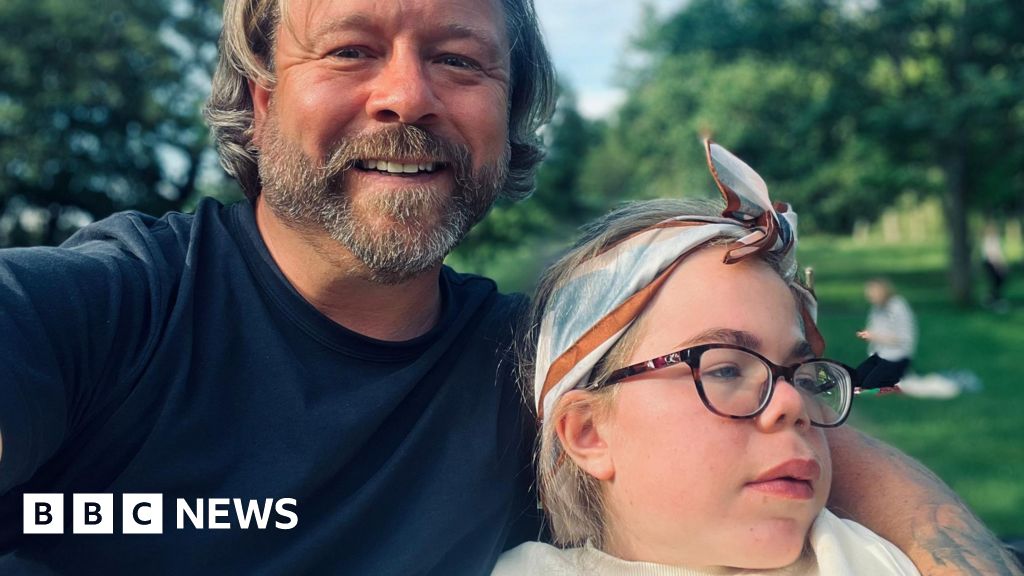
Isla first went to the GP in July 2022 with a lump in her breast, but she was told it was likely to be benign and caused by hormonal changes. "She was told it was hormonal - a fibroadenoma - and she would grow out of it," Isla's father Mark said. Two years later, Isla became ill and was taken to hospital, where doctors suspected she had cancer and made an urgent referral for biopsies.
Rebecca said her daughter was seven when she was diagnosed with Kawasaki disease, a condition she had "only ever heard of" from a Grey's Anatomy episode. Winifred received intravenous immunoglobulin which was made from donated plasma. Now aged nine, she has recovered and only needs regular check-ups. Since her daughter's illness, Rebecca has donated plasma herself and also wants to raise awareness of the disease which causes inflammation in blood vessels and can damage the heart if left untreated.
RSV season in the U.S. typically peaks in January and February, with cases often stretching well into March. National emergency room visits and hospitalizations from the virus in kids ages four and younger have dipped slightly but are growing overall in more than a dozen states, according to the Centers for Disease Control and Prevention's latest report on January 16.
Almost a quarter of GPs are seeing children aged four or under who are obese, according to a survey of UK family doctors. The alarming research also found that almost half (49%) of GPs have seen boys and girls up to the age of seven who have obesity, including a handful younger than a year old. However, four out of five family doctors find it difficult to talk to children or their parents about the condition.
Public health consultant Dr Ross Keat said supporting people earlier to make small preventative changes would make "a big difference later on". Some 3,500 people in the north of the island within that age bracket are eligible for the checks. The checks will be carried out by two pre-existing nurses that support GP staff and would not replace GP appointments, Keat explained, adding that the cost would be minimal and absorbed by Ramsey Group Practice.
The doctor treated hundreds of children from 2017 to 2022 at Great Ormond Street Hospital (Gosh) in London, with independent experts saying in a new review that his surgery fell well below the level expected in several areas. Many patients came to harm or were left in pain, with some going on to need further surgery. Proper consent was also not obtained in some cases, while Mr Jabbar also had an "unjustified preference for certain surgical techniques including unconventional or unrecognised procedures".
Under the new guidelines, the U.S. still recommends that all children be vaccinated against measles, mumps, rubella, polio, pertussis, tetanus, diphtheria, Haemophilus influenzae type B (Hib), pneumococcal disease, human papillomavirus (HPV) and varicella, better known as chickenpox. Vaccines for all other diseases will now fall into one of two categories: recommended only for specific high-risk groups, or available through "shared clinical decision-making" - the administration's preferred term for "optional."
The Centers for Disease Control and Prevention (CDC) announced on Monday that it is reducing the number of vaccinations it is recommending for young children, immediately dropping the number of diseases and ailments covered by the vaccine regimen from 17 to 11. States are technically the authority on what vaccines children should or are required to get when they are born and in the years beyond. But the CDC recommendation is very influential in what vaccines officials end up choosing.
On Tuesday the American Cancer Society (ACS) released its annual report on cancer statistics in the U.S., and it offered a rare bit of good news: the proportion of people who were alive at least five years after a cancer diagnosis hit a record high. The report found that, among all cancer patients diagnosed between 2015 and 2021 in the U.S., the survival rate at the five-year mark relative to those who didn't have cancer was 70 percent.