#palaeomicrobiology

[ follow ]
fromwww.scientificamerican.com
1 day ago

Bizarre fossils reveal that complex life evolved far earlier on Earth than we thought

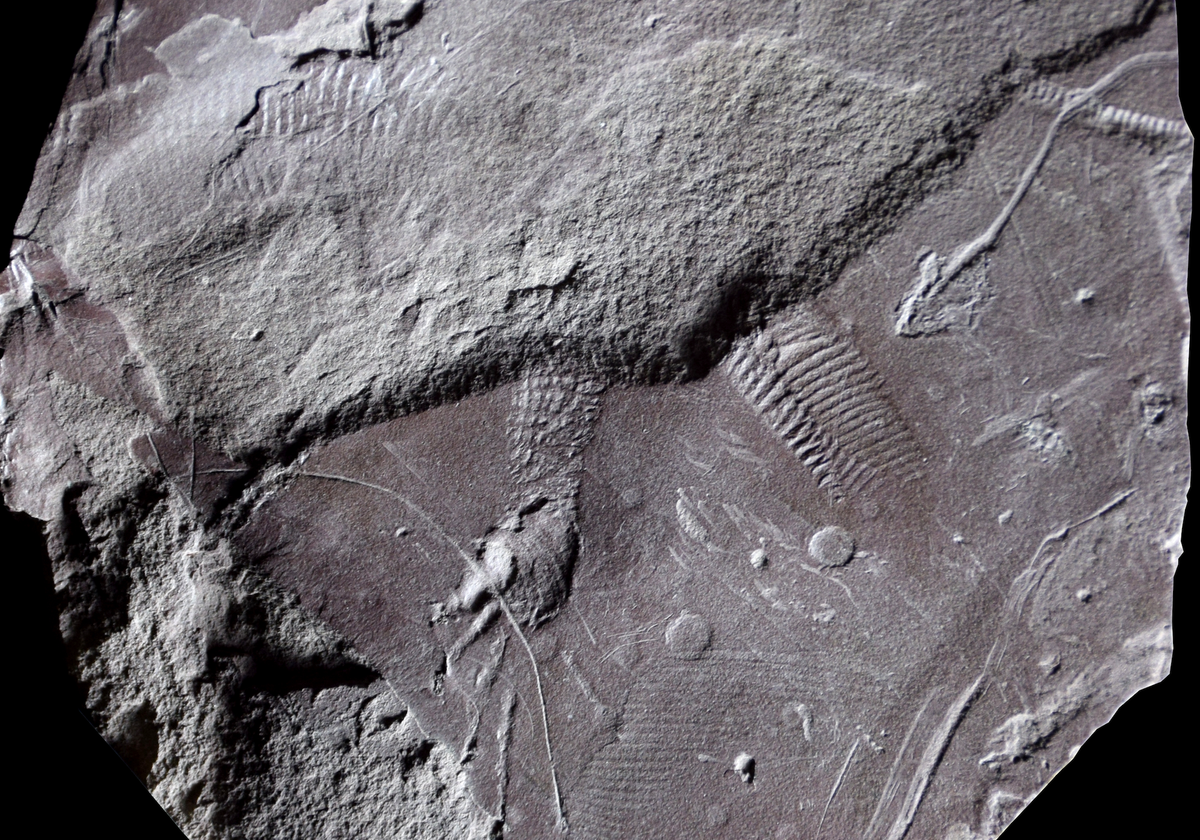
Hundreds of fossils uncovered in southern China's province of Yunnan reveal that at least some of the life-forms scientists had thought arose in the Cambrian period were alive and thriving millions of years earlier, in an era known as the Ediacaran period.
OMG science
fromArs Technica
1 day ago

New fossil deposits show complex animal groups predating the Cambrian

Four protrusions appear to be arranged in pairs, each consisting of two connected branches surrounding a central depression. We really don't understand what any of these features represent anatomically.
OMG science
Science
fromNature
1 week ago

Daily briefing: Earliest known dog genome pushes genetic record back 5,000 years

Early domestic dogs were crucial to diverse human communities, with their genomes dating back over 15,000 years.
#antibiotic-resistance
OMG science
fromwww.npr.org
1 week ago

Here's some new dirt on a source of antibiotic resistance

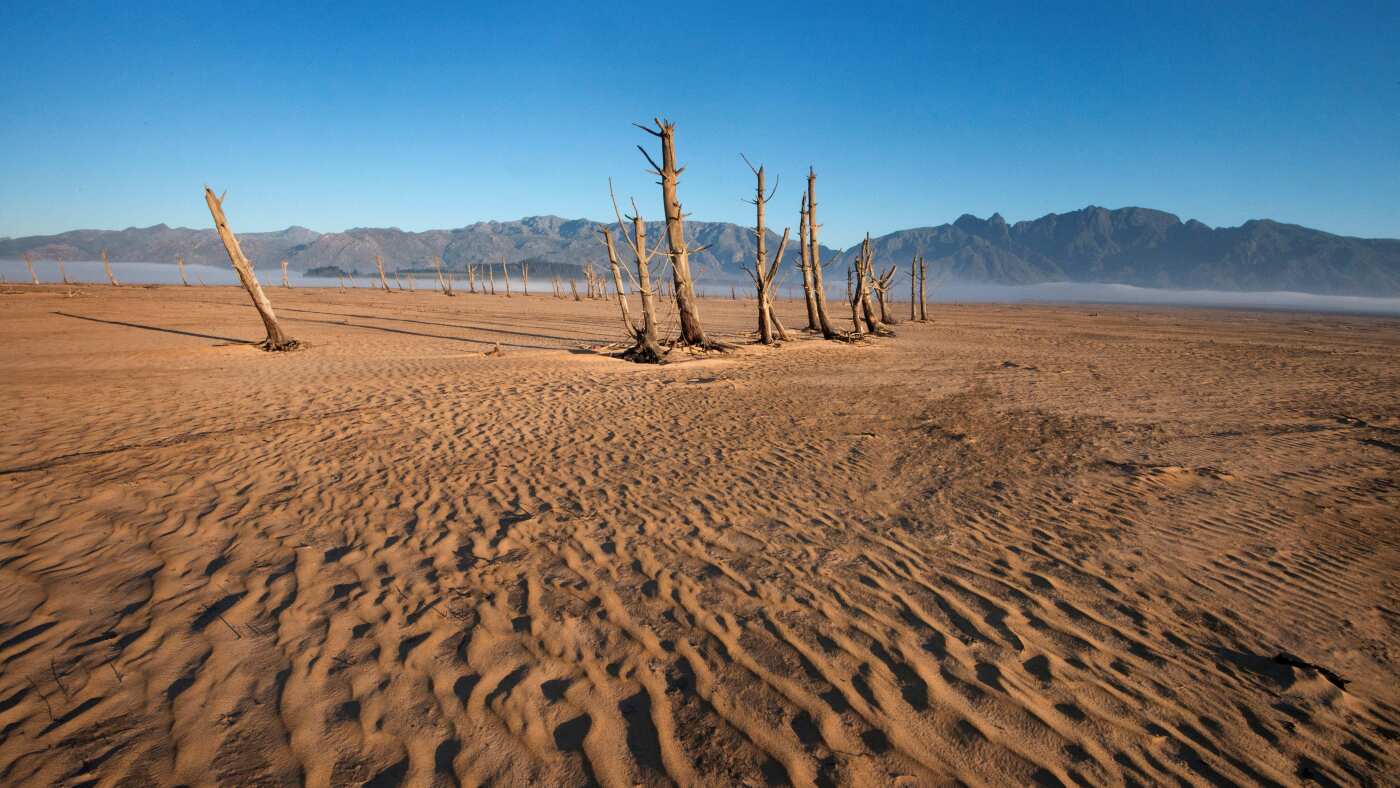
Bacteria are increasingly resistant to antibiotics, with drought contributing to this rise in resistance and impacting human health.
Science
fromNature
1 week ago

Daily briefing: Tiny bones from Neanderthal fetus point to downfall of the species

A genetic bottleneck contributed to the Neanderthals' extinction, while AI-generated X-rays challenge radiologists' ability to discern real from fake.
OMG science
fromArs Technica
1 week ago

Explanation for why we don't see two-foot-long dragonflies anymore fails

Breathing capacity may have allowed giant insects to thrive despite lower atmospheric oxygen levels.
OMG science
fromNature
1 week ago

How DNA in dirt is shaking up the study of human origins

Ancient DNA can be recovered from sediments, revolutionizing the study of extinct species and the history of ecosystems.
fromArs Technica
2 weeks ago

We keep finding the raw material of DNA in asteroids-what's it telling us?

The new work was less notable for showing that we had found these bases in Ryugu than for solving a previous mystery: earlier studies had failed to detect them there, despite their presence in many other asteroid samples.
OMG science
Science
fromNature
3 weeks ago

How pollutants and poo paint a picture of past civilizations

Environmental archaeologists extract mud cores from swamps to analyze molecular biomarkers like coprostanol, revealing ancient human population trends and behaviors.
OMG science
fromJezebel
2 weeks ago

Non-Earth News: Fossil Stars, an Asteroid Dripping With DNA, and 2 Dueling Planets

Astronomy news offers a refreshing escape from overwhelming current events, inspiring curiosity about the universe's vastness and history.
Science
fromwww.theguardian.com
3 weeks ago

A new start after 60: I'd had several careers but no degree then I became a palaeontologist at 62

Craig Munns pursued a degree in palaeontology at 62 while working at Geoscience Australia, focusing on invertebrate fossils and biostratigraphy analysis of drill cores from central Australia.
OMG science
fromTheregister
2 weeks ago

Everything needed to make DNA and RNA found on asteroid

All five nucleobases essential for DNA and RNA were discovered in samples from asteroid Ryugu, suggesting life's molecular building blocks form naturally throughout the Solar System.
fromwww.theguardian.com
2 weeks ago

Can scientists really resurrect the dodo? Inside the company that says they can

Colossal Biosciences, valued at $10.2bn after raising hundreds of millions of dollars in funding from investors including celebrities spanning from Tiger Woods to Paris Hilton, has provoked a stampede of acclaim as well as denunciation after announcing last year it had made the dire wolf, a species lost from the world for more than 10,000 years, de-extinct via the birth of three new pups.
OMG science
fromenglish.elpais.com
1 month ago

Ants trapped in amber reveal what diminutive life was like millions of years ago

Although there are many amber stones containing a single creature, there are fewer that include two or more, as is the case with a pair of mosquitoes trapped in amber 130 million years ago which tell us that, back then, males also sucked blood. Even more extraordinary is when several organisms can be seen interacting, either eating the other, acting as a parasite, or cooperating.
Science
fromMail Online
3 weeks ago

Sea fossils atop world's mountains fuel claims of Noah's Great Flood

Marine fossils have been discovered on mountain ranges around the world, including the Himalayas, Andes and Rocky Mountains, which scientists say were once covered by ancient seas before being pushed upward as continents collided and mountains formed.
OMG science
#snowball-earth
fromAeon
1 month ago
Philosophy

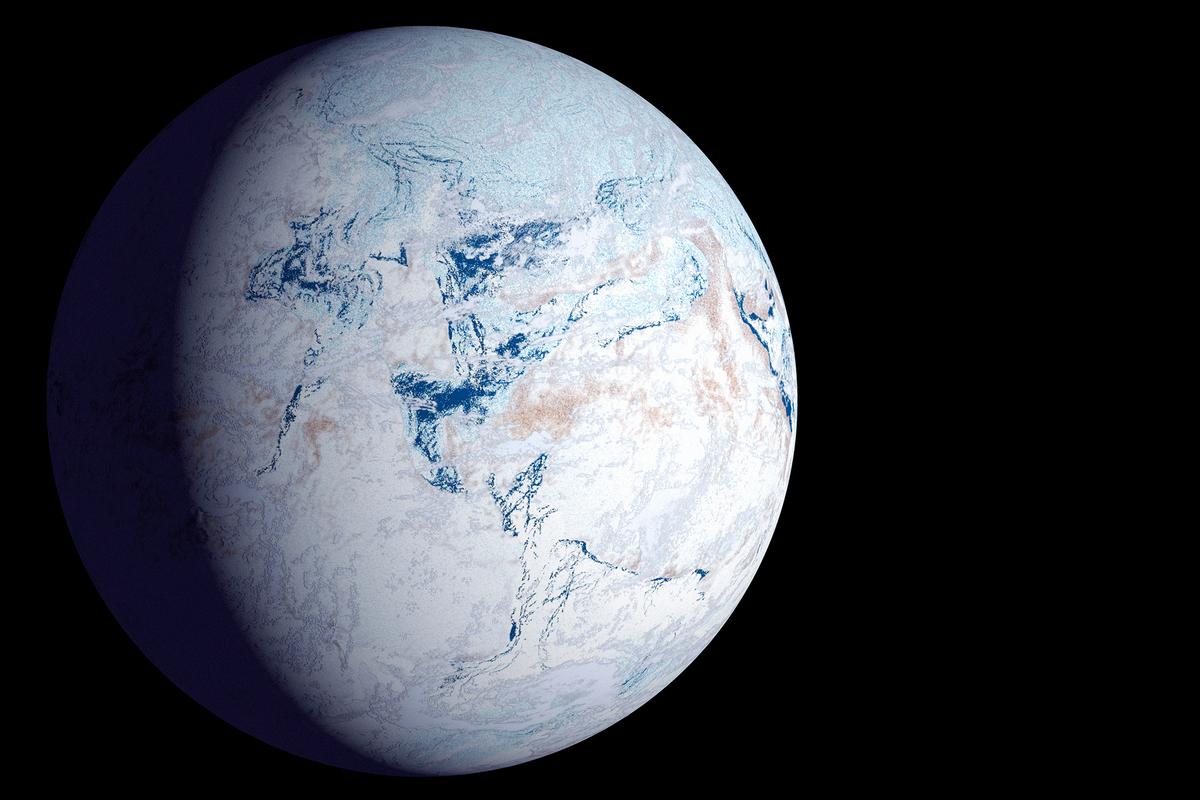
How the harsh, icy world of Snowball Earth shaped life today | Aeon Essays

fromAeon
1 month ago
Philosophy

How the harsh, icy world of Snowball Earth shaped life today | Aeon Essays

OMG science
fromFuturism
4 weeks ago

Scientists Find Microbes Can Survive Traveling from Planet to Planet While Clinging to Asteroids

Extremophile bacteria can survive extreme pressures simulating asteroid impacts, supporting the possibility that microorganisms could travel between planets via panspermia.
Books
fromNature
2 months ago

Marvellous microbes, memory and the multiverse: Books in brief

Microscopy uncovered microbes and cellular anatomy; biosemiotics connects life and sign systems; memory constitutes both reader and read of personal identity.
Environment
fromNature
1 month ago

Tree rings and salt lakes give clues about ancient rainfall

Replace hazardous pesticides and apply diverse paleoclimate measurement methods to reconstruct past climate changes.
OMG science
fromwww.scientificamerican.com
4 weeks ago

Blast off! Martian microbes might travel between worlds on asteroid-impact debris

Deinococcus radiodurans, an extremophile bacterium, can survive extreme pressures from asteroid impacts on Mars, suggesting potential for microbial life dispersal across the solar system.
#paleontology
Science
fromNature
1 month ago

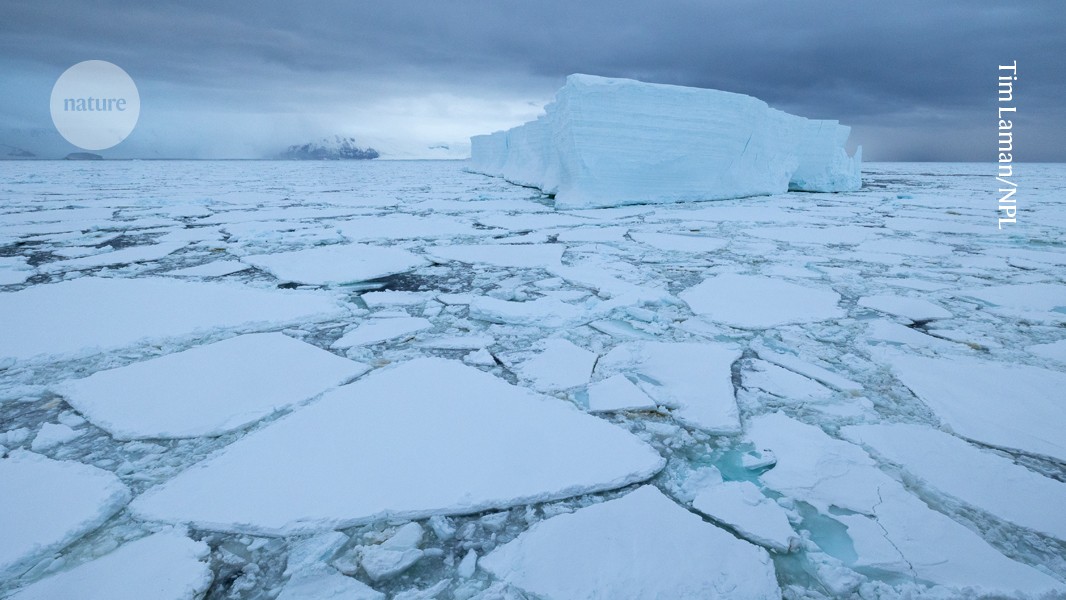
The first ice-core record of historical atmospheric hydrogen levels

Atmospheric hydrogen levels fluctuate with climate changes and have increased significantly since pre-industrial times due to human activities, requiring consideration in projections of future emissions impacts.
Environment
fromMail Online
1 month ago

Inside mysterious vault built to save life after planetary extinction

A Colossal Biosciences–UAE BioVault will cryogenically store genetic material from thousands of species using robotics and AI to preserve biodiversity and enable future restoration.
OMG science
fromNature
1 month ago

Earth's oldest crystals suggest an early start for plate tectonics

Ancient Australian zircon crystals reveal early Earth had more oxygen and water than expected, with tectonic plate movement occurring at least 3.3 billion years ago, suggesting conditions more favorable for life than previously believed.
Science
fromDefector
1 month ago

Finally! An Ancient Fish That Understood Life's Terrors | Defector

Haikouichthys, an early Cambrian fish, possessed four eyes and lacked jaws, reflecting distinctive sensory and feeding adaptations among early vertebrates.
fromwww.scientificamerican.com
1 month ago

Could aliens in another galaxy see dinosaurs on Earth?

For example, reader David Erickson had this on his mind: If there were aliens 66 million light-years from Earth, how big a telescope would they need to see dinosaurs? Ha! I love this question. I've thought of it myself but never worked out the mathexcept to think, Probably pretty big, which turns out to dramatically underestimate the actual answer.
Science
Science
fromArs Technica
1 month ago

"Million-year-old" fossil skulls from China are far older-and not Denisovans

Homo erectus fossils from Yunxian in China are dated to about 1.77 million years, making them the oldest hominins discovered in East Asia.
Science
fromMail Online
1 month ago

Prehistoric killer superbug discovered in 5,000-year-old ice

An ancient Psychrobacter strain from Scarisoara Ice Cave, frozen about 5,000 years, is resistant to ten modern antibiotics and harbors over 100 resistance genes.
Science
fromenglish.elpais.com
1 month ago

A bacterium frozen 5,000 years ago has been found capable of standing up to super-pathogens

A 5,000-year-old Psychrobacter strain recovered from Romanian cave ice displays resistance to multiple modern antibiotics and produces compounds that inhibit other, hard-to-treat pathogens.
fromArs Technica
1 month ago

Scientists hunting mammoth fossils found whales 400 km inland

At first glance, it looked like Wooller and his colleagues might have found evidence that mammoths lived in central Alaska just 2,000 years ago. But ancient DNA revealed that two "mammoth" bones actually belonged to a North Pacific right whale and a minke whale-which raised a whole new set of questions. The team's hunt for Alaska's last mammoth had turned into an epic case of mistaken identity, starring two whale species and a mid-century fossil hunter.
Science
OMG science
fromEsquire
1 month ago

This Weird Effect of Climate Change Is Scaring the Hell Out of Me

A 5,000-year-old Psychrobacter strain from cave ice carries multidrug resistance and antimicrobial activity, posing potential AMR risks if released by melting ice.
Science
fromwww.nature.com
1 month ago

Author Correction: Inference and reconstruction of the heimdallarchaeial ancestry of eukaryotes

Eukaryotes likely emerged from a bona fide Asgard archaeal ancestor, forming a monophyletic group with Hodarchaeales; marker set corrected to NM54.
fromNature
2 months ago

Dominant contribution of Asgard archaea to eukaryogenesis - Nature

Eukaryotes drastically differ from archaea and bacteria (collectively, prokaryotes) by the complex organization of eukaryotic cells. The signature features of this organizational complexity include the eponymous nucleus, the endomembrane system, the elaborate cytoskeleton and the energy-converting mitochondrion, which evolved from an alphaproteobacterial endosymbiont9. Thus, the last eukaryotic common ancestor (LECA) probably already possessed mitochondria along with the other signatures of the eukaryotic cellular organization.
Science
fromwww.scientificamerican.com
2 months ago

Meet the extremophile molds wreaking havoc in museums

Mold is a perennial scourge in museums that can disfigure and destroy art and artifacts. To keep this microbial foe in check, institutions follow protocols designed to deter the familiar fungi that thrive in humid settings. But it seems a new front has opened in this long-standing battle. I'd recently heard rumblings that curators in my then home base of Denmark have been wrestling with perplexing infestations that seem to defy the normal rules of engagement.
Science
Science
fromArs Technica
2 months ago

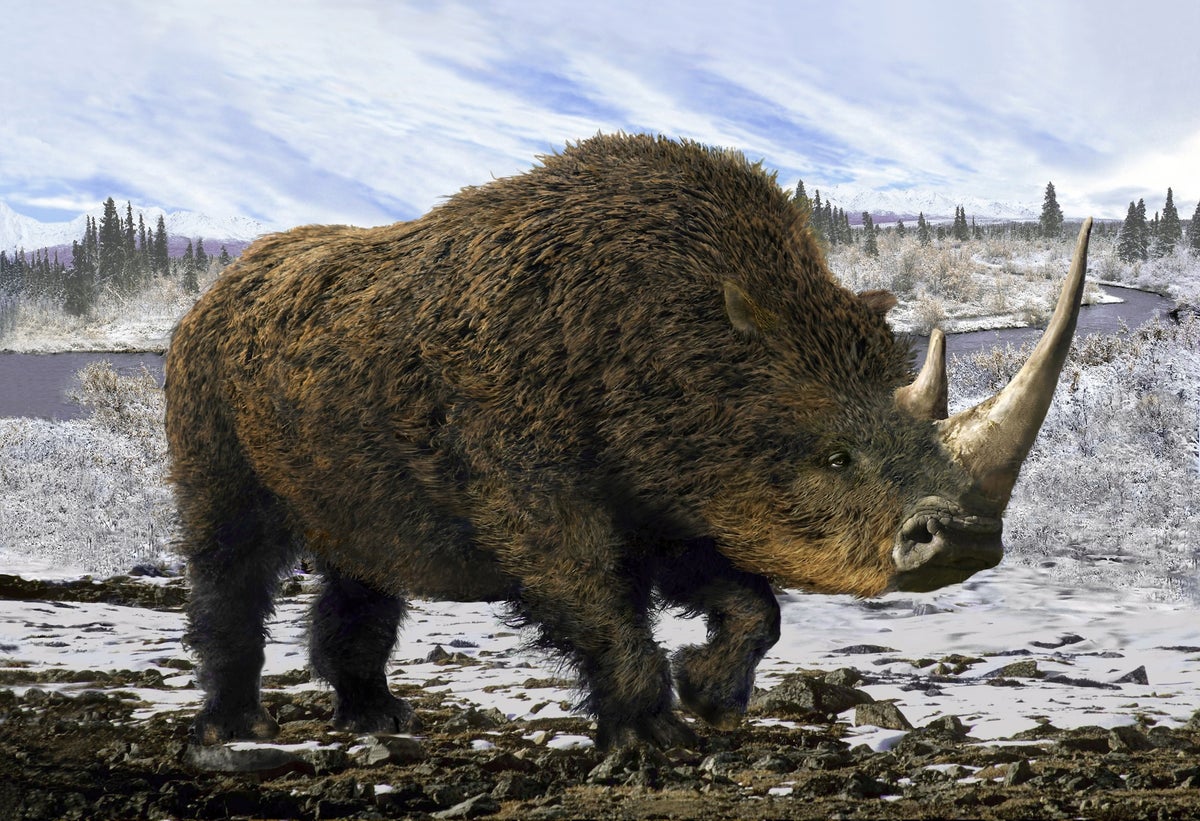
Scientists sequence a woolly rhino genome from a 14,400-year-old wolf's stomach

Woolly rhino effective population fell from about 15,600 to 1,600 between 114,000–63,000 years ago, then stabilized around 1,600 breeding individuals.
#woolly-rhinoceros
fromwww.dw.com
1 month ago

New dinosaur fossils could provide evolutionary clues: study

From the beginning, we knew these bones were exceptional because of their minute size. It is equally impressive how the study of this animal overturns global ideas on ornithopod dinosaur evolution,
Science
Science
fromThe Walrus
2 months ago

What Do Microbes Have to Do with How We Age? Everything, Actually | The Walrus

Microbes profoundly influence human aging and health and represent a promising frontier for interventions to delay age-related decline.
Science
fromNature
2 months ago

Marvellous microbes, memory and the multiverse: Books in brief

Leeuwenhoek's microscopic discoveries illuminated microbes and cells; biosemiotics links human and nonhuman sign systems; memory entwines the remembering and the remembered.
fromNature
2 months ago

Daily briefing: The battle over the identity of the first animals

Wooden objects carrying the marks of carving and use could be the oldest wooden tools ever found. Researchers dated the artefacts, found in what is now Greece, to 430,000 years ago - and suggest they might have been made by early Neanderthals or their ancestors, Homo heidelbergensis. A separate study describes 480,000-old flint-knapping tools made from antler and elephant bone, from what is now the United Kingdom.
Science
Science
fromArs Technica
2 months ago

We have a fossil closer to our split with Neanderthals and Denisovans

Casablanca fossils are North African counterparts to Homo antecessor, positioned near the split that led to Neanderthals/Denisovans and the lineage toward modern humans.
Science
fromNature
2 months ago

A mysterious ancient fingerprint and a lemon-shaped planet - the stories you've missed

A 4,400-kilometre undersea fibre-optic cable can detect seismic waves by measuring light reflections from glass impurities along its length.
fromwww.scientificamerican.com
2 months ago

Meet the Ancestor That Connects Us to Neandertals and Denisovans

New research published today in Nature dates the boneschipped out from a cave called Grotte a Hominides and nearby it over decadesto about 773,000 years ago, during the era of the last common ancestor of Homo sapiens, Homo neanderthalensis and Denisovans (a group of humans that ranged across Asia and that does not have an agreed-upon species name). We can say that the shared ancestry between these three species is perhaps in Grotte a Hominides in Casablanca, says study co-author Abderrahim Mohib, a prehistorian at the National Institute of Archaeology and Heritage Sciences in Rabat, Morocco.
Science
Science
fromwww.npr.org
1 month ago

Searching for dinosaur secrets in crocodile bones

Counting growth rings in fossil bones can overestimate dinosaur ages because rings may not form strictly once per year.
#urban-geology
Science
fromMail Online
1 month ago

Scientists discover how building blocks of LIFE formed on an asteroid

Amino acids formed on asteroid Bennu in cold, radioactive conditions, showing life's building blocks can form without warm liquid water and may have seeded Earth.
#prototaxites
Science
fromwww.dw.com
1 month ago

Tiny dinosaur fossil could provide evolutionary clues: study

A newly discovered tiny ornithopod, Foskeia pelendonum, exhibits unusually complex anatomy that reshapes understanding of ornithopod evolution.
Science
fromHigh Country News
2 months ago

Three books explore deep time and help us look forward - High Country News

Geologic records show slow processes and global catastrophes; understanding deep time reveals Earth's history and informs present and future choices.
fromwww.scientificamerican.com
2 months ago

A foraging teenager was mauled by a bear 27,000 years ago, skeleton shows

We have little physical evidence of these interactions turning violent, however, because burials were rare and carnivores were more likely to finish off their prey. That's why the embellished burial site of a 15-year-old from 27,000 years ago is an important window into the past: the teenager's bones indicate he was mauled by a bear. The finding represents some of the first evidence of its kind.
Science
Science
fromwww.nature.com
2 months ago

Afar fossil shows broad distribution and versatility of Paranthropus

Pliocene and Late Miocene East African fossil evidence reveals diverse early hominin taxa, varying dental and skeletal morphologies, and debates over taxic diversity.
fromNature
2 months ago

What were the first animals? The fierce sponge-jelly battle that just won't end

Which animals came first? For more than a century, most evidence suggested that sponges, immobile filter-feeders that lack muscles, neurons and other specialized tissues, were the first animal lineages to emerge. Then, in 2008, a genomic study pointed to a head-scratching rival: dazzling, translucent predators called comb jellies, or ctenophores, with nerves, muscles and other sophisticated features. That single study ignited a debate that has raged for nearly 20 years, sparking fierce arguments about how complexity evolved in animals.
Science
Science
fromwww.scientificamerican.com
2 months ago

The bacterium behind syphilis has a far more ancient history than we thought

Treponemal diseases, including syphilis, originated much earlier than thought; a 5,500-year-old Treponema pallidum genome from Colombia pushes back their evolutionary timeline.
Science
fromwww.scientificamerican.com
2 months ago

Life's evil twins, called mirror cells, could wipe us out if scientists don't stop them

Engineered mirror-image bacteria used to manufacture durable drugs can evade immune detection and cause uncontrollable infections and environmental spread.
[ Load more ]