#pandemic-challenges
#pandemic-challenges
[ follow ]
#remote-work #mental-health #public-health #covid-19 #return-to-office #hybrid-work #labor-market #productivity



#fuel-crisis
World news
fromYahoo Finance
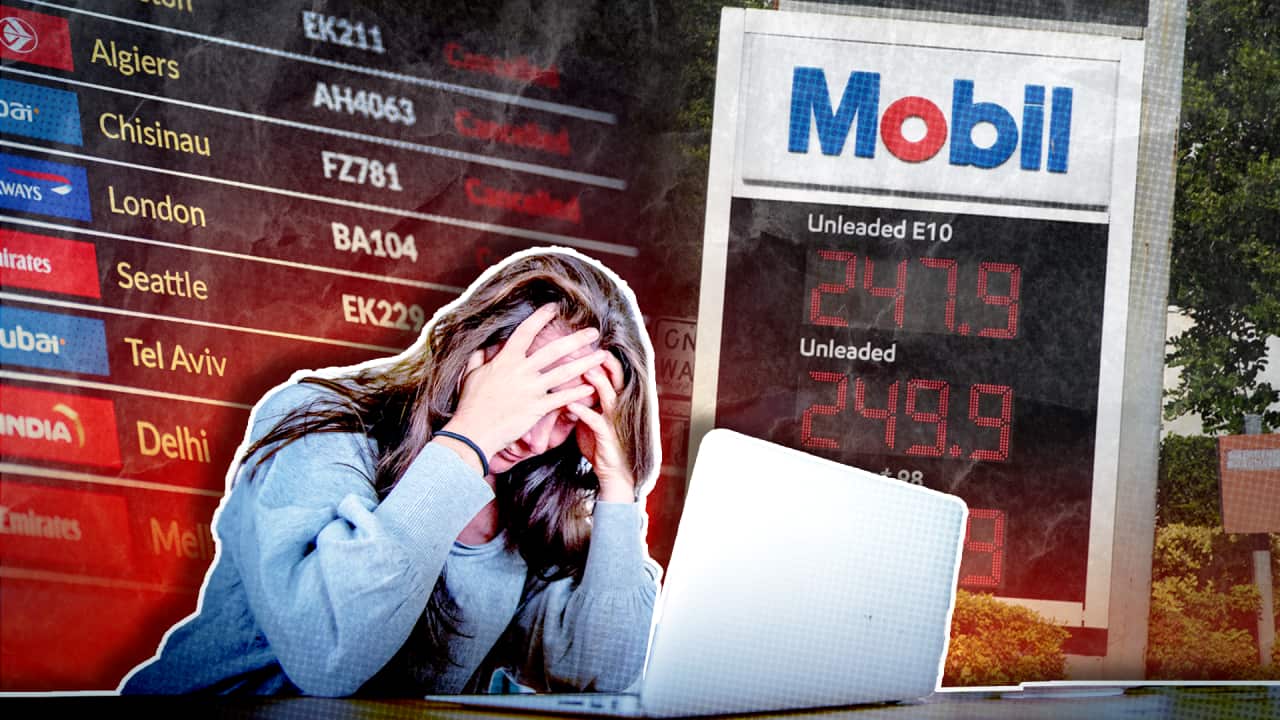
3 weeks agoCountries ordered to work from home as fears grow for Aussie supplies: 'It's happening'
Multiple Asian countries implement work-from-home mandates, travel restrictions, and energy conservation measures to reduce fuel demand amid escalating Iran conflict and supply concerns.
fromwww.cbc.ca
2 days agoOffice space for emergency care: East-end Toronto hospital says patient demand is more than double capacity | CBC News
The emergency department at Michael Garron Hospital was built to care for about 150 patients a day, but now sees more than 300 patients daily, amounting to about 107,000 patients last year in a space designed for 50,000 annually.
Healthcare

fromThedrum
3 weeks agoHow to react if a client pauses your marketing services
If your client pauses your services, it could mean that they're facing financial difficulty and by offering further collaboration, could potentially help the business - in the end, we're all going through this together. In terms of maintaining your relationship your team could offer consultancy at no extra cost.
US news
fromTruthout
3 weeks agoGlobal Health Workers Describe Impact a Year After Trump Admin Shut Down USAID
USAID's dissolution in 2025 has caused avoidable deaths and increased suffering among vulnerable populations globally, with malaria spikes, food assistance cuts, and disrupted medical supply chains already documented.
Coronavirus
fromwww.scientificamerican.com
2 weeks agoCOVID probably killed 150,000 more people in its first two years than official U.S. tolls show
COVID-19 deaths in the U.S. during 2020-2021 may have reached nearly one million when accounting for approximately 150,000-160,000 unrecorded deaths, with disproportionate impact on marginalized populations.
Mental health
fromSilicon Canals
3 weeks agoPeople who stay calm during emergencies but fall apart over minor inconveniences aren't fragile. Their system was calibrated for catastrophe, and it genuinely doesn't know how to scale down to a traffic jam or a lost set of keys. - Silicon Canals
Accumulated small daily frustrations can trigger greater stress responses than single major crises in people whose nervous systems were calibrated for survival under chronic danger or high-stakes conditions.
fromNebraska Examiner
2 weeks ago3 states and New York City join global disease response network * Nebraska Examiner
GOARN, which includes more than 310 national public health agencies, United Nations agencies, academic institutions, and nongovernmental groups, helps identify and manage infectious disease outbreaks worldwide. Since it was established in 2000, GOARN says it has helped manage more than 175 global health emergencies across 114 countries.
Public health
fromThe Atlantic
2 weeks agoI Remember a World Without Vaccines
I am open-minded; I believe in integrative practices, and I agree that the medical establishment can be arrogant and unduly influenced by the pharmaceutical industry, which now funds so much of medical research. But I fully understand Scherer's frustration with his interminable discussions with Kennedy about scientific articles.
Coronavirus
Psychology
fromPsychology Today
1 month agoHow to Help Communities Rebound from Crisis and Disaster
Disaster psychology provides an empirically-based framework for building community resilience and growth during crises through understanding predictable psychological phases and natural recovery mechanisms.
Public health
fromwww.theguardian.com
3 weeks agoPatients face long journeys for medicines as pharmacies cut weekend hours
One in six English pharmacies have reduced weekend hours since 2022, causing over 20% loss of weekend opening hours and forcing patients to travel long distances or seek emergency care.
Mental health
fromPsychology Today
1 month agoNavigating the Messy Middle of Disaster Recovery
Disaster recovery extends beyond the initial crisis phase; year two brings psychological challenges including chronic stress, financial strain, and bureaucratic delays that impair functioning and compound trauma.
Coronavirus
fromArs Technica
3 weeks agoWe study pandemics, and the resurgence of measles is a grim sign of what's coming
Measles outbreaks impose substantial economic costs through containment, medical expenses, and productivity losses, while declining vaccination coverage threatens control of multiple infectious diseases.
fromNature
3 weeks agoPrevent pandemics through One Health commitments
Risks of outbreaks with pandemic potential rise with increasing land-use change, biodiversity loss and climate change. The Pandemic Agreement adopted by the World Health Assembly in 2025 marks a historic shift that establishes the One Health approach as a legally binding obligation for pandemic prevention.
Public health
Healthcare
fromFortune
3 weeks agoHealthcare has been propping up a shaky labor market. For the first time in over four years, the sector shed thousands of jobs | Fortune
Healthcare lost 28,000 jobs in February, marking its first decline in four years and exposing the labor market's dangerous dependence on a single sector for growth.
fromwww.nature.com
2 months agoCOVID-19, teleworking, and firms' office-related decisions: an emerging literature
Verbatim quotes from the study cannot be extracted from the citation list provided. To supply exact, detailed quotes of around 60–85 words, the complete study document or the relevant passages must be provided. Please upload the full study document or paste the quoted passages and exact verbatim extractions will be returned in the requested format.
fromFast Company
2 months agoCold and flu season is disproportionately impacting this group of employees
It was mid-morning when Nadine Jones got the daycare call every working mother dreads-her son spiked a fever and needed to be picked up. Jones, a senior associate at a big D.C. law firm, newly divorced with full custody of her 14-month-old son, knew what that call meant: her day was about to unravel. At the daycare, another single mother pulled Jones aside. "Don't you have to work?" she asked. Yes, Jones replied.
Parenting
fromwww.theguardian.com
2 months agoWe are living in a time of polycrisis. If you feel trapped you're not alone
I, too, have been having difficulty conjuring up visions of a better future either for myself or in general. I posted this insight on social media in the final throes of 2025, and received many responses. A lot of respondents agreed they felt like they were just existing, encased in a bubble of the present tense, the road ahead foggy with uncertainty.
Psychology
fromFast Company
2 months agoHow to stay productive as the world burns
Barely 10 days into the new year, it already feels like you can't look away from the news. In the last week alone, the U.S. military captured Venezuelan president Nicolás Maduro and took over operations of the country; President Trump withdrew the U.S. from dozens of international organizations, including a major climate treaty; and an ICE agent fatally shot a Minneapolis resident, sparking outrage and widespread protests.
Mental health
fromwww.aljazeera.com
2 months agoGlobal health's defining test
Perhaps the most significant milestone was the adoption by WHO Member States of the Pandemic Agreement, a landmark step towards making the world safer from future pandemics. Alongside this, amendments to the International Health Regulations came into force, including a new pandemic emergency alert level designed to trigger stronger global cooperation. And to sustainably finance the WHO's work, governments in a historic show of support increased their contributions to our core budget.
Public health
fromBusiness Matters
2 months agoThe Rise of Telemedicine: How Digital Health is Reshaping Medical Equipment Demand
Between March 2020 and March 2022, over 100 million telemedicine services were delivered to approximately 17 million Australians. The Australian government invested $409 million to make telehealth permanent, whilst the UK announced £600 million for digital health infrastructure in April 2025. Patient adoption is equally impressive: 60% find telemedicine more convenient than in-person appointments, 55% report higher satisfaction with teleconsultations, and 74% of millennials prefer virtual appointments for routine care. These aren't temporary shifts; they represent a fundamental transformation in healthcare delivery.
Healthcare
fromPsychology Today
2 months agoA Virus Is Rising Exponentially This Month
We see the percentage of outpatients' visits for influenza-like illnesses (proven influenza cases and not tested but similar cases) in 2025 and the beginning of 2026, compared to the last few years. The current outbreak is represented by a dark red line that is higher than in previous years and is expected to continue rising with the start of school this week.
Public health
fromwww.npr.org
2 months agoGlobal buzzwords that will be buzzing in your ear in 2026
Has your resilience ever been fractured? Do you yearn to express solidarity in a pragmatic way? Have you signed an MOU? (Or even heard of an MOU?) These sentences contain some of the buzzwords likely to be relevant in the world of global health and development in 2026 according to our informal survey of 20 experts who work in the field.
Public health
fromApp Developer Magazine
1 year agoAI becomes a go-to health resource as hospital access strains
As OpenAI launches ChatGPT Health, allowing users to connect medical records and wellness apps for AI-driven health guidance, a new survey from Drip Hydration confirms Americans are increasingly turning to AI for medical advice. The nationwide survey explores the motivations, demographics, and regional trends behind this growing phenomenon. The data reveals where and why people are choosing AI alongside traditional medical channels in their healthcare journey.
Healthcare
fromThe Drum
2 months agoWAH! Why the work at home bubble is about to burst
The only winners of a 100% work at home situation are Adobe, Zoom, our pets and the divorce attorneys. Here's why it's now time to implement a hybrid approach to working in the office. The pandemic has reaffirmed a collective solace, purpose and permission to transform the everyday moments we may have taken for granted, into even more meaningful experiences.
Remote teams
[ Load more ]