Graphic design
fromApartment Therapy
3 hours agoThis Item Designers Always Buy First at the Flea Market Will Make Your Home Look More Expensive
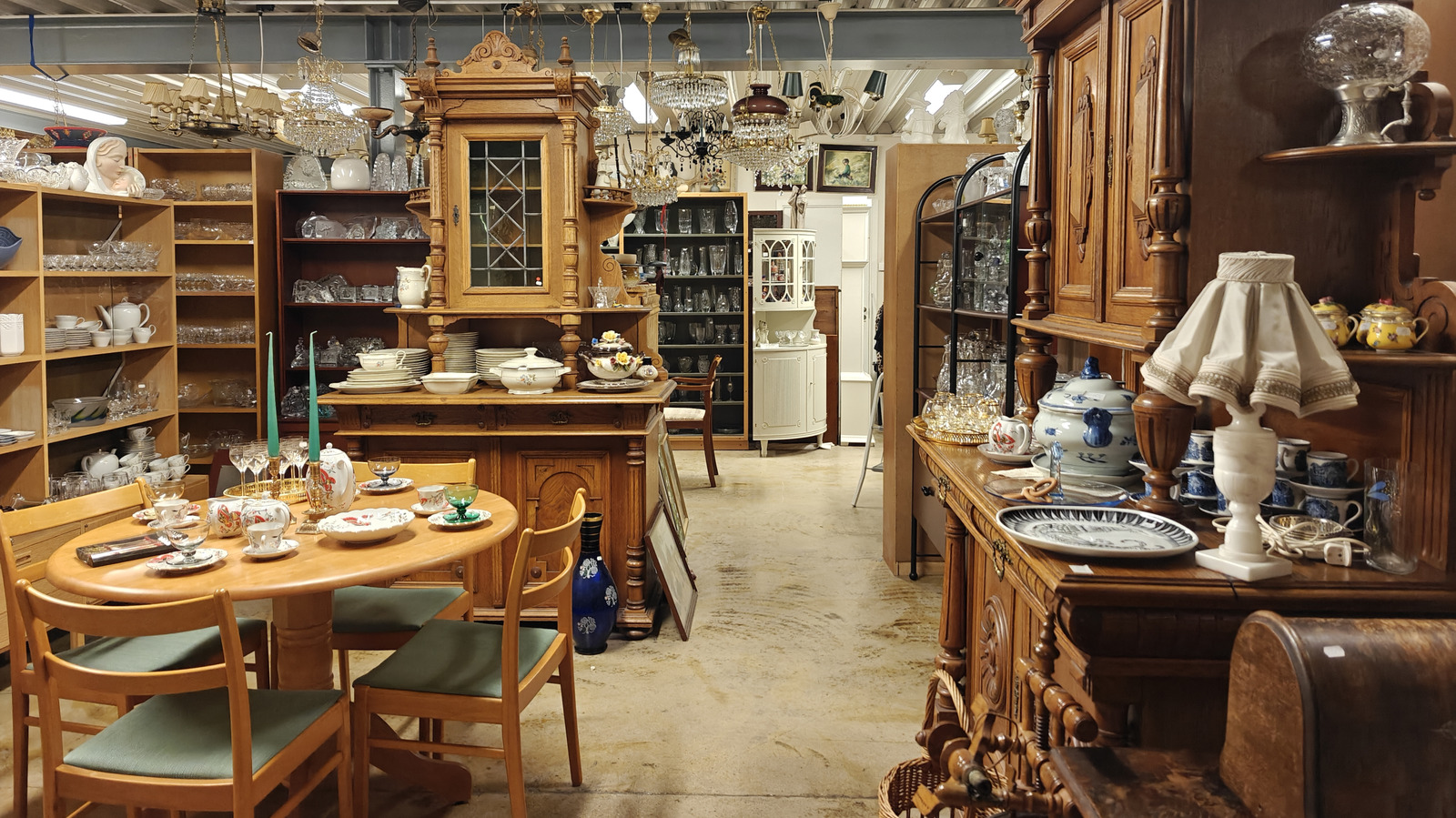
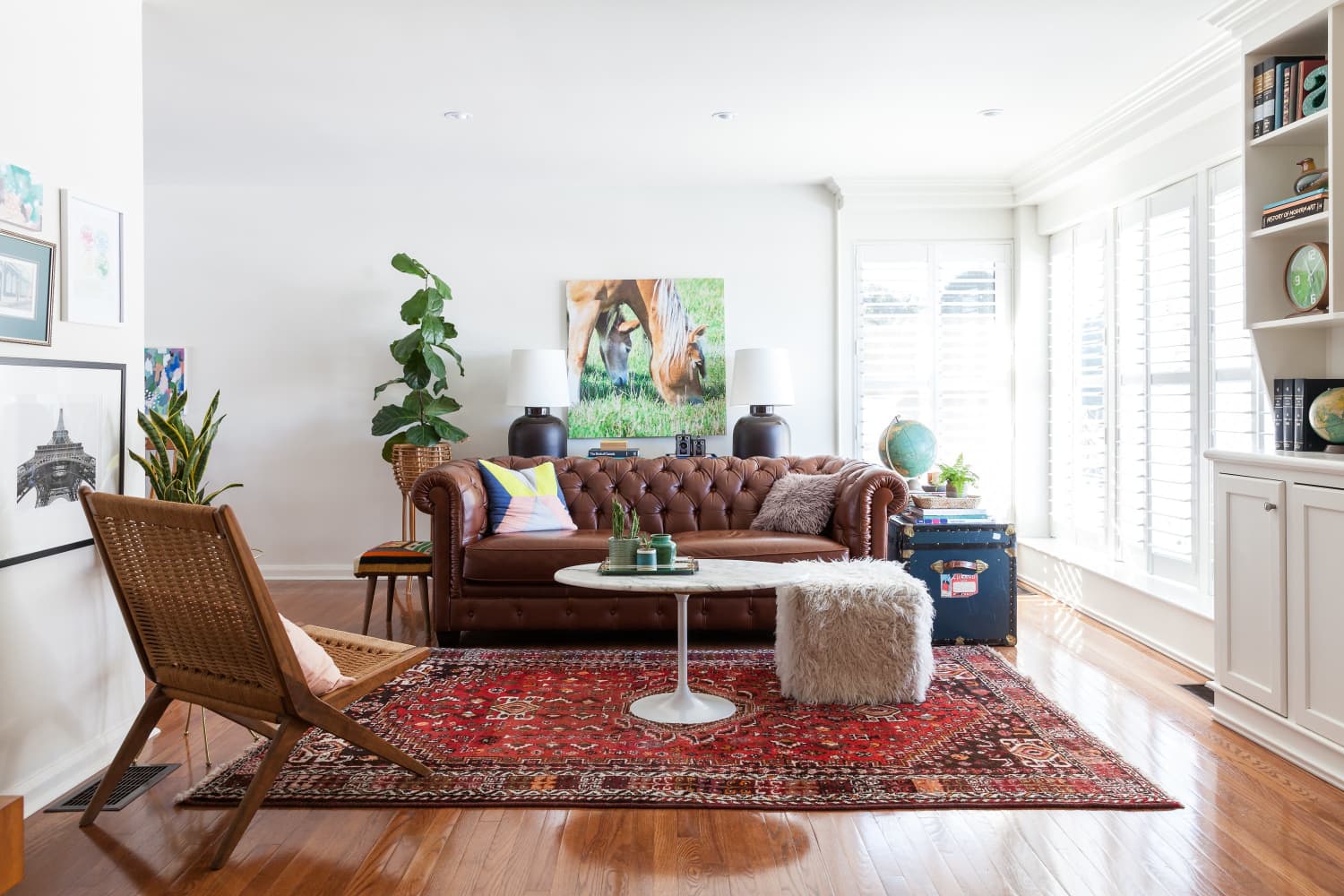
Designers prioritize art when shopping at flea markets for unique and affordable pieces.
In 1971, Manolo Blahnik created shoes for the designer Ossie Clark's catwalk show in London. Relatively new to shoemaking, the Spanish designer forgot to put steel pins in the heels of the shoes, which meant that models wobbled, unbalanced, down the catwalk.
Anna Holmes defines 'hype aversion' as a reflex against being told what to like, suggesting that popularity can create pressure rather than signal quality. This feeling can lead to a deliberate choice to resist mainstream culture.
Clare Vivier and Heather Taylor have perfected the art of hosting by dividing responsibilities, with Vivier focusing on wine and Taylor on flowers and dessert. Their friendship of 20 years has led to a seamless collaboration that enhances the dinner party experience.
The convenience of sourcing online is fraught with more pitfalls than most of us want to admit. Try finding adequate photos of a vintage piece's condition-close-ups of the fabric, video of damaged areas, any images of a piece's rear or underside!
I call it the tsunami of stuff. It's cresting. There are a lot of baby boomers. America's over-65 population reached 55.8 million in 2020, and an additional 42.4 million are in the 55-64 age group. This adds up to nearly 100 million people who have amassed a large amount of possessions - stuff they bought, stuff they got from their own parents, stuff their kids stuck them with.
Despite having to haul a dozen dumpster-loads of damaged goods out of the offices and the nearby Lab Store, to the tune of $1.5 million, Eileen said at the time, 'It was just stuff.' You can only imagine the emotions that might arise in a chief executive if they saw their sewage-soaked products floating by. Eileen and her staff did not linger there. They mobilized quickly-organizing carpools, impromptu meeting spaces, and arranging interest-free loans for staff needing cash during the crisis.
The question of how fashion is archived - what enters the museum; what is deemed worthy of preservation; whose clothes are considered culturally significant enough to outlast the bodies that wore them - has long sat uneasily at the centre of fashion history itself. Institutions have tended to answer it, or ignore it, in much the same way: couture gowns under glass, luxury garments mounted on conservation-grade mannequins in blockbuster exhibitions - an implicit hierarchy of the designed over the worn, the authored over the anonymous.
"I 'm the most hated man in town," Ray McKelvie told me. The town in question was Clinton, British Columbia, approximately 350 kilometres northeast of Vancouver, on Highway 97. Later, I asked another Clinton resident whether McKelvie's claim was true. She thought for a moment. "Well, there's Joe, who lives in the trailer park," she said. "We don't like him much either. But it's about even."
I used to save my favorite clothes for a version of my life that never showed up. The blazer stayed in my closet because it felt "too professional" for a normal day. The heels were waiting for a dinner I'd yet to be invited to. The earrings were longing for an occasion that felt important enough to justify wearing them. Meanwhile, I wore the same outfits on repeat - to work, to run errands, to all the places where my actual life was happening.
These clothes are not secondhand, says Yin Xiuzhen, the Beijing-born artist known for creating large-scale installations out of found garments and keepsakes. I prefer to call them used' or worn', she explains. Clothes that have been worn' carry a lot of information like a second skin, imprinted with social meaning. In some of Yin's works the clothes are her own, telling a personal story. In others, the clothes are collected, stained and stretched across towering steel frames resembling planes, trains or organic forms.
Whenever there's a spare minute, your first instinct is to reach for your phone and scroll. But what if you didn't? Experts confirm the benefits of this new take on old ways to pass time
But this week I spotted an ingenious use for the extras, courtesy of NY-based company Proche Studio. Here's their proposal: Mail in a wool blanket, and they'll give it new life in the form of a great-looking-and uber snug-chore coat, vest, or scarf. I'm particularly smitten by the chore coat, a fresh version of the quilt coats that became popular a couple of years ago, and much, much warmer.
Furniture made from mycelium or algae can decompose in five years, sure, but a well-made antique armoire outlives empires because no one throws it away. Columns takes that logic seriously. Handcrafted in solid oak, natural leather, and horsehair, the pieces are built to last a thousand years, which sounds like marketing hyperbole until you look at the joinery, the hand stitching, and the material choices. This is furniture designed to be inherited, repaired, and remembered.
The traditional museum experience, pausing in front of an object, and absorbing its history visually or by reading its description, has long shaped how collectors and others relate to cultural treasures. Yet, over the last few decades, digital technology has quietly rewritten many of those rules, changing not only how collections are exhibited but also how they are documented, preserved, and even inherited.
This research-based design project by Laura Oliveira investigates discarded as a potential raw material for sustainable design applications. Human hair is produced continuously and in large quantities through everyday grooming practices, yet it is almost always treated as waste once separated from the body and typically disposed of in landfills. Despite its material properties, strength, flexibility, and durability as a keratin-based protein fiber, its remains uncommon within design and research contexts.
What if I took my design lens and built out my essentials capsule for the Everlane customer? I felt like that would be a really amazing opportunity for me to introduce myself as a designer to an audience outside of EB Denim.
In the show, "dirty" extends to anything that breaks fashion's pact with propriety. Here are clothes caked in grime, blotted with makeup, stiffened by salt, pieced from trash, frayed, and faded. The garments span decades, from the 1980s through the mid-2000s, when the likes of Vivienne Westwood and Jean Paul Gaultier built their fame on defying convention, to today, when corporatization has made such daring increasingly rare. But forgoing practicality frees certain designers from the demands that the body be polite-and thereby policed.
The Rural Cut places vintage fashion in Lebanon's Bekaa Valley, among vineyards, open fields, and the animals that inhabit the land. As a Beirut-based stylist, I worked with a fully Lebanese team to create a shoot that feels authentic, where each garment and every frame reflects the textures, history, and rhythm of the rural landscape. Photography by Angele Basile / Instagram: @angelebasile Styling by Rinad Saad / Instagram: @rinaaaaddd
It captures seven different femininities during an all-day pool party, enjoying themselves while revealing their distinctive styles. Creative Direction, Production & Styling by Maria Gkin. Photography by Eliza Poultidou. The models are Vanessa Otilia, Cyka, Alvina Chamberland and Angelica Komninak. The concept examines the thin line between what is seen as acceptable and what has been labelled ugly or immoral, explored through each woman's personal story. Textures, colours, makeup and styling come together, breaking down stereotypes and highlighting fashion as a means of freedom