#pfas-free-materials
#pfas-free-materials
[ follow ]
#sustainability #recycling #pfas #microplastics #circular-economy #environmental-impact #plastic-pollution
#microplastics




OMG science
fromFuturism
5 days agoYou Know How Scientists Keep Finding Microplastics Literally Everywhere? Well, You'd Never Guess What Their Lab Gloves Are Coated in Straight Out of the Packaging
Skepticism grows in the scientific community regarding microplastics research due to potential methodological errors and contamination issues.
Alternative transportation
fromSustainable Bus
5 days agoNew certified Ultrafabrics collections target durability and compliance in passenger transport interiors - Sustainable Bus
Ultrafabrics launches new certified collections for passenger transport, combining durability, aesthetics, and sustainability in high-performance upholstery fabrics.

.jpg)


fromArchDaily
1 week agoDesigning for Obsolescence in an Age of Perpetual Upgrades
In the nineteenth century, entire railway networks became obsolete almost overnight, not due to physical deterioration, but because of changes in the technical standards that supported them. The expansion of railroads across Europe and North America adopted different track gauges, and as a dominant standard gradually emerged, these infrastructures became incompatible with one another.
Renovation
fromEarth911
1 week agoThe State of Polystyrene Recycling In 2026
The #6 symbol on the foam container only tells you what kind of plastic it is, not if it can be recycled. If you put it in the bin just because you see a number and the recycling arrows, it can actually contaminate your other recyclables, like paper, cardboard, and aluminum, and might cause the whole batch to be rejected.
SF food
fromTODAY.com
4 days agoThese Are the 2 Most Dangerous Home Cleaning Products to Have Around Kids, New Research Shows
"What surprised me is we are still seeing so many visits to emergency departments associated with very common household cleaning products," Lara McKenzie, Ph.D., stated, emphasizing the ongoing issue despite safety advancements.
Public health
fromWIRED
2 weeks agoA New Generation of Big Water Filters-Without the Plastic
Most water filter pitchers are made of BPA-free plastic. But as new research shows that bottled-water drinkers ingest tens of thousands of excess microplastic particles, wellness lovers have begun to look askance at water filters that are themselves made of plastic.
Beer
Fashion & style
fromEntrepreneur
2 weeks agoYour 'Organic' TShirt Still Hurts the Planet More Than You Think
Organic and sustainable fashion brands undermine their environmental messaging by packaging products in excessive single-use plastic, contradicting their eco-friendly positioning and contributing significantly to global plastic waste.
fromEarth911
2 weeks agoIs Shredded Paper Recyclable?
Shredded paper is especially difficult to recycle, so many programs will not accept it. Shredding accelerates fiber shortening and lowers the paper grade from high-grade to mixed-grade. Mixed-grade paper is still recyclable, but it ends up baled and processed into products like paper towels and packing paper.
Portland
fromwww.theguardian.com
4 days agoThe dark side of the balloon boom is it time they were banned?
In 2019, scientists found that balloons eaten by seabirds are more likely to kill them than other kinds of plastic yet they do not seem to have been earmarked in the same way as, for example, plastic straws.
Public health
#sustainable-fashion


Fashion & style
fromEarth911
2 weeks ago11 Sustainable Men's Clothing Brands for Spring & Summer Style
Clothing production consumes massive water resources and generates significant carbon emissions, but sustainable brands using organic, recycled fibers and repair services offer viable alternatives to fast fashion's environmental damage.
Fashion & style
fromBusiness Matters
3 weeks agoWhy Sustainable Fashion is More Than Just a Trend: Clothing, Bags, and Accessories for a Better Future
Sustainable fashion has moved from niche to mainstream as consumers increasingly demand transparency about production, labor practices, and environmental impact of clothing and accessories.
OMG science
fromYanko Design - Modern Industrial Design News
1 week agoResearchers turned Sawdust Waste and Watermelon Seeds into Recyclable Fire-resistant Panels - Yanko Design
Sawdust can be transformed into a strong, fire-retardant composite material using struvite and an enzyme from watermelon seeds.
fromFast Company
3 weeks agoHow silicone wristbands can help scientists monitor 'forever chemicals'
Environmental monitoring has traditionally relied on snapshots of exposure from a water sample collected on a single day, a blood sample drawn at one point in time, or soil tested from a specific location. But exposure unfolds gradually as people move through different environments and come into contact with air, dust, and surfaces throughout the day.
Wearables
Agriculture
fromEarth911
2 weeks agoConvenience Comes at the Environment's Expense
Fast delivery convenience carries significant environmental costs through packaging waste, carbon emissions, and resource consumption, but individual yard management choices can meaningfully reduce environmental impact at a local scale.


fromFortune
3 weeks agoPlastics, fertilizers, clothing, medicines and electronics: $100-a-barrel oil has huge downstream consequences | Fortune
Crude oil is a complex mixture of hydrocarbons - molecules made mainly of carbon and hydrogen. Refineries and chemical plants separate and transform these molecules into smaller chemical building blocks known as petrochemicals. Some of the most important petrochemical building blocks include chemicals such as ethylene, propylene and benzene.
Environment
fromTasting Table
1 month agoThat Empty Potato Chip Bag Probably Doesn't Belong In Your Recycling Bin - Tasting Table
While you might assume that potato chip bags or other snack bags are recyclable, most are made from mixed materials. This means that the bags may contain plastic on the outside and an inner lining of plastic and aluminum film or foil. While the individual materials may be recyclable on their own, the only way they could be used is if the recycling facility has the means by which to separate the materials.
SF food
fromEarth911
1 month agoHow to Recycle or Dispose of Single-Use Alkaline Batteries
Never place batteries of any type in your curbside recycling bin. Batteries can damage recycling equipment and, if lithium batteries are mixed in, cause fires. Always use designated battery collection programs.
Environment
fromwww.npr.org
2 months agoPolyester clothing has been causing a stir online. But how valid are the concerns?
Your eyes don't deceive you. The use of polyester has ballooned with time, according to Henry Navarro Delgado, an associate professor at Toronto Metropolitan University's school of fashion. It's partly because polyester can be quite useful, he said. It is a type of plastic made from petroleum compounds that are cooled and stretched into yarn, according to Michael Palladino, a fashion industry veteran and lecturer at Kingsborough Community College's business of fashion program in New York.
US news
fromDaily Coffee News by Roast Magazine
1 month agoReport: Sustainability Must Be Embedded Into Core Buying Practices to Drive Change
"Ironically, many if not most of these 'sustainability' projects remain disassociated from companies' core procurement strategies, meaning the coffee produced from these projects is not necessarily bought by the companies involved, or only in minimal quantities," the paper states. "And for the coffee that is purchased, prices do not factor into the project design, despite the fact that price is the single variable impacting farmer income that is in the direct control of companies."
Coffee
Design
fromdesignboom | architecture & design magazine
2 months agowearable collection repurposes leftover leather powder as translucent composite material
OBRO converts leather manufacturing offcuts into semi-transparent PVC composite by embedding finely ground leather powder to create visually layered, tactile, durable sheets.
fromFast Company
1 month agoThese designers made a sustainable new building material from corn
This corn-based construction material was made by Manufactura, a Mexican sustainable materials company, and it imagines a second life for waste from the most widely produced grain in the world. The project started as an invitation by chef Jorge Armando, the founder of catering brand Taco Kween Berlin, to find ways he could reintegrate waste generated by his taqueria into architecture. A team led by designer Dinorah Schulte created corncretl during a residency last year in Massa Lombarda, Italy.
Science
Environment
fromEarth911
1 month agoHow to Recycle Nitrile, Latex, and Vinyl Sterile Gloves
Disposable gloves cannot go in curbside recycling due to equipment tangling and contamination risks; mail-in programs and manufacturer recycling offer proper alternatives for turning gloves into downcycled products.
fromdesignboom | architecture & design magazine
2 months agorecontextualizing human hair waste as potential raw material for design
This research-based design project by Laura Oliveira investigates discarded as a potential raw material for sustainable design applications. Human hair is produced continuously and in large quantities through everyday grooming practices, yet it is almost always treated as waste once separated from the body and typically disposed of in landfills. Despite its material properties, strength, flexibility, and durability as a keratin-based protein fiber, its remains uncommon within design and research contexts.
Design
Design
fromwww.archdaily.com
2 months agoFrom Material Intelligence to Circularity: Lessons from Architecture in 2025
Architects prioritize material innovation in 2025—agricultural waste, recycled plastics, and living materials—balancing tradition, circularity, and material intelligence for resilient, low-carbon construction.
fromArchDaily
2 months agoA Responsible Addition: HIMACS Shapes Achieve SCS Certification for Recycled Content
In a balance of aesthetics, performance, and versatility, HIMACS shows a solid surface material of choice for many architects and designers. Taking a further step forward, the entire range of standard HIMACS sinks and basins is now officially SCS certified, containing a minimum of 8% pre-consumer recycled content. This certification enhances the material's technical and visual appeal by providing a more sustainable option without compromising quality or functionality.
Design




fromEarth911
2 months agoRecycling Mystery: Black-Colored Plastic
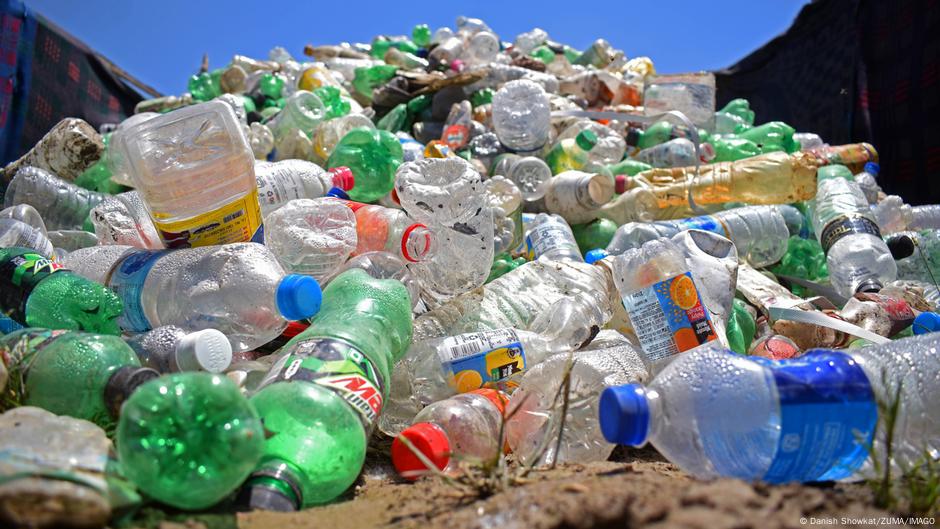
Black plastic gets its color from carbon black pigment and is commonly used in food containers, such as meat or produce trays and take-out containers, as well as disposable coffee lids, plastic bags, and hard plastic items like DVD cases and planters. While plastic is one of the categories of things that we are encouraged to recycle - when we can't reuse or repurpose it - not all black plastic items can be recycled.
Environment
fromwww.theguardian.com
2 months agoRecycled plastic packaging claims are misleading, say experts
Europe's supermarket shelves are packed with brands billing their plastic packaging as sustainable, but often only a fraction of the materials are truly recovered from waste, with the rest made from petroleum. Brands using plastic packaging from Kraft's Heinz Beanz to Mondelez's Philadelphia use materials made by the plastic manufacturing arm of the oil company Saudi Aramco. The Saudi state-owned holding opposes production cuts under the UN plastic treaty and is the world's largest corporate greenhouse-gas emitter (over 70m tonnes up to 2023).
Environment
fromEarth911
2 months agoGuest Idea: 7 Solutions to Give Your Old Sunglasses a Second Life
Just like that coffee cup, eyewear is a complex fusion of materials. Metal hinges are screwed into polymer frames, which hold chemically-coated lenses. This mix of metals, plastics, and coatings means standard sorting machines cannot process them. As a result, they are rejected as contamination and sent directly to landfills, where they contribute to non-biodegradable waste. Unlike a disposable paper cup, however, a pair of sunglasses is built for durability. Its high-quality components make it a perfect candidate for repair, reuse, or reinvention.
Environment
fromEarth911
2 months agoThe Earth911 Lithium-Ion Battery Recycling Guide
Lithium-ion (Li-ion) batteries are found in many devices we use every day, like smartphones, laptops, tablets, wireless earbuds, power tools, e-bikes, and electric vehicles. By 2023, there were more than 40 million electric vehicles on the road worldwide, and billions of portable electronics used Li-ion cells. These batteries are valuable for recycling, but they can be dangerous if not disposed of correctly.
Environment
fromInsideHook
1 month agoCould Recycled Plastic Lead to More Housing?
When you think about building a house, what materials come to mind? Brick, wood and metal all come to mind; there are also some very distinctive glass houses out there. (Even if their occupants should refrain from throwing stones - though honestly, that's a good tip for indoor living in general.) A group of MIT researchers have come up with a very different way of making buildings, and it's one that also addresses an ongoing waste issue."We've estimated that the world needs about 1 billion new homes by 2050. If we try to make that many homes using wood, we would need to clear-cut the equivalent of the Amazon rainforest three times over," explained AJ Perez, who conducts his research in the MIT Office of Innovation. The title of a paper written by Perez and his colleagues - "Design, Manufacture and Testing of Structural Trusses Using Additively Manufactured Polymer Composites" - gives a sense of the solution that they have in mind.
Environment
[ Load more ]