#phishing-schemes
#phishing-schemes
[ follow ]
#cybersecurity #phishing #malware #social-engineering #credential-theft #cybercrime #ransomware #data-breach


#phishing


Privacy technologies
fromTechzine Global
1 month agoFake Google Security page hijacks browser as proxy for attackers
Attackers use fake Google security notifications to install malicious Progressive Web Apps that steal one-time passwords, crypto wallet addresses, location data, and intercept SMS codes through social engineering and legitimate browser APIs.


Privacy technologies
fromTechzine Global
1 month agoFake Google Security page hijacks browser as proxy for attackers
Attackers use fake Google security notifications to install malicious Progressive Web Apps that steal one-time passwords, crypto wallet addresses, location data, and intercept SMS codes through social engineering and legitimate browser APIs.
fromFortune
2 days agoInternet Watch Foundation finds 260-fold increase in AI-generated CSAM in just one year, and 'it's the tip of the iceberg' | Fortune
"Any numbers that we see, it's the tip of the iceberg," said Melissa Stroebel, vice president of research and strategic insights at Thorn, a nonprofit that builds technology to combat online child sexual exploitation. "That is about what has been either detected or proactively reported."
Digital life
#cybersecurity



Information security
fromThe Hacker News
4 days ago3 Reasons Attackers Are Using Your Trusted Tools Against You (And Why You Don't See It Coming)
Cyber attackers increasingly exploit legitimate tools within environments, making detection difficult and expanding the attack surface organizations must manage.
#malware

Information security
fromThe Hacker News
3 days agoResearchers Uncover Mining Operation Using ISO Lures to Spread RATs and Crypto Miners
Operation REF1695 uses fake installers to deploy RATs and cryptocurrency miners, monetizing infections through CPA fraud since November 2023.


Artificial intelligence
fromThe Hacker News
3 weeks agoResearchers Trick Perplexity's Comet AI Browser Into Phishing Scam in Under Four Minutes
AI-powered agentic web browsers can be manipulated through their reasoning processes to bypass security measures and fall victim to phishing attacks within minutes.


#phishing-as-a-service
Privacy technologies
fromSecurityWeek
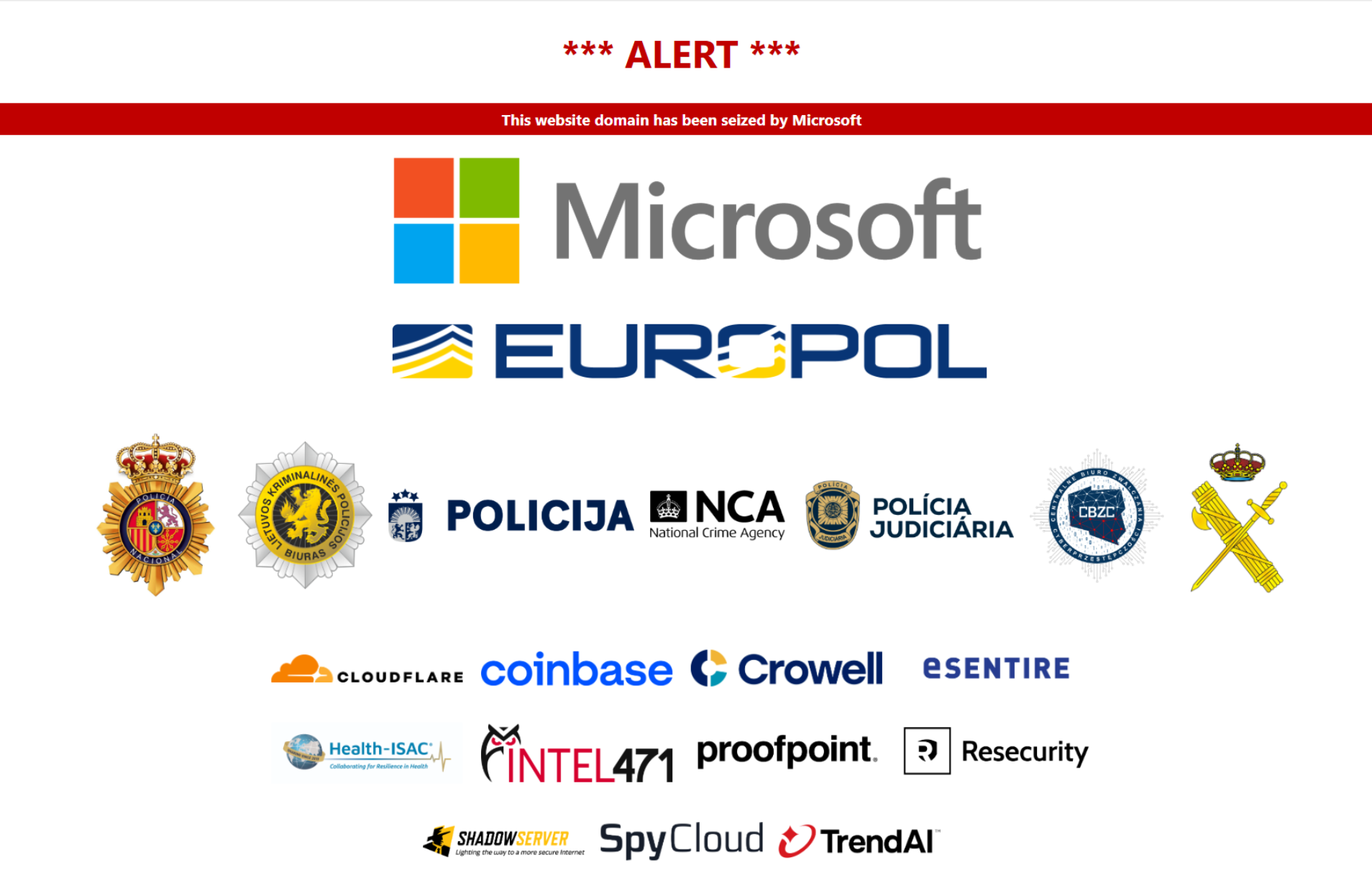
1 month agoTycoon 2FA Phishing Platform Dismantled in Global Takedown
Europol and Microsoft led a coordinated takedown of Tycoon 2FA, a phishing-as-a-service platform responsible for 62% of phishing attempts blocked by Microsoft and affecting 96,000 victims worldwide.

Privacy technologies
fromSecurityWeek
1 month agoTycoon 2FA Phishing Platform Dismantled in Global Takedown
Europol and Microsoft led a coordinated takedown of Tycoon 2FA, a phishing-as-a-service platform responsible for 62% of phishing attempts blocked by Microsoft and affecting 96,000 victims worldwide.
Privacy professionals
fromComputerworld
3 weeks agoCyber criminals too are working from home... your home
The FBI warns that cybercriminals use residential proxies to mask illegal activities by hijacking IoT devices, smartphones, and routers, threatening both consumers and enterprises, particularly older devices.
fromSecuritymagazine
3 days agoAI Startup Mercor, Which Works With Open AI and Anthropic, Confirms Data Breach
Four terabytes of data have reportedly been stolen, including database records and source code. Allegedly stolen data has been published on a leak site, containing Slack information, internal ticketing data, and videos of conversations between Mercor's AI systems and contractors.
Information security
fromSilicon Canals
2 months agoI'm a retired Boomer and I just watched my smartest friend lose everything to a scam-here are 9 ways they got to him that could get to anyone - Silicon Canals
Last month, I sat across from one of the brightest people I know as he explained how he'd lost nearly everything to a sophisticated scam. This wasn't some naive teenager or technophobe. This was my friend from university days, a retired executive who'd navigated corporate politics for decades and made shrewd investment decisions his whole life. Watching him piece together how it happened was like watching someone solve a puzzle in reverse.
Psychology
fromArs Technica
2 months agoMillions of people imperiled through sign-in links sent by SMS
The links are sent to people seeking a range of services, including those offering insurance quotes, job listings, and referrals for pet sitters and tutors. To eliminate the hassle of collecting usernames and passwords-and for users to create and enter them-many such services instead require users to provide a cell phone number when signing up for an account. The services then send authentication links or passcodes by SMS when the users want to log in.
Privacy technologies
#phishing-attack
Information security
fromSecurityWeek
2 weeks agoSecurity Firm Executive Targeted in Sophisticated Phishing Attack
A C-level executive at Outpost24 was targeted by a sophisticated phishing attack using the Kratos phishing-as-a-service kit that exploited legitimate services like Cisco and Nylas to bypass security defenses.
Information security
fromSecuritymagazine
3 weeks agoTargeted Phishing Attack Breaches Biotech Company Data
Intuitive Surgical suffered a phishing attack compromising employee credentials, exposing customer and corporate data, though operational systems and customer networks remained unaffected due to network segmentation.
fromPCWorld
1 month agoPhishing scammers weaponize ICE ragebait
The email seen by at least some customers of the Emma email platform was a phishing scam. Hackers hoped to inspire instant panic with the words, 'As part of our commitment to supporting U.S. Immigration and Customs Enforcement (ICE), we will be adding a Support ICE donation button to the footer of every email sent through our platform.'
Information security
Information security
fromComputerWeekly.com
1 month agoTycoon2FA phishing platform dismantled in major operation | Computer Weekly
Europol-led operation dismantled Tycoon2FA, a phishing service with 2,000 subscribers that bypassed multifactor authentication by intercepting credentials and session cookies across 24,000 domains.
Information security
fromTheregister
1 month agoMicrosoft OAuth scams abuse redirects for malware delivery
Microsoft warns of ongoing OAuth abuse scams using phishing emails and URL redirects to deliver malware and compromise organizational devices, primarily targeting government and public-sector entities.
Information security
fromTravel + Leisure
1 month agoThis New Travel Con Is So Real Looking It's Tricking Even the Most 'Scam Aware' Travelers-Here's How to Stay Safe
Urgent, personalized texts impersonating airlines or hotels trick travelers into clicking counterfeit links or calling scammers to steal login, payment, and travel-identifying information.
fromZDNET
1 month agoHalf of all cyberattacks start in your browser: 10 essential tips for staying safe
Web browsers are among the top targets for today's cybercriminals, playing a role in nearly half of all security incidents, new research reveals. According to Palo Alto Networks' 2026 Global Incident Response report, an analysis of 750 major cyber incidents recorded last year across 50 countries found that, in total, 48% of cybercrime events involved browser activity. Individuals trying to connect to the web, including business employees, are exposed to cyberthreats on a daily basis.
Information security
fromThe Hacker News
2 months agoLong-Running Web Skimming Campaign Steals Credit Cards From Online Checkout Pages
Silent Push said it discovered the campaign after analyzing a suspicious domain linked to a now-sanctioned bulletproof hosting provider Stark Industries (and its parent company PQ.Hosting), which has since rebranded to THE[.]Hosting, under the control of the Dutch entity WorkTitans B.V., is a sanctions evasion measure. The domain in question, cdn-cookie[.]com, has been found to host highly obfuscated JavaScript payloads (e.g., "recorder.js" or "tab-gtm.js") that are loaded by web shops to facilitate credit card skimming.
Information security
fromSecuritymagazine
2 months agoIs Email the Entry Point to a Well-Rounded Disinformation Attack?
Generative models learn an executive's tone and syntax from public posts, press releases and meeting transcripts. Attackers then craft messages indistinguishable from authentic correspondence. But the real innovation isn't the text, it's the choreography. A fraudulent email may serve only as the opening move. Within minutes, the target receives a confirming voice message that sounds like the executive whose name appears in the signature block. A deepfaked video may follow, asking for "final authorization." Email opens the door; other channels walk through it.
Information security
fromThe Hacker News
1 month agoFrom Ransomware to Residency: Inside the Rise of the Digital Parasite
To be clear, ransomware isn't going anywhere, and adversaries continue to innovate. But the data shows a clear strategic pivot away from loud, destructive attacks toward techniques designed to evade detection, persist inside environments, and quietly exploit identity and trusted infrastructure. Rather than breaking in and burning systems down, today's attackers increasingly behave like Digital Parasites. They live inside the host, feed on credentials and services, and remain undetected for as long as possible.
Information security
fromComputerWeekly.com
2 months agoWave of ShinyHunters vishing attacks spreading fast | Computer Weekly
"Mandiant is tracking a new, ongoing ShinyHunters-branded campaign using evolved vishing techniques to successfully compromise SSO credentials from victim organisations, and enrol threat actor controlled devices into victim MFA solutions," he told Computer Weekly via email. "This is an active and ongoing campaign. After gaining initial access, these actors pivot into SaaS environments to exfiltrate sensitive data. An actor that identifies as ShinyHunters has approached some of the victim organisations with an extortion demand.
Information security
[ Load more ]