#piano-concert
#piano-concert
[ follow ]
#classical-music #live-music #handel #san-francisco-symphony #piano #opera-and-ballet #classical-concert #baroque

fromSPIN
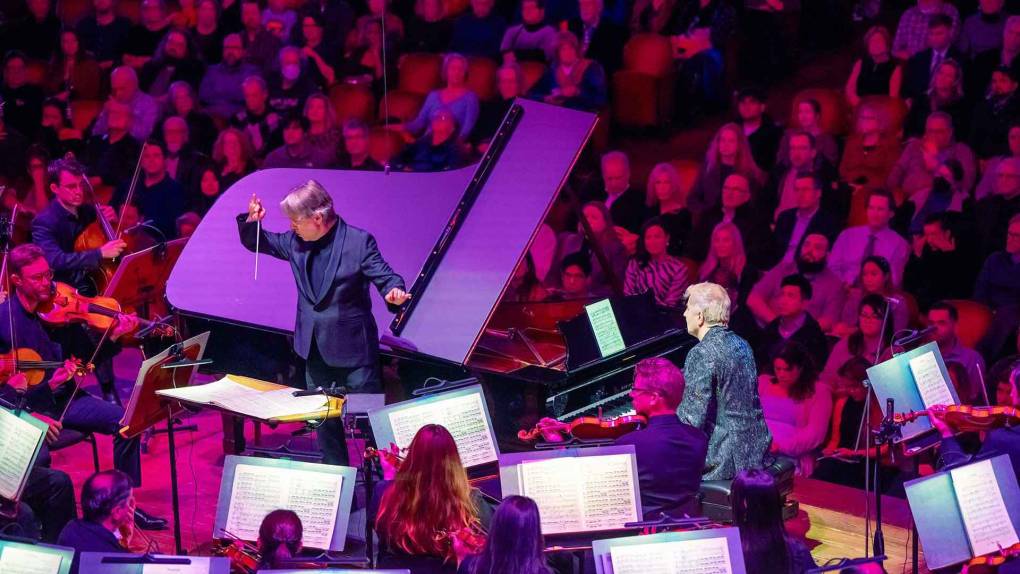
2 weeks agoWhitney Johnson, Lia Kohl, and Macie Stewart Go Beyond the Chamber - SPIN
All but one of the song titles on Body Sound, the debut album from experimental string trio Whitney Johnson, Lia Kohl, and Macie Stewart, line up nicely-a few words, usually two, usually nouns, separated by a vertical line. The straight line in the middle means different things in different disciplines. In computing, it's called a 'pipe' and serves as a conduit. In poetry, it denotes a pause or break. In music, it marks the beginning and end of measures.
Music

fromwww.theguardian.com
2 weeks agoSinfonia of London/ Wilson/ Kantorow review pushing the limits of the well-oiled orchestral machine
Fast forward a few decades and John Wilson is still hand-picking musicians and still serving up performances so polished they leave critics scrabbling for superlatives. These days Wilson's main outfit is the Sinfonia of London, and he is as likely to be conducting the symphonic mainstream as showtunes.
London music
fromVulture
3 weeks agoOpera Houses Invite Timothee Chalamet to See a Show
I don't want to be working in ballet, or opera, or things where it's like, 'Hey, keep this thing alive, even though like no one cares about this anymore.' All respect to all the ballet and opera people out there. I just lost 14 cents in viewership. I just took shots for no reason.
Miscellaneous
Music
fromOregon ArtsWatch * Arts & Culture News
3 weeks agoThe effusion of difficult emotion: Newport Symphony performs Higdon, Mendelssohn, and Tchaikovsky * Oregon ArtsWatch
Newport Symphony Orchestra's final season concert features Shakespeare-inspired music performed March 21-22 with poet Frank Oden and works by Nicolai, Korngold, Verdi, Kellogg, and Bernstein.
SF music
fromFuncheap
3 weeks agoGolden Gate Park Band's Free Symphony in the Park: Polish Celebration
The Golden Gate Park Band presents its 144th season of free weekly Sunday concerts at 1 pm in Golden Gate Park, featuring 70-90 minute performances with culturally themed programs and guest performers.
Berlin music
fromGothamist
2 weeks agoMozart's childhood violin and original manuscripts come to the Morgan Library
Mozart's personal belongings, including the clavichord used to compose 'The Magic Flute' and his childhood violin, are exhibited at the Morgan Library & Museum in Manhattan for the first time in the United States.
Arts
fromVulture
4 weeks agoBallet Dancers and Opera Singers Are Mad at Timothee Chalamet
Timothée Chalamet suggested ballet and opera lack public interest, prompting backlash from professional dancers and opera singers who attribute low attendance to high ticket prices and exclusivity rather than lack of care.
fromwww.theguardian.com
3 weeks agoElisabeth Leonskaja review piano legend's unerring sense of architecture reveals connections and kinships
The Austrian pianist's expressive, emotional playing may grab the headlines, but it's the unerring sense of underlying architecture that's the thread through her long career. We heard that here, not just within each of the works, but in the shared foundations, and sometimes secret connecting passages, she revealed between them.
Berlin music
Portland food
fromOregon ArtsWatch * Arts & Culture News
1 month agoThe stone of winter rolled away: March choral previews, part one * Oregon ArtsWatch
Alexander Lingas concludes 35 years as Music Director of Cappella Romana, transitioning to Music Director Emeritus to focus on scholarship and theological education while the choir searches for his successor.
fromHyperallergic
1 month ago70 Shows to See in NYC This Spring
This year, we opted to sort our spring guide into categories, the better to match your mood. There are the shows everyone's talking about - big names like Duchamp and Raphael (seriously, how is this the first major survey of his in the city?), Frida Kahlo and Diego Rivera. There are major surveys, like the New Museum's inaugural show in its expanded building, MoMA PS1's Greater New York triennial, and of course, the Whitney Biennial.
Arts
NYC music
fromLos Angeles Times
8 years agoBroadway star Kristin Chenoweth takes us inside her favorite room: The piano room
Kristin Chenoweth's Beverly Hills apartment features a 1920s Steinway baby grand piano as her prized possession, creating an ideal space for singing and musical practice with exceptional acoustics.
fromwww.theguardian.com
3 weeks agoNemanja Radulovic: Prokofiev album review thrills and spills from a fearless violin virtuoso
Radulovic plunges in, his audacious attack and intonational high-wire act almost upsetting the applecart in the oompah-pah finale. The same fearless commitment pays dividends elsewhere: in the jaunty Heifetz arrangement of the Gavotte from the Classical Symphony, for example, or in the spiky march from The Love for Three Oranges.
Berlin music
fromwww.theguardian.com
1 month agoPlay like a dog biting God's feet': Steven Isserlis on the formidable Gyorgy Kurtag at 100
I was immediately struck by his magnetic intensity, his fierce passion for music and his unique way of speaking English—punctuated by frequent utterances of er-er-er. Many years later, Kurtag was to tell me: 'Stuttering is my natural mode of expression.' He and Marta simply embodied—he still embodies—music. I had never met anyone to whom each note mattered so much.
Music
fromWWD
3 weeks agoHow to Get Tickets to the American Ballet Theatre and New York City Ballet
When attending the ballet used to mean lining up at the box office or will-call window for a chance to score seats, you can now buy ballet tickets easily online, through the respective company websites or through third-party sites like Stubhub, Vivid Seats and SeatGeek.
Berlin music
fromThe New Yorker
1 month agoVocal Resistance at the New York Festival of Song
We began in the world that was-in the humid atmosphere of fin-de-siècle Vienna, from which Zemlinsky, Schreker, and Schoenberg emerged. In a program note, Blier wrote that the "Fugitives" concept was inspired by Zemlinsky's "Meeraugen," or "Sea Eyes," which tells of a "person staring into the roiling abyss of the ocean." You had the feeling, as the evening went on, that the crushing realities of twentieth-century history-war, revolution, inflation, the Depression, Fascism-made such refined aestheticism untenable and forced composers onto other paths.
Music
fromMetro Silicon Valley | Silicon Valley's Leading Weekly
1 month agoPoiesis Quartet at Stanford | Metro Silicon Valley | Silicon Valley's Leading Weekly
Formed at the Oberlin Conservatory of Music, the group blends technical precision with expressive range, moving comfortably between classical staples and contemporary compositions. Their programs often highlight contrast, pairing the clarity and balance of Haydn with modern textures that stretch tone and color.
Berlin music
fromwww.theguardian.com
1 month agoMy rookie era: I signed up for ballet on a whim. I still can't tell my left from my right
This is an absolute beginners course on the foundations of classical ballet and, a single catastrophic line dance lesson aside, it is also the first dance class I have ever attended. I am in the minority. As we take the barre, it quickly becomes apparent that not being able to tell my left from my right will be a significant deficit over the next 16 weeks. This, however, is a tertiary concern.
Exercise




fromwww.mercurynews.com
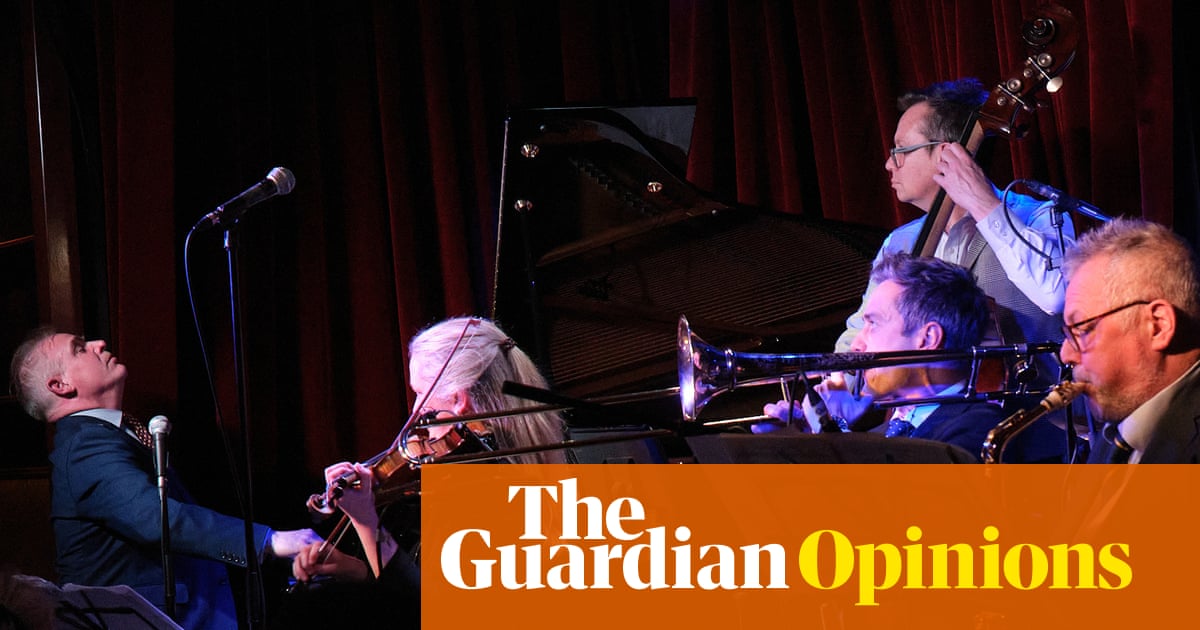
2 months agoPhilip Glass yanks symphony world premiere from Kennedy Center lineup
Glass joined a growing list of performers and artists who have canceled shows and cut ties with the arts center since President Trump replaced its board with people who share his aversion to woke programming, and affixed his name to the facade without congressional or Kennedy family approval. The new board also named Trump as chairman, and, in an unprecedented move, the president hosted this year's Kennedy Center Honors, which garnered its lowest ratings ever when broadcast on CBS. Ticket sales have also tanked.
US politics
Music
fromMetro Silicon Valley | Silicon Valley's Leading Weekly
1 month agoBrahms' Fifth in Redwood City | Metro Silicon Valley | Silicon Valley's Leading Weekly
Redwood Symphony presents Ortiz's Kauyumari, Ginastera's Harp Concerto with soloist Anna Maria Mendieta, and Klatzow's arrangement of Brahms' String Quintet (Brahms' Fifth).
fromwww.amny.com
2 months agoGoing Under the Radar' with international experimental theater amNewYork
Two years ago, the annual Under the Radar festival (which showcases international, experimental and multidisciplinary theater) was unexpectedly canceled by the Public Theater, its longtime presenter, due to financial issues. In response, the festival was quickly reconceived as a citywide effort involving several other theater companies, allowing it to move forward. The festival, now in its 21st edition, returns this month with productions at theaters across the city from Jan. 7 to 25.
Arts


Arts
fromwww.amny.com
2 months agoA snowbound night at Carnegie Hall with the Georgian National Ballet Sukhishvili amNewYork
The Georgian National Ballet Sukhishvili delivered a commanding, athletic, and ancestral performance at Carnegie Hall emphasizing endurance, lineage, and the physical intelligence of dancers.

Music
fromMetro Silicon Valley | Silicon Valley's Leading Weekly
2 months agoLeif Ove Andsnes at Stanford | Metro Silicon Valley | Silicon Valley's Leading Weekly
Norwegian pianist Leif Ove Andsnes performs a program focused on Central European composers and Robert Schumann at Bing Concert Hall, Stanford on Jan 25.
fromianVisits
1 month agoUnfinished Mozart manuscript going on display in Mayfair museum
The sheet is modest in size but immense in significance. Carefully inked across the page are the opening 20 bars of a fugue - not Mozart's own invention, but his transcription of a harpsichord work by George Frideric Handel, composed more than sixty years earlier. Mozart was 26 when he set to work on it in 1782-83, transforming Handel's keyboard fugue into the beginnings of a string quartet arrangement.
Music
Music
fromOregon ArtsWatch * Arts & Culture News
2 months agoGlimmers of light: Oregon Symphony concertmaster Sarah Kwak and guest conductor Markus Stenz tackle Alban Berg's difficult "Violin Concerto" * Oregon ArtsWatch
Markus Stenz led the Oregon Symphony in an outstanding concert featuring Sarah Kwak's superb performance of Berg's Violin Concerto and renditions of Boulanger and Beethoven.
Music
fromOregon ArtsWatch * Arts & Culture News
2 months agoGlimmers of light: Oregon Symphony concertmaster Sarah Kwak and guest conductor Markus Stenz tackle Alban Berg's difficult "Violin Concerto" * Oregon ArtsWatch
Markus Stenz led the Oregon Symphony in an outstanding concert featuring Sarah Kwak's superb performance of Berg's Violin Concerto and expressive Boulanger and Beethoven interpretations.
fromwww.theguardian.com
2 months agoKnow the score? I don't read music, but that's no hindrance to reimagining great classical works
I'm a harmonica and accordion player and one half of folk-classical duo Stevens & Pound. As a multi-instrumentalist I am rooted in a folk tradition that is oral, aural and communal. Music and song are passed down by ear, either through recordings or more fun traditional music sessions. Here, players and singers get together to share, swap and play tunes, drawing from a repertoire that is always evolving.
Music
Music
fromMetro Silicon Valley | Silicon Valley's Leading Weekly
2 months agoJoyce Yang in Campbell | Metro Silicon Valley | Silicon Valley's Leading Weekly
Joyce Yang, a Grammy-nominated pianist and Van Cliburn silver medalist, performs Beethoven and works by Strauss, Prokofiev, and Diamond with Peninsula Symphony.
Music
fromwww.theguardian.com
2 months agoLPO/Jurowski review Mahler's 10th is full of colour, and the composer's pain, in Barshai's completion
Barshai's colourful completion of Mahler's Tenth, conducted by Jurowski, delivers bold orchestration and vivid playing that contrasts Cooke's restrained version.
Music
fromMetro Silicon Valley | Silicon Valley's Leading Weekly
1 month agoVitamin String Quartet in Menlo Park | Metro Silicon Valley | Silicon Valley's Leading Weekly
Vitamin String Quartet transforms popular rock, pop, K-pop, and film music into elaborately arranged string quartet performances and releases prolific, genre-spanning albums.
[ Load more ]