#playcube-projector
#playcube-projector
[ follow ]
#home-theater #smart-glasses #portable-projector #augmented-reality #ar-glasses #apple-vision-pro #gaming

fromEngadget
2 days agoSony's gaming division just bought an AI startup that turns photos into 3D volumes
Following the acquisition, the Cinemersive Labs team will join SIE's Visual Computing Group (VCG) and contribute to our broader efforts in advancing state of the art visual computing within games. This includes applying machine learning to enhance gameplay visuals, improve rendering techniques, and unlock new levels of visual fidelity for players.
Marketing tech
fromwww.businessinsider.com
5 days agoI thought this Tokyo museum would be a major tourist trap. It ended up being a highlight of my first trip to Japan.
TeamLab Planets quickly made a name for itself after opening its doors in 2018. It holds the Guinness World Record for the most-visited museum dedicated to a single group or artist, bringing in more than 2.5 million visitors from April 2023 to March 2024.
Digital life


#home-theater
Gadgets
fromYanko Design - Modern Industrial Design News
6 days agoThe Hisense XR10 Packs 6,000 Lumens, Liquid Cooling, and Devialet Audio Into One Very Serious 4K Projector - Yanko Design
Hisense's XR10 projector offers a bright 4K image and advanced features at a competitive price, aiming to enhance home theater experiences.

Gadgets
fromYanko Design - Modern Industrial Design News
6 days agoThe Hisense XR10 Packs 6,000 Lumens, Liquid Cooling, and Devialet Audio Into One Very Serious 4K Projector - Yanko Design
Hisense's XR10 projector offers a bright 4K image and advanced features at a competitive price, aiming to enhance home theater experiences.
fromEngadget
3 weeks agoSamsung promises 120 games will be playable via its glasses-free 3D monitor tech by the end of the year
Samsung just announced that 120 games will be playable via its Odyssey 3D Hub platform by the end of the year. This is the platform that provides content for glasses-free 3D monitors like recent Odyssey displays. The company made this claim at, while also noting that the platform currently offers around 60 playable titles.
Video games
#portable-projectors
Gadgets
fromWIRED
2 weeks agoWant an Insane Party Trick? This Rolling Case Contains an Entire Theater
The Anker Nebula X1 Pro is a 72-pound portable projector with 400-watt Dolby Atmos sound and 4K triple-laser display, offering cinema-quality performance in a mobile package despite high cost and impractical size.
Arts
fromdesignboom | architecture & design magazine
1 month agothree suspended digital screens translate AI imagery into luminous spatial installation
UNFOLD PLANE's spatial installation translates artificial intelligence concepts into an integrated architectural environment using suspended screens, dynamic lighting, and reflective surfaces that respond to visitor movement.
fromTheregister
3 weeks agoSmart mirror shows dumb Windows in elevator
The Windows Boot Manager has blamed a recent hardware or software change, which, frankly, could be pretty much anything. The code 0xc0000428 is a clue that something might be awry with the digital signature of a file (perhaps ntoskrnl.exe) and, to be honest, we'd suggest nuking the whole thing from orbit.
Gadgets
fromWIRED
3 weeks agoTheater Shmeater! These Are My Favorite Huge TVs at Every Price
Traits I look for in a large TV include good brightness and contrast, advanced local dimming (read: good backlighting) to reduce light bleed from bright objects on dark backgrounds, accuracy to the director's intent, and impressive color saturation, especially for HDR (High Dynamic Range) content.
Television
fromWIRED
3 weeks agoThis Digital Picture Frame Wants to Bring People Closer to a Holographic Future
Upload any picture or video, and Musubi uses artificial intelligence to extract the most important part and hover it in space as a 3D image within the frame. That could be a video of a child's first steps or a snapshot of a birthday party. The image will be displayed in 3D form, viewable in all its holographic glory across nearly 170 degrees.
Gadgets
fromEngadget
3 weeks agoLooking Glass' Musubi showcases its holographic display in a consumer-friendly package
Looking Glass has been doggedly committed to making holographic displays the next big thing since 2019, and with its new Musubi digital photo frame, it might finally be offering its tech at a price that's hard to deny. Musubi is scheduled to start shipping in June, and unlike the company's previous, more developer-focused kits, the company's new display only costs $149.
Gadgets
fromEngadget
3 weeks agoSoundcore Nebula P1i projector review: An affordable option with accurate color and loud sound
Now, the company has added "affordability" to that equation with its latest model, the $369 P1i. Instead of being detachable like on the P1, its speakers fold out toward listeners, promising better and louder sound than most cheap projectors. The P1i also delivers 1080p video, Google TV for streaming and the same easy screen fit setup as other Anker projectors.
Gadgets
fromWIRED
1 month agoPico's Project Swan XR Headset Wants to Go Where the Apple Vision Pro Failed
One of the big focuses of the new operating system version is what Pico calls PanoScreen, a feature that lets the wearer run multiple applications at once while also keeping a 360-degree view of the real-world space around them. Other users can pop into the space as 3D avatars while you spin around to see spreadsheets, browser tabs, design software, or whatever else you're working on.
Wearables
fromEngadget
2 months agoGoogle's Project Genie lets you generate your own interactive worlds
This past summer, Google DeepMind debuted Genie 3. It's what's known as a world world, an AI system capable of generating images and reacting as the user moves through the environment the software is simulating. At the time, DeepMind positioned Genie 3 as a tool for training AI agents. Now, it's making the model available to people outside of Google to try with Project Genie.
Artificial intelligence
fromThe Drum
2 months agoA break from reality: Is VR really going to be the next big thing?
According to Digi Capital augmented and virtual reality are about to explode as VCs and corporates get in on the act. Facebook's multi-billion dollar acquisition of Oculus got everyone's attention early last year, but it's only really in the last 12 months that investments have accelerated, with more than $1bn pouring into the sector. Meanwhile Mashable reports Nokia's virtual reality camera is now available for pre-order for a cool $60,000.
fromGSMArena.com
2 months agoRazer unveils an "AI-native" headset with cameras that see what you see
The Motoko's dual first-person-view cameras are positioned at eye level to basically see what you see, enabling real-time object and text recognition - translating street signs, tracking gym reps, summarizing documents on the fly, all of that. There are also dual far and near-field mics, working together to capture voice commands and pick up dialogue within view.
Mobile UX
fromYanko Design - Modern Industrial Design News
1 month agoLenovo's Yoga Book Concept Makes 3D Models Float Above the Screen - Yanko Design
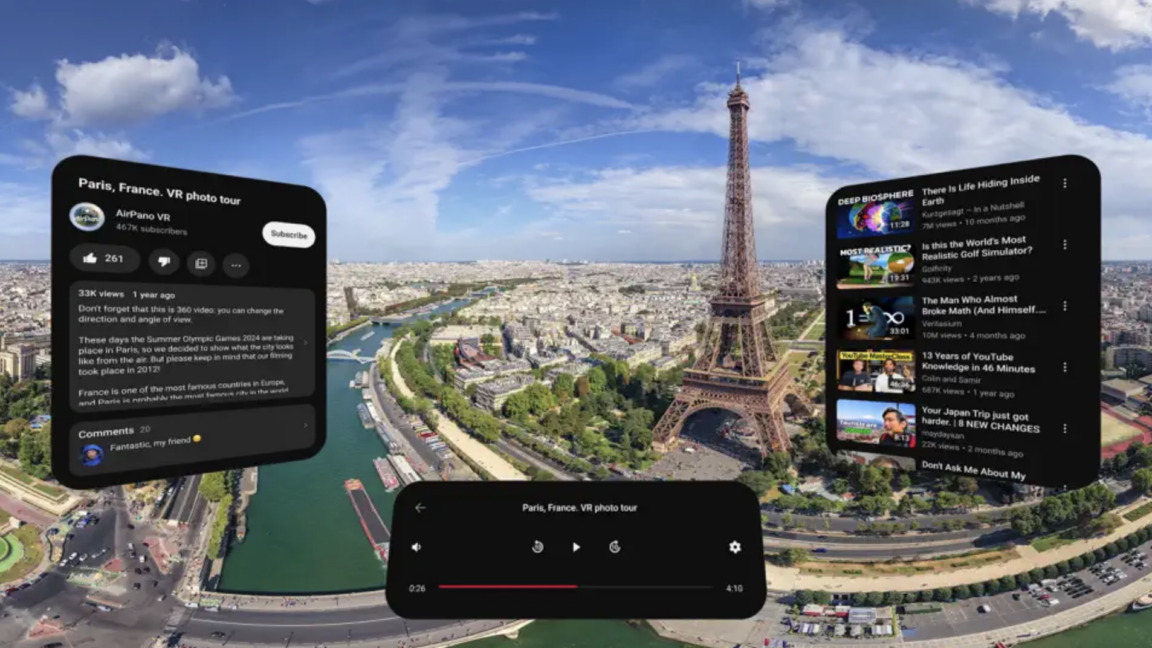
The upper display renders 3D content without glasses, using Lenovo's PureSight Pro Tandem OLED technology to show depth and spatial volume directly on screen. A spacecraft that's been modeled in three dimensions appears to float, with genuine perceived distance between its front and rear planes, rather than sitting flat behind glass.
Gadgets



Marketing tech
fromYanko Design - Modern Industrial Design News
1 month agoSamsung Just Made Those Viral 3D Billboards Fit on Any Wall - Yanko Design
Samsung's Spatial Signage delivers wall-mountable, glasses-free volumetric 3D displays that create window-like depth while integrating with existing signage workflows.
fromComputerworld
1 month agoWith attention shifting to AI smart glasses, VR faces another reality check
"It's not an overstatement to declare another VR winter," said J.P. Gownder, vice president and principal analyst at Forrester. "I think we might even go as far as to say there's only a handful of successful scenarios where people are using VR." This assessment reflects the industry's struggle to find practical applications beyond niche markets.
Gadgets

fromZDNET
2 months agoThe makers of Meta Ray-Ban Display glasses showed me what's next for AR, and it's wild
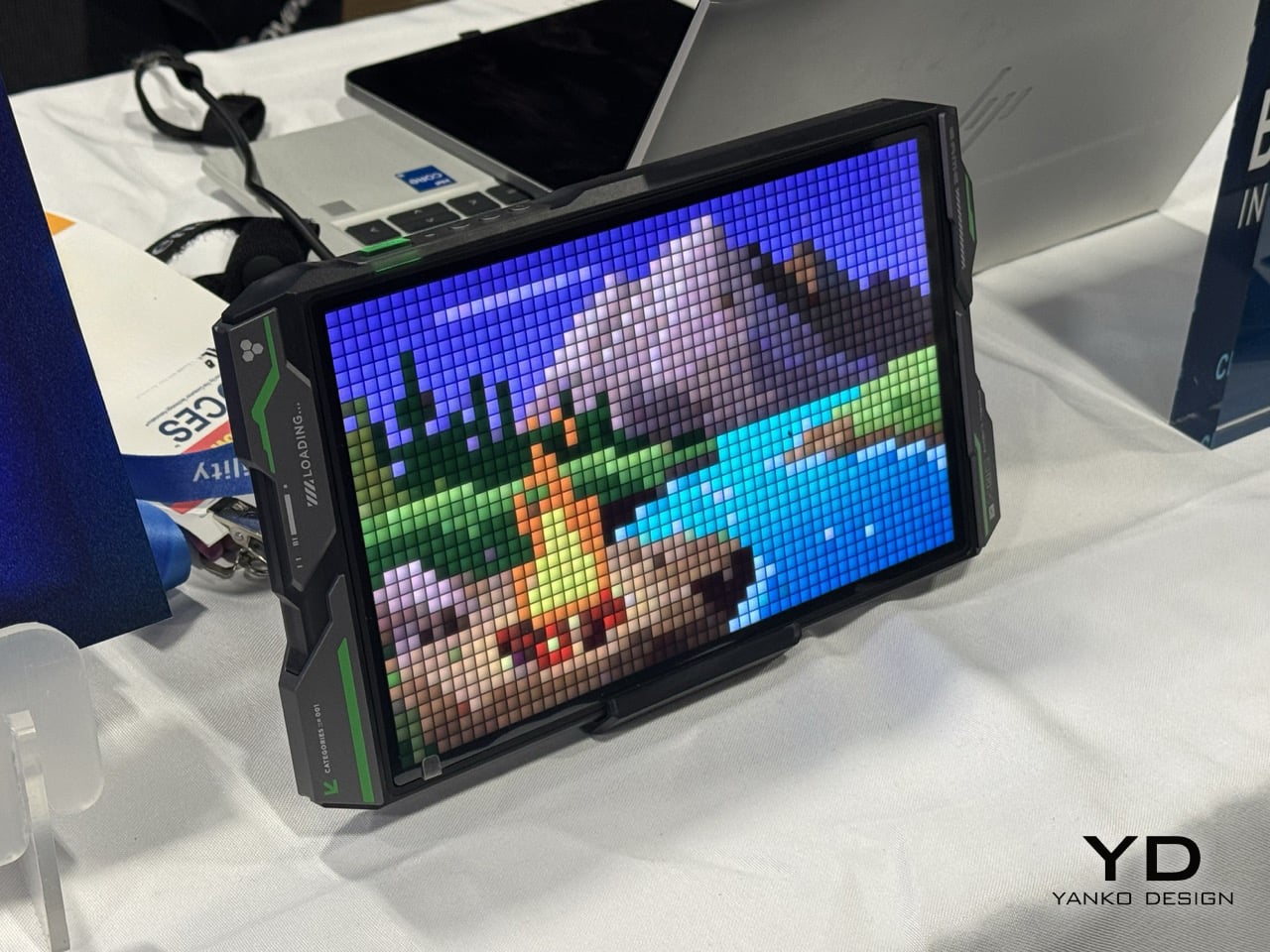
The company is building directly on its major success supplying its waveguide technology to glasses, and proving that geometric waveguides work at consumer scale with standard glass. At CES, Lumus showcased a ZOE prototype with a field of view of more than 70 degrees, an optimized Z-30 with 40% more brightness, and a Z-30 2.0 preview that's 40% thinner. David Goldman, VP of marketing, walked me through each demo with clear enthusiasm about the progress Lumus is making.
Wearables


Gadgets
fromYanko Design - Modern Industrial Design News
1 month ago200-Inch Dolby Vision Gaming With 1ms Latency: Inside The Aetherion 4K RGB Laser UST Projector - Yanko Design
Aetherion is an ultra-short-throw projector offering true VRR (0.1–240Hz), Auto Low Latency, 1ms-class response, and monitor-level gaming features.
Television
fromYanko Design - Modern Industrial Design News
2 months agoLG Collaborated with Museum Curators to Bring the Gallery TV to CES 2026 - Yanko Design
LG's Gallery TV pairs museum-curated Gallery Mode with Alpha 7 MiniLED hardware and Gallery+ content to deliver exhibition-quality art display and challenge The Frame.
fromYanko Design - Modern Industrial Design News
2 months agoI saw Samsung's 130inch Micro RGB easel TV at CES 2026 and now regular screens feel tiny - Yanko Design
A television spanning 130 inches diagonally creates immediate questions about physics, aesthetics, and whether something this massive can exist as anything other than spectacle. Samsung's answer at CES 2026 involves treating the R95H Micro RGB model as architecture rather than appliances, borrowing design language from gallery easels and luxury retail interiors to create what the company describes as an "extra-large window" that transforms room perception.
Gadgets
Gadgets
fromYanko Design - Modern Industrial Design News
1 month agoPlayStation XR Glasses Concept Makes a Strong Case for Gaming-Focused AR Wearables - Yanko Design
PlayStation XR Glasses concept integrates subtle AR with the PS5 ecosystem, extending console experience via wearable virtual screens and familiar controller-like controls.
Gadgets
fromYanko Design - Modern Industrial Design News
2 months agoThis $18,000 Holographic Display Needs No Glasses to See 3D Videos - Yanko Design
Hololuminescent Display (HLD) converts standard 2D videos into naked-eye, razor-thin holographic 3D displays for desktop and large public installations.
fromEngadget
2 months agoInkPoster launches a premium, 41-inch e-paper display for your home
Last year, PocketBook rocked up at CES with a series of large e-paper displays to display art on the walls of your home. This year, the company has turned up with a far larger, A1-sized model called the Duna, which it says mimics the "texture, depth and tonal richness of printed paper." It's intended to act as an upmarket alternative to those big screen TVs which display art when they're not being used for their intended purpose.
Gadgets
Gadgets
fromYanko Design - Modern Industrial Design News
2 months agoRazer's Project AVA Brings Holographic AI Companions to Your Desk - Yanko Design
Razer's Project AVA is a desk holographic AI that projects a 5.5-inch animated avatar which talks, learns habits, shows facial expressions, and syncs lip movement.
Gadgets
fromYanko Design - Modern Industrial Design News
2 months agoForget Brightness Wars, XGIMI's Titan Noir Max at CES 2026 is starting the 'Projector Contrast War' - Yanko Design
The Xgimi Titan Noir Max is a 4K laser projector engineered to deliver deep black levels using a dual iris and 10,000:1 native contrast.
[ Load more ]