Marketing
fromEntrepreneur
1 day agoHow to Price Your Product Like the Last Unit Sets the Market
The highest-cost marginal customer determines market price, not averages; focus on scarcity and the last unit for effective pricing.
Crude oil is a complex mixture of hydrocarbons - molecules made mainly of carbon and hydrogen. Refineries and chemical plants separate and transform these molecules into smaller chemical building blocks known as petrochemicals. Some of the most important petrochemical building blocks include chemicals such as ethylene, propylene and benzene.
In enterprise commerce, totals don't drift because someone forgot algebra. They drift because reality changes: promos expire, eligibility changes when an address arrives, catalog data updates, substitutions happen, and returns unwind prior discounts. When someone asks "why did the total change?" you need more than narration. You need evidence - a trail of facts you can replay and a pure computation that deterministically produces the same result.
At its core, GrainFox really helps producers and agri businesses make clear, more confident grain marketing decisions. Instead of reacting to the hot headlines of the day or relying on that gut feel, they have a structured plan that really helps guide them throughout the whole sales year.
Recent data from The TalentLMS 2026 L&D Benchmark Report reveals a 19-point perception gap on AI learning support. 83% of HR leaders believe they actively support AI learning, but only 64% of employees agree. This extremely polarized viewpoint raises an uncomfortable question: If leaders are this far off on AI skills support, what else might they be misreading about their teams' capabilities?
Whole Foods shelves sit empty after a data breach shut down its wholesale distributor. Meat packers working for JBS Foods are paralyzed as an $11 million ransomware attack takes out their processing facilities. Some 2.2 million workers at Stop & Shop and Hannaford have their personal data exposed as the result of a cyberattack on parent company Ahold Delhaize USA. These scenarios, straight from a William Gibson novel, are becoming increasingly common in supply chains across the world.
If you're a manufacturer with a $10M+ business and your website is "just there," you are losing money to competitors who treat their site like a 24/7 sales rep. If the phone isn't ringing and the inbox is empty of RFQs, it's usually because of these five specific friction points.
You're scrolling through an online retailer, like Amazon, Shein or eBay, and spot a shirt on sale for $40. You add it to your cart, but at checkout, a $10 shipping fee suddenly appears. Frustrated, you close the tab. But what if that same shirt was priced at $50 with free shipping? The likelihood that you would have bought it without a second thought is much higher.
Profit margins at the world's largest luxury goods companies have almost halved in just three years, prompting calls for more disciplined cost management that preserves brand equity while restoring profitability. Research from supply chain consultancy Inverto, part of Boston Consulting Group, shows that the average operating margin across the 20 biggest luxury groups has fallen from 24 per cent in 2022 to 13 per cent today.
As you were browsing something about your browser made us think you were a bot. There are a few reasons this might happen: You've disabled JavaScript in your web browser. You're a power user moving through this website with super-human speed. You've disabled cookies in your web browser. A third-party browser plugin, such as Ghostery or NoScript, is preventing JavaScript from running. Additional information is available in this support article.
The gold rush across the high-end processor market might help Apple's processor manufacturing partner, TSMC, drive harder bargains than in the past. That's because Apple's huge appetite for processors is being met by fast-growing demand for chips for servers. As a result, the cost of the chips used inside Macs, iPads, and iPhones will likely increase, putting even more inflationary pressure on Cupertino's bottom line.
As prices climb, shoppers aren't just spending less-they're spending differently. Nearly half are buying smaller quantities or trading down to lower-cost options, such as canned fruit instead of fresh, according to Capgemini's report, "What matters to today's consumers 2026." It's not about cutting things out entirely-it's about making budgets stretch. Low- and middle-income households are especially deal-focused right now: more coupons, more frequent but smaller trips, and fewer meals out.
AI-driven memory and storage price hikes have been the defining feature of the PC industry in 2026, and hobbyists have been hit the hardest-companies like Apple with lots of buying power have been able to limit the price increases for their PCs, phones, and other gadgets so far, but smaller outfits like Valve and Raspberry Pi haven't been so lucky.
Geoffrey Hinton, the Nobel Prize winning computer scientist who is often referred to as the "Godfather of AI", famously asserted in 2016 that, "People should stop training radiologists now. It's just completely obvious that in five years deep learning is going to do better than radiologists." The logical expectation would be that the number of radiologists should begin to decline over time as they begin to get replaced by AI.
Markup is how much you add to your cost to get your selling price. If something costs $10 and you sell it for $15 , you added $5. That's a 50 percent markup on your cost. Where people get confused is that markup isn't the same as margin, even though the terms get used interchangeably all the time. Margin measures profit as a percentage of the selling price, and markup measures it based on your costs. Same dollar, different percentages.
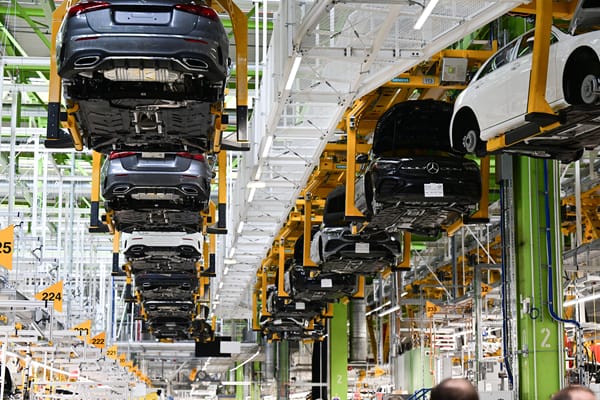
We are now in a time of manufacturing where precision is more than a technical necessity; it's a business requirement. The more complex, globally dispersed and demanding things get, the less slack remains in the system. Under these circumstances tolerance management has become a decisive competence and affects competitiveness not only in terms of controlling costs, ensuring quality and improving production efficiency but also for long term market success.
With the Supreme Court potentially poised to invalidate recent tariffs, organizations face a confusing scenario. Having clear visibility into contract terms - such as price adjustments and renegotiation provisions - is essential to navigating this volatility. Come join us on at 1 p.m. ET on Jan. 27 for this CLE-approved webinar, where we'll discuss the current state of the tariff conundrum and explore strategies for achieving contract visibility with the latest AI innovations.
"The result will be a shortfall of 10 million tons that represents a "systemic risk for global industries, technological advancement and economic growth," the report said."
DRAM contract prices are now expected to rise around 90 to 95 percent quarter-over-quarter. NAND flash similarly sees a huge jump, with expected prices ballooning by 55 to 60 percent compared to Q4 2025. Specifically, PC DRAM prices could more than double even from their elevated positions late last year. This will invariably result in overall price increases across all product categories, though varying in significance depending on component costs.
End-of-line packaging often sits at the quiet end of a production line, yet it carries an outsized responsibility. This is the final checkpoint before products leave your facility, meet customers, and represent your brand in the real world. A single error here can undo hours of upstream efficiency and compromise overall product integrity. That's why building reliability into this stage is essential for both operational efficiency and customer satisfaction.
It's about replacing entire layers of business process management with intelligent systems that route work, make recommendations, and execute decisions autonomously. PEGA builds workflow automation and CRM software specifically designed for this transformation. The company generates $1.73 billion in trailing revenue with a 16.1% profit margin, focusing on AI-driven customer engagement and process automation. Recent quarters show dramatic profitability improvement, with Q1 2025 delivering $85.4 million in net income after the company posted losses in 2022.
We're living in a token economy. Each piece of content -- words, images, sounds, etc. -- is treated by an AI model as an atomic unit of work called a token. When you type into a prompt in ChatGPT, and you receive a paragraph in response, or you call an API to do the same thing inside an app you've built, both the input and the output data are counted as tokens. As a result, the meter is always running when you use AI, racking up costs per token, and the total bill is set to go higher in aggregate.