#privacy-gdpr-ccpa
#privacy-gdpr-ccpa
[ follow ]
#privacy #cybersecurity #data-privacy #data-breach #data-brokers #data-protection #cookies #surveillance #ai





#ai
Higher education
fromInside Higher Ed | Higher Education News, Events and Jobs
1 day agoWhat to Know About AI and Campus Mental Health (opinion)
Students increasingly rely on AI for mental health support, raising concerns about its effectiveness and safety.





#data-breach
Privacy professionals
fromSilicon Canals
1 day agoA fintech app asked users for their passports - then left 360,000 files unprotected for five years - Silicon Canals
A money transfer app exposed over 360,000 sensitive files on a public server for nearly five years, including unencrypted personal documents.


fromComputerworld
1 day agoA core infrastructure engineer pleads guilty to federal charges in insider attack
Rhyne's attack involved unauthorized remote desktop sessions, deletion of network administrator accounts, and changing of passwords, showcasing significant security vulnerabilities.
Information security
Privacy professionals
fromSilicon Canals
2 days agoA money-transfer app stored customer passports on an unencrypted, publicly accessible server for nearly five years - Silicon Canals
Fintech companies face regulatory pressure to collect identity documents but lack enforceable obligations to protect them, leading to data breaches.
Marketing tech
fromMarTech
1 month agoThe 5 trends reshaping identity resolution in 2026 | MarTech
Identity resolution platforms have become foundational marketing infrastructure as 54% of mobile and 36% of desktop impressions lack identifiers, making data clean rooms essential for secure cross-channel customer data collaboration.
#online-privacy
Privacy professionals
fromwww.bbc.com
1 month agoWe have more privacy controls yet less privacy than ever
Young people increasingly view online privacy as inevitable loss rather than a right, accepting data sharing as currency for digital services while older privacy advocates warn this threatens fundamental freedoms.
Information security
fromBusiness Matters
1 month ago7 Data Privacy Risks Leaders Miss in 2026
Organizations overlook seven critical privacy risks in 2026 that bypass security awareness, including public WiFi interception, malicious browser extensions, shadow AI tools, unencrypted messaging, credential reuse, unmanaged personal devices, and data retention gaps.
Privacy professionals
fromMedCity News
2 weeks agoThe Evolving Landscape of Privacy and Cybersecurity: Essential Strategies for Legal and Compliance Professionals - MedCity News
Organizations must combine strong controls with comprehensive employee training and accountability culture to effectively protect sensitive data and comply with evolving privacy laws.
Privacy professionals
fromTheregister
2 weeks agoAge verification isn't sage verification inside OSes
California's Digital Age Assurance Act attempts age verification for minors but is vague, incoherent, and creates liability risks without clearly defining compliance requirements or addressing practical implementation across diverse computing devices.
fromEntrepreneur
2 months agoWhy Protecting Your AI Data Should Be a Top Priority
The breakneck pace of AI deployment across enterprises is creating a monumental challenge for executives and company boards. In contrast to traditional IT systems, AI data and related ecosystems, which encompass everything from LLM models and training data to custom prompt data, have emerged as valuable intellectual property. They often represent millions of dollars in investment and months or even years of engineering effort.
Artificial intelligence

fromExchangewire
1 month agoAxeptio Launches Global Privacy Control (GPC) Support to Strengthen Compliance with US Privacy Regulations
Global Privacy Control is a browser-level signal that allows users to express-prior to any interaction with a website-their decision to opt out of the sale or sharing of their personal data. To meet these evolving legal requirements, Axeptio now integrates GPC signal detection and processing through a new feature available for projects using a CCPA banner, a prerequisite for remaining compliant in the United States.
Privacy technologies
EU data protection
fromComputerWeekly.com
1 month agoEurope's data protection supervisors warn over plans to 'narrow' privacy rights | Computer Weekly
Narrowing the definition of personal data in EU reforms risks eroding privacy rights, creating legal uncertainty, and weakening protections against automated decision-making.


Privacy technologies
fromThemarkup
2 months agoHow Californians can use a new state website to block hundreds of data brokers - The Markup
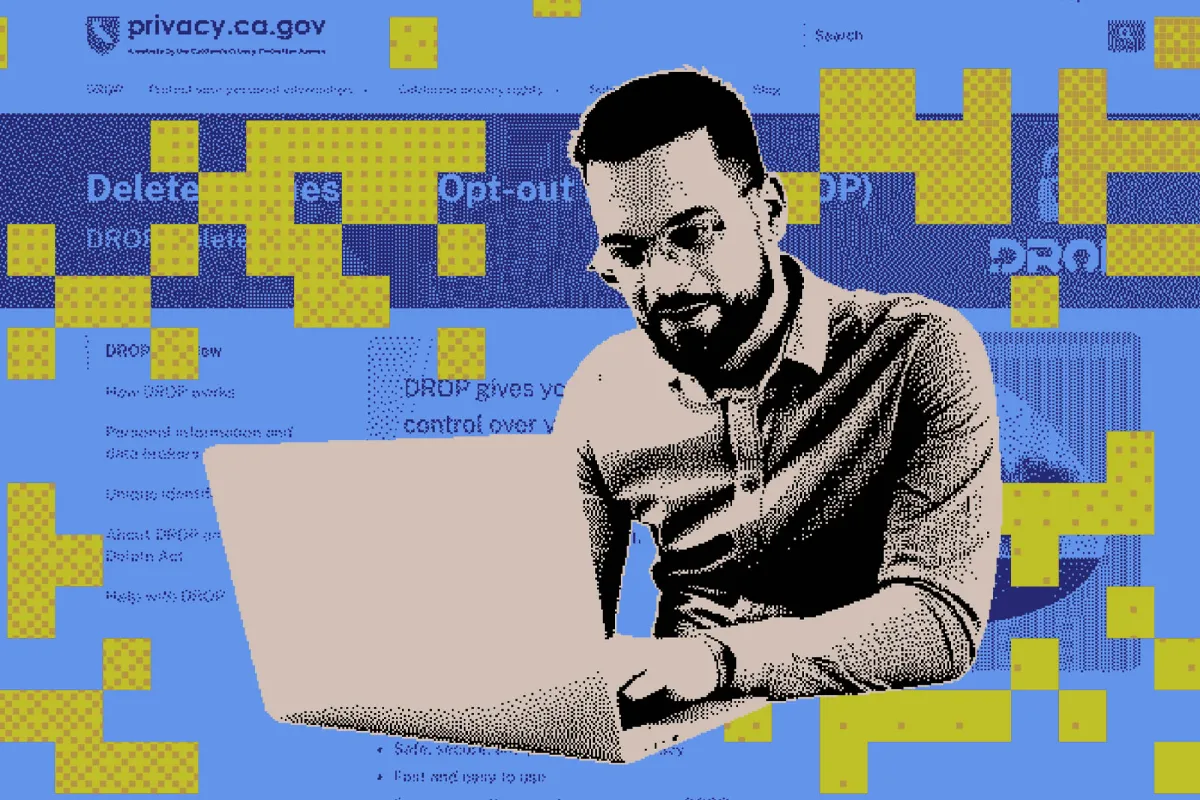
California launched DROP to let residents send delete and opt-out requests to all registered data brokers at once, simplifying the process and strengthening privacy control.
fromCoindesk
2 months agoPrivacy
This Privacy Notice applies to all personal information processed by CoinDesk, including its affiliates and subsidiaries (" CoinDesk," " we," " us," or " our "). It covers the information CoinDesk collects through the websites, mobile applications, electronic devices, all other products and services we provide, any other services that display this Privacy Notice, all of the associated content, functionalities, and advertising, and when you communicate with us by phone, email, or otherwise (collectively, the " Services ").
Privacy professionals
Privacy professionals
fromLocal News Matters
2 months agoOpting out: How Californians can use state's new tool to block hundreds of data brokers - Local News Matters
California launched DROP, a platform that lets residents send deletion and opt-out requests to all registered data brokers at once, starting January 1, 2026.

fromAdExchanger
2 months agoDon't Let These Privacy Shifts Blindside You In 2026 | AdExchanger
Last year, Google decided not to deprecate third-party cookies in Chrome after all. This year, Google decided to jettison its backup plan and not even launch a planned choice prompt for cookies in its browser. By October, the Privacy Sandbox was all but kaput. The UK's Competition and Markets Authority released Google from its Privacy Sandbox commitments and - Psych. I'm done writing about third-party cookie deprecation, guys. Let's move on, fur real.
Privacy professionals
fromThe Cyber Express
2 months agoData Privacy Week 2026 Interview: Why Verification Matters
Ad fraud isn't just a marketing problem anymore - it's a full-scale threat to the trust that powers the digital economy. In 2024 alone, fraud in mobile advertising jumped 21%, while programmatic ad fraud drained nearly $50 billion from the industry. During data privacy week 2026, these numbers serve as a reminder that ad fraud is not only about wasted budgets - it's also about how consumer data moves, gets tracked, and sometimes misused across complex ecosystems.
Privacy professionals
fromoregonlive
1 month agoYour personal data is being sold right now. Here's what you can do
Oregon allows consumers to opt out when companies collect and sell personal details gained in online transactions or simply when people log on to a website or use an app. Under the Oregon Consumer Privacy Act, residents can see what data companies keep about them, request corrections or deletion and opt out of data sales, targeted advertising and certain types of profiling. Businesses must also disclose their data practices and obtain consent before collecting sensitive information such as precise location, biometric or some health data.
Privacy professionals
Privacy professionals
fromPrivacy International
2 months agoA Call for Class Action: how people are reclaiming control over their health data
Class actions in the US are increasingly used to hold companies accountable for exploiting highly valuable health data, creating financial incentives to change corporate behavior.
[ Load more ]