Information security
fromTechzine Global
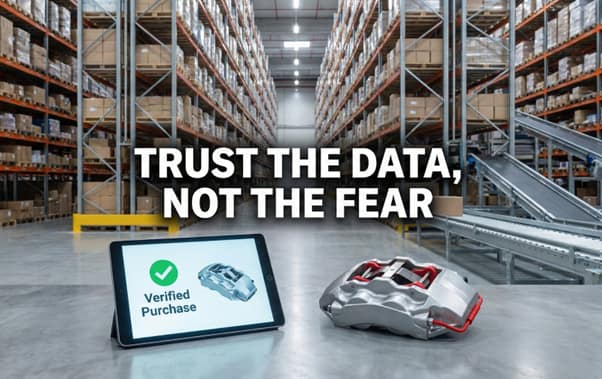
2 days agoBlind trust in hardware vendors is always a bad idea
Attackers are increasingly targeting hardware and firmware vulnerabilities as traditional security tools focus primarily on software layers.
The convenience of sourcing online is fraught with more pitfalls than most of us want to admit. Try finding adequate photos of a vintage piece's condition-close-ups of the fabric, video of damaged areas, any images of a piece's rear or underside!
What we want to do is make sure that CIOs are fully empowered to be there at the beginning of conversations, that they are part of the formulation of budget and policy from liftoff.
The mail will stop if the agency can't meet its obligations. That includes critical deliveries like prescription drug packages. Postmaster General David Steiner warned lawmakers this week that USPS could run out of cash in less than 12 months without congressional action.
Recent data from The TalentLMS 2026 L&D Benchmark Report reveals a 19-point perception gap on AI learning support. 83% of HR leaders believe they actively support AI learning, but only 64% of employees agree. This extremely polarized viewpoint raises an uncomfortable question: If leaders are this far off on AI skills support, what else might they be misreading about their teams' capabilities?
Nine in ten retailers globally are planning to raise their spending on artificial intelligence (AI) to optimise their e-commerce operations over the next 12 to 24 months, with online delivery execution a key area of focus. A total of 38% of European retailers identify speed, tracking and proactive communication around the delivery process as areas where AI can deliver the greatest impact.
Whole Foods shelves sit empty after a data breach shut down its wholesale distributor. Meat packers working for JBS Foods are paralyzed as an $11 million ransomware attack takes out their processing facilities. Some 2.2 million workers at Stop & Shop and Hannaford have their personal data exposed as the result of a cyberattack on parent company Ahold Delhaize USA. These scenarios, straight from a William Gibson novel, are becoming increasingly common in supply chains across the world.
If you're a manufacturer with a $10M+ business and your website is "just there," you are losing money to competitors who treat their site like a 24/7 sales rep. If the phone isn't ringing and the inbox is empty of RFQs, it's usually because of these five specific friction points.
You're scrolling through an online retailer, like Amazon, Shein or eBay, and spot a shirt on sale for $40. You add it to your cart, but at checkout, a $10 shipping fee suddenly appears. Frustrated, you close the tab. But what if that same shirt was priced at $50 with free shipping? The likelihood that you would have bought it without a second thought is much higher.
"Ironically, many if not most of these 'sustainability' projects remain disassociated from companies' core procurement strategies, meaning the coffee produced from these projects is not necessarily bought by the companies involved, or only in minimal quantities," the paper states. "And for the coffee that is purchased, prices do not factor into the project design, despite the fact that price is the single variable impacting farmer income that is in the direct control of companies."
Understanding the difference in purpose Unlike private businesses, which exist to make a profit, public institutions are designed to create impact - especially social and economic outcomes that benefit everyone, not just paying customers. A public agency doesn't measure its success in revenue or margins, but in how much it improves lives, builds equity and maintains public trust. This doesn't mean budgets and spending don't matter - they absolutely do - but money is not the goal. It's the tool.
With the Supreme Court potentially poised to invalidate recent tariffs, organizations face a confusing scenario. Having clear visibility into contract terms - such as price adjustments and renegotiation provisions - is essential to navigating this volatility. Come join us on at 1 p.m. ET on Jan. 27 for this CLE-approved webinar, where we'll discuss the current state of the tariff conundrum and explore strategies for achieving contract visibility with the latest AI innovations.
Efficient business practices boost bottom lines, and finding the right balance begins with using the right productivity software tools. For entrepreneurs and small-business owners, time spent searching or navigating different tools could be better spent growing your company. Having the right productivity software in place isn't just convenient, it's essential for operational efficiency. The challenge many entrepreneurs face is balancing software costs with functionality.
GSA also wants information on factors that drive the range of markups such as volume, product category, support levels and business size. The questions also wants to know if sourcing hardware through a distributor versus directly with the OEM drives variations in the markups. GSA wants to identify ways to reduce the cost on items that are not purchased directly from OEMs.
Given that ParkerBrand had allocated greater resources to paid media, higher performance objectives were set for 2019. Overall, the goal was to grow revenue rapidly over a short period of time whilst maintaining the return on ad spend (ROAS) to remain profitable. This translated into the following objectives: Achieve a minimum of 10:1 ROAS "Grow revenue as much as possible" from a year-on-year perspective
We are now in a time of manufacturing where precision is more than a technical necessity; it's a business requirement. The more complex, globally dispersed and demanding things get, the less slack remains in the system. Under these circumstances tolerance management has become a decisive competence and affects competitiveness not only in terms of controlling costs, ensuring quality and improving production efficiency but also for long term market success.
Most businesses, which includes modern ones, invest heavily in technology, but they rarely plan for its eventual and inevitable exit strategy. Generally speaking, companies spend millions on the latest hardware while overlooking the critical phase when those assets reach their end. This lack of planning creates a massive gap in the operational lifecycle of many otherwise successful global organizations. Decisions made at the end of a device's life carry real business risks that can impact the bottom line financially and environmentally speaking.
Costco was founded in the 1980s, and it's been changing shoppers' lives ever since. Every day, millions of Americans flock to the warehouse chain to take advantage of its low prices, free samples, range of goods, and, of course, its food court. This warehouse store is so beloved, it even has its own league of superfans: There are actually people out there with Costco tattoos. One even has Kirkland Signature inked on his arm.
Your AI pilot showed 94% accuracy improvements. The LLM is yielding solid results. You're getting defunded anyway. The reason? You solved a problem AI can solve. Your budget-holder needed you to solve theirs. Companies launch AI pilots that produce results, then stall at scale. The team's diagnosis: "They don't get it." What's really going on: These projects never earned budget-holder buy-in.
The technology underpinning retail operations is under scrutiny in 2026 as fashion executives look to streamline systems with the aim to unlock efficiency, cut costs and meet consumer expectations for speed and personalisation in the shopping journey. At the retail event Lightspeed Edge on 12 January, Lightspeed - the unified point-of-sale (POS) and payments platform for SMEs such as Apricot Lane Boutique and Neal's Yard Remedies - convened industry leaders to explore the strategic imperative for integrated technology ecosystems over siloed systems.
Americans are likely to have spent a record $1 trillion-plus this holiday shopping season alone, and about $5.5 trillion in retail sales in all of 2025, according to estimates by the National Retail Federation. That includes many unhappy returns for retailers: And when it comes back to them, a lot of the $850 billion in returned merchandise is often cheaper to discard than to inspect, sort, and resell-adding millions of tons to landfills every year.
Markup is how much you add to your cost to get your selling price. If something costs $10 and you sell it for $15 , you added $5. That's a 50 percent markup on your cost. Where people get confused is that markup isn't the same as margin, even though the terms get used interchangeably all the time. Margin measures profit as a percentage of the selling price, and markup measures it based on your costs. Same dollar, different percentages.
Statistics from the 2025 holiday shopping season clearly show that AI is playing a huge role in how people shop. But new research from retail payment platform Adyen found that many consumers are ready for AI to become their personal shopper. Just over half-51%-said they're open to letting AI take over the entire shopping process, including making final purchases. Millennials are the most willing to let agents do their shopping, with nearly three in five saying they are ready for such a shift.
After spending a large part of 2025 with its back to the wall, Target is intent on turning things around. The retail giant is heading into 2026 led by a new CEO who has ambitious plans, driven by a sharp focus on three areas: style and design, elevated customer experience, and better use of technology to improve speed and efficiency through the business.