#product-provenance
#product-provenance
[ follow ]
#sustainability #sustainable-fashion #environmental-impact #consumer-behavior #sustainable-design #upcycling

Fashion & style
fromdesignboom | architecture & design magazine
2 days agocollagen from dinosaur shapes the designer handbag made with lab-grown leather
Enfin Levé introduces a handbag made from lab-grown T-Rex leather, utilizing collagen from fossilized dinosaur bones, showcased at Art Zoo Museum in Amsterdam.
fromArchitectural Digest
3 days agoI'm Done Sourcing So Much Online. Here's Why
The convenience of sourcing online is fraught with more pitfalls than most of us want to admit. Try finding adequate photos of a vintage piece's condition-close-ups of the fabric, video of damaged areas, any images of a piece's rear or underside!
UX design
Coffee
fromDaily Coffee News by Roast Magazine
5 days agoMajor Traders Agree on Two 'Principles of Procurement' to Improve Coffee Sector Sustainability
Major coffee traders and roasters have established principles to enhance the economic viability of coffee farmers through strategic partnerships and sustainable production support.
#sustainability


Artificial intelligence
fromFast Company
1 week agoSustainability is dead-long live purpose
Sustainability has been deprioritized, while purpose remains essential for long-term business success amidst the rise of AI.
fromDaily Coffee News by Roast Magazine
1 week agoOnline Community Development
Study: Social Enterprises Beat Corporate Sustainability in Farmer Well-Being
Social enterprises significantly enhance farmer well-being compared to traditional corporate sustainability programs and cooperatives in the coffee and cocoa sectors.
Online Community Development
fromDaily Coffee News by Roast Magazine
1 week agoStudy: Social Enterprises Beat Corporate Sustainability in Farmer Well-Being
Social enterprises significantly enhance farmer well-being compared to traditional corporate sustainability programs and cooperatives in the coffee and cocoa sectors.
fromwww.architecturaldigest.com
2 weeks agoNon-Toxic Paint 101: A Designer-Approved Guide
Even long after the tell-tale odor of new paint has vanished, traditional paint can off-gas for months, releasing volatile organic compounds (VOCs) that have been linked to organ and nervous system damage, cancer, and infertility.
Remodel
Everyday cooking
fromTasting Table
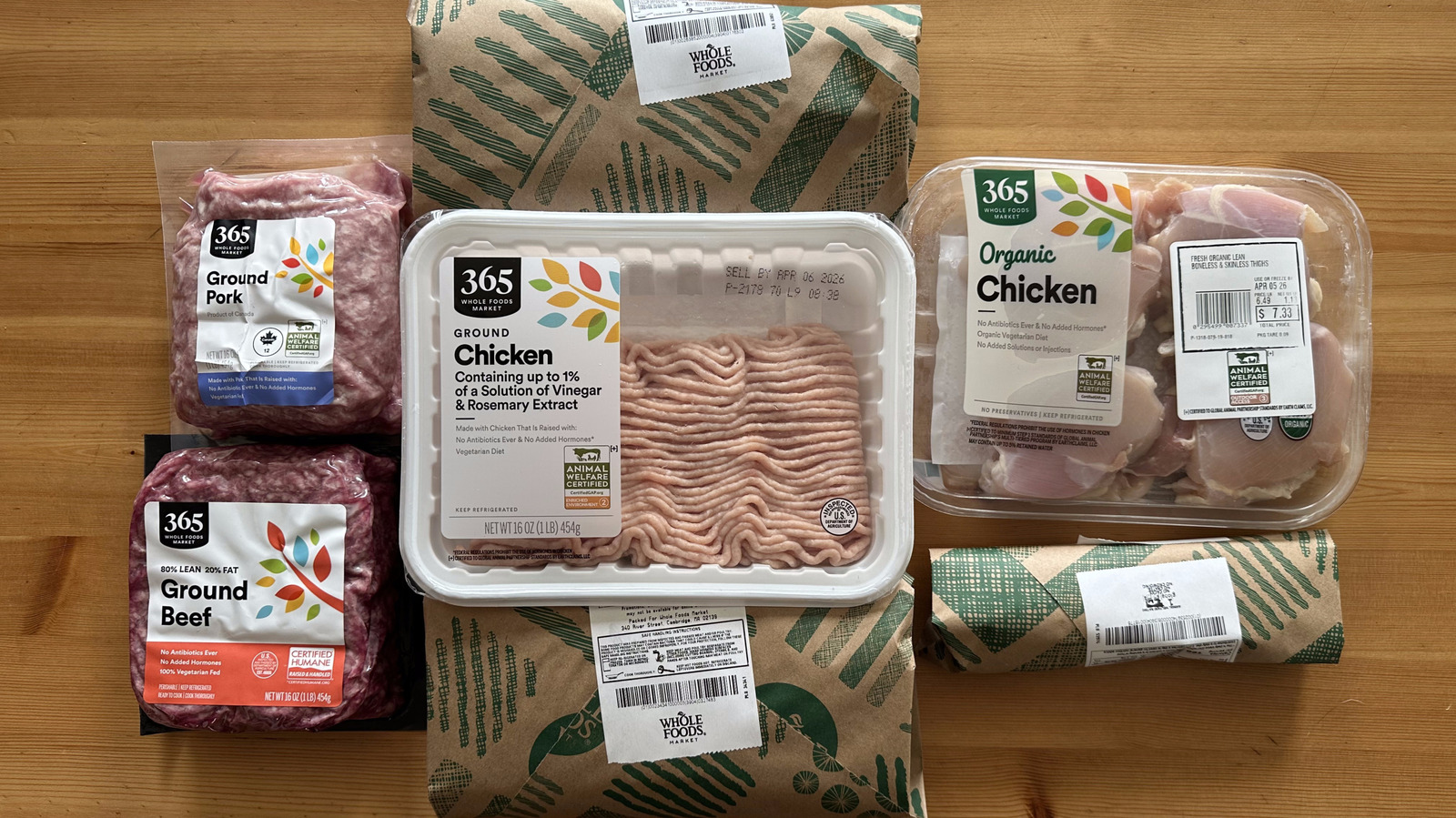
3 weeks agoWhy You'll Probably Want To Avoid This Popular Type Of Meat At The Grocery Store - Tasting Table
Pre-marinated packaged meats compromise texture and contain excessive sodium and phosphates, making homemade marinades a healthier alternative despite requiring more time.
fromMedium
1 month agoFolding in Traceability
In enterprise commerce, totals don't drift because someone forgot algebra. They drift because reality changes: promos expire, eligibility changes when an address arrives, catalog data updates, substitutions happen, and returns unwind prior discounts. When someone asks "why did the total change?" you need more than narration. You need evidence - a trail of facts you can replay and a pure computation that deterministically produces the same result.
Scala
Marketing tech
fromAol
3 weeks agoGrove Collaborative (GROV) Earnings Transcript
Grove Collaborative experienced significant 2025 churn from e-commerce platform disruptions, with DTC orders down 25% and active customers declining 13%, positioning 2026 as a rebuilding year focused on retention and momentum recovery.
Fashion & style
fromEntrepreneur
2 weeks agoYour 'Organic' TShirt Still Hurts the Planet More Than You Think
Organic and sustainable fashion brands undermine their environmental messaging by packaging products in excessive single-use plastic, contradicting their eco-friendly positioning and contributing significantly to global plastic waste.
fromMindful
3 weeks agoClothing Designer Eileen Fisher Models Mindfulness
Despite having to haul a dozen dumpster-loads of damaged goods out of the offices and the nearby Lab Store, to the tune of $1.5 million, Eileen said at the time, 'It was just stuff.' You can only imagine the emotions that might arise in a chief executive if they saw their sewage-soaked products floating by. Eileen and her staff did not linger there. They mobilized quickly-organizing carpools, impromptu meeting spaces, and arranging interest-free loans for staff needing cash during the crisis.
Women
Marketing
fromMuse by Clios | Discover the latest creative marketing and advertising news. Muse by Clio is the premier news site covering creativity in advertising and beyond.
1 week agoWhy Being Good, Fast and Cheap Is the Most Radical Thing a Brand Can Do | Muse by Clios
Brands must earn attention by creating engaging content rather than relying on loud, manipulative advertising tactics.
Social media marketing
fromPR Daily
3 weeks ago6 steps for creating GEO friendly social posts - PR Daily
Social media managers must optimize content structure with frontloaded questions, lists, and clear formatting to improve discoverability in AI-driven search and recommendation systems across platforms.
#sustainable-fashion



Fashion & style
fromEarth911
2 weeks ago11 Sustainable Men's Clothing Brands for Spring & Summer Style
Clothing production consumes massive water resources and generates significant carbon emissions, but sustainable brands using organic, recycled fibers and repair services offer viable alternatives to fast fashion's environmental damage.
Fashion & style
fromBusiness Matters
3 weeks agoWhy Sustainable Fashion is More Than Just a Trend: Clothing, Bags, and Accessories for a Better Future
Sustainable fashion has moved from niche to mainstream as consumers increasingly demand transparency about production, labor practices, and environmental impact of clothing and accessories.
fromFast Company
2 weeks agoWhy some brands are choosing slower, more expensive growth on purpose
"Instead of starting with a product that we didn't feel like existed in the marketplace, we started with a mission that we felt like didn't exist, particularly in the beauty space," Cohen said. "We love that young people are turning to brands for not just products, but for the issues that they care about-and also that's what holds us accountable."
Marketing
Fashion & style
fromEntrepreneur
2 weeks agoYoung Entrepreneurs Are Building Businesses Around 'Grandma Hobbies' and Demand Is Surging
Millennials and Gen Z entrepreneurs are building thriving businesses around analog hobbies like needlepoint, mahjong, and blacksmithing as an antidote to screen fatigue and digital burnout.
Relationships
fromwww.theguardian.com
1 month agoThe greenest flags: virtue signals that help you find love from patchwork clothes to car sharing
Environmental consciousness has become a significant dating criterion, with 80% of Gen Z considering shared eco-values as important as physical compatibility in potential partners.
Food & drink
fromFuturism
4 weeks agoChocolate Company Announces Plans to Produce Lab-Grown Cocoa
Lab-cultured chocolate technology offers an alternative to traditional cocoa farming, potentially disrupting a supply chain unchanged since the 1800s while addressing consumer concerns about additives and exploitation.
Fashion & style
fromFast Company
3 weeks agoTrader Joe's is bringing back its viral mini tote bags. Here's when to start looking
Trader Joe's canvas tote bags are returning in spring 2024 with new sizes and colors, including large bags with lavender handles and mini bags in pastel shades, expected in stores by mid-March.
fromThe Walrus
1 month agoThrifting Was about Frugality. How Did It Become All about Profit? | The Walrus
"I 'm the most hated man in town," Ray McKelvie told me. The town in question was Clinton, British Columbia, approximately 350 kilometres northeast of Vancouver, on Highway 97. Later, I asked another Clinton resident whether McKelvie's claim was true. She thought for a moment. "Well, there's Joe, who lives in the trailer park," she said. "We don't like him much either. But it's about even."
Miscellaneous


Design
fromdesignboom | architecture & design magazine
2 months agowearable collection repurposes leftover leather powder as translucent composite material
OBRO converts leather manufacturing offcuts into semi-transparent PVC composite by embedding finely ground leather powder to create visually layered, tactile, durable sheets.
fromColossal
1 month agoIn Collaboration with Indigenous Artisans Around the World, PET Lamp Emphasizes Sustainability
Tons upon tons of these single-use plastics end up in landfills or even floating in the ocean. Spanish design firm PET Lamp set out give another purpose to these otherwise short-lived materials. Partnering with artisans in communities from Chile to Ethiopia to Australia, the company celebrates both Indigeneity and sustainability, drawing upon time-honored global craft traditions while supporting local economies and recycling discarded materials.
Arts
fromwww.npr.org
2 months agoPolyester clothing has been causing a stir online. But how valid are the concerns?
Your eyes don't deceive you. The use of polyester has ballooned with time, according to Henry Navarro Delgado, an associate professor at Toronto Metropolitan University's school of fashion. It's partly because polyester can be quite useful, he said. It is a type of plastic made from petroleum compounds that are cooled and stretched into yarn, according to Michael Palladino, a fashion industry veteran and lecturer at Kingsborough Community College's business of fashion program in New York.
US news
Information security
fromTechCrunch
1 month agoFormer Tesla product manager wants to make luxury goods impossible to fake, starting with a chip | TechCrunch
A solution combining hack-proof chips and digital certificates uses integrated hardware and software to authenticate luxury goods and protect brands and buyers.
fromFast Company
2 months agoThis startup helps enterprising resellers prevent nearly a million pounds of returns from ending up in landfills
Americans are likely to have spent a record $1 trillion-plus this holiday shopping season alone, and about $5.5 trillion in retail sales in all of 2025, according to estimates by the National Retail Federation. That includes many unhappy returns for retailers: And when it comes back to them, a lot of the $850 billion in returned merchandise is often cheaper to discard than to inspect, sort, and resell-adding millions of tons to landfills every year.
E-Commerce
Environment
fromGlobal IP & Technology Law Blog
1 month agoGreenhushing: The Indirect Consequence of the Crackdown on Greenwashing?
Regulators increasingly enforce against vague or unsubstantiated environmental claims; advertisers must provide clear, high-level substantiation for "green" or "sustainable" statements.
fromYanko Design - Modern Industrial Design News
2 months agoThe Case for Heirloom Furniture in an Era Obsessed With Biodegradable Everything - Yanko Design
Furniture made from mycelium or algae can decompose in five years, sure, but a well-made antique armoire outlives empires because no one throws it away. Columns takes that logic seriously. Handcrafted in solid oak, natural leather, and horsehair, the pieces are built to last a thousand years, which sounds like marketing hyperbole until you look at the joinery, the hand stitching, and the material choices. This is furniture designed to be inherited, repaired, and remembered.
Design
fromDaily Coffee News by Roast Magazine
1 month agoReport: Sustainability Must Be Embedded Into Core Buying Practices to Drive Change
"Ironically, many if not most of these 'sustainability' projects remain disassociated from companies' core procurement strategies, meaning the coffee produced from these projects is not necessarily bought by the companies involved, or only in minimal quantities," the paper states. "And for the coffee that is purchased, prices do not factor into the project design, despite the fact that price is the single variable impacting farmer income that is in the direct control of companies."
Coffee
fromCN Traveller
1 month agoThe best farm shops in Cornwall that take pride in provenance
Long before they became destination stops, farm shops were practical lifelines in Cornwall; places where farming families sold what they reared, grew or made, and where local communities stocked their pantries. In a county shaped by smallholdings, dairy herds and mixed farms, the connection between land and table has always been close - and still, today, hyper-local food is something Cornwall does exceptionally well.
Food & drink
fromEarth911
2 months agoGuest Idea: 7 Solutions to Give Your Old Sunglasses a Second Life
Just like that coffee cup, eyewear is a complex fusion of materials. Metal hinges are screwed into polymer frames, which hold chemically-coated lenses. This mix of metals, plastics, and coatings means standard sorting machines cannot process them. As a result, they are rejected as contamination and sent directly to landfills, where they contribute to non-biodegradable waste. Unlike a disposable paper cup, however, a pair of sunglasses is built for durability. Its high-quality components make it a perfect candidate for repair, reuse, or reinvention.
Environment
fromDocumentjournal
1 month agoOnce upon a time, fashion got dirty
In the show, "dirty" extends to anything that breaks fashion's pact with propriety. Here are clothes caked in grime, blotted with makeup, stiffened by salt, pieced from trash, frayed, and faded. The garments span decades, from the 1980s through the mid-2000s, when the likes of Vivienne Westwood and Jean Paul Gaultier built their fame on defying convention, to today, when corporatization has made such daring increasingly rare. But forgoing practicality frees certain designers from the demands that the body be polite-and thereby policed.
Fashion & style
Fashion & style
fromwww.theguardian.com
2 months agoHunt, scroll, strike gold: the best clothes and accessories to buy secondhand and where to find them
Secondhand shopping delivers unique, affordable, and eco-friendly fashion finds—especially leather jackets, designer pieces, and high-street bargains—when buyers know where and how to shop.
[ Load more ]