#pslv-c61
#pslv-c61
[ follow ]
#spacex #starlink #orbital-data-centers #blue-origin #space-technology #satellites #ai-infrastructure #starship


fromTNW | Startups-Technology
1 week agoPAVE Space raises $40M to build orbital transfer vehicles
PAVE Space is building a fleet of orbital transfer vehicles designed to complete the journey from launch orbit to working orbit in under 24 hours, addressing the inefficiencies in satellite deployment.
European startups
fromLos Angeles Times
2 weeks agoSpaceX launch tonight: When to scan the sky
SpaceX's Falcon 9 is set to launch 25 Starlink satellites from Vandenberg Space Force Base to low-Earth orbit at 10:16 p.m. Monday, according to a post by the company. The launch will stream live on SpaceX's website and X account, starting five minutes before launch time.
Silicon Valley


Venture
fromTechCrunch
3 weeks agoThis SpaceX veteran says the next big thing in space is satellites that return to Earth | TechCrunch
Lux Aeterna develops reusable satellites with integrated heat shields enabling payload return to Earth, securing $10 million seed funding for 2027 demonstration mission.
OMG science
fromFuturism
1 month agoMysterious Chinese Space Plane Conducting Unknown Mission in Orbit
The U.S. Air Force's X-37B and China's Shendong space planes conduct secretive orbital missions with unclear military and space capabilities, both demonstrating advanced reusable spacecraft technology.
from24/7 Wall St.
1 month agoThe Space Infrastructure Builder Stumbles While the Launch Provider Burns Through Cash Faster
Redwire focuses on space infrastructure and autonomous systems. The company completed its Edge Autonomy acquisition and reported 50.7% year-over-year revenue growth. Management maintained full-year guidance of $320 to $340 million, and the book-to-bill ratio of 1.25 suggests demand is holding. But the business is bleeding cash with a net loss of $41.2 million in Q3, nearly double the $21 million loss from the prior year. Gross margin sits at just 16.3%, leaving almost no room for error.
Startup companies
Business
from24/7 Wall St.
2 months agoSatellite Infrastructure Stocks Surge as Orbital Economy Expands Beyond SpaceX's Shadow
Investors can access orbital-economy growth through public infrastructure plays like satellite IoT, emergency communications, lunar delivery, and small-launch services rather than SpaceX.


fromTheregister
2 months agoIndia's flagship rocket fails for the second time in a row
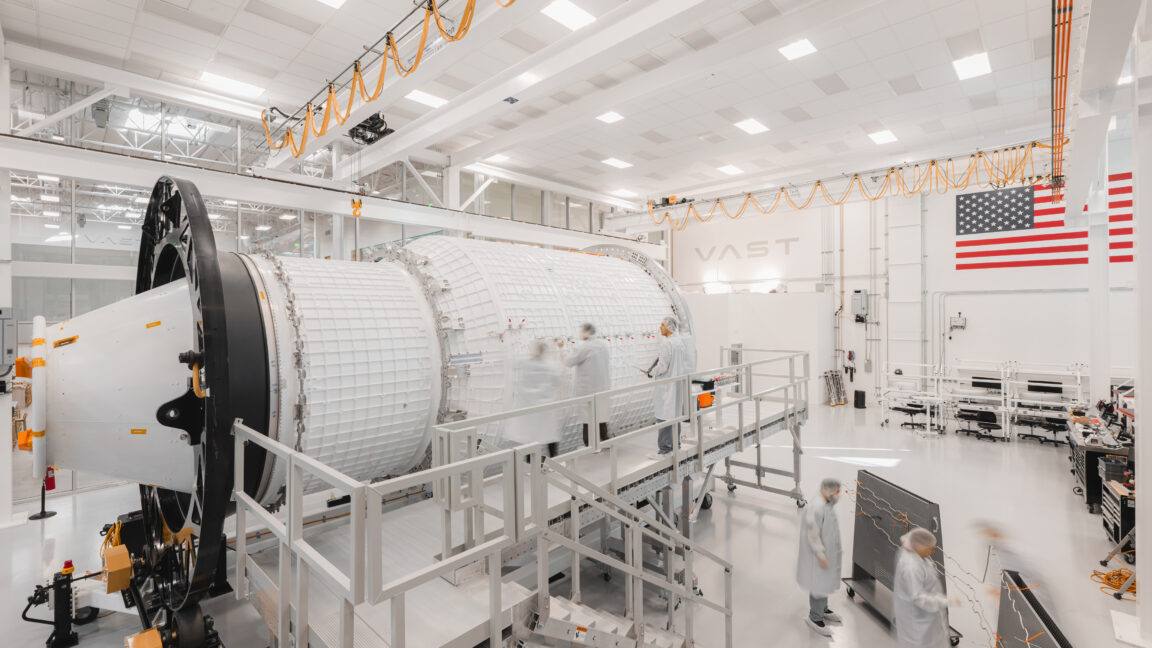
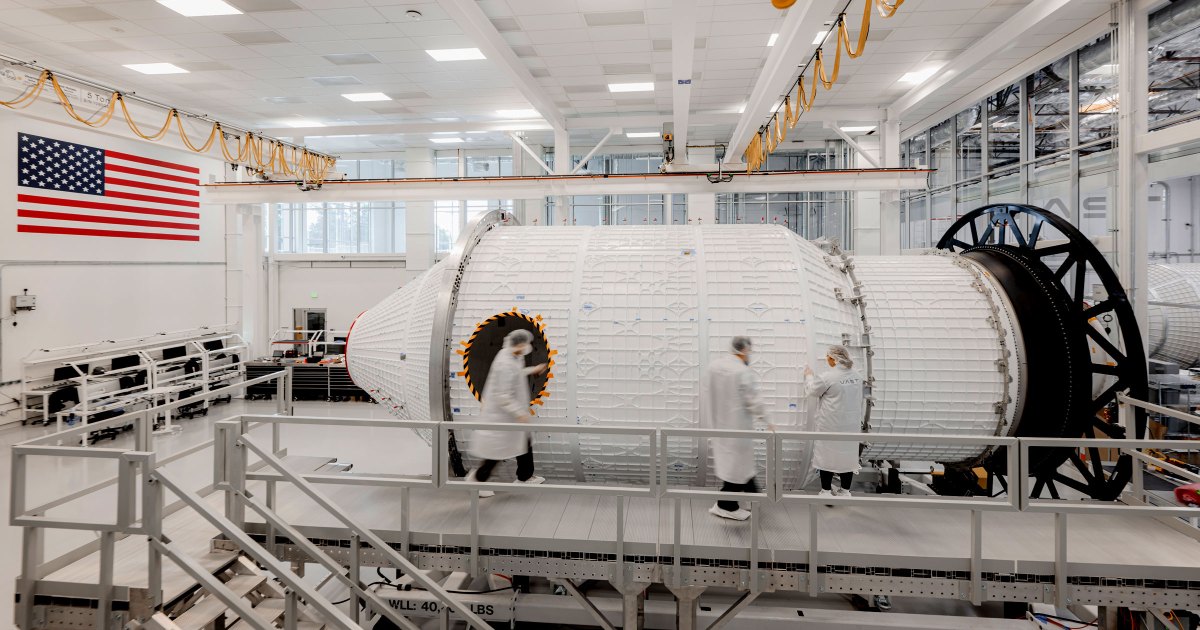
The PSLV - aka the Polar Satellite Launch Vehicle - is an expendable medium launch rocket that India devised and has flown since 1993. ISRO has launched 64 of the rockets and chalked up 58 successes. This mission, PSLV-C62 / EOS-N1, employed the PSLV-DL variant of the rocket, which uses a pair of external boosters. Other PSLV variants use four or six external boosters. The mission was a commercial affair, with 15 payloads aboard.
Science
fromArs Technica
1 month agoRocket Report: Chinese launch firm raises big money; Falcon 9 back to the Bahamas
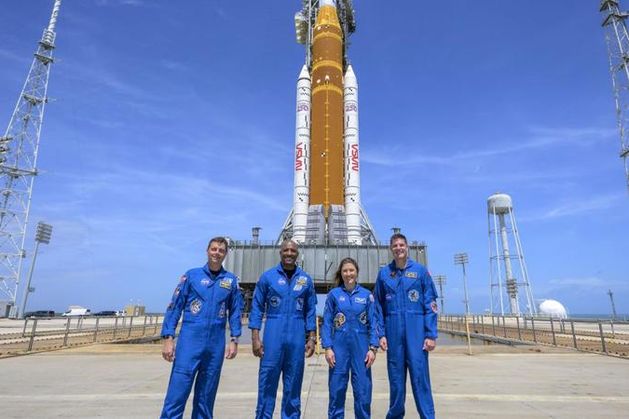
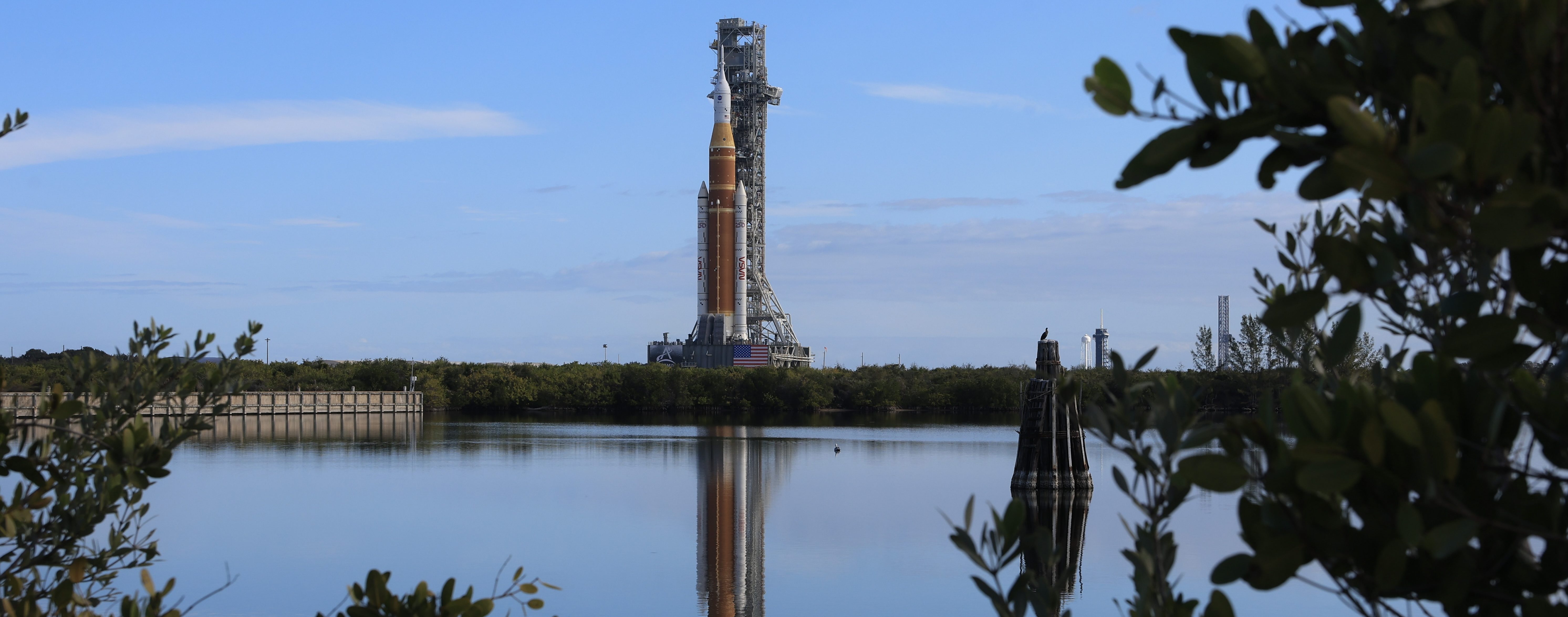
As I write this week's edition, NASA's Space Launch System rocket is undergoing a second countdown rehearsal at Kennedy Space Center, Florida. The outcome of the test will determine whether NASA has a shot at launching the Artemis II mission around the Moon next month, or if the launch will be delayed until April or later. The finicky fueling line for the rocket's core stage is the center of attention after a hydrogen leak cut short a practice countdown earlier this month.
Science
Science
fromArs Technica
1 month agoULA's Vulcan rocket suffers another booster problem on the way to orbit
Northrop Grumman-built GEM 63XL solid boosters suffered manufacturing-related nozzle insulator failures that reduced thrust, yet Vulcan successfully placed military satellites into geosynchronous orbit.
fromArs Technica
1 month agoRocket Report: Say cheerio to Orbex; China is getting good at booster landings
"You absolutely have to have a plan to compete with SpaceX on price." Welcome to Edition 8.29 of the Rocket Report! We have a stuffed report this week with news from across the launch spectrum. Long-term, probably the most significant development this week was a subscale version of the Long March 10 rocket successfully launching and then executing a picture-perfect ocean landing. China is catching up rapidly to the United States when it comes to reusable launch.
Science
fromwww.bbc.com
2 months agoBezos' Blue Origin announces satellite rival to Musk's Starlink
Blue Origin, the rocket company owned by Amazon founder Jeff Bezos, says it will launch more than 5,400 satellites to create a new communications network. Named TeraWave, it will offer continuous internet access around the world, with the ability to move large amounts of data much more quickly than rival services. But even after launching thousands of satellites, Blue Origin would still have far fewer in orbit than Elon Musk's Starlink, which currently dominates the satellite internet market.
Science
fromArs Technica
2 months agoAs data from space spikes, an innovative ground station company seeks to cash in
By the end of the year, Northwood, based in El Segundo, California, had shown the ability to build eight of these Portal arrays a month. And in January the company had deployed operational Portal antennas across two continents. These deployments, which comprise an area of 8 to 15 meters, have the equivalent capability of a 7-meter parabolic dish, said Griffin Cleverly, co-founder and chief technical officer of Northwood.
Science
fromArs Technica
1 month agoWhen Amazon badly needed a ride, Europe's Ariane 6 rocket delivered
The Ariane 64 flew with an extended payload shroud to fit all 32 Amazon Leo satellites. Combined, the payload totaled around 20 metric tons, or about 44,000 pounds, according to Arianespace. This is close to maxing out the Ariane 64's lift capability. Amazon has booked more than 100 missions across four launch providers to populate the company's planned fleet of more than 3,200 satellites. With Thursday's launch, Amazon has launched 214 production satellites on eight missions with United Launch Alliance, SpaceX, and now Arianespace.
Science
fromTheregister
1 month agoVulcan Centaur reaches orbit after booster anomaly
United Launch Alliance's Vulcan Centaur reached orbit on February 12 despite "a significant performance anomaly" that saw one of its four solid rocket boosters burn through its nozzle during ascent. Viewers of the launch from Cape Canaveral at 0422 EST (0922 UTC) were treated to some impressive fireworks as the part detached in a shower of fragments. It was the fourth launch of ULA's replacement for the Atlas V and Delta IV rocket, and the second in which an anomaly was noted with the booster.
Science
fromThe Verge
2 months agoThe first privately funded space-based telescope is in the works
Lazuli's design features a 3.1-meter mirror, which would make it larger than NASA's Hubble Space Telescope (but smaller than the James Webb Space Telescope). It will also be equipped with a wide-field camera, a broadband integral-field spectrograph, and a coronagraph. Those instruments will be used to study everything from exoplanets to supernovae, but Schmidt Sciences also envisions Lazuli being used for "rapid response" purposes, such as quickly swiveling to gather data on objects spotted by other telescopes.
Science
fromArs Technica
1 month agoRocket Report: SpaceX probes upper stage malfunction; Starship testing resumes
The big news in rocketry this week was that NASA still hasn't solved the problem with hydrogen leaks on the Space Launch System. The problem caused months of delays before the first SLS launch in 2022, and the fuel leaks cropped up again Monday during a fueling test on NASA's second SLS rocket. It is a continuing problem, and NASA's sparse SLS launch rate makes every countdown an experiment, as my colleague Eric Berger wrote this week.
Science
Science
fromTechCrunch
2 months agoSpaceX gets FCC approval to launch 7,500 more Starlink satellites | TechCrunch
The FCC approved SpaceX to launch 7,500 additional Gen2 Starlink satellites (total 15,000), enabling multi-frequency operation and direct-to-cell service outside the U.S., with launch deadlines.
fromwww.theguardian.com
2 months agoBezos's Blue Origin announces plans to deploy thousands of satellites in 2027
Jeff Bezos's space company Blue Origin on Wednesday announced a plan to deploy 5,408 satellites in space for a communications network that will serve data centers, governments and businesses, jumping into a satellite constellation market dominated by Elon Musk's SpaceX. Deployment of satellites is planned to begin in the last quarter of 2027, Blue Origin said, adding the network will be designed to have data speeds of up to 6 Tbps anywhere on Earth.
Science
[ Load more ]