#public-lands-policy
#public-lands-policy
[ follow ]
#national-park-service #environmental-policy #public-lands-management #national-parks #trump-administration
fromHigh Country News
3 days agoForest Service overhaul sows confusion, concern - High Country News
"Nobody is asking for this. None of the farm groups want this. No one in conservation wants this. Nobody." Robert Bonnie, former Forest Service undersecretary, highlights widespread opposition to the reorganization.
Washington DC
US politics
fromHigh Country News
23 hours agoThe public got one week to comment on Chaco Canyon drilling. It's almost over - High Country News
The Trump administration is criticized for rushing the reversal of a federal ban on drilling near Chaco Culture National Historical Park with limited public comment.
fromHigh Country News
3 days agoLetters to the Editor, April 2026 - High Country News
The fact that the Burns Paiute and Bannock Shoshone tribes are still battling our government and politicians for protection of the sagebrush steppe habitat and our native sage grouse isn't spiritually uplifting.
Social justice
fromwww.theguardian.com
4 days agoFederal God squad' exempts oil and gas drilling in Gulf of Mexico from endangered species rules
The Endangered Species Committee voted to approve the request for the ESA exemption at the request of the defense secretary, Pete Hegseth. Hegseth has said environmentalists' lawsuits against the industry threatened to hobble the nation's energy supply, while environmentalists fear drilling could kill off protected species including Rice's whales, whooping cranes and sea turtles.
Environment
Non-profit organizations
fromwww.theguardian.com
2 weeks agoWe cannot replace USAID, but we can do big things': conservation plots a future without American money
Liberia's eco-guard program, funded by USAID, faces collapse after the Trump administration dismantled the agency, threatening forest conservation and wildlife protection in one of Africa's most biodiverse regions.
fromLos Angeles Times
3 weeks agoCalifornia national parks set attendance record, despite controversy
The nine national parks in the Golden State - including Yosemite, Death Valley and Joshua Tree - attracted nearly 12 million recreational visits in 2025, according to statistics from the National Park Service. That's up more than 800,000 visits from 2024 and up more than 300,000 from the previous record set in 2019, according to the data, which stretches back to 1979.
Washington DC
Brooklyn
fromTime Out New York
4 weeks agoTen NYC parks across all five boroughs are getting upgrades
New York City will invest $50 million to upgrade 10 neighborhood parks across all five boroughs that have lacked meaningful improvements for at least 20 years, benefiting over 116,500 residents in historically underserved communities.
fromwww.theguardian.com
4 weeks agoIt creates a sense of belonging': Brazil bets on hiking trails for conservation
The idea that hiking trails are a tool for conservation is based on a simple premise: people protect what they know. That requires making conservation areas accessible. There's no point telling people you only protect what you know, if you don't give them the tools to know. The trail is this tool. People who hike, people who camp, these people often become defenders of the environment.
Travel
California
fromLos Angeles Times
1 month agoCalifornia, Arizona and Nevada urge Trump administration to rethink Colorado River plans
California, Arizona, and Nevada oppose Trump administration's Colorado River water cutback proposals, arguing they violate the 1922 Colorado River Compact foundational agreement.
#national-park-service



US politics
fromwww.theguardian.com
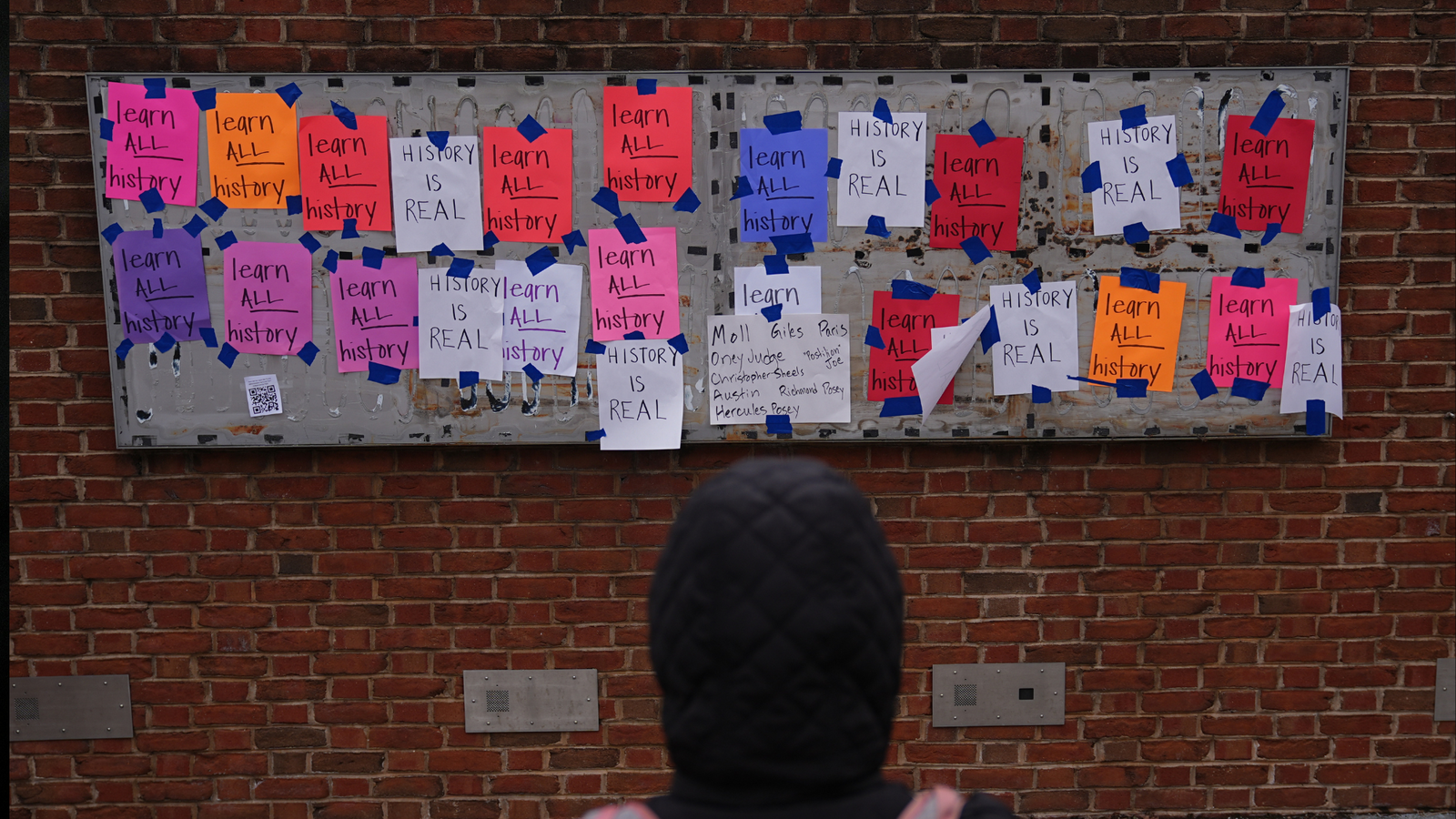
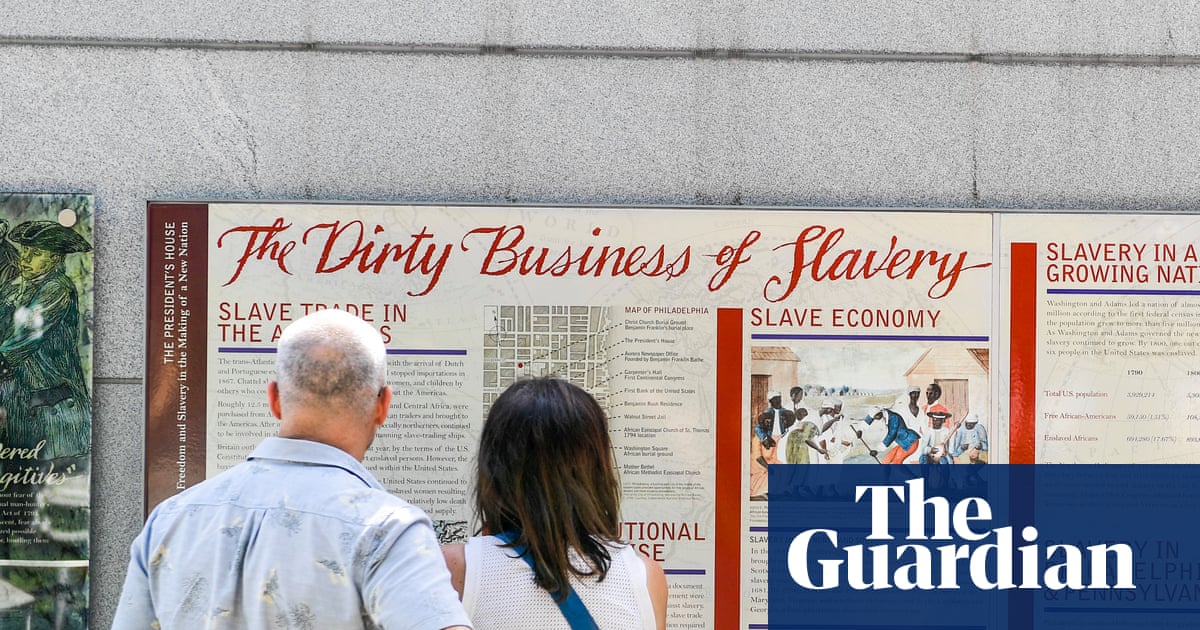
1 month agoSo shameful': backlash as US national monuments conform to Trump's rewrite of history
National Park Service removed 34 panels about people enslaved by George Washington from the President's House in Philadelphia to comply with Trump's 2025 executive order, placing them in storage.
Boston food
fromBoston.com
1 month agoLawsuit challenges National Park Service over content removal, including at a Mass. site
A Trump administration executive order directing the National Park Service to remove or alter history exhibits deemed to disparage Americans has prompted a lawsuit and immediate changes at New England national park sites.

Environment
fromHigh Country News
2 weeks agoThe BLM wants to ramp up logging. Oregonians aren't so sure. - High Country News
The BLM plans to increase timber harvesting on 2.5 million acres in western Oregon, including protected old-growth forests, citing wildfire management and Trump administration timber production directives.
fromLos Angeles Times
26 years agoAhmanson Ranch
Formal groundbreaking for the Ahmanson Ranch project, a town-style development on 2,800 acres in the Simi Hills in southeastern Ventura County, will not take place until 2001. However, the project has already achieved historic status for the size of the private-to-public land transfer it produced and for reviving a design concept that marks a major departure from the car-dependent suburban enclave typical of the postwar era.
LA real estate
Environment
fromwww.theguardian.com
2 weeks agoEngland should give over 7% of land to nature and renewables to meet environmental targets, data shows
England must allocate 7% of its land to nature, forests, and renewable energy to meet environmental targets while maintaining food production and housing capacity.
fromHigh Country News
1 month agoTrump's BLM nominee waffles on public land sell-off stance - High Country News
I'm not so sure that I've changed. I do not believe that we're going to go out and wholesale land from the federal government. Federal law says that we can't do that from the BLM itself.
US politics
Environment
fromTruthout
2 weeks agoGrowing Presence of AI Data Centers Prompts Debate on Native Lands
AI data center expansion creates environmental and cultural challenges for Native American tribes, sparking debates over tribal digital sovereignty and regulatory needs for data infrastructure control.
fromHigh Country News
2 weeks agoHow Trump's oil-and-gas agenda threatens critical Wyoming wildlife habitat - High Country News
These sagebrush-covered foothills of primarily Bureau of Land Management land have a higher concentration of sage grouse than anywhere else on the planet, likely in part because the birds have room to move. More than a thousand elk winter there, too, sustained by the high-elevation landscape's cured grasses, dried wildflowers and shrubs. So do pronghorn and mule deer, wintering or using the area as a stopover on their journeys, which include the longest documented mule deer and pronghorn migrations in the Lower 48.
Environment
Environment
fromFortune
2 weeks agoThe outdoor recreation economy is worth $1.3 trillion. Trump's cuts to National Parks could change that | Fortune
The outdoor recreation industry generated $1.3 trillion in economic output and 5.2 million jobs in 2024, but Trump administration budget cuts to federal agencies threaten this economic engine and dependent rural businesses.

fromThe Mercury News
1 month agoLetters: Climate rule revocation coincides with woeful parks nominee
The only interest he has in our parks is the money he can make from them. Case in point is how Socha, as an executive for the hospitality company Delaware North, sued the NPS for $51 million for the naming rights to Yosemite National Park, Ahwahnee, Wawona, etc., claiming they were the company's intellectual property. Twenty-two years as concessionaire entitles them to own and profit from the names? How absurd and disrespectful.
US politics
fromwww.npr.org
2 months agoNational Park updates guidelines to stop visitors defacing Trump picture on pass
The National Park Service has updated its policy to discourage visitors from defacing a picture of President Trump on this year's pass. The use of an image of Trump on the 2026 pass rather than the usual picture of nature has sparked a backlash, sticker protests, and a lawsuit from a conservation group. The $80 annual America the Beautiful pass gives visitors access to more than 2,000 federal recreation sites.
US news
Canada news
fromwww.theguardian.com
2 months agoOur minerals could be used to annex us': why Canada doesn't want US mining
A Pentagon-financed open-air graphite mine in La Petite-Nation, Quebec threatens local ecosystems, air and water quality, and the regional eco-tourism economy, prompting strong opposition.
US politics
fromwww.mercurynews.com
1 month agoTrump administration eliminates reservations at Yosemite National Park this summer
Entry reservation requirements at Yosemite, Arches, and Glacier national parks will be eliminated, removing a COVID-era crowd-management tool and reopening unrestricted summer access.
:max_bytes(150000):strip_icc()/header-goblin-valley-campground-goblin-valley-state-park-ut-CAMPUS0322-91cc594e806346d89bcd3c0fc2daafb5.jpg)
:max_bytes(150000):strip_icc()/valley-of-fire-state-park-nevada-STATEPARTS0521-d4c97901aa95441caf4f92f184021811.jpg)
fromwww.kaltblut-magazine.com
2 months agoTerrain
The body is a shifting landscape transformed by surfaces and sensations. Each look captures a different tactile world: the heat of blood, the cool weight of metal, the yielding drift of water. The result is a sculptural study of how the elements carve, shield, and release the self. The materials we embody become the emotions we carry, and the body becomes a materialised exhibition of our emotions, from the pulse of Blood to the discipline of Metal to the surrender of Water.
Fashion & style
Real estate
fromwww.theguardian.com
2 months agoGreen spaces should be the norm for all new housing developments in England, guidelines say
New government guidelines recommend mixed-use, heritage-preserving, nature-inclusive neighbourhood developments with shops, schools, green spaces and flood protection as standard for new housing developments.
:max_bytes(150000):strip_icc()/TAL-yosemite-national-park-FREEUSNP0126-865a047f5ee343d5b1765176813a466a.jpg)
:max_bytes(150000):strip_icc()/TAL-yosemite-national-park-VISITNP4FREE0126-58af0014477046879b80731f7896e2d3.jpg)
:max_bytes(150000):strip_icc()/TAL-header-mount-rainier-national-park-washington-USNP0323-a21fa46048a84a49ad34db7d689300ff.jpg)
fromHigh Country News
1 month agoThe Colorado River rift abides - High Country News
Western water law is based on the prior appropriation doctrine, which gives the first entity to make "beneficial use" of water the right to keep on using that amount, even if that means that upstream "junior" users' spigots will get shut off. By the early 1900s, a rapidly growing California was enthusiastically diverting the Colorado River, with huge irrigation districts gobbling up the senior water rights.
Environment


fromLos Angeles Times
2 months agoWestern governors are called to Washington as Colorado River impasse drags on
With Western states deadlocked in negotiations over how to cut water use along the Colorado River, the Trump administration has called in the governors of seven states to Washington to try to hash out a consensus. The governors of at least four - Utah, Arizona, Nevada and Wyoming - say they'll attend the meeting next week led by Interior Secretary Doug Burgum, but California Gov. Gavin Newsom won't.
US politics
fromHigh Country News
2 months agoThe nation's trails are disappearing - High Country News
Many of them were built for purposes that no longer exist - cattle drives, mining prospecting, early U.S. Forest Service fire patrols - while others were packed by the footprints of the Chumash people well before the colonization of North America. Sections of trail cling to steep slopes that seem to barely resist gravity, shedding soil and stone with each winter storm.
Environment
fromHigh Country News
2 months agoAlaska's public lands are a political battleground - High Country News
Over the past year, a wave of high-profile development proposals - from oil fields and mining roads to timber projects - has reshaped a fast-moving debate, propelling Alaska into the center of the national conversation over how to balance energy production with conservation. These projects have revived long-running tensions over what the state's public lands are for, and who they ultimately benefit.
Environment
fromArchDaily
1 month agoHealth, Habitat, and Civic Infrastructure: Designing the City as a National Park
Cities around the world share a common goal: to become healthier and greener, supported by civic infrastructure that restores ecosystems and strengthens public life. The question is how to reach this. Global climate targets, local building codes, and municipal standards increasingly guide designers and planners toward better choices. Still, many cities struggle to translate these frameworks into everyday, street-level comfort and long-term ecological protection.
Environment
Environment
fromSocial Media Explorer
1 month agoEntorno Law and the Role of Public Interest Law in Protecting Communities and the Environment - Social Media Explorer
Public interest law ensures accountability and enforces environmental and consumer protections to safeguard public health, community welfare, and natural resources while promoting sustainability and fairness.
fromwww.dw.com
2 months agoThe business of saving nature
The world spends 30 times more money destroying nature than protecting it. That's according to a new report from the United Nations Environment Programme (UNEP) that exposes a massive gulf between so-called "harmful investments" and financing that promotes nature preservation. The global environment agency's latest "State of Finance for Nature" (SNF) report is calling to phase out the US$7.3 trillion (6.2 trillion) in global investments that damage nature including into high-emissions energy infrastructure and manufacturing, for example.
Environment
fromHigh Country News
2 months agoAn EPA proposal would make it harder for tribes to protect their water - High Country News
Developers seeking to build dams, mines, data centers or pipelines must navigate a permitting process to do so. One requirement in the process is obtaining certification from a tribe or state confirming that the project meets federal water quality standards. Currently, tribes and states conduct holistic reviews of projects, known as " activity as a whole ", evaluating all potential impacts on water quality, including spill risks, threats to cultural resources, and impacts on wildlife. This approach was established under the Biden administration in 2023.
Environment
fromStreetsblog
3 months agoOpinion: Why Urbanists Should Support Plant-Forward Policies - Streetsblog USA
It shows up three times a day, on your plate. The U.S. spends over $30 billion annually on agricultural subsidies. Most support corn and soy, crops that become livestock feed, not food for people. U.S. meat is artificially cheap, which has locked us into a high-emissions food system. It's the highway funding of food: a policy choice that induces demand and reinforces path dependency.
Environment
fromwww.theguardian.com
1 month agoEnforcement of laws against polluters nearly non-existent in US, analysis finds
Enforcement of environmental laws against major polluters has virtually ground to a halt under the Trump administration, a new analysis of Environmental Protection Agency records from January 2025 to January 2026 shows. Major polluters typically include companies that are among the largest in the oil, gas, coal and chemical industries. Records show the EPA filed just one Clean Air Act consent decree compared with 26 in the first year of Trump's first term, and 22 during Biden's first year.
Environment
[ Load more ]