#publication-bias
#publication-bias
[ follow ]
fromNature
5 days agoNow is the time for scientific societies to guide global research
Modern scientific societies are increasingly vulnerable due to their dependence on membership fees and journal subscriptions, which are being challenged by the rise of virtual networking and open-access publishing.
Science
fromNature
1 week agoMajor conference catches illicit AI use - and rejects hundreds of papers
"We hope that by taking strong action against violations of agreed-upon policy we will remind the community that as our field changes rapidly the thing we must protect most actively is our trust in each other."
Intellectual property law
#academic-publishing
Higher education
fromNature
3 weeks agoReckoning with my 'ghost years': why a high publication rate doesn't always reflect success
Publication gaps during early career development represent valuable research progress and skill-building, not career failure, despite academic pressure to maintain constant output.
Higher education
fromInside Higher Ed | Higher Education News, Events and Jobs
4 weeks agoJournal Submissions Riddled With AI-Created Fake Citations
Artificial intelligence is generating convincing fake academic citations with legitimate formatting, real journal names, and fabricated DOI links, deceiving researchers and educators.
Science
fromNature
3 weeks agoKeep calm and be transparent: advice from scientists who retracted their papers
Scientists who self-retract papers due to honest mistakes maintain citation rates and receive community support, suggesting shifting attitudes toward retractions as responsible scientific practice rather than career-damaging misconduct.
Intellectual property law
fromPsychology Today
4 weeks agoUnconscious Plagiarism: Fact or Fiction?
Unconscious plagiarism claims by famous artists may reflect genuine memory lapses rather than intentional theft, though distinguishing between carelessness and authentic unconscious appropriation remains difficult.
Science
fromNature
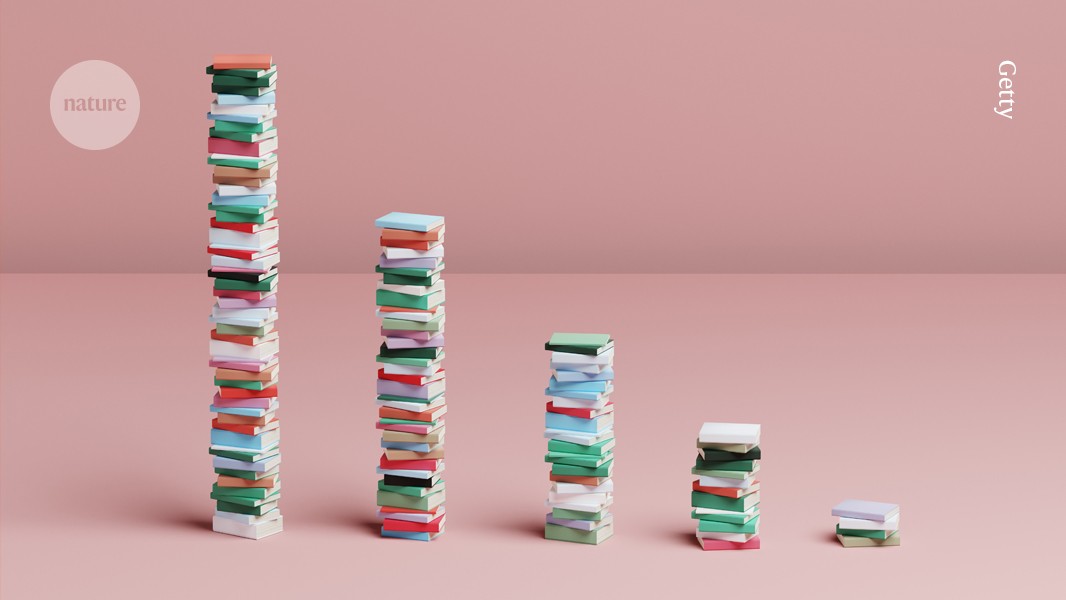
3 weeks agoHow bioRxiv changed the way biologists share ideas - in numbers
bioRxiv has grown to over 310,000 preprints since 2013, with neuroscientists as top users and monthly submissions reaching 4,000 by 2025, demonstrating widespread acceptance of preprint publishing in scientific research.
OMG science
fromArs Technica
1 month agoResearch roundup: Six cool science stories we almost missed
Scientists revived Edison's nickel-iron battery design using protein scaffolding and graphene oxide, creating an aerogel structure for improved renewable energy storage with extended range and longevity.

Environment
fromSilicon Canals
1 month agoPsychology says people who pick up litter even when no one is watching usually display these 7 traits that are becoming increasingly rare - Silicon Canals
Some individuals perform small acts of care without recognition, driven by intrinsic motivation linked to greater psychological well-being and life satisfaction.
Business intelligence
fromwww.customerexperiencedive.com
1 month agoCultural response bias warps survey responses. How can brands overcome the issue?
Cultural response bias skews CX survey scores across countries, making raw cross-country KPI comparisons unreliable without recalibration or regional benchmarking.
fromPsychology Today
1 month agoWho Is to Blame for Our Choices?
Do you blame others for the choices you are making? Have you blamed others for the previous choices you have made? To shed more light on these questions, you might also ask yourself: "What am I responsible for, and what power do I have?" From there, you might agree with this self-reflective response: "I am responsible for, and I've got the power over what I think, do, say, learn, and choose" (Purje, 2014).
Philosophy




fromNature
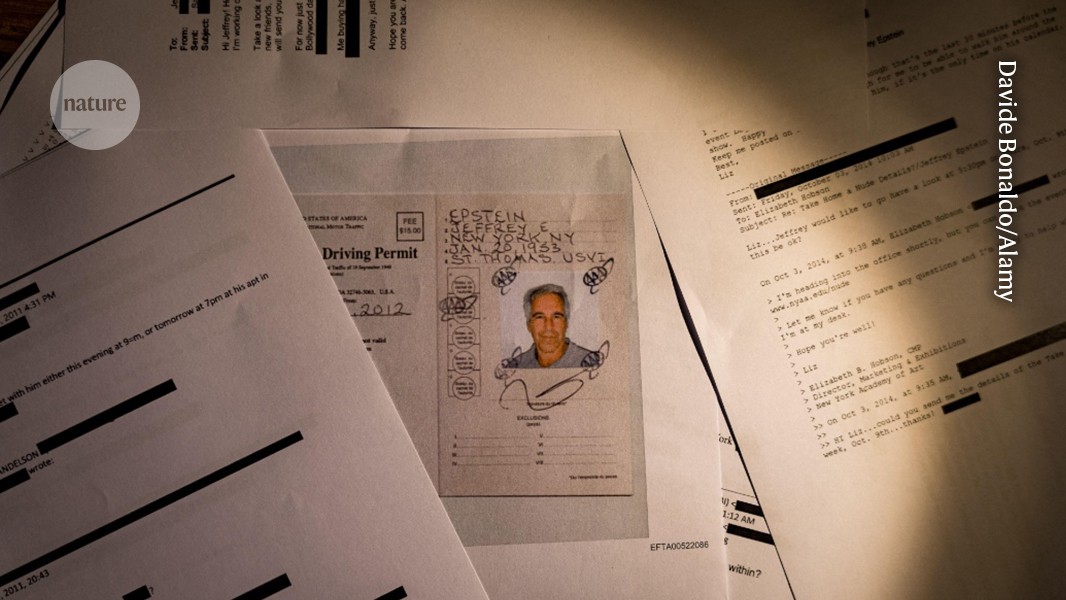
2 months agoWhen two years of academic work vanished with a single click
Within a couple of years of ChatGPT coming out, I had come to rely on the artificial-intelligence tool, for my work as a professor of plant sciences at the University of Cologne in Germany. Having signed up for OpenAI's subscription plan, ChatGPT Plus, I used it as an assistant every day - to write e-mails, draft course descriptions, structure grant applications, revise publications, prepare lectures, create exams and analyse student responses, and even as an interactive tool as part of my teaching.
Privacy technologies
fromFuturism
2 months agoResearchers Just Discovered Something Startling About How Conservatives Pick Political Positions
As it turns out, neuroscience might be able to explain why. In a new study whose findings will surprise absolutely no one who's endured a fiery holiday dinner debate, researchers discovered that conservative and liberal brains don't just arrive at fundamentally different conclusions, but take strikingly different paths to get there. It's a fascinating piece of research which just might explain something about the yawning political divides currently tearing society apart.
US politics
fromwww.nature.com
2 months agoPublisher Correction: Multiple oestradiol functions inhibit ferroptosis and acute kidney injury
Publisher Correction: Multiple oestradiol functions inhibit ferroptosis and acute kidney injury Publisher Correction Open access Published: 21 January 2026 Wulf Tonnus orcid.org/0000-0002-9728-14131 na1, Francesca Maremonti2 na1, Shubhangi Gavali orcid.org/0000-0003-2876-14532 na1, Marlena Nastassja Schlecht orcid.org/0000-0001-8893-53261, Florian Gembardt2, Alexia Belavgeni orcid.org/0000-0001-6311-58583, Nadja Leinung2, Karolin Flade orcid.org/0009-0009-5449-28251, Natalie Bethe1,
fromNature
1 month agoPop-up journals for policy research: can temporary titles deliver answers?
I'm less interested in topics than in questions, and I'm less interested in publishing than I am in curation. When I've testified before Congress or dealt with an appropriations bill or a budget negotiation, this question, of what is the return on investments when you're doing R&D, comes up quite often. It's been asked by economists in very formal ways since at least the 1950s, but the data and the methods that were available were really not very strong.
Science
fromPsychology Today
1 month agoHow Science Is Learning to Explore Ground Truth
Some clinicians have an uncanny quality. A colleague describes herself and others with this instinct as "witchy"-a capacity to know things about patients they haven't said yet, to follow a stray association to a song lyric or a half-remembered cultural reference and arrive, reliably, at something the patient urgently needed to say but couldn't reach on their own. We see with artificial intelligence these intriguing possibilities for discovery, especially as connections that human beings never would see pop out of apparently unrelated data.
Science
fromNature
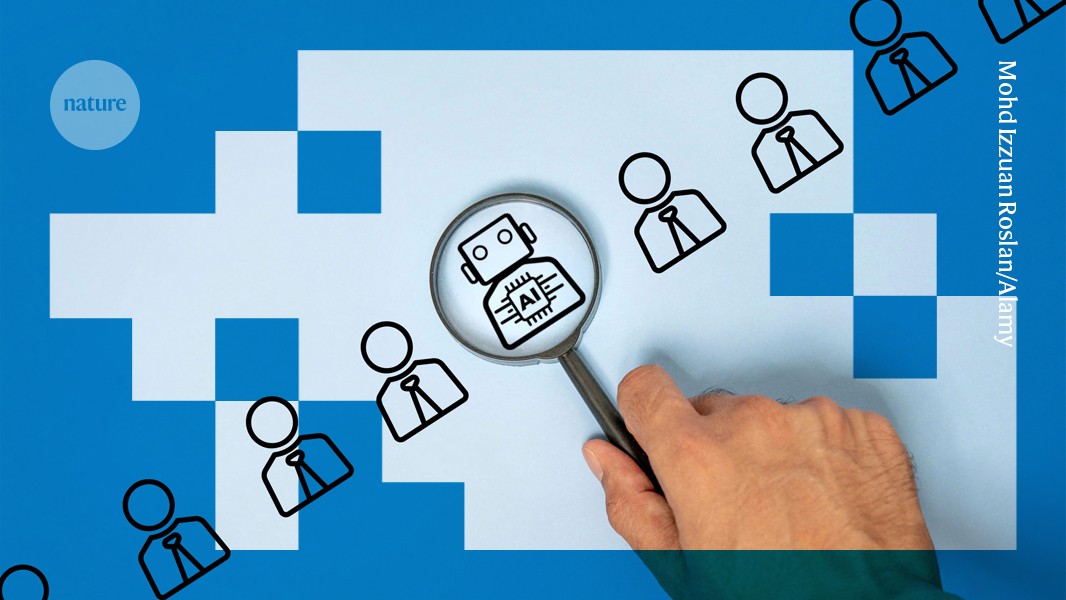
1 month agoAI could transform research assessment - and some academics are worried
In 2023, Australia abandoned its expensive and bureaucratic scholar-led research-assessment programme. New Zealand followed suit soon after. The hope, according to a transition plan unveiled by the Australian federal government's Department of Education and the research sector, was to find a "more modern, data-driven approach". In the United Kingdom, where financial pressures on universities are especially acute, there are similar calls to reform the Research Excellence Framework (REF), the country's performance-based research-funding system.
Higher education
fromNature
1 month agoHow AI slop is causing a crisis in computer science
Fifty-four seconds. That's how long it took Raphael Wimmer to write up an experiment that he did not actually perform, using a new artificial-intelligence tool called Prism, released by OpenAI last month. "Writing a paper has never been easier. Clogging the scientific publishing pipeline has never been easier," wrote Wimmer, a researcher in human-computer action at the University of Regensburg in Germany, on Bluesky. Large language models (LLMs) can suggest hypotheses, write code and draft papers, and AI agents are automating parts of the research process.
Artificial intelligence
fromPsychology Today
2 months agoThe Cause Illusion
Ever since our ancestors first stood upright and squinted at the horizon, we've been wired to notice patterns. A rustle in the grass might have meant a stalking predator. Dark clouds often meant rain. Those who made these connections and guessed that one thing caused another tended to survive. Over time, this ability to link events became one of our most significant evolutionary advantages. It's how we built tools, tamed fire, and eventually invented Wi-Fi.
Psychology
Artificial intelligence
fromTechCrunch
2 months agoIrony alert: Hallucinated citations found in papers from NeurIPS, the prestigious AI conference | TechCrunch
100 hallucinated citations were confirmed across 51 NeurIPS papers, revealing AI-generated fabricated references among accepted machine-learning research.
Science
fromNature
1 month agoSynthesizing scientific literature with retrieval-augmented language models - Nature
OpenScholar is an open, retrieval-augmented system integrating a 45 million-paper datastore, trained retrievers, and iterative self-feedback to generate cited, up-to-date scientific literature syntheses.
Science
fromwww.theguardian.com
2 months agoThe Guardian view on microplastics research: questioning results is good for science, but has political consequences | Editorial
Studies measuring micro- and nanoplastics in humans show methodological flaws that cast doubt on reported quantities and reveal preventable systemic problems.
[ Load more ]